
Quick Answer — what should buyers confirm before comparing Hovenia dulcis extract suppliers?
Confirm seven points in writing before requesting samples: (1) botanical source and plant part — Hovenia dulcis seed, fruit or vine tea (Ampelopsis grossedentata); (2) specification direction — extract ratio (10:1, 20:1, 50:1) or Dihydromyricetin (DHM) assay (10–98% HPLC); (3) assay method — TLC identification or HPLC marker review; (4) COA fields — DHM content, appearance, particle size, moisture, ash, heavy metals, pesticide residues and microbiology; (5) sample plan — quantity, test matrix and a lot-matched COA; (6) commercial terms — MOQ, packing, lead time and destination market; (7) certificates covering the exact grade (ISO 22000, FSSC 22000, HACCP, Kosher, Halal, organic where required). A precise brief returns a representative sample and an accurate quotation in one round; a vague one starts a three-round clarification loop. Use the Hovenia Dulcis Extract product page as the commercial page, then send application, specification, sample, COA and RFQ details via Contact HERBSEA.
1. What “Hovenia Dulcis Extract” Really Means in a Supplier Brief
Hovenia dulcis (Japanese raisin tree or oriental raisin tree, family Rhamnaceae) is a deciduous tree native to East Asia, found from Japan and China through Korea to the Himalayas. The commercially used parts are the dried mature seeds, the raisin-like fruit stalks and, in some process routes, stems and leaves. The marker most buyers track is dihydromyricetin (DHM, also called ampelopsin), a flavanonol with CAS number 27200-12-0 and molecular weight 320.25 (C15H12O8) (ChemicalBook, 2026).
In practice, “Hovenia dulcis extract” covers two commercial streams that behave differently in sourcing:
- Ratio-based extract — concentrated powder declared as 10:1, 20:1, 30:1 or 50:1, with DHM present at natural levels (often 0.1–2%) and identified by TLC or a marker assay (Herealth, 2026). Used when the buyer wants a whole-herb profile for food or beverage formulation.
- Standardized DHM extract — assay declared as DHM 10%, 20%, 50%, 90%, 95%, 98% or 99% by HPLC, typically a refined powder where purity becomes the commercial contract (Staherb, 2026; Tobrand, 2026). Used for supplement and functional-beverage projects that buy on active content.
State which stream your project needs in the first message. A supplier brief that only says “Hovenia dulcis extract” invites grade mismatches and a slower RFQ round.
2. Two Source Streams, One Marker: Hovenia dulcis vs Vine Tea
Commercial DHM is produced from two botanical sources that buyers often confuse. Both deliver the same marker compound, but plant identity, origin documentation and sensory profile differ:
| Dimension | Hovenia dulcis (Japanese raisin tree) | Vine tea (Ampelopsis grossedentata) |
|---|---|---|
| Plant part used | Dried mature seeds; also fruit stalks and stems | Young stems and leaves |
| Typical grades | 10:1–50:1 ratio extract; DHM 10%/50% standardized | DHM 10–98% HPLC; 90%/95%/98% high-purity common |
| Appearance | Yellow to brown-yellow powder | Off-white to white powder (higher purity grades) |
| COA focus | Ratio, TLC/HPLC marker, moisture, ash, residues | Assay purity, impurity profile, heavy metals, residues |
| Origin documentation | China, Japan, Korea sourcing records | China (Hunan/Fujian/Guangxi vine-tea regions) |
| Typical buyer profile | Food, beverage, functional-food formulation | Supplement, functional-beverage and high-purity projects |
The supplier’s COA should state the botanical source and plant part explicitly. If a quotation says “DHM 98%” without naming the source plant, request the botanical identity in writing before treating the grade as comparable to another supplier’s DHM 98%.
3. Extract Ratio vs DHM Assay: Which Specification Direction to Request
Two suppliers can quote “Hovenia dulcis extract” at very different specification logic. State which direction you are buying:
| Specification direction | What it declares | When to request it | COA implication |
|---|---|---|---|
| Extract ratio (10:1, 20:1, 50:1) | Concentration from raw material to finished powder | Whole-herb food or beverage projects; label-friendly profiles | Confirm the ratio basis, plant part and TLC identification result |
| DHM assay 10–50% (HPLC) | Standardized active content in an extract powder | Supplement and functional-food projects with a marker target | Confirm HPLC method, assay value and supporting chromatogram on request |
| DHM high purity 90–98%+ (HPLC) | Refined active ingredient purity | Capsule, tablet, gummy and beverage shots that buy on active content | Confirm purity, single-impurity limits, residual solvents and heavy metals |
Industry purity preference skews high: 95% grade accounts for roughly 45% of the DHM market and 98% grade for about 40% (Global Growth Insights, 2026). If your brief allows either a ratio grade or an assay grade, specify the finished-format application first — the target format (capsule, beverage, powder blend) usually decides the sensible specification direction.
4. TLC vs HPLC: Match the Assay Method to the Specification
Assay method wording on a COA is not interchangeable. Confirm which method the supplier used before comparing quotations:
- TLC identification — confirms the presence of the expected marker pattern. Common for ratio-based extracts and identity screening; cheap and fast but not quantitative.
- HPLC marker review — quantifies DHM content against a reference standard (typically measured near 290–294 nm). Required when the commercial spec is an assay value such as DHM 50% or 98%.
- Buyer-specified method — some projects define their own method or request a specific laboratory standard. State this in the RFQ so the supplier can confirm feasibility before sampling.
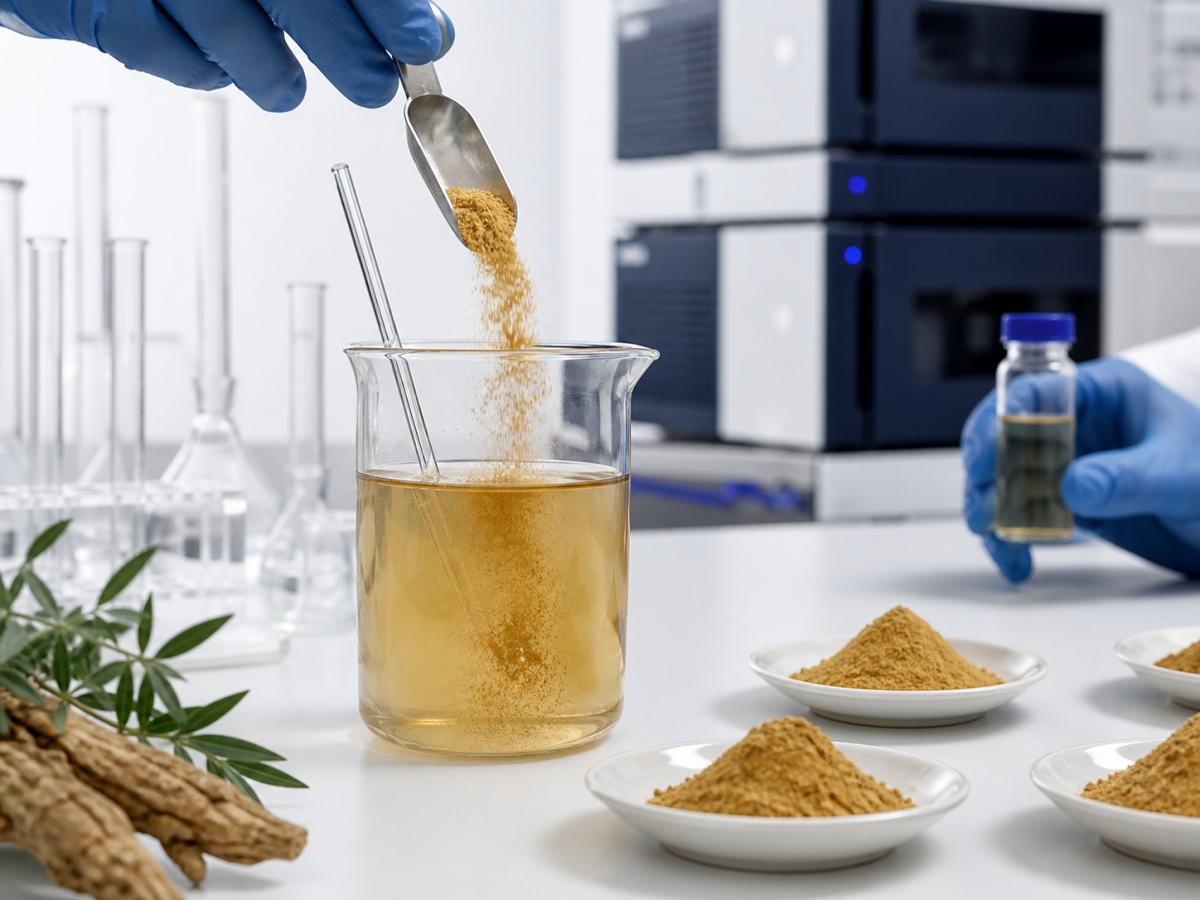
For standardized grades, ask whether the COA can include the HPLC chromatogram and the assay wavelength. A representative chromatogram is the fastest way to confirm the supplier actually ran the quantitative method on the quoted lot (HERBSEA COA review practice, 2026).
5. COA Fields That Matter for Hovenia Dulcis Extract
A COA is only useful if it covers the fields your market and formula require. For Hovenia dulcis extract, focus on:
- Lot-matched batch number — the COA must reference the exact sample or commercial lot, not a representative batch from another run.
- Marker result — DHM assay (HPLC) or ratio declaration with the method stated.
- Physical fields — appearance, odor, taste, particle size (commonly 100% through 80 mesh), loss on drying and ash.
- Heavy metals — lead, arsenic, cadmium and mercury against the destination-market limits (typical supplier limits: Pb ≤0.5–2 ppm, As ≤1–2 ppm, Cd ≤1 ppm, Hg ≤0.1–1 ppm; Landnutra, 2026).
- Pesticide residues — required for food and supplement markets; confirm the framework of your destination market (EU, US, Japan, Korea each maintain their own lists).
- Microbiology — total plate count, yeast and mold, coliforms, E. coli, Salmonella and Staphylococcus (typical limits: TPC ≤1,000–10,000 cfu/g; Landnutra, 2026).
- Residual solvents — relevant for ethanol-extracted grades; confirm the result is negative or within spec.
- Traceability — origin, plant part, production and best-before dates, and any certificate numbers tied to the lot.
Red flags in the sample stage: a generic COA with no batch number, an assay method that does not match the quoted spec, or a supplier that cannot state the botanical source and plant part.
6. Certification and Regulatory Review by Destination Market
Certification needs are set by the finished-product market, not by the supplier’s home country. Check the framework before requesting documents:
| Destination | Framework to review | What to confirm with the supplier |
|---|---|---|
| United States | DSHEA 1994 dietary supplement rules | Supplement-grade documentation; labeling compliance; no unsubstantiated claims on finished products |
| European Union | Food Supplements Directive 2002/46/EC; Novel Food Regulation (EU) 2015/2283 check | Whether the ingredient has a significant pre-1997 history of use in the EU; pre-market authorization requirements for novel status |
| Canada | Natural Health Products Regulations (NHP) | NPN (Natural Product Number) pathway for finished NHP products |
| China | Health food and food additive frameworks | GB-compliant assay methods, origin and processing records for export lots |
| Global food/beverage | FSSC 22000, ISO 22000, HACCP, Kosher, Halal, organic | Certificate validity covering the exact SKU and export lot |
Note that most DHM suppliers operate from China, where vine tea and Hovenia dulcis both have long traditional use. The sourcing decision is about documentation fit: ask which certificates cover the exact grade you will import, and request copies in the RFQ package.
7. Sample Types, Quantities and What to Test
Sample quantity should follow your test plan. Common guidance: 100–500 g for identity, color and basic behavior screening; 1–5 kg per variant for a full application trial or third-party testing (Geminate International, 2026; Landnutra, 2026).
| Test purpose | Suggested quantity | What it verifies |
|---|---|---|
| Identity, color and aroma check | 50–100 g | Grade, appearance, odor, particle size and TLC/HPLC marker direction |
| Formula behavior screening | 100–500 g | Solubility, color impact, taste, dispersion and blend behavior in your matrix |
| Full application trial | 1–5 kg per variant | Performance in the actual line, excipient or carrier compatibility, storage observation |
| Third-party COA testing | 500 g–2 kg | Heavy metals, pesticide residues and microbiology per destination rules |
Sample cost follows the tier: stock samples typically US$0–50 (often free, freight paid by buyer), custom specification-matched samples US$50–500, and pre-production samples US$100–1,000+ before bulk production. Delivery is commonly 3–7 working days by express courier. Industry experience puts sample-to-order conversion at roughly 20–30% — most inquiries never become orders, which is exactly why disciplined buyers use the sample stage to pre-qualify suppliers.
8. Sample Request vs Bulk RFQ: Send the Right Request at the Right Time
| Dimension | Sample request | Bulk RFQ |
|---|---|---|
| Main purpose | Grade screening and document review | Commercial supply planning after approval |
| Buyer input | Application, sample quantity, specification target and COA needs | Quantity, MOQ expectation, packing size and destination market |
| Document focus | Lot-matched COA, specification sheet, certificate copies | Proforma invoice, packing list, export documents, certificate validity |
| Typical next step | Evaluate the sample in your own matrix | Place the order with the approved sample lot referenced |
Practical rule: request the sample first, evaluate it in your matrix, then send the RFQ with the approved sample lot number attached. If the specification is already fixed, send the target assay, method, particle size, document list, packaging size and destination market in the first message so the supplier can quote commercial supply in one round.
9. Market Data: Why DHM Demand Is Growing
Short market context helps buyers set expectations on supply and pricing. Figures below are public industry estimates — use them for direction, not contract math.
| Data point | Value | Source / year |
|---|---|---|
| Global dihydromyricetin market | US$112.5M (2024) → US$246.8M (2033), CAGR 9.2% | MarketIntelo, 2025 |
| Alcohol-metabolism-support DHM segment | US$385M (2024) → US$858M (2033), CAGR 9.2% | Growth Market Reports, 2025 |
| Alternative global estimate | US$353M (2024) → US$472M (2031), CAGR 4.3% | QYResearch via Valuates, 2025 |
| North America share | ~36–38% of demand | Research Intelo, 2025; Global Growth Insights, 2026 |
| Asia Pacific growth | Fastest region, ~11.2% CAGR 2024–2033 | Research Intelo, 2025 |
| Application split | Dietary supplements ~57%, functional beverages ~34% | Global Growth Insights, 2026 |
| Purity preference | 95% grade ~45% of market, 98% grade ~40% | Global Growth Insights, 2026 |
| B2B sample-to-order conversion | ~20–30% of sample inquiries become orders | Industry observation, 2026 |
The category is growing across supplements, functional beverages and high-purity active projects, which means more SKUs, more specification directions and more price spread — making the specification and COA review stage more valuable, not less.
10. RFQ Checklist for Hovenia Dulcis Extract
Send these fields with the first message to get a usable quotation in one round:
- Botanical source and plant part (Hovenia dulcis seed / fruit / vine tea).
- Specification direction — extract ratio or DHM assay target.
- Assay method — TLC identification, HPLC marker review or buyer-defined method.
- COA fields required — marker, physicals, heavy metals, pesticide residues, microbiology.
- Sample quantity and test conditions (include the destination address and review timeline).
- MOQ expectation, packing size and destination market.
- Certificate list covering the exact grade (FSSC 22000, ISO 22000, HACCP, Kosher, Halal, organic).
For category-level comparison, use the Plant Extract Supplier hub; for COA review support, use the Plant Extract COA Review Checklist.
11. Related Product Pages for DHM Sourcing
- Hovenia Dulcis Extract product page — main commercial page for specification, samples, COA and RFQ.
- Dihydromyricetin 90% product page — high-purity DHM grade for supplement and beverage projects.
- Plant Extract Supplier hub — category-level comparison across botanical extracts.
- Plant Extract COA Review Checklist — adjacent sourcing review for COA fields.
- Contact HERBSEA — send application, specification, sample, COA and RFQ details.
FAQ
Confirm botanical source and plant part, extract ratio or DHM assay direction, assay method (TLC or HPLC), COA fields, sample lot, particle size, packing, MOQ and destination market.
Hovenia dulcis extract is the botanical extract from the Japanese raisin tree, declared by extract ratio or marker assay; DHM (dihydromyricetin) extract is the same botanical direction standardized to a dihydromyricetin content, from Hovenia dulcis or vine tea, typically 10–98% by HPLC.
Japanese raisin tree extract is commonly used as a search phrase for Hovenia dulcis extract. Confirm botanical identity, plant part and specification before RFQ.
Request TLC identification for identity screening, HPLC marker review for quantitative DHM assay targets, or a buyer-specified method when the project defines its own standard.
Test in the intended formula and record color, taste impact, solubility, particle size, flow, dispersion and storage behavior, and confirm the sample matches the supplied COA.
Use the Hovenia Dulcis Extract product page for samples, COA and quotation, with application, specification direction, sample quantity, destination market and document list in the first message.
Summary
If you are comparing Hovenia dulcis extract suppliers, confirm the source stream (Hovenia dulcis or vine tea), specification direction (ratio or DHM assay), assay method, COA fields, sample test plan, MOQ, packaging and destination market first. Then request a representative sample with a lot-matched COA, evaluate it in your formula, and send the RFQ with the approved sample lot referenced.
Contact HERBSEA for specification, COA, samples and RFQ support.
Ingredient Sourcing Resource Center
Use these HERBSEA resources to keep supplier, COA, sample, MOQ, RFQ and export documentation review in one practical sourcing path.
- Ingredient Sourcing Guide Index for grouped tea powder, plant extract, fruit powder and documentation resources.
- Bulk Ingredient Sample Request Template for sample quantity, specification, COA and MOQ fields.
- Food Ingredient RFQ Template for supplier comparison, packing and quotation fields.
- Ingredient Export Documentation Checklist for COA, packing and destination-market document review.
- Ingredient Supplier Audit Checklist for supplier scope, sample control and document readiness.
Data Sources
Market and industry figures cited in this article are drawn from publicly available research: ChemicalBook (2026) DHM chemical identity; Staherb / Tobrand / Shineherb (2026) commercial grade observations; Herealth / Landnutra (2026) specification and COA practice; MarketIntelo (2025), Growth Market Reports (2025), QYResearch via Valuates (2025), Research Intelo (2025) and Global Growth Insights (2026) market estimates; KINTAI (2026) and Data Insights Reports (2026) regulatory frameworks; Geminate International (2026) B2B sample guidance. Figures are industry estimates and should be re-verified against current reports before contract use.