
Quick Answer — How do you build a working ingredient supplier audit checklist?
Build it in four layers: (1) screen documents first — specification sheet, representative COA, HACCP summary and flow chart; (2) verify sample control — label, lot number, COA link and an internal approval record; (3) confirm commercial terms — MOQ, packing, lead time, reorder and destination-market support; (4) apply risk-based depth — high-risk ingredients justify annual on-site audits, while low-risk materials can be approved on documentation plus a valid GFSI certificate. The same five control areas apply at every tier: HACCP and CCP monitoring, prerequisite programs (hygiene, pest control, water, maintenance), allergen management, traceability and mock recall, and corrective action records. Use the HERBSEA contact thread to send audit-style questions alongside the ingredient request.
1. Why a Structured Audit Checklist Reduces Sourcing Risk
Ingredient sourcing decisions are made before goods reach the receiving dock. A documented supplier audit checklist keeps qualification consistent, prevents mismatched grades, and gives QA a defensible record when the destination market asks for proof of supplier approval.
The scale of the problem is real. Industry estimates put the global cost of food fraud — mislabeling, substitution, dilution, adulteration — at roughly US$10–40 billion per year, with WTO-derived estimates reaching US$30–50 billion. Traceability failures, undeclared origin changes and out-of-spec raw material are the practical failure modes a checklist catches early. Two industry benchmarks frame why buyers standardize:
- Around 85% of major global retailers now require GFSI-benchmarked food safety certification as a minimum supplier qualification.
- Facilities operating under GFSI-benchmarked standards report roughly 34% lower food safety incident rates on average.
- GFSI 2024 coverage spans 4 leading schemes — SQF, BRCGS, FSSC 22000, IFS — covering 95%+ of globally certified food sites.
A checklist does not replace judgment — it replaces inconsistency. The same questions asked the same way let you compare suppliers on equal footing.
2. Audit Types: First-Party, Second-Party, Third-Party
Not every audit carries the same weight. The three types answer different questions and produce different evidence — a supplier can pass one without satisfying the others.
| Audit type | Who conducts it | What it proves | Typical trigger |
|---|---|---|---|
| First-party (internal) | Supplier’s own team | Self-assessment against its own system | Annual internal review, pre-certification gap check |
| Second-party (customer) | Buyer, or a third party contracted by the buyer | Supplier meets the buyer’s specific requirements | New supplier approval, high-risk ingredient, contract mandate, post-incident verification |
| Third-party (certification) | Accredited certification body | Compliance with a recognized standard (ISO 22000, FSSC 22000, BRCGS, IFS, SQF) | Certification cycle, retail channel requirement, FSMA supplier verification |
A GFSI certificate is a third-party audit you can reuse — but always check scope (product, facility, process) and validity date before accepting it as a substitute for second-party verification. A certificate covering one product line does not auto-cover a related product made on the same site.
3. GFSI Certification Tiers: What a Certificate Actually Tells You
Certification is table stakes for most export channels. The four main GFSI-benchmarked schemes are equivalent in food safety outcome but different in origin, audit style and market acceptance. Choose by customer geography, not personal preference.
| Scheme | Home market | Audit style | Strength | Site count (approx.) |
|---|---|---|---|---|
| BRCGS | UK and Ireland retail | Prescriptive, announced or unannounced, graded AA–D | Operational discipline, infrastructure depth, food fraud and food defense | 24,500+ sites in 137 countries |
| IFS Food | Germany, France, Italy, continental EU | Scored audit — 75%+ to certify, 95%+ for Higher Level | Documentation and process control, industry-specific add-ons | Widely used across EU retail and private label |
| FSSC 22000 | Global, B2B and industrial | ISO 22000 + ISO/TS 22002 PRPs, risk-based, 3-year cycle with surveillance | Integrates with ISO 9001, ISO 14001 and other ISO systems | 40,000+ certified organizations |
| SQF | North America (Walmart, Costco, Kroger) | Three levels (1, 2, 3), annual audits, unannounced option at higher tiers | Farm-to-table traceability, food safety culture | 15,000+ certified sites |
For an ingredient exporter, FSSC 22000 is often the practical first choice because it is built on ISO 22000 and scales with existing management systems; BRCGS matters if UK retail is the target channel, IFS for continental EU private label, SQF for North American retail. For multiple markets, dual certification (BRCGS + FSSC 22000 is the most common combination) is the standard pattern.
4. Core Checklist Fields by Risk Tier
Assign each ingredient a risk tier at qualification, then let the tier drive audit depth and frequency. The same five control areas apply at every tier, but the verification method scales with risk.
| Risk tier | Example ingredients | Approval method | Verification frequency |
|---|---|---|---|
| High | Allergen raw materials, RTE ingredients without a downstream kill step, historically contaminated categories | On-site audit before first receipt (or accepted GFSI certificate plus risk assessment) | Annual audit or recertification, plus lot-level COA verification and periodic finished product testing |
| Medium | Shelf-stable processed ingredients, primary packaging films, low-moisture products with a kill step | Document review plus certificate check plus remote audit | Every 2 years, plus periodic testing |
| Low | Non-food-contact packaging, processing aids with no residue potential, low-risk service suppliers | Questionnaire plus valid certificate | Every 3 years |
Within each tier, the checklist covers the same five control areas: HACCP and CCP monitoring, prerequisite programs (hygiene, pest control, water quality, maintenance, waste management), allergen management (segregation, changeover, label verification), traceability and mock recall capability, and corrective action records.
5. Documents to Request Before Samples
Run a document screen before approving any sample. The five-file minimum gives QA enough evidence to assess whether the supplier’s system is real, or just a marketing claim.
- Specification sheet with target assay, grade, mesh, moisture, microbiology, heavy metals and application limits.
- Representative COA from at least two recent production batches — one COA proves the lab ran once, two batches prove the process is stable.
- HACCP plan or food safety management system summary with current version date and approval signature.
- Production flow chart with critical control points and a one-step-back / one-step-forward traceability diagram.
- Valid certification certificates — GFSI scheme, ISO 9001 or country-specific GMP, with scope statement covering the exact product and facility.
Use the supplier approval questions to check for evidence of CAPA follow-up on past audit findings, training records, allergen risk assessment, and a documented mock recall within the last 12 months. A clean certificate is the start, not the end.
6. Sample Control and Traceability
An approved sample has no value unless it stays linked to future bulk lots. Sample control is where most informal supplier programs break down — the sample gets approved, the lot number gets lost, and the bulk shipment that arrives is from a different batch.
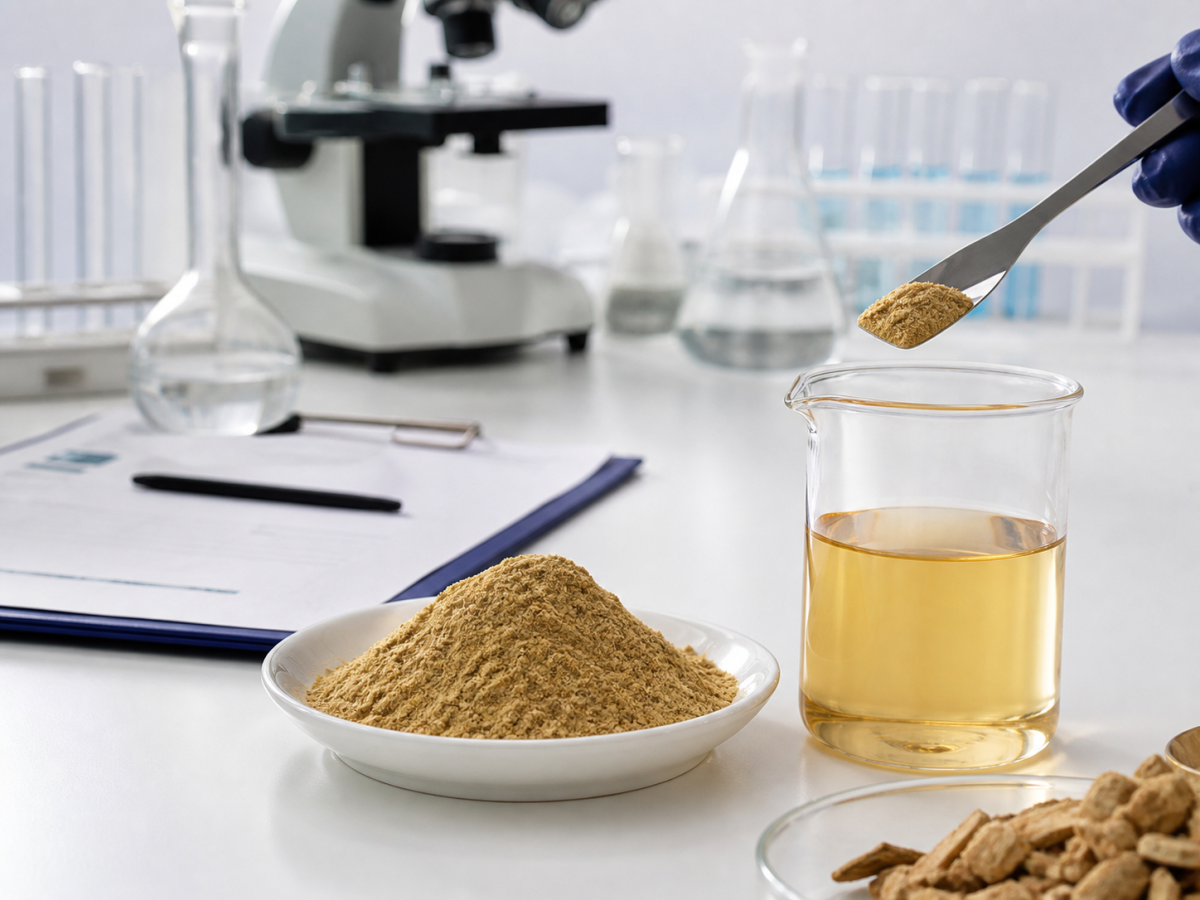
Insist on these five sample-control items in the supplier audit:
- A sample label with batch number and production date.
- A COA tied to that specific sample lot, not a representative lot from a different batch.
- An internal review record with the approval decision, the reviewer name and the date.
- A traceability exercise (mock recall) demonstrating one-step-back and one-step-forward records, completed within the last 12 months.
- A written commitment that bulk production will match the approved sample’s specification, with a defined change-control path if it cannot.
If the supplier cannot reproduce the approved sample’s specification in bulk production, the sample approval was an artifact, not a capability.
7. Audit Frequency and Cost Benchmarks
Risk-based audit frequency keeps verification cost proportionate to ingredient risk. The figures below are industry benchmarks — treat them as a planning range, not a contract quote.
| Scenario | Typical frequency | Typical cost driver |
|---|---|---|
| High-risk ingredient, on-site second-party audit | Annual | 1–2 auditor days for a single-product plant, 2–3 days for multi-product operations, plus travel |
| Medium-risk, remote audit or hybrid | Every 2 years | Document review plus video walk-through, lower travel cost, 0.5–1 auditor day |
| Low-risk, questionnaire plus valid certificate | Every 3 years | Minimal, desk-based, under US$1,000 typical |
| Major non-conformity follow-up | Within 14–28 days of the finding | CAPA documentation review plus a verification visit |
| Third-party GFSI certification (e.g. FSSC 22000, BRCGS) | 3-year cycle with annual surveillance | Multi-day on-site audit, scope and facility dependent |
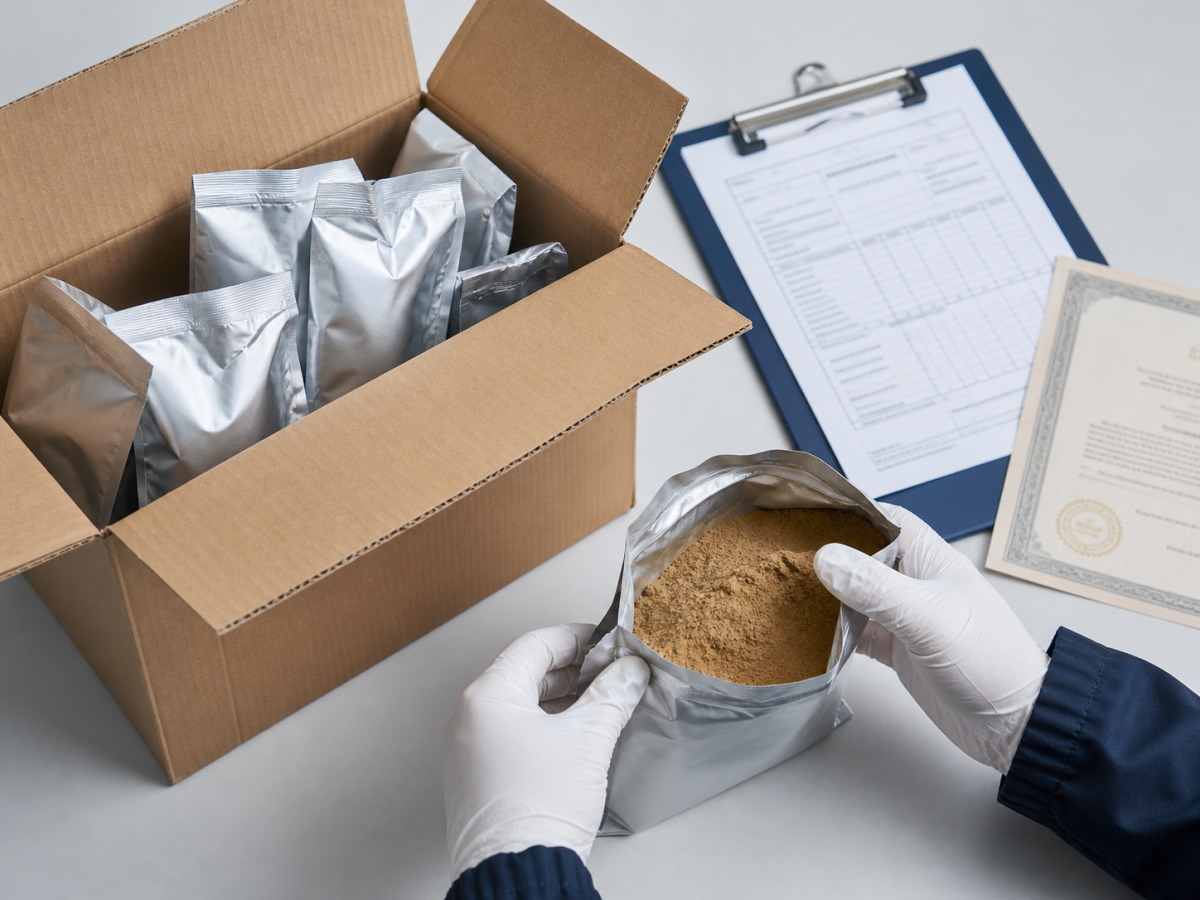
Costs scale with auditor days, travel, and facility scope — a remote desk review can cost well under US$1,000, while a multi-day on-site audit typically runs from a few thousand to US$15,000+. Budget audits as insurance against rejected shipments, which can cost far more than the audit itself — a single detained container of misdeclared ingredient can exceed an entire year’s supplier audit budget.
8. Template Request vs Product RFQ
Use both documents at different stages of the sourcing funnel. A template request standardizes inputs across suppliers; a product RFQ confirms the commercial quote.
| Dimension | Template request | Product RFQ |
|---|---|---|
| Main purpose | Standardize buyer inputs before supplier comparison | Confirm product-level grade, sample, packing and quotation details |
| Best fit | Early screening, document review, internal alignment | Ready-to-quote projects with a defined ingredient target |
| Limit | Needs product details before final quotation | Works better when the buyer has a clear checklist |
Keep the request short, specific, and attached to one sourcing file. Confirm application, target specification, sample quantity, COA fields, packing, MOQ expectation, and destination market before comparing supplier replies.
9. FAQ
Cover supplier category scope and available grades, specification sheets, COA readiness, sample control (label, batch, COA link, approval record), packing, MOQ, lead time, traceability, and destination-market certification. A consistent template lets QA compare suppliers on equal footing.
Yes. A document screen before samples helps QA avoid mismatched grades, incomplete supplier files and single-batch test artifacts. The five-file minimum is: specification sheet, representative COA from at least two recent batches, HACCP or food safety management system summary, production flow chart with CCPs, and valid GFSI or ISO certificates with scope statement.
It depends on the target channel. FSSC 22000 for global B2B and ISO-aligned buyers (40,000+ certified organizations), BRCGS for UK retail (24,500+ sites in 137 countries), IFS Food for continental EU retail, SQF for North American retail (Walmart, Costco, Kroger). For multiple markets, dual certification is the standard pattern. All four are GFSI-benchmarked, so the certificate satisfies the baseline for most export channels.
Risk-based. High-risk ingredients annually, medium-risk every two years, low-risk every three years. GFSI certificates run on a three-year cycle with annual surveillance audits. A second-party audit is still useful even when a GFSI certificate is on file — the certificate proves third-party compliance, your audit proves fit to your specific requirement.
A GFSI certificate is a third-party audit against a recognized standard (FSSC 22000, BRCGS, IFS, SQF). A second-party audit verifies the supplier against your specific requirements — your raw material, your application, your destination market. Use both: the certificate for baseline food safety, your audit for application and destination-market fit.
HERBSEA can provide product-level specification, representative COA, sample and quotation details for qualified B2B projects, and answers audit-style questions directly on one sourcing thread. Use the Ingredient Sourcing Resource Center and the Bulk Ingredient Sample Request Template to pre-fill the document list, then send a single request to the HERBSEA contact thread to compare replies.
Summary
Standardize the request, screen documents before samples, verify sample-to-bulk traceability, and match audit depth to ingredient risk. A clear template helps HERBSEA connect the ingredient, application, sample, COA, MOQ, packing and destination details into one practical quotation path. Download or request the related sourcing template from HERBSEA.
Data Sources
Market and industry figures cited in this guide are drawn from publicly available research: FAO Food fraud: What it is and how it happens (2023) for the US$10–40 billion annual cost estimate; WTO-derived estimates published in the UN Working Group on business and human rights report (2026) for the US$30–50 billion range; Foundation FSSC, BRCGS, SQF public certificate counts (2024–2025); iFactory, GFSI / CGF retailer acceptance benchmarks; and ASI Food Safety and OSHLI guidance for second-party audit frequency and CAPA timelines. Figures are industry estimates and should be re-verified against current reports before contract use.
Related Sourcing Pages
- Ingredient Sourcing Guide Index — grouped tea powder, plant extract, fruit powder and documentation resources.
- Bulk Ingredient Sample Request Template — sample quantity, specification, COA and MOQ fields.
- Food Ingredient RFQ Template — supplier comparison, packing and quotation fields.
- Ingredient Export Documentation Checklist — COA, packing and destination-market document review.
- Plant Extract Supplier hub — review botanical extract supplier paths.
- Green Tea Extract Supplier — review extract COA and sample path.
- Contact HERBSEA — send supplier audit, sample and document questions.