
Quick Answer
A plant extract COA (Certificate of Analysis) is the single most important quality document in a B2B botanical ingredient purchase — it is the batch-specific evidence that connects a sample or commercial lot to an agreed specification. To review one properly, run through seven checks: (1) match product identity, botanical source, plant part and document version; (2) confirm the lot number matches the sample or quoted batch; (3) verify the assay method (HPLC, UV, titration) and the calculation basis; (4) compare the assay result against the specification range for the grade you requested; (5) review physical properties (appearance, moisture, particle size, ash); (6) check contaminant data — microbiology, heavy metals, residual solvents and pesticide residues — against your destination-market limits; (7) confirm retest date, packing and storage assumptions. Regard the COA as one document in a package: specification sheet, allergen statement, flow chart and change-control records should all describe the same material. When in doubt, verify the issuing laboratory’s ISO/IEC 17025 accreditation scope before relying on the results.
1. What Is a Plant Extract COA and Why Does It Matter for B2B Buying?
A Certificate of Analysis is an analytical record issued by a laboratory for a specific batch of material. It reports what was measured, which method was used, the acceptance limit, and the actual result. It is not a marketing badge and it is not a product guarantee — it is a snapshot of a tested lot at a point in time.
For a purchasing, quality or R&D team, the COA answers three questions in one document:
- Is this the material we agreed to buy? — identity, botanical source, plant part, specification name and version.
- Does the batch meet the specification? — assay result, physical properties and contaminant data within the agreed range.
- Can we trace and repeat it? — lot number, manufacturing/retest date, packing and change-control records that keep future batches aligned with the approved sample.
The stakes are real because the category is large and fragmented. Global Market Insights estimated the global botanical extracts market at about USD 30 billion in 2024, growing to roughly USD 32.3 billion in 2025 and projected to reach about USD 64.6 billion by 2034 at a CAGR of about 8% (Global Market Insights, 2025 report). Regional market research firms use different scopes — Future Market Insights puts 2025 at USD 7.8 billion and Market Research Future at USD 7.2 billion — so view the absolute figure as a direction, not a precision number. What the sources agree on is that Asia Pacific is the largest producing region and that clean-label, standardized extracts are the fastest-moving segment.
Because the same common ingredient name can hide different species, plant parts, assay methods, extraction ratios and carriers, a COA is the cheapest way to catch a mismatch before you commit to sampling, testing and qualification costs. The rest of this guide gives you the review procedure, the limits to compare against, and the red flags that should stop a batch release.
2. Which 10 Items Should You Check First on a Plant Extract COA?
Use the same table for every supplier so that purchasing, quality and R&D evaluate identical criteria. The ten items below cover identity, assay, physical data, safety data and supply terms.
| COA item | What buyers should check | Red flag to watch for |
|---|---|---|
| Product identity | Product name, botanical source, plant part, specification name and document version | Name is generic (“ginger extract”) with no species or plant part |
| Lot number | Must match the reviewed sample or the commercial lot being quoted | No lot number, or a lot number that differs from the label/batch file |
| Document date | Manufacturing date, analysis date and retest/expiry date in a clear format | Undated report, or dates older than the retest window |
| Assay method | HPLC, UV, TLC, titration or agreed method, with calculation basis | Only “HPLC tested” with no compound named or no method detail |
| Assay result | Result within the specification range and aligned with the target grade | Only “Pass” with no numerical value, or a result outside range |
| Physical properties | Appearance, color, odor, particle size, moisture, ash, bulk density when relevant | No physical data, or values inconsistent with previous batches |
| Heavy metals | Lead, arsenic, cadmium, mercury with method (ICP-MS preferred) and limits | Only “passes USP” with no element-specific numbers |
| Microbiology | Total plate count, yeast and mold, E. coli, Salmonella, S. aureus as applicable | No micro data, or limits that do not match your market |
| Residual solvents / pesticides | Residual solvent and pesticide residue data where required by policy or market | Data absent for markets that require it (e.g. EU) |
| Retest / shelf-life | Retest period, storage condition and packing assumption stated | No retest date, or storage conditions not defined |
How to use the table: fill one row per supplier in a shared sheet. Any “red flag” cell should trigger a written follow-up question before the batch moves to sampling or quoting. A COA with five empty cells is not a document gap — it is a supplier-qualification signal.
3. How Do You Read Assay, Marker and Method Data Correctly?
The assay line is where most COA review mistakes happen, because a number is easy to read and easy to misinterpret.
A specification figure is only meaningful with its method. “98% by HPLC” tells you the technique, not the compound. You still need to know:
- Which analyte was measured — the marker compound (e.g. curcuminoids, dihydroquercetin, quercetin, EGCG) or the extract ratio basis.
- Which acceptance range applies — e.g. 95.0–105.0% of declared content, not a single “98%” figure.
- Which reporting basis — dry basis, as-is basis, or with carrier included or excluded.
- Which calculation — ratio relative to native extract or finished spray-dried powder.
“Standardized” is not a synonym for “identical.” Two suppliers can both call a product “milk thistle extract standardized to 80% silymarin” yet differ in species, extraction solvent, carrier, particle size and the assay method used to prove the 80%. The COA review should convert marketing language into a measurable specification: marker identity + acceptance range + method + reporting basis.
Check the extraction ratio and carrier basis. A “10:1 extract” can be calculated on the native herb, on the dried raw material, or on the finished powder including carrier. Carrier content changes the effective concentration, the price per unit of active, and the label declaration. If the COA does not state the carrier and its percentage, request a manufacturing clarification before comparing prices between suppliers.
| Claim on the COA | What to clarify with the supplier |
|---|---|
| “10:1 extract” | Raw-material basis, native solids, carrier inclusion |
| “99% purity” | Which substance the 99% refers to, and the analytical method |
| “HPLC tested” | Which compound was measured, the acceptance range, and the method reference |
| “Food grade” | Which market’s food-grade specification applies |
| “Water soluble” | Test method, haze, sediment and dispersibility after standing |
| “Standardized” | Marker identity, method, and acceptance range |
4. Which Contaminant Limits Should a Buyer Compare Against?
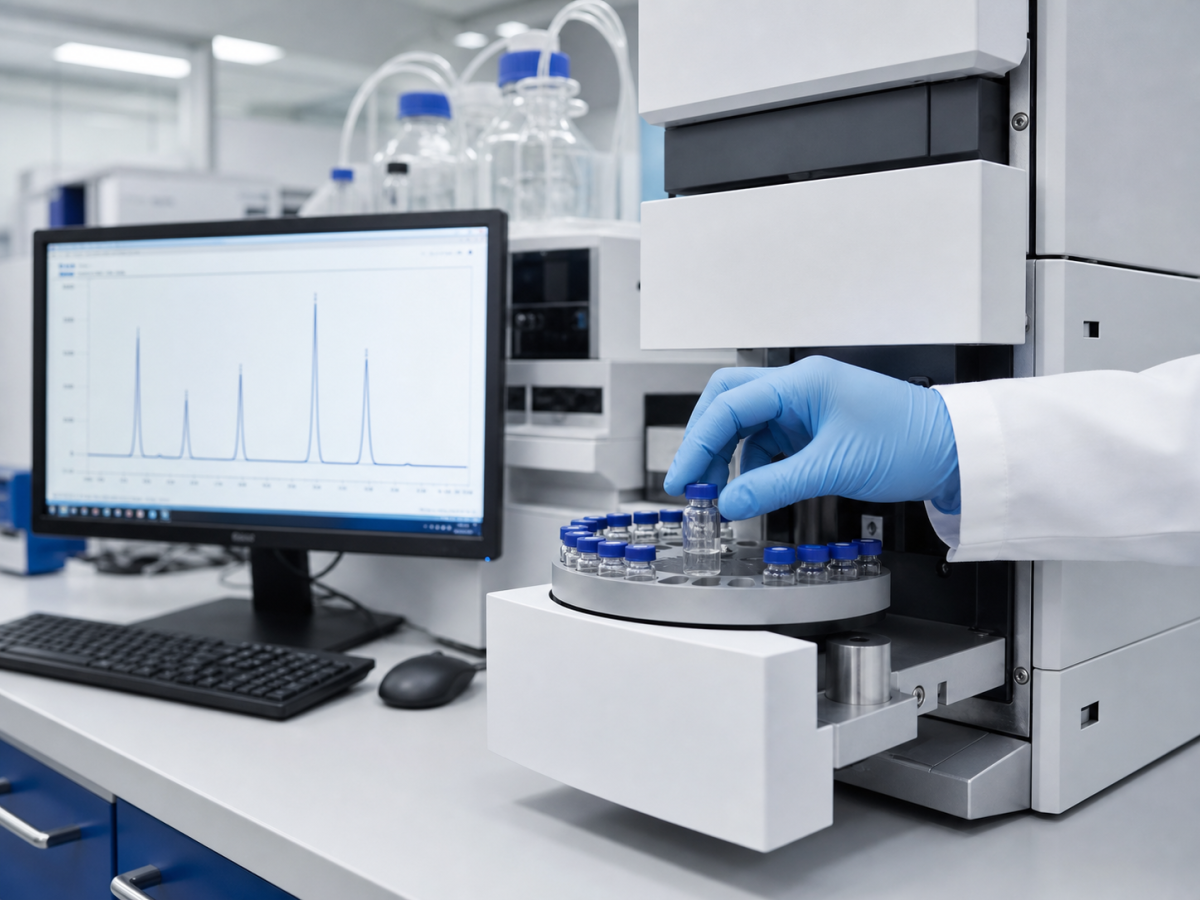
Contaminant data is where a COA becomes legally relevant, because limits depend on the destination market, the finished-product form and the intake level. A COA that “passes” against one market’s limits may not be acceptable in another.
Heavy metals / elemental impurities. The modern reference framework is USP General Chapters <232> (Limits), <233> (Procedures) and <2232> (Dietary Supplements), harmonized with ICH Q3D. The old colorimetric “heavy metals” test (USP <231>) was retired in 2018 because it could not distinguish individual elements; the accepted techniques are now ICP-MS or ICP-OES. Key oral exposure limits:
| Element | USP <232> PDE (µg/day) | USP <2232> component limit (µg/g, ≤10 g/day intake) |
|---|---|---|
| Lead (Pb) | 5 | 1.0 |
| Cadmium (Cd) | 5 | 0.5 |
| Arsenic (As, inorganic) | 15 | 1.5 |
| Mercury (Hg, total) | 30 | 1.5 |
The concentration a buyer requires depends on the maximum daily dose: a supplement with a 1 g/day intake can tolerate 5 ppm lead under the USP PDE, while a 30 g/day powder serving drops the allowed lead concentration to about 0.17 ppm. California Proposition 65 layers an additional warning regime with a lead MADL of 0.5 µg/day — ten times tighter than the USP PDE — which matters for any product sold into California.
Pesticide residues and residual solvents. For EU-bound products, buyers should confirm that pesticide residue data follows the applicable MRL framework and that residual solvent data is reported where the extraction process uses solvents. If the COA cites an “internal method” where a pharmacopeial method exists (e.g. USP chapters for articles of botanical origin), request the full method validation data — linearity, precision, accuracy, detection limits.
A practical check: for each contaminant line, ask whether the result is (a) element-specific with a numeric value, (b) compared against a named limit that matches your market, and (c) produced by an ISO/IEC 17025-accredited laboratory whose scope covers that matrix and method. A line that says only “passes USP” fails all three.
5. What Red Flags Should Stop a Batch From Being Released?
Some COA issues are follow-up questions; others should stop the batch from moving forward until resolved. The industry literature (e.g. Care Europe’s COA red-flag guidance for European supplement brands, 2026) highlights these signals:
| Red flag | Why it matters | Recommended action |
|---|---|---|
| No laboratory accreditation information | Results have no external verification of competence | Request the lab name and accreditation number; check the scope |
| Missing lot number | Results cannot be tied to the batch you are buying | Ask for the lot-linked COA before release |
| Undated report | Cannot establish retest validity | Reject or request a dated reissue |
| Only “internal method” where a pharmacopeial method exists | Method may not be validated or comparable | Request full validation data before approval |
| Suspiciously identical results across batches | Real analytical data varies; identical values suggest a template | Compare three consecutive COAs; ask for raw data |
| In-house lab with no independent verification | One company writes its own test results | Require third-party testing or an audit |
| Supplier refuses to share the specification or method | The COA cannot be interpreted without the specification | Raise supplier-risk rating |
Two contextual signals worth treating seriously: RASFF (the EU rapid alert system for food and feed) recorded more than 4,200 original notifications in 2022, with botanicals, food supplements and herbal preparations consistently among the top categories (Care Europe, citing EU RASFF data). And Amazon began requiring COAs from ISO/IEC 17025-accredited laboratories for dietary supplement listings in 2024 (Nutricel, 2026) — a commercial signal that accreditation is becoming a practical requirement, not a nice-to-have.
6. How Do You Verify a Laboratory’s Accreditation and Credibility?
The COA is only as credible as the laboratory that issued it. ISO/IEC 17025:2017 is the international standard for testing and calibration laboratory competence. A laboratory accredited to it has been independently assessed for technical competence, valid methods, measurement traceability and quality management.
Accreditation is scope-specific. A laboratory can be accredited for pesticide residues in cereal matrices but not for heavy metals in botanical powders. The scope document — a publicly searchable certificate issued by the national accreditation body (UKAS in the UK, COFRAC in France, DAkkS in Germany, ACCREDIA in Italy, A2LA in the US) — lists exactly which methods and matrices are covered. Verification takes about five minutes:
1. Ask the supplier for the laboratory name, address and accreditation number.
2. Look the number up in the accrediting body’s online register.
3. Confirm the matrix (botanical powder/extract) and the methods (e.g. ICP-MS) are in the scope.
4. Check the accreditation validity date.
5. When risk is high, request the raw data or commission an independent retest at your own laboratory.
A certification logo alone does not prove that a specific ingredient or method is covered. Confirm the certificate holder, the production facility, the product scope, the issuing organization and the validity period.
7. Plant Extract Supplier Scoring Matrix
Use the same scoring matrix across shortlisted suppliers. The goal is to separate “buyer-ready” responses from “weak” ones before sampling, so the commercial team does not spend time chasing quotes from suppliers who cannot support repeat supply.
| Criterion | Weak response | Buyer-ready response |
|---|---|---|
| Specification clarity | Basic name only or unclear marker | Clear assay range, method, plant source and physical requirements |
| COA usefulness | Generic document without sample connection | Representative or lot-linked COA with method detail |
| Sample support | Sample sent without clear commercial grade | Sample connected to repeat supply specification |
| Document package | Limited files and slow quality response | Specification, COA, allergen, flow chart and quality data available |
| Commercial fit | MOQ, lead time or packing unclear | MOQ, lead time, packing, quotation validity and shipment terms stated |
| Supply continuity | No change-control or repeat-batch alignment plan | Change-control statement and batch-consistency plan available |
Score each criterion 0 (weak) / 1 (partial) / 2 (buyer-ready) and compare totals. A supplier with a strong assay but a weak document package is not necessarily disqualified — it is a negotiation point: “confirm change-control coverage before we approve repeat orders.”
8. What Documents Should a Supplier Provide Alongside the COA?

The COA should not be reviewed alone. Request a supporting document package so the sample, specification and commercial quotation are checked against the same product standard. This is especially useful when multiple botanical extract suppliers offer similar names but different assay methods or carrier systems.
- Specification sheet with product identity, assay target and physical requirements.
- Representative or lot-linked COA with test method and document date.
- Allergen statement, flow chart and packing information.
- Heavy metals, microbiology and residual solvent information where relevant.
- Pesticide residue information when required by buyer policy or destination market.
- Quality questionnaire or change-control statement when the project requires repeat supply.
Document consistency check: the COA, specification sheet, TDS, SDS, supporting statements and the label should all describe the same material — same botanical source, same assay target, same carrier, same packing. If the COA says “milk thistle extract” but the specification says “silymarin 80% with maltodextrin,” the two documents are describing different products.
9. How to Compare Supplier Replies Consistently
Send the same technical brief to each shortlisted supplier and compare replies in one sheet. Useful fields include available grade, assay method, sample timing, COA completeness, packing format, MOQ, lead time, export document support and whether the supplier can keep future batches aligned with the approved sample. This makes the decision easier for procurement, R&D and quality teams.
- Keep the approved sample code, batch number and COA in the purchasing file.
- Record internal sample feedback before requesting a commercial quotation.
- Confirm whether the same grade can support repeat orders or scale-up planning.
- Ask about packing, pallet information and shipment documents before order release.
Before releasing a purchase order, align the approved sample with the commercial batch record. Reference sample feedback, COA values, packing format, label details and shipment notes in the purchasing file. This reduces confusion during reorder communication and gives the supplier a clearer basis for maintaining consistency across future batches.
10. Plant Extract COA Review FAQ
Start with product identity, botanical source, plant part, specification name, lot number, assay method, assay result and document date. These eight fields establish that the document refers to the material you are actually buying.
A sample can be screened visually for appearance, odor and color, but supplier comparison should use the sample together with a representative or lot-linked COA, specification sheet and document package. A COA connects the sample to a repeatable commercial grade; without it, you cannot verify that future batches will match the sample.
Request microbiology, heavy metals, residual solvent information where relevant, pesticide residue information when required, allergen statement, flow chart and packing details. For EU-bound or California-bound products, confirm the limits match those markets’ requirements rather than a generic “pass.”
Use the same RFQ format, sample test notes, COA review table and scoring matrix across suppliers so technical, quality and commercial teams evaluate the same criteria. A shared comparison sheet prevents one supplier from being judged on documents and another on price.
A lot-linked COA reports test results for a specific batch number and carries that batch’s dates and data. A generic template shows the same values for every inquiry and cannot prove that your batch was tested. Request the lot-linked version and match the number on the COA to the label or packing list.
ISO/IEC 17025 accreditation means the laboratory’s competence, methods and measurement traceability have been independently assessed. Because accreditation is scope-specific, verify that the lab’s scope covers your matrix and test methods — and confirm the certificate is current — before treating the COA as reliable.
11. Summary and Next Step for RFQ Preparation
A plant extract COA is the documentary bridge between what a supplier claims and what a batch actually contains. Review it with a fixed checklist — identity, lot, method, result, physical data, contaminants, retest and documents — compare every supplier against the same scoring matrix, and verify the issuing laboratory’s accreditation scope. A COA that fails any of these checks is a supplier-qualification signal, not a paperwork delay.
Before asking for pricing, confirm the target specification, intended application, sample quantity, document requirements and shipment destination. HERBSEA can then respond with a practical sourcing route instead of a generic product name match. For related ingredients, review the Plant Extract category. For a focused COA workflow, see the Organic Cranberry Extract Supplier Guide or the Mulberry Leaf Extract specification review. For flavonoid projects, compare dihydroquercetin vs quercetin suppliers; for solubility-driven projects, review water soluble resveratrol vs standard powder.
To request samples, COA or quotation support, use the HERBSEA contact page and include the product name, target specification, application format, estimated order quantity, destination country and document checklist. Clear RFQ details help the team match the right material and avoid unnecessary back-and-forth.
Data sources: Global Market Insights — Botanical Extracts Market Size & Share 2025–2034 (2024 base USD 30B; 2025 USD 32.3B; 2034F USD 64.6B; CAGR ~8%). USP General Chapters <232>/<233>/<2232> and ICH Q3D elemental-impurity framework (USP PDEs: Pb 5, Cd 5, As 15, Hg 30 µg/day; USP <2232> component limits: Pb 1.0, Cd 0.5, As 1.5, Hg 1.5 µg/g at ≤10 g/day intake). California Proposition 65 lead MADL 0.5 µg/day. Care Europe — COA red flags for European supplement brands (2026; RASFF 2022 >4,200 notifications). Nutricel — How to Read a Supplement COA (2026; Amazon ISO/IEC 17025 COA requirement for supplement listings since 2024). Market estimates from different research firms vary by scope (Future Market Insights 2025 USD 7.8B; Market Research Future 2025 USD 7.2B; PW Consulting 2025 USD 15.5B) — direction consistent, absolute values differ.