
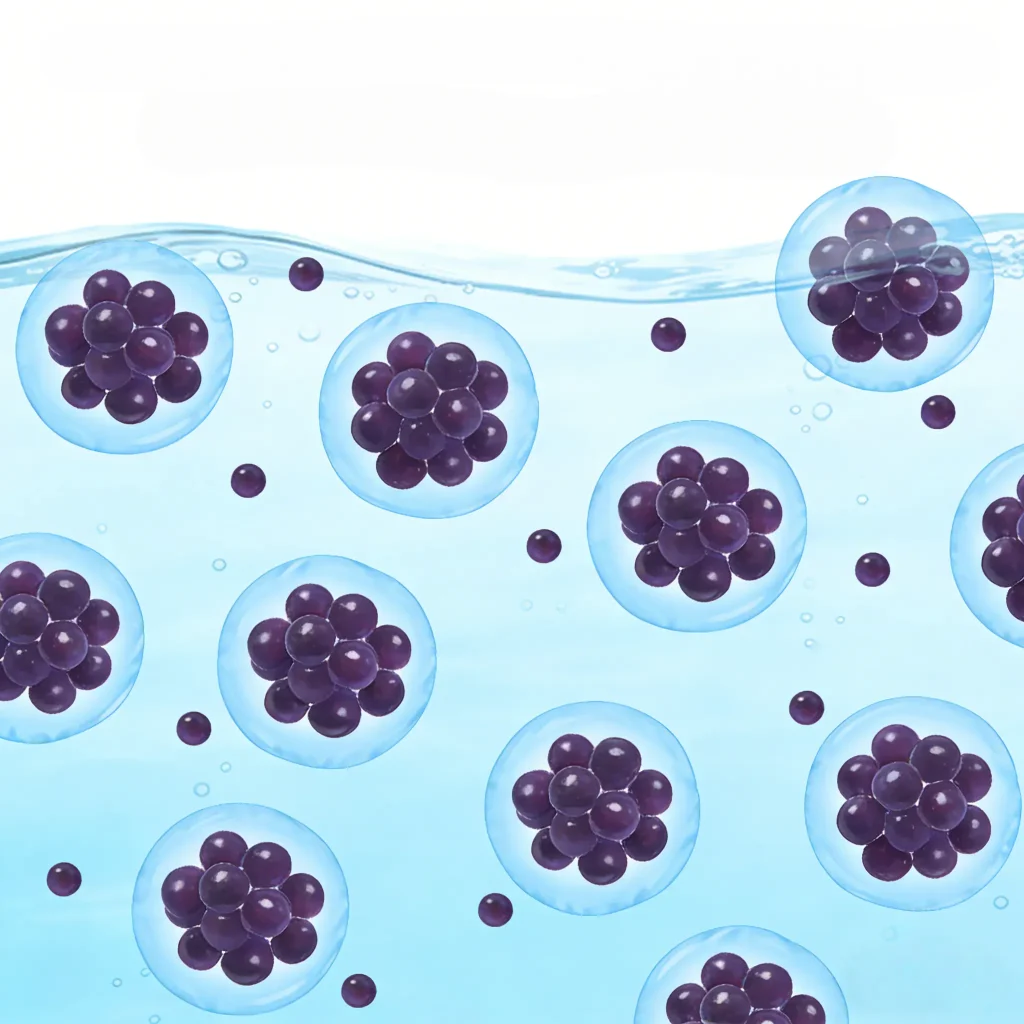
Water soluble resveratrol and standard trans-resveratrol powder can both fit supplement, functional beverage and powder blend projects, but they should not be purchased with the same checklist. B2B buyers need to compare solubility target, carrier system, assay method, COA details, sample behavior, packaging and commercial readiness before selecting a supplier.
Water Soluble Resveratrol Supplier Checklist
Use this buyer panel before requesting quotation. It converts a broad resveratrol solubility question into a supplier, specification and sample evaluation workflow.
| Buyer question | What to request from the supplier | Why it matters |
|---|---|---|
| Solubility target | Target water dispersion level, test condition, temperature, pH range and visual standard. | A clear test condition avoids comparing one supplier’s marketing claim against another supplier’s laboratory method. |
| Carrier system | Maltodextrin, gum arabic, cyclodextrin, micellar system or other declared carrier details. | The carrier affects label review, taste, powder loading, cost and formula compatibility. |
| COA package | Assay method, trans-resveratrol content, moisture, microbiology, heavy metals, residual solvents and lot data. | Quality teams need the same document depth for sample approval and incoming material review. |
| Sample testing | Sample quantity, lot number, packing condition, storage note and suggested dispersion test. | Real sample behavior often decides whether the material fits beverages, sachets, capsules or powder blends. |
| Commercial fit | MOQ, lead time, packing size, shelf-life statement, quotation validity and repeat supply plan. | Solubility performance only matters if the grade can be supplied reliably for launch and reorder cycles. |
Water Soluble Resveratrol vs Standard Powder
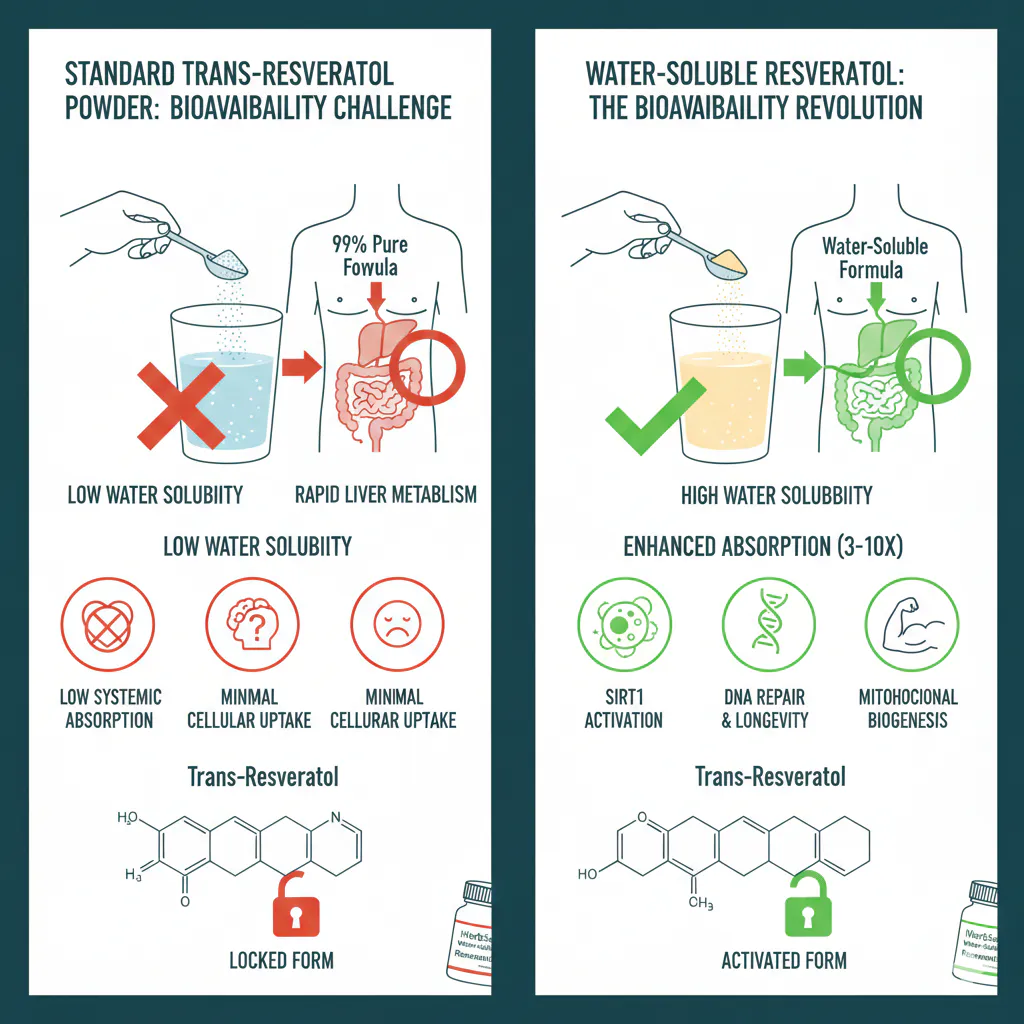
Standard trans-resveratrol powder is usually selected when the project needs a high-assay dry ingredient for capsules, tablets or powder blends. Water soluble resveratrol is usually considered when the project brief requires improved dispersion in liquid systems, instant beverage powders, shots, stick packs or clear formula concepts.
| Review field | Standard resveratrol powder | Water soluble resveratrol |
|---|---|---|
| Main purchasing focus | Assay, identity, purity, particle size, color and dry blend behavior. | Solubility target, carrier system, assay after processing, taste impact and dispersion behavior. |
| Typical use direction | Capsules, tablets, dry blends and formulas where water dispersion is not the main requirement. | Ready-to-mix powders, functional beverages, liquid premixes and projects where dispersion is visible to the user. |
| Document review | COA, specification, HPLC method, residual solvents, microbiology and heavy metals. | COA, specification, assay method, carrier declaration, solubility test method, microbiology and heavy metals. |
| Sample check | Appearance, odor, flow, sieve profile, blend uniformity and packing condition. | Appearance, odor, dispersion, sediment, clarity target, carrier taste and storage behavior. |
| RFQ detail | Assay range, annual volume, packing size, destination market and document list. | Solubility target, application system, carrier preference, sample test condition and document list. |
Specification and COA Review Points
For standard powder, buyers often start with assay and identity. For a water soluble grade, the specification should also explain how the solubility claim is measured and whether the result depends on a carrier, emulsifier, cyclodextrin complex or other delivery system. Ask the supplier to state the test condition instead of only using a broad phrase such as water soluble.
- Confirm the assay method and whether the result is reported as trans-resveratrol or total active content in the finished soluble grade.
- Request the carrier or excipient declaration and check whether it fits the target label and destination market.
- Review moisture, microbiology, heavy metals, residual solvents, storage condition and retest policy.
- Ask for particle size or powder flow details when the material will be used in dry blends or sachets.
- Keep the specification, COA, sample label and internal test record connected to the same supplier lot.
Sample Testing for Solubility and Formulation Fit
A good sample request should describe the target application. A clear beverage, a flavored shot, a capsule blend and an instant sachet may need different grades even when the keyword is the same. Ask the supplier to send a representative lot and record the test condition used by your team.
| Application | Sample checks | Useful RFQ detail |
|---|---|---|
| Instant beverage powder | Dispersion time, sediment, color impact, carrier taste and caking behavior. | Serving format, flavor base, target active content and expected order volume. |
| Liquid premix or shot | Clarity target, short-term separation, pH fit, odor and storage observation. | Liquid system, pH range, processing temperature and packing format. |
| Capsule or tablet | Flow, bulk density, particle size, color and compatibility with other powders. | Assay target, excipient limit, tablet or capsule size and document package. |
| Powder blend or sachet | Blend uniformity, dust level, moisture pickup and packaging behavior. | Blend matrix, packing size, shelf-life target and destination market. |
Related Resveratrol Sourcing Pages
- Trans-resveratrol 99 HPLC supplier guide for high-assay standard powder sourcing and COA review.
- Plant extract ingredient category for broader botanical and functional ingredient selection.
- Contact HERBSEA to request water soluble resveratrol specification, COA, sample and quotation details.
Water Soluble Resveratrol FAQ for B2B Buyers
Ask for the solubility test condition, carrier system, assay method, COA package, sample lot details, MOQ, lead time and packing options.
The active ingredient direction may be similar, but a water soluble grade usually includes a carrier, complexation or dispersion system. Buyers should compare assay, carrier declaration and application behavior.
Share the target application, solubility expectation, flavor or formula base, assay range, sample quantity, document list, destination market, packing size and buying timeline.
Record the supplier name, lot number, COA, sample label, test condition, appearance, dispersion behavior, sediment, odor, color impact and storage observation.
Request Specification, COA and Samples
To compare water soluble resveratrol and standard powder for a B2B project, share your target format, solubility expectation, assay range, carrier preference, document list, sample quantity, destination market and buying timeline. HERBSEA can help confirm available specification, COA package, sample options and quotation details.
Contact HERBSEA to request water soluble resveratrol or standard trans-resveratrol specification, COA, sample and quotation details.
Supplier Decision Notes for Water Soluble Resveratrol Supplier Guide: Solubility, COA and Samples
This sourcing guide should help a buyer move from general interest to a clear RFQ. Before asking for pricing, confirm the target specification, intended application, sample quantity, document requirements and shipment destination. HERBSEA can then respond with a practical sourcing route instead of a generic product name match.
| Decision point | What to verify |
|---|---|
| Specification fit | Review botanical source, active marker or extract ratio, assay method, particle size, appearance, moisture and batch documents against the purchasing brief. |
| Application fit | Confirm whether the material is intended for capsule, tablet, powder blend, beverage, functional food and private label projects. |
| Sample review | Test appearance, odor, color, solubility, particle size, flowability and formula compatibility before purchase approval. |
| Documentation | Check COA, specification sheet, available test data, packing details, shelf-life note and export document support. |
| Commercial readiness | Confirm MOQ, lead time, packaging, shipment terms, reorder plan and communication process with the supplier. |
How to Compare Supplier Replies
Send the same technical brief to each shortlisted supplier and compare replies in one sheet. Useful fields include available grade, assay method, sample timing, COA completeness, packing format, MOQ, lead time, export document support and whether the supplier can keep future batches aligned with the approved sample. This makes the decision easier for procurement, R&D and quality teams.
- Keep the approved sample code, batch number and COA in the purchasing file.
- Record internal sample feedback before requesting a commercial quotation.
- Confirm whether the same grade can support repeat orders or scale-up planning.
- Ask about packing, pallet information and shipment documents before order release.
Next Step for RFQ Preparation
For related ingredients, review the Plant Extract category. To request samples, COA or quotation support, use the HERBSEA contact page and include the product name, target specification, application format, estimated order quantity, destination country and document checklist. Clear RFQ details help the team match the right material and avoid unnecessary back-and-forth.
If the exact specification is not finalized, share the finished-product concept and any constraints such as solubility, taste, color, carrier preference, organic status, packing size or launch timeline. HERBSEA can review available options and suggest a sample direction for the buyer to evaluate internally.
Before releasing a purchase order, align the approved sample with the commercial batch record. The buyer can reference sample feedback, COA values, packing format, label details and shipment notes in the purchasing file. This reduces confusion during reorder communication and gives the supplier a clearer basis for maintaining consistency across future batches.