
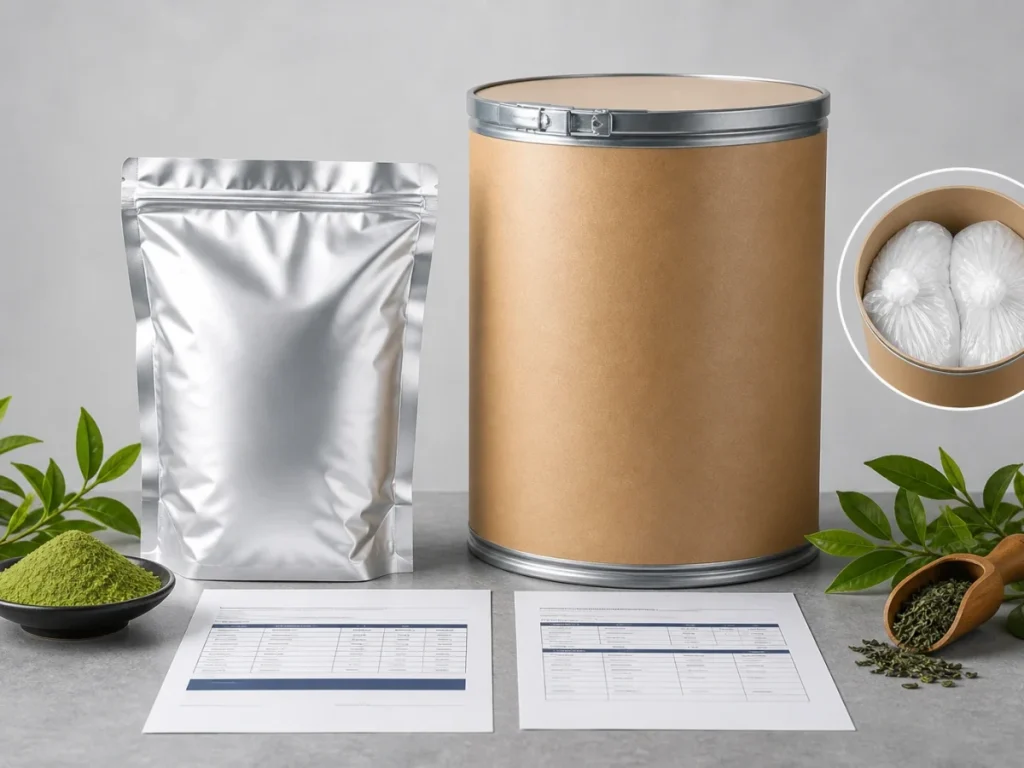
Pea protein and soy protein are two of the most common plant protein raw materials for supplement powders, nutrition blends, beverages, bars and functional food projects. Both can support plant-based product development, but they do not behave the same way in sourcing, formulation, labeling, sensory review or document control.
For B2B buyers, the question is not simply which protein is “better.” A more useful question is which ingredient fits the finished product, market positioning, allergen strategy, cost target, processing route and documentation requirement. Pea protein vs soy protein should be reviewed as a formulation and procurement decision, not only as a nutrition comparison.
If your project is already leaning toward pea protein, start with the HERBSEA Pea Protein powder supplier page. If your team is comparing soy-based options, review the HERBSEA Soy Protein Powder supplier page. For broader source comparison, the Plant Protein supplier category is the right internal hub.
Quick Buyer Summary
Pea protein is often selected for plant-based, allergen-conscious and clean-label style formulas. Soy protein is often considered when buyers want an established plant protein raw material with strong historical use, familiar manufacturing experience and broad formulation references.
The choice depends on several practical factors:
- Target finished product format
- Protein content requirement
- Allergen and label strategy
- Taste and color target
- Solubility and dispersion needs
- Texture and mouthfeel
- Heat or process exposure
- Cost target
- Supply stability
- COA and quality document requirements
- Destination market expectations
A purchasing team should not approve either material based only on protein percentage. The final formula decides which raw material is easier to use.
Long-Tail Section: Pea Protein vs Soy Protein for Plant-Based Formulation
Plant-based formulation usually starts with positioning. A brand may want a vegan protein powder, meal replacement, beverage powder, protein bar, bakery mix or functional food base. Pea protein and soy protein can both fit plant protein claims, but the product story and label review may differ.
Pea protein is derived from yellow peas, usually Pisum sativum. It is widely used in plant protein powders, vegan blends, sports nutrition concepts, meal replacement products and meat alternative systems. Buyers often evaluate pea protein when they want a non-soy protein source or when the finished product needs to avoid soy-related allergen concerns.
Soy protein is derived from soybean. It has a long history in food and nutrition products and may be familiar to many manufacturers. Soy protein can be used in powders, bars, beverages, food systems and functional product concepts, but allergen review is usually more important because soy is recognized as a major food allergen in several markets.
For plant-based formulas, pea protein often supports “soy-free” positioning, while soy protein may support established protein systems where soy is accepted by the target market.
A buyer should confirm the finished product’s label direction before sending RFQs. If the marketing team needs soy-free positioning, soy protein may be excluded from the start. If the project prioritizes cost, supply familiarity or existing processing knowledge, soy protein may remain in the shortlist.
Source and Labeling Review
Source identity affects documentation, labeling and customer expectations. Pea protein is commonly positioned as a legume-derived plant protein. Soy protein is soybean-derived and usually requires closer allergen review.
For export projects, ingredient source should be documented clearly in the specification sheet and COA. The buyer may also need allergen statements, GMO-related statements, flow charts, origin information and processing details. These documents are not optional for many serious B2B projects; they are part of supplier qualification.
The source decision should be made before sample testing, because it affects label claims, allergen review and customer acceptance.
Ask the supplier to confirm:
- Botanical or material source
- Product name used on documents
- Protein content
- Processing method summary where available
- Allergen status
- GMO-related statement where required
- Country of origin or manufacturing origin
- Batch COA availability
- Specification sheet availability
- Packaging and storage conditions
The U.S. FDA’s page on food allergies is useful for understanding why soy allergen review matters. This does not replace finished-product regulatory review, but it helps procurement teams understand why documentation must be handled carefully.
Protein Content and Specification Comparison
Protein content is one of the first comparison points. Pea protein is commonly supplied around 80% protein, with higher grades available depending on supplier capability and project needs. Soy protein may also be available in different protein levels depending on whether the material is a concentrate, isolate or other commercial grade.
A simple protein percentage comparison can be misleading. Moisture, ash, particle size, flavor, color, dispersibility and process behavior also matter. A higher-protein material may still fail if it tastes too strong, disperses poorly or does not match the finished product.
Protein percentage helps shortlist materials, but the full specification decides whether a batch is usable.
For pea protein purchasing, connect this review with the Pea Protein specification and COA guide. That article covers how buyers should read protein content, mesh size, COA fields and testing items before approving a supplier.
Important specification fields include:
- Product name
- Source material
- Protein content
- Assay method
- Appearance
- Odor and taste
- Particle size
- Moisture
- Ash
- Heavy metals
- Microbiology
- Allergen statement
- GMO-related document where required
- Packaging
- Shelf life
- Storage condition
A buyer comparing pea protein vs soy protein should request both specifications in the same format. This makes review easier for QA, R&D and purchasing teams.
Taste, Color and Sensory Difference
Sensory review often decides the real winner. Pea protein can have beany, earthy or legume-like notes depending on grade and processing. Soy protein can also carry beany or characteristic soy notes. The intensity depends on the supplier, protein level, particle size, processing route and final flavor system.
Color may also affect the formula. Pea protein often appears light cream to light yellow. Soy protein powder is usually light cream or pale yellow, depending on grade. These differences may look minor in the raw material bag, but they can become important in vanilla, neutral, fruit, bakery or light-colored beverage powders.
Taste and color should always be tested in the real formula, not only in plain water.
A powder that tastes acceptable alone may create problems after adding sweeteners, flavors, minerals, fibers or botanical extracts. A formula with cocoa or strong flavor systems may hide plant protein notes better than a lightly flavored beverage. Protein bars and baked products have different sensory challenges than instant drink powders.
For beverage applications, review the pea protein beverage formulation notes because dispersion, mouthfeel and sediment can become more visible in drink systems.
Solubility, Dispersion and Mouthfeel
Solubility and dispersion are not the same thing. A protein may disperse into water without fully dissolving. It may also hydrate slowly, create sediment, form clumps or produce a gritty mouthfeel. These details matter in beverages, instant powders, meal replacement products and stick packs.
Pea protein can be used in beverage powders, but it often needs proper flavor design, particle-size review and mixing instructions. Soy protein may behave differently depending on the grade and processing. Some soy protein systems have strong historical use in beverages and food systems, but sample testing is still necessary.
Do not assume either protein will perform well in a beverage simply because it is sold as a powder.
Test these points during formulation:
- Wetting speed
- Clumping behavior
- Sedimentation
- Mouthfeel
- Viscosity
- Foam
- Flavor release
- Heat exposure response
- pH compatibility
- Stability during holding time
Peer-reviewed research on plant proteins is broad, and buyers can search current literature through PubMed pea protein results and PubMed soy protein results. These sources are useful for technical background, while finished-product claims still require separate regulatory review.
Long-Tail Section: Pea Protein vs Soy Protein for Powder Blends
Powder blends are one of the most common formats for plant protein raw materials. They include tubs, sachets, stick packs, meal replacement mixes, sports nutrition powders and private label dry blends.
Pea protein is often selected for soy-free plant protein positioning. Soy protein may be selected where soy is acceptable and the manufacturer has existing experience with soy-based systems. The best option depends on taste target, density, flow, price and customer expectations.
For powder blends, the comparison should focus on blend uniformity, taste masking, flowability, fill behavior and shelf stability.
A good powder blend trial should test:
- Dry blending uniformity
- Particle size match with other ingredients
- Bulk density
- Flow into filling equipment
- Dusting during transfer
- Taste after flavoring
- Mouthfeel after mixing
- Sediment after standing
- Moisture pickup after opening
- Packaging fit
Pea protein and soy protein can both separate from other ingredients if particle size and density are not controlled. This is especially important in formulas with minerals, fibers, sweeteners or botanical powders. A small bench blend is useful, but pilot-scale blending gives a better view of production behavior.
For capsule, tablet and dry blend format details, use the pea protein capsules, tablets and powder blends guide as the next internal reference.
Long-Tail Section: Pea Protein vs Soy Protein for Capsules and Tablets
Capsules and tablets create a different set of questions. Plant protein ingredients are bulky, so they are not always ideal for capsule formats where serving size is limited. Tablets require compression testing and excipient support. Neither pea protein nor soy protein should be treated as a complete tablet system by default.
For capsules, buyers should compare bulk density, tapped density, flowability and capsule count. A protein ingredient with lower density may require more capsules to reach the target serving amount. This can affect product design, packaging cost and customer experience.
For tablets, the manufacturer should test compression, hardness, friability, disintegration and stability. Protein powders may need binders, lubricants or granulation support. Direct compression should not be assumed without testing.
In capsules and tablets, the winning material is the one that works on the equipment at the target serving size.
RFQs should include the finished format. If the buyer only asks for “pea protein price” or “soy protein price,” the supplier cannot properly judge whether particle size, flow or density matters for the project.
Allergen and Market Positioning
Allergen strategy is one of the clearest differences between pea protein and soy protein. Soy is a major allergen in many markets, so products containing soy protein may need specific allergen handling, labeling review and facility controls. Pea protein may be attractive when the brand wants to avoid soy ingredients, although cross-contact and facility allergen statements still need review.
This does not mean pea protein is automatically better. It means the buyer must align the ingredient with the target channel. Some markets accept soy protein well. Other products need soy-free positioning for label or customer reasons.
Allergen review should happen before price comparison, because the wrong source can remove a material from consideration entirely.
Ask these questions early:
- Does the finished product need to be soy-free?
- Will the product be sold in a market with strict allergen labeling requirements?
- Does the manufacturer handle soy in the same facility?
- Is an allergen statement available for the batch or product line?
- Are GMO-related documents required?
- Does the target customer accept soy-derived ingredients?
- Does the brand story favor pea, soy or blended plant proteins?
For U.S. dietary supplement context, buyers can also review the FDA’s dietary supplements page and 21 CFR Part 111 for CGMP requirements. Ingredient purchasing should be integrated with finished-product compliance review.
Price and Supply Considerations
Price comparison should include more than the number per kilogram. A lower-priced material may require more flavor masking, more excipients, more processing adjustment or larger packaging volume. A slightly higher raw material cost may be acceptable if it improves taste, flow, dispersion or document confidence.
Pea protein price can be affected by protein content, origin, processing, demand, sample support, packaging, order quantity and certification needs. Soy protein price is also shaped by grade, source, supply scale, documentation and market conditions.
The useful price question is not “Which is cheaper?” It is “Which material creates the best total cost for this formula?”
Total cost may include:
- Raw material price
- MOQ
- Sample cost
- Freight
- Packaging
- Flavor masking
- Extra processing
- Production speed
- Rework risk
- Testing cost
- Documentation support
- Supplier reliability
For a deeper sourcing cost checklist, review pea protein powder price factors. Even when the article focuses on pea protein, the same purchasing logic can help compare soy protein quotations.
COA and Supplier Qualification
Supplier qualification should be similar for both raw materials. Ask for a specification sheet, batch COA, sample support, packaging details, storage statement, shelf life and relevant quality documents. Do not accept a comparison based only on product photos or a one-line quotation.
For pea protein, the COA should match the quoted grade and batch. For soy protein, the same rule applies. If the supplier sends a generic COA, ask whether batch-specific documentation will be provided before shipment.
A supplier that answers technical questions clearly is usually easier to work with than a supplier that only sends a low price.
Request these documents:
- Specification sheet
- Batch COA
- Allergen statement
- GMO-related statement where required
- Heavy metals data
- Microbiology data
- Flow chart where available
- Packaging details
- Shelf-life statement
- Storage condition
- Certification support where available
- Sample batch information
If your project needs multiple plant protein options, send an RFQ through the HERBSEA plant extract supplier contact page and mention whether you are comparing pea protein, soy protein or other plant protein grades.
Application-Based Selection Guide
Choose pea protein when the project needs soy-free positioning, plant-based nutrition direction, clean-label style messaging or a non-soy protein source. It can be a strong fit for vegan protein powders, meal replacement blends, nutrition powders and formulas where allergen strategy favors avoiding soy.
Choose soy protein when the target market accepts soy, the manufacturer has strong experience with soy systems, the formula benefits from established soy protein processing knowledge or the cost structure fits the project better. Soy may remain practical for certain food, beverage and nutrition applications.
Consider blending plant proteins when a single protein source does not meet taste, texture or positioning needs. A blend may combine pea protein with other plant proteins in the Plant Protein supplier category, such as mung bean, chickpea or broad bean protein, depending on the product concept.
The final decision should come from sample testing, not from assumptions about ingredient reputation.
A good decision workflow looks like this:
- Define finished-product format.
- Confirm label and allergen requirements.
- Request pea protein and soy protein specifications.
- Compare protein content, particle size, taste and color.
- Test both samples in the real formula.
- Review COA and supplier documents.
- Calculate total cost, not only raw material price.
- Confirm bulk batch consistency before purchase.
Common Buyer Mistakes
One common mistake is treating pea protein and soy protein as interchangeable. They may both be plant proteins, but their source, allergen profile, taste, processing behavior and label implications differ.
Another mistake is comparing only protein content. A formula can fail because of flavor, flow, sediment, color or poor documentation even when protein content is acceptable.
Some buyers request samples without telling the supplier the application. That creates weak sample matching. A beverage project, tablet project and powder blend project may need different technical priorities.
A fourth issue is delaying allergen review until after sampling. If soy-free positioning is required, soy protein should not remain in the shortlist unless the brand changes the product direction.
The fastest sourcing process starts with the finished product brief, not with a generic price request.
FAQ
Is pea protein better than soy protein?
Not always. Pea protein may be better for soy-free positioning and certain plant-based formulas, while soy protein may be suitable where soy is accepted and the manufacturer has experience with soy systems. The better choice depends on formula, label needs, cost and sample performance.
Which protein is easier for beverage formulation?
Both require testing. Dispersion, mouthfeel, sediment, taste and pH behavior can vary by grade and supplier. Beverage projects should test samples in the real formula before bulk purchase.
Does soy protein require allergen review?
Yes. Soy is a major allergen in many markets, so soy protein projects should include allergen statement review, label review and manufacturing control checks.
Can pea protein and soy protein be blended?
Yes, if the finished product allows both sources. A blend may support texture, taste or cost goals, but allergen and label implications must be reviewed before approval.
What should be included in a pea protein vs soy protein RFQ?
Include target protein content, finished application, sample quantity, order estimate, destination market, packaging preference, allergen requirements, GMO-related document needs, COA requirements and target lead time.
Summary
Pea protein vs soy protein is a practical B2B sourcing decision. Pea protein often supports soy-free plant protein positioning, while soy protein may fit projects where soy is accepted and established processing experience is useful. The right choice depends on specification, taste, allergen strategy, sample performance, documentation and total formula cost.
Start with the HERBSEA Pea Protein powder page, compare the HERBSEA Soy Protein Powder page, and review more options in the Plant Protein supplier category. For quotation support, send the application, target grade, sample request, document list and order estimate through the HERBSEA contact page.
HERBSEA provides raw materials for B2B manufacturing and formulation use. This article is for ingredient sourcing and formulation review only. It is not medical advice and is not a substitute for professional regulatory review of finished products in each destination market.