
Comparing an instant tea powder RFQ? First check solubility, sensory fit, COA, MOQ, packaging and supplier response quality.
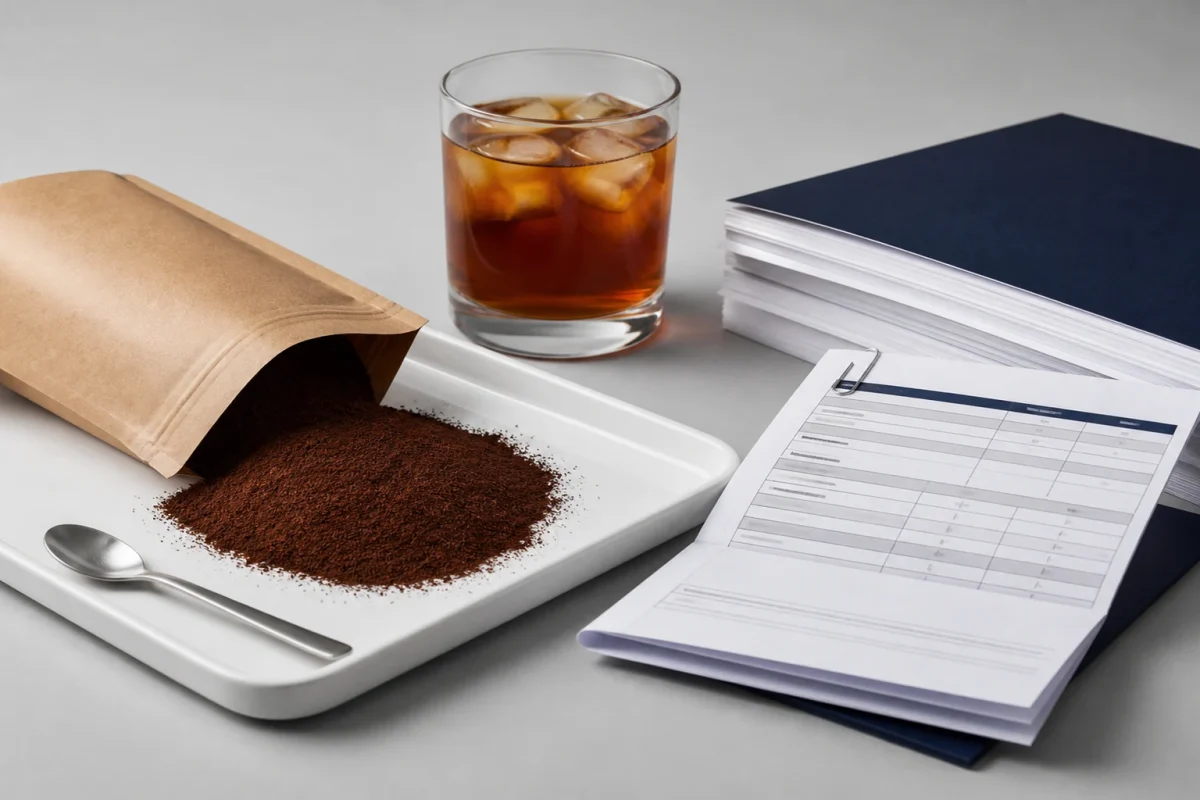
For beverage brands, importers and contract manufacturers, an instant tea powder RFQ should do more than ask for a unit price. The better task is to describe the target application clearly, then compare each supplier against the same specification and sample test sheet.
HERBSEA supplies bulk instant tea powder for RTD beverages, milk tea, iced tea, dry mixes and food applications. Buyers can also review the broader bulk instant tea powder supplier guide before sending a quotation request.
Instant Tea Powder RFQ Requirements
An instant tea powder RFQ should start with the finished product brief. In practice, suppliers can respond more accurately when buyers share the tea type, target application, sensory direction, solubility needs, sample quantity and documentation requirements.
First, define the tea ingredient. A buyer may need black tea powder, green tea powder, oolong tea powder, jasmine tea powder or a custom instant tea base. However, the sourcing questions change when the powder is used in RTD drinks, milk tea, vending drinks, bakery fillings or dry sachet mixes.
Then, define the technical review points. For example, beverage teams often compare cold-water dispersion, sediment, color, aroma profile, sweetness compatibility, acid stability, foam behavior and clarity. These points should appear in the RFQ instead of being left for a late-stage sample discussion.
- Target tea type and flavor direction
- Finished application, such as RTD tea, milk tea, iced tea or dry mix
- Required sample quantity and destination market
- Solubility and dispersion conditions for buyer-side testing
- Packaging preference, annual volume and first order quantity
- Required documents, including specification, COA and storage statement
If the project already has a preferred formula base, send that context early. As a result, the supplier can recommend a closer grade for sample testing instead of quoting only a generic powder.
Supplier Screening Standards
A strong bulk instant tea powder supplier should help buyers compare grade fit, not only price. Therefore, procurement teams should ask each supplier for the same document set and sample details before choosing which quote to advance.
The first review area is documentation. Buyers can request a current specification, representative COA, ingredient name, origin, manufacturing site information, allergen or additive statement if relevant, packaging format, storage conditions and shelf-life statement. For U.S.-bound food projects, buyers may also review applicable quality-system expectations with their internal compliance team and official references such as 21 CFR Part 117.
The second review area is sample performance. A document may look acceptable, but the powder still needs to fit the actual beverage or dry mix. For this reason, the buyer’s lab should test the sample in target water, temperature, mixing energy, pH range and holding time.
Finally, compare commercial fit. MOQ, lead time, packaging, batch availability and export documentation can decide whether a material is practical for a launch timeline. A low quote may not work if the sample lead time is slow or the packaging format does not match the production plan.
- For black tea applications, review the instant black tea powder product page.
- For green tea beverages, compare the instant green tea powder product page.
- For category-level options, browse the instant tea powder supplier catalog.
Practical RFQ and Sample Testing Workflow
The most useful RFQ workflow is simple: define the application, request documents, test samples, compare supplier responses and then shortlist the grade for price negotiation. This keeps the buyer’s team focused on repeatable criteria.
Start with one internal RFQ sheet. Include the target product type, tea note, color expectation, solubility conditions, packaging size, destination market, required documents, annual forecast and desired sample timeline. Then send the same sheet to each shortlisted supplier.
After samples arrive, test them under the same conditions. Record dispersion time, sediment, foam, color, aroma, taste balance, interaction with sweetener or acid, and appearance after standing. If the product is a milk tea or RTD drink, test the powder inside the actual formula instead of plain water only.
Once the lab results are available, procurement can compare the supplier response. Look at whether the supplier answered technical questions clearly, provided matching documents, explained sample differences and supported a realistic next step for bulk ordering.
Basic RFQ vs Professional Instant Tea Powder RFQ
| Review Point | Basic RFQ | Professional RFQ |
|---|---|---|
| Buyer brief | Asks for instant tea powder price | Shares tea type, application, market, volume and sample timeline |
| Technical details | Mentions flavor or powder type only | Defines solubility, color, sensory and formula conditions |
| Documentation | Requests COA after price negotiation | Requests specification, COA, packaging and storage information early |
| Sample testing | Tests one sample informally | Tests all supplier samples with the same checklist |
| Decision logic | Focuses mainly on unit price | Compares specification fit, sample result, MOQ, lead time and response quality |
By contrast, a basic RFQ often creates slow back-and-forth messages. A professional RFQ gives suppliers enough information to quote the right grade, which helps the buyer shortlist faster.
Summary
If your instant tea powder RFQ only asks for price, you may miss the grade differences that matter in beverage production. The better answer is to compare specification, COA, solubility, sample performance, MOQ, lead time and packaging under the same review sheet.
For RTD, milk tea and dry mix projects, a professional RFQ is more useful than a broad product inquiry. It helps the buyer identify which supplier can support the actual formula, not just which supplier can send a quick quote.
To move the project forward, prepare your target application, required documents, sample quantity, estimated order volume and destination market. Then send the details through the HERBSEA quotation form for supplier review.
Download CTA
Request the Instant Tea Powder RFQ Checklist: Ask HERBSEA for a buyer-side checklist covering specification, COA, sample testing, MOQ, packaging and quote preparation for instant tea powder projects.
FAQ
What should an instant tea powder RFQ include?
An instant tea powder RFQ should include tea type, application, target sensory profile, solubility conditions, sample quantity, annual volume, packaging preference, destination market and required documents.
Why should buyers test instant tea powder samples before bulk ordering?
Buyers should test samples because solubility, sediment, color and sensory fit can change in the final formula. The same sample checklist helps compare suppliers fairly.
Which documents should a supplier provide?
Buyers can request a current specification, representative COA, ingredient details, packaging information, storage statement and other documents required by the project brief.
How does HERBSEA support bulk instant tea powder sourcing?
HERBSEA supports B2B instant tea powder projects with specification review, sample discussion, COA review, packaging options and RFQ preparation for beverage and dry mix applications.