
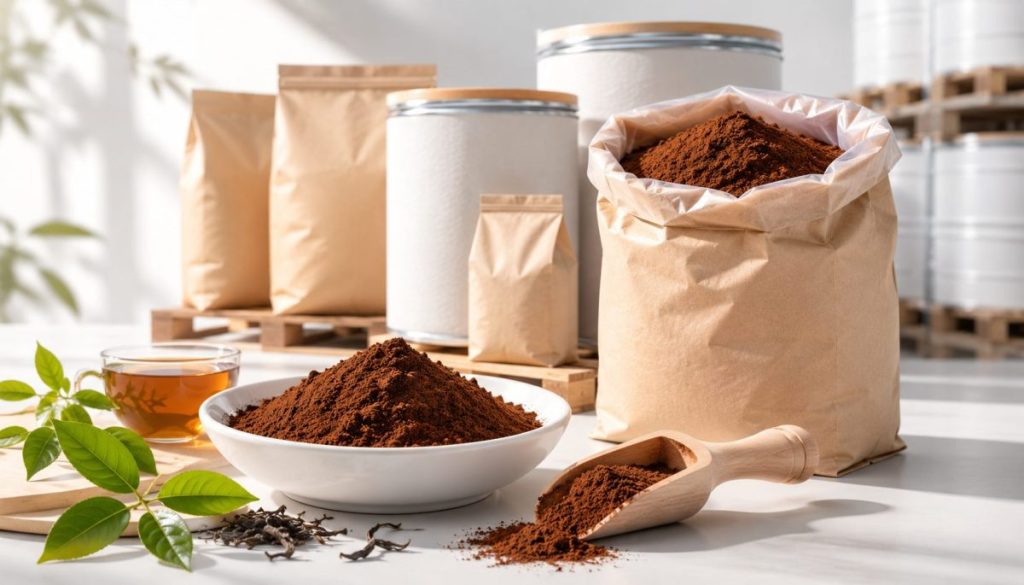
Choosing a bulk instant tea powder supplier is not only a price comparison. For beverage brands, powder mix companies, food manufacturers and private-label teams, the supplier decision affects flavor consistency, solubility, batch release speed, document review and long-term production planning. A tea powder that looks acceptable in a small sample can still create problems in a commercial formula if its particle size, carrier system, color strength, sediment behavior or document package does not match the project.
Supplier Shortlist Path
Match the Supplier Checklist to the Formula
After commercial checks, compare the B2B black tea sourcing path and the milk tea formulation requirements before requesting samples.
This guide gives B2B buyers a practical checklist for evaluating instant tea powder suppliers before ordering. It focuses on the questions that matter for RTD tea, milk tea, instant drink powder, tea latte, bakery and food flavor systems. If you are comparing several tea ingredients, start with the instant tea sourcing hub category page, then use this guide to shortlist the right grade and document requirements.
Bulk Instant Tea Powder Supplier Sourcing Summary
| Buyer question | Practical sourcing answer |
| What is this guide for? | A B2B checklist for comparing bulk instant tea powder suppliers by application, solubility, taste, COA, MOQ, samples, packaging and RFQ details. |
| Who should use it? | RTD beverage brands, milk tea manufacturers, powdered drink brands, food factories, private-label teams and ingredient distributors. |
| What should buyers test first? | Solubility, color, sediment, taste profile, carrier status and behavior in the intended drink or food system. |
| What documents should be requested? | Specification sheet, batch COA, microbiology, heavy metals, packing details, flow chart and export document support. |
| Where should buyers go next? | Compare the tea category, then review specific pages for instant black tea powder, instant green tea powder, L-Theanine green tea extract or EGCG depending on the project. |
Instant Tea Supplier Shortlist Panel
Choose a Bulk Instant Tea Powder Supplier by the First Sample Test
For buyers comparing bulk instant tea powder suppliers, the fastest click-to-decision path is a small sample test tied to a real formula, not a generic quote request. Use the checks below before asking for bulk pricing.
Share your beverage format, target tea type, expected annual volume and destination market so HERBSEA can match the right instant tea powder grade before quotation.
1. Start with the Finished Product Format
The best instant tea powder specification depends on the finished product. A bottled iced tea may need clean color and cold-water dispersion. A milk tea formula may need a stronger black tea note that remains clear in a dairy or non-dairy base. A stick-pack powder mix may need flowability, blend compatibility and fast dispersion after shaking. A bakery or dessert formula may place more weight on flavor strength and heat exposure.
| Finished product | Key supplier questions | Useful internal link |
|---|---|---|
| RTD iced tea | Cold-water performance, clarity, sediment, color target, process temperature | Instant black tea powder RTD guide |
| Milk tea or tea latte | Tea strength, dairy compatibility, color depth, flavor persistence | Instant Black Tea Powder |
| Instant green tea drink | Green tea color, fresh tea profile, cold beverage compatibility, sediment target | Instant Green Tea Powder |
| Instant drink powder | Particle size, flowability, carrier system, dry blend behavior | Instant tea powder types comparison |
| Cold-fill beverages | Cold dispersion, low sediment, acid compatibility, sample testing in final formula | Cold soluble tea powder guide |
| Standardized tea ingredients | Assay method, marker target, HPLC data, batch COA | L-Theanine Green Tea Extract |
2. Compare Supplier Capability, Not Only Unit Price
A low unit price can become expensive if the powder fails a sample test, requires extra flavor adjustment, cakes during storage or lacks the documents needed for QA release. When comparing suppliers, ask whether they can support the product type, specification range, sample process, document package, packaging format and commercial lead time your team needs.
| Evaluation field | What to ask | Why it matters |
|---|---|---|
| Solubility | Hot-water only, cold-water soluble or instantized? | Directly affects RTD, iced tea and powder mix performance. |
| Color | Can the supplier match light amber, deep amber or green tea color targets? | Color consistency matters for brand repeatability. |
| Sensory profile | Is the tea note clean, roasted, malty, floral or fresh green? | Different beverage concepts need different tea profiles. |
| Particle size | Is the powder fine, agglomerated or adjusted for dry blending? | Particle size affects flow, dust, dispersion and blend stability. |
| Carrier system | Is there a carrier? If yes, which carrier and at what range? | Carrier choice affects label review and formula compatibility. |
| Batch documents | Can the supplier provide COA and specification sheet? | Documents support incoming material review. |
| Packaging | Bag, carton or drum? Moisture barrier? Pallet option? | Packaging affects storage, shipment and production handling. |
| Lead time | Spot stock, made-to-order or custom batch? | Lead time affects launch planning and inventory coverage. |
3. Documents to Request Before Bulk Ordering
For commercial ingredient sourcing, document review should happen before the purchase order. The required file set depends on the destination market and finished product, but most buyers start with the following:
- Certificate of Analysis: batch-specific values such as appearance, moisture, ash, microbiology, heavy metals and marker data where applicable.
- Specification sheet: agreed commercial limits for physical, chemical and microbiological parameters.
- Flow chart: overview of raw material handling, extraction, concentration, drying, blending and packing steps.
- Allergen statement: declaration of relevant allergen handling and cross-contact review.
- Non-GMO or other market documents: provided when available and relevant to the buyer’s label review.
- Packaging information: net weight, inner bag material, outer carton or drum style, pallet details and storage guidance.
Buyers that need broader sourcing support can also review the HERBSEA bulk ingredient FAQ before sending a quotation request.
4. Sample Testing Checklist for R&D Teams
Sample evaluation should match the real formula as closely as possible. Testing a tea powder only in plain water may hide issues that appear later in a sweetened, acidified, dairy-based or mineral-containing system. Use the sample stage to check practical behavior, not only taste.
Cold-Water and Hot-Water Dispersion
Prepare samples at the intended use level in both cold and warm water if the formula requires both. Observe mixing time, visible sediment, surface film, color and clarity. For cold-fill beverages, compare the sample with the cold soluble tea powder guide and ask the supplier which grade is intended for low-temperature dispersion.
Color and Flavor After Formula Addition
Tea color may shift after acid, sweetener, protein, creamer, flavor or mineral addition. Record the color immediately after mixing and again after a holding period. For milk tea, check whether the tea note remains strong enough after dairy or non-dairy creamer is added.
Dry Blend Behavior
For stick packs or powder jars, mix the tea powder with sweeteners, flavors, acids or other dry ingredients. Watch for dust, segregation, caking and clumping. Particle size and carrier system often matter more than the product name on a spec sheet.
5. Choose the Right Tea Ingredient Type
Bulk instant tea powder is a broad sourcing category. Buyers should compare the intended use before choosing a grade.
| Ingredient type | Best fit | Related page |
|---|---|---|
| Instant black tea powder | RTD black tea, milk tea, iced tea, bakery flavor systems | Product page |
| Instant green tea powder | Green tea drinks, tea lattes, powder mixes | Product page |
| Matcha powder | Matcha latte, bakery, confectionery, smoothie powder | Product page |
| Instant oolong tea powder | Oolong tea drinks, roasted tea notes, tea latte concepts | Product page |
| EGCG 98% | High-purity green tea catechin ingredient for standardized tea projects | Product page |
| L-Theanine green tea extract | HPLC-confirmed L-Theanine specification for powder blends, capsules and beverage concepts | Product page |
When Buyers Need Bulk Instant Green Tea Powder
Buyers usually need bulk instant green tea powder when the finished product requires a clean green tea profile, convenient powder handling and easier dosing during beverage production. It is commonly evaluated for RTD green tea, iced tea, tea latte, food-service drinks and dry beverage mixes where the brand needs stable sourcing, COA review, sample testing and commercial packaging support.
For sourcing comparison, instant green tea powder should be tested in the real formula instead of plain water only. Cold-water dispersion, sediment, color after dilution and flavor after sweetener, acid, dairy or non-dairy creamer addition can all affect whether the selected grade fits production. Buyers can also compare other options through the instant tea powder supplier category when the project includes black tea, oolong tea, milk tea or mixed tea concepts.
| Buyer Scenario | What to Check Before Ordering |
|---|---|
| RTD green tea or iced tea | Cold-water dispersion, sediment, pH compatibility, color after dilution and tea profile after sweetener or acid addition. |
| Tea latte or milk tea concepts | Tea strength, mouthfeel, dairy or non-dairy creamer compatibility and performance after hot or cold reconstitution. |
| Dry beverage powder | Particle size, flowability, blend uniformity, caking risk, aroma retention and packaging barrier requirements. |
| Private-label beverage launch | Sample availability, COA and specification sheet, MOQ, lead time, bulk packaging and sample-to-commercial lot consistency. |
The COA and specification sheet should be reviewed before confirming MOQ and price. Key checkpoints include appearance, moisture, particle size, microbiology, heavy metals, pesticide residue review where required, packaging format and any agreed marker specification. If the project is mainly focused on milk tea or tea latte development, the related instant tea for milk tea formulation guide can help buyers compare tea strength, dispersion and dairy-system fit.
To request a matching grade, buyers can send finished product type, target sensory profile, processing condition, estimated order volume, packaging preference and documentation requirements through the contact plant extract supplier page. Buyers who are still comparing ingredient categories can also start from the HERBSEA homepage before preparing an RFQ.
6. Supplier Models: Factory, Exporter or Ingredient Partner?
Bulk tea powder buyers may receive quotes from different supplier types. A factory may offer direct production knowledge and custom processing options. An exporter may combine several ingredient categories into one shipment. A stocking partner may support smaller trial orders and faster dispatch. An ingredient partner may help translate the buyer’s application into a workable specification. The best option depends on order volume, timeline, document needs and how much formulation support the buyer expects.
| Supplier model | Strength | Question to ask |
|---|---|---|
| Primary processor | More control over extraction, drying and custom specification | Can the factory support your target grade and production volume? |
| Exporter or trading partner | Can combine multiple tea and botanical ingredients in one sourcing channel | How are batch documents and quality data verified? |
| Stocking supplier | Useful for trial orders, smaller quantities and faster sample dispatch | Is the sample from the same commercial batch as available stock? |
| Ingredient solution partner | Can help align application, sample testing and document review | Does the team understand RTD, milk tea, powder mix or food manufacturing needs? |
7. How to Compare Quotes Without Losing Quality
Quote comparison should include more than price per kilogram. A useful comparison sheet should show the specification, sample source, batch size, document package, carrier declaration, packaging format, freight term, lead time and shelf life. If two suppliers quote very different prices, ask whether the material has the same tea type, extraction method, carrier system, solubility grade and document level.
For pilot projects, a slightly higher unit price may be acceptable if the supplier can provide reliable samples, clear documents and responsive technical communication. For repeat commercial orders, buyers should place more weight on batch consistency, lead time stability and the supplier’s ability to reproduce the selected grade. A quote that does not match the real formula requirement can slow down product development even if the first price looks attractive.
8. Common Supplier Red Flags
- No batch-specific COA: a generic document is not enough for serious QA review.
- Unclear carrier declaration: the buyer should know whether the tea powder includes a carrier and how that affects the formula.
- Vague solubility claim: ask whether the sample is suitable for hot water, cold water or both.
- No sample from a commercial batch: pilot samples may not represent routine production.
- Weak packaging details: moisture-sensitive powders need suitable inner bags and clear storage guidance.
- Limited application support: a supplier should understand beverage, powder mix or food manufacturing requirements, not only the ingredient name.
9. RFQ Details That Help HERBSEA Match the Right Grade
| RFQ detail | Why it helps |
| Finished-product format | Separates RTD tea, milk tea, powder drink, bakery and standardized ingredient needs. |
| Target tea ingredient | Clarifies whether the project needs black tea powder, green tea powder, matcha, EGCG or L-Theanine extract. |
| Solubility and processing condition | Helps identify hot-water, cold-water or instantized options. |
| Target quantity and destination country | Supports MOQ, lead time, packaging and export document planning. |
| Required documents | Clarifies COA, specification sheet, microbiology, heavy metals, HPLC data or certificate needs before quotation. |
Send the target product, tea type, desired solubility, estimated quantity, destination country, packaging requirement, sample need and document requirements. If the specification is not fixed, share the finished product format first.
No. RTD tea, milk tea, powdered drinks and bakery products may need different solubility, color, sensory and particle size choices. Sample testing in the actual formula is the best way to compare options.
Not always. Cold-soluble grades are useful for iced tea, cold-fill processing and some powder mix projects. Hot-fill or bakery projects may use a different grade if it performs better for flavor, cost-in-use or processing.
Start with the finished product format. RTD black tea often starts with instant black tea powder, green tea drinks with instant green tea powder, matcha concepts with matcha powder, and standardized tea marker projects with L-Theanine green tea extract or EGCG.
Project-dependent customization may include color direction, flavor profile, particle size, carrier preference, instantization, packaging and document package. Feasibility depends on the ingredient, order quantity and target specification.
10. Request Bulk Instant Tea Powder Samples and Specifications
HERBSEA supplies instant tea powder and tea-derived ingredients for beverage, food and supplement formulation projects. Review the Instant Tea Powder Supplier category, compare Instant Black Tea Powder, Instant Green Tea Powder and L-Theanine Green Tea Extract, then send your application and quantity through the contact plant extract supplier page.
Black Tea Powder Internal Sourcing Links
For a complete black tea powder sourcing review, use the following HERBSEA pages before requesting samples or bulk quotation:
- black tea powder supplier product page for specification, COA, MOQ, samples and bulk packaging.
- What Is Black Tea Powder? for definition, applications and specification checks.
- black tea powder for milk tea formulation guidance.
- Black Tea Powder for RTD Tea Manufacturing and iced tea projects.
- Black Tea Powder vs Black Tea Extract for choosing between beverage-base powder and extract-led specifications.
- bulk black tea powder supplier selection checklist.