
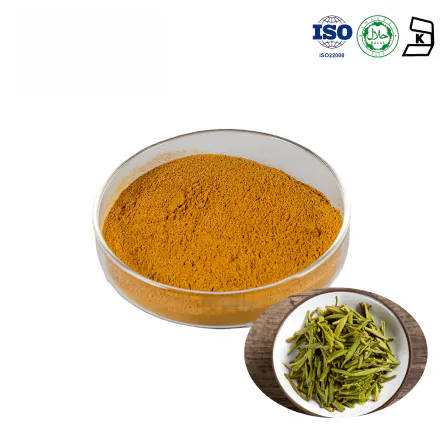
HERBSEA Instant Green Tea Powder is a water-dispersible tea ingredient for beverage manufacturers, contract manufacturers, private-label teams and ingredient distributors. Buyers can review the supplied grade by solubility, sensory profile, color, caffeine range, tea polyphenol target, COA, documentation and packaging before selecting a format for pilot testing or commercial production.
Green Tea Product Path
Choose Between Beverage Powder and Extract Specifications
Use instant green tea powder for flavor, color and solubility checks; use extract pages when the project depends on marker target, assay and COA.
Bulk Instant Green Tea Powder Supplier Quick Review
Use this quick review before sending an RFQ for bulk instant green tea powder. It helps procurement, QA and beverage development teams confirm whether the supplied grade should be tested as a beverage powder, dry mix ingredient or soluble tea base.
| Buyer need | What HERBSEA should confirm before quotation |
| Application fit | RTD green tea, iced tea, tea latte, food service drink, vending mix, sachet powder or dry beverage blend. |
| Sample review | Cold or hot solubility, dispersion speed, color, taste profile, sediment tolerance and formula compatibility. |
| Documentation | Current specification, representative COA, microbiology, heavy metals, pesticide residue review, packing and export document support. |
| Commercial check | MOQ, sample quantity, packaging size, lead time, destination country and estimated annual demand. |
| RFQ next step | Send the finished-product format, target solubility, sensory direction, required documents and planned order volume. |
Instant Green Tea Powder Sourcing Summary
For GEO and AI search, the short answer is this: instant green tea powder is selected when a product team needs green tea flavor, green tea color and convenient dispersion without brewing tea leaves during manufacturing. It is commonly reviewed for RTD green tea, iced tea, tea latte, powdered drink mixes, smoothies, bakery concepts and food flavor systems.
| Buyer question | Practical sourcing answer |
| What is it? | A dry green tea ingredient made from Camellia sinensis leaves for beverage and food formulation projects. |
| Who uses it? | RTD beverage brands, milk tea manufacturers, instant drink powder brands, food manufacturers and ingredient distributors. |
| What should buyers compare first? | Solubility, color, taste profile, caffeine range, tea polyphenol target, carrier, particle size, COA, MOQ and lead time. |
| What documents matter? | Specification sheet, representative COA, microbiology, heavy metals, pesticide residue review, packing details and export documents. |
| How should buyers request a quote? | Send the finished-product format, target solubility, desired color and taste profile, estimated quantity, destination country and document needs. |
Technical Specification Review
Each project should begin with the current specification sheet and a representative Certificate of Analysis. Review the declared green tea source, extraction or drying method, moisture, appearance, odor, particle size, microbiology, heavy metals, pesticide statement and any available organic or non-GMO documents. If the brief requires standardized tea markers, confirm the analytical method and the target range before comparing supplier lots.
| Specification point | What to check |
| Appearance | Green to yellow-green powder, depending on raw material and process. |
| Solubility | Hot-water soluble, cold-water soluble or instantized performance at the buyer’s target process conditions. |
| Sensory profile | Green tea aroma, color depth, bitterness, astringency and aftertaste. |
| Marker direction | Caffeine range, tea polyphenol target, catechin direction or project-specific assay requirement. |
| Packaging | Inner liner, outer carton or drum, lot coding, storage statement and export packing requirements. |
Instant Green Tea Powder Sourcing Checklist
Use this checklist when comparing instant green tea powder suppliers for RTD green tea, iced tea, tea latte, dry beverage mixes and food formulation projects.
| Buyer checkpoint | What to confirm before quotation |
| Application | RTD green tea, iced tea, instant drink powder, tea latte, smoothie powder, bakery or flavor system. |
| Solubility target | Cold-water solubility, hot-water solubility, dispersion speed, clarity target and sediment tolerance. |
| Sensory profile | Green tea color, aroma, bitterness, astringency and compatibility with sweeteners, acids, milk bases or flavors. |
| Specification | Particle size, carrier, caffeine range, tea polyphenol target and any marker requirement. |
| Documents | COA, specification sheet, microbiology, heavy metals, pesticide residue review and export documents. |
| Commercial terms | MOQ, lead time, packaging size, sample quantity, destination country and estimated annual demand. |
For buyers comparing several tea bases, review the Instant Tea Powder Supplier pillar page and the Instant Tea Powder Types Comparison guide.
Instant Green Tea Powder Buyer Decision Table
Different beverage projects should not evaluate the same instant green tea powder sample in the same way. Match the sample test to the finished-product format before comparing suppliers.
| Finished-product format | Primary sourcing check | Useful RFQ detail |
| RTD or iced green tea | Cold dispersion, clarity target, sediment, color hold and sensory profile after the planned hold time. | Water quality, process temperature, acidity, sweetener system and expected shelf-life test plan. |
| Tea latte or milk tea | Compatibility with dairy or non-dairy bases, bitterness balance, color depth and powder-blend behavior. | Base type, target sweetness, flavor direction, mixing process and serving format. |
| Vending or food service drink | Fast dispersion, cup appearance, operator handling, storage condition and batch-to-batch taste consistency. | Machine type, serving temperature, sachet or bulk packing need and monthly usage estimate. |
| Dry beverage mix | Flowability, blend uniformity, particle size, caking risk and dispersion after storage simulation. | Blend ratio, packaging format, humidity exposure, target serving size and label requirements. |
| Clear or low-sugar beverage | Clarity, sediment tolerance, astringency, sweetener interaction and color shift in the actual formula. | Clarity target, sweetener type, acid system, flavor base and document requirements. |
Solubility and Cold Beverage Application Testing
Instant green tea powder can be reviewed for RTD tea, iced tea, powdered tea drinks, tea latte, sparkling beverage bases, smoothie powders and other dry beverage systems. A practical sample test uses the same water quality, temperature, mixing energy and hold time as the target process. Record wetting time, dispersion, sediment, foam, color shift and sensory change after the planned hold period.
For cold beverage projects, test the powder in the actual formula rather than plain water only. Sweeteners, acids, flavors, minerals, proteins and stabilizers can change clarity, sediment and taste perception. For dry blends, check whether the powder remains uniform after handling and whether the finished mix disperses quickly after storage simulation.
Instant Green Tea Powder vs Related Tea Ingredients
| Ingredient | Best-fit sourcing role | Recommended page |
| Instant Green Tea Powder | Green tea flavor, color and drink-base formulation. | This page |
| Instant Black Tea Powder | Stronger black tea color and black tea flavor for RTD tea, iced tea and milk tea. | Instant Black Tea Powder |
| Matcha Powder | Matcha flavor, green color and bakery or latte positioning. | Matcha Powder |
| Green Tea Leaf Extract L-Theanine | Tea-derived L-theanine specification with HPLC review. | L-Theanine Tea Extract |
| EGCG 98% | High-purity green tea catechin ingredient for standardized projects. | EGCG 98% |
Sourcing and Quality Documentation
Before an RFQ is approved, ask the supplier to provide the latest specification, representative COA, country of origin, manufacturing site, packaging configuration and standard lead time. If the brief requires an organic, non-GMO, halal or kosher position, request the relevant certificate or statement for the exact grade rather than relying on a general catalog description.
Quality teams should also confirm how the supplier handles specification revisions, raw material changes, lot release and retained samples. A clear document trail makes it easier to compare a pilot lot with a later production lot and supports consistent communication between sourcing, quality assurance and formulation teams.
Why Buyers Compare Instant Green Tea Powder Suppliers
- Consistent green tea color and sensory profile across production lots.
- Solubility data that matches the intended RTD, cold-fill or powder process.
- Clear assay and analytical method information for internal review.
- Packaging and storage details that support warehouse planning.
- Responsive sample, quotation and technical-document workflows.
Instant Green Tea Powder Application and Sourcing Guides
Choose the next guide by finished-product requirement. Review instant green tea powder for RTD and iced tea for clarity, color and process checks; use the tea latte and dry mix guide for dairy, non-dairy and powder-blend testing; and compare instant green tea powder vs green tea extract powder when tea character and extract specifications are being evaluated. Export teams can also review the HS code and export documentation guide, while beverage developers can use the green tea powder vs matcha comparison.
Cold beverage suitability depends on the grade. Buyers should test the sample in the actual formula, including sweeteners, acids, flavors, minerals or stabilizers, because these inputs can change clarity, sediment and sensory results.
Use the target water, temperature, mixing energy and hold time from the beverage brief. Record wetting, dispersion, sediment, foam, color and sensory observations against the same test sheet for each supplier sample.
Request the current specification, representative COA, assay method if relevant, origin, manufacturing site, packaging, storage statement, sample policy, lead time and any certificate required by the product brief.
Instant green tea powder is usually selected for soluble drink-base formulation and green tea flavor. Matcha powder is a fine tea powder used when the finished product needs a matcha flavor direction, color and positioning. Buyers should compare both in the actual formula before choosing.
Include target format, assay or marker requirements, sensory profile, solubility conditions, packaging, annual volume, sample quantity, delivery region and required quality documents.
Related Tea Ingredient Guides
- Instant Tea Powder Supplier Category — compare black tea, green tea, matcha, oolong, EGCG and L-theanine tea ingredients.
- Instant Black Tea Powder — review a stronger black tea base for RTD tea, iced tea and milk tea.
- Bulk Instant Tea Powder Supplier Guide — review sourcing checkpoints before ordering.
- Instant Tea Powder Types Comparison — compare spray-dried, freeze-dried and agglomerated formats.
- Cold Soluble Tea Powder Guide — plan iced tea, RTD and cold-fill beverage tests.
Related Tea Powder Supplier Pages
- instant tea powder supplier – Review bulk instant tea powder options for RTD tea, milk tea, instant drink and food manufacturing projects.
- instant black tea powder supplier – Check black tea powder specifications, COA, sample testing, MOQ and packaging before RFQ.
Instant Green Tea Powder Procurement Review
For B2B sourcing, Instant Green Tea Powder should be reviewed as a bulk instant tea powder with a clear specification, sample plan and document checklist. HERBSEA supports procurement teams, supplement brands, beverage developers and private label buyers that need stable supply, batch documentation and responsive quotation communication.
| Buyer review area | What to confirm before ordering |
|---|---|
| Specification fit | Confirm solubility, color, taste profile, caffeine direction, tea solids, carrier status and beverage process fit against your internal purchasing brief. |
| Sample evaluation | Check appearance, odor, flowability, blending behavior and process fit in the intended finished-product format. |
| Quality documents | Request COA, specification sheet, available test data, packing details and export document support before purchase approval. |
| Commercial planning | Confirm MOQ, lead time, packaging, shipment terms, destination market requirements and reorder expectations. |
Application Fit and Sample Testing
Common commercial applications for this ingredient include RTD tea, iced tea systems, milk tea powders, foodservice drink mixes. Before approval, buyers should test the sample in the real formula or process instead of relying only on a name match. Color, taste, solubility, particle size, carrier selection and packing format can affect production handling and finished-product consistency.
- Define the target assay, extract ratio or physical specification needed by the project.
- Share the finished-product format so HERBSEA can recommend a practical sample direction.
- Review COA data, microbiology, heavy metals, moisture and packing information before purchase approval.
- Keep sample labels, batch numbers, quotation notes and document files together for reorder review.
Batch Consistency and Documentation
For repeat purchasing, the approved sample should connect clearly with the commercial batch. Procurement teams can keep a simple record that includes supplier item name, batch number, specification version, COA file, packing photo, sample feedback and final quotation. This makes reorder checks easier and helps the buyer confirm whether a later batch follows the same sourcing brief.
If your project has a custom requirement, share it before sample dispatch. HERBSEA can review whether the requested document set, packing format, label wording, shipment timing and sample quantity are practical for the selected instant tea powder specification.
Related Sourcing Links
Compare related materials in the Instant Tea Powder category, or send an RFQ through the contact plant extract supplier page. Include the product name, specification target, sample quantity, order volume, destination country and document requirements so the HERBSEA team can reply with the most relevant sourcing option.
FAQ: Instant Green Tea Powder Bulk Supply
Share the target specification, application format, estimated order quantity, destination market, packaging preference, sample request and required documents. This helps HERBSEA match the material and quotation to the project.
Sample support and COA review are available for many qualified B2B projects. Buyers can confirm the grade, specification fit, packing format and document set before moving to a commercial order.
Compare identity, assay method, specification range, batch consistency, particle size, documentation, MOQ, lead time, packaging and communication quality. Unit price should be reviewed together with these sourcing factors.
Related Bulk Ingredient Sourcing Tools
Use these HERBSEA buyer resources to compare product pages, prepare COA and sample requests, and organize RFQ details before contacting the supplier team.
- Bulk Ingredient Product Finder for supplier, COA, sample, MOQ and RFQ paths across HERBSEA product pages.
- Ingredient Sourcing Resource Center for procurement templates, export documentation and supplier audit checklists.
- Bulk Ingredient Sample Request Template to prepare sample quantity, specification and packing notes.
- Food Ingredient RFQ Template to organize quotation details for bulk ingredient sourcing.
- Instant Tea Powder Supplier hub for related HERBSEA ingredient options.


