
Black Tea Definition Path
Move from Definition to the Right Black Tea Specification
After confirming what black tea powder means, compare instant powder, extract powder, milk tea use and supplier shortlist requirements.
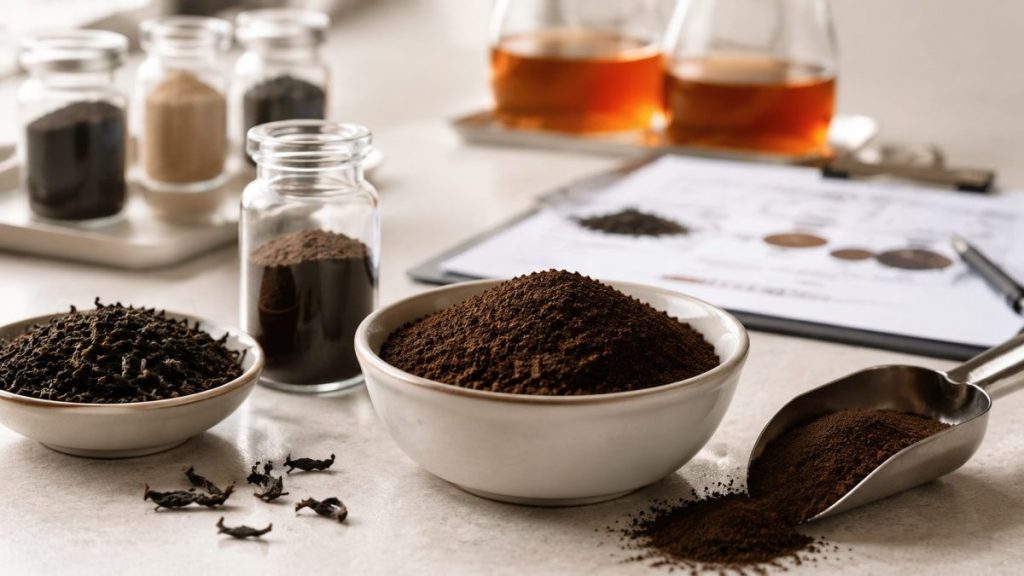
What Is Black Tea Powder?
Black tea powder is a dry tea ingredient made from Camellia sinensis leaves. In B2B sourcing, the phrase may refer to instant black tea powder for beverage formulas, powdered black tea for dry mixes, or black tea extract powder with a more specific marker target. The right specification depends on the buyer’s finished-product format, process conditions and document requirements.
Black Tea Definition Path
Use the Term Carefully: Black Tea Powder Can Mean Beverage Powder, Dry Blend Powder or Extract Powder
For B2B buyers, the best first question is not only “what is black tea powder?” but “which black tea powder format fits the finished product?” RTD tea, milk tea, instant drink powder and extract-led projects can need different sample tests, documents and RFQ details.
Quick Answer for Buyers
| Basic definition | Black tea powder is a dry tea ingredient made from black tea leaves or tea-derived solids for commercial formulation projects. |
| Main B2B formats | Instant black tea powder, powdered black tea for dry blends, and black tea extract powder. |
| Best-fit applications | RTD tea, iced tea, milk tea, instant drink powder, bakery and selected food systems. |
| First sample checks | Solubility, color, tea strength, sediment, particle size, carrier status and formula behavior. |
| Documents to request | COA, specification sheet, flow chart, packaging details, MOQ and sample batch information. |
How Black Tea Powder Is Used in Food and Beverage Projects
| Application | Buyer priority | Specification check |
|---|---|---|
| RTD tea and iced tea | Clear tea taste, color and processing fit. | Solubility, clarity, pH range, thermal process and sediment target. |
| Milk tea and tea latte | Stronger black tea note and dairy or non-dairy compatibility. | Color depth, bitterness level, particle size, carrier and sensory balance. |
| Instant drink powder | Dry blending and fast dispersion in the final formula. | Flowability, particle size, instantized performance and formula compatibility. |
| Food and bakery | Black tea flavor and brown tea color in a dry ingredient format. | Heat exposure, taste intensity, color target and matrix compatibility. |
Black Tea Powder vs Instant Black Tea Powder vs Black Tea Extract
Black tea powder is the broader buyer search term. Instant black tea powder usually points to a material designed for faster dispersion in commercial beverage formulas. Black tea extract powder usually shifts the sourcing conversation toward specification, assay method, marker target and COA review.
| Term | Best-fit sourcing question | Related page |
|---|---|---|
| Black tea powder | Which tea powder format fits the finished product? | Black tea powder sourcing guide |
| Instant black tea powder | Does the formula need fast dispersion, color control and tea strength? | Instant black tea powder product |
| Black tea extract powder | Does the project need extract-led specification and document review? | Black tea powder vs extract |
| Milk tea powder use | Does the tea note need to remain clear after dairy or creamer is added? | Black tea powder for milk tea |
What Buyers Should Confirm Before RFQ
- Finished product: RTD tea, milk tea, dry mix, bakery or extract-led formulation.
- Processing condition: hot-fill, cold-fill, powder reconstitution, baking or blending process.
- Sample target: tea strength, color, solubility, sediment and aftertaste requirements.
- Document needs: COA, specification sheet, flow chart, packing details and sample batch match.
- Commercial details: target quantity, destination market, MOQ, packaging and lead time.
Black Tea Powder Sourcing Cluster
Use these related HERBSEA pages to compare black tea powder by definition, application, extract type, supplier selection and product specification before requesting a sample or quotation.
- instant black tea powder supplier for COA, MOQ, sample and bulk specification review.
- Black Tea Powder vs Black Tea Extract for powder vs extract sourcing decisions.
- Black Tea Powder for Milk Tea for tea strength, color and creamer compatibility.
- Black Tea Powder for RTD Tea Manufacturing for solubility, clarity and sediment checks.
- How to Choose a Bulk Black Tea Powder Supplier for supplier evaluation and RFQ details.
FAQ
How Commercial Black Tea Powder Names Differ
In B2B sourcing, “black tea powder” can describe more than one material. The name alone does not confirm whether the powder disperses as an instant beverage base, contains fine tea leaf particles or is supplied as a concentrated extract-style ingredient. Buyers should therefore compare the production description, solubility direction, sensory profile, carrier declaration and specification instead of relying only on the product name.
| Commercial description | Typical buyer expectation | Main approval checks |
|---|---|---|
| Instant black tea powder | Fast preparation for beverages, foodservice or dry mixes | Dispersion, tea strength, color, sediment and carrier information |
| Micronized or ground black tea powder | Whole-tea character with suspended fine particles | Particle size, mouthfeel, visible sediment and process fit |
| Black tea extract powder | Concentrated tea solids or an extract-led specification | Extract description, solids, assay if relevant, taste and application fit |
COA and Specification Checks for B2B Buyers
The specification sets the agreed quality limits, while the COA reports results for a particular batch. For a beverage project, review appearance, moisture, microbiological limits and any agreed physical parameters together with sensory and application testing. Depending on the project and destination market, buyers may also request heavy metals, pesticide residue information, allergen statements, GMO statements, packing details and shelf-life documentation.
- Confirm whether solubility means hot-water dispersion, cold-water dispersion or performance in the finished formula.
- Ask whether a carrier is used and how it appears in the ingredient declaration.
- Compare a recent batch COA with the supplier specification before approving a sample.
- Keep a reference sample and preparation record for future batch comparison.
Common Commercial Applications
Instant black tea powder is commonly screened for bottled tea, milk tea, foodservice drinks, vending systems and dry beverage mixes. Ground tea powder may be considered when visible tea solids and whole-leaf character fit the product concept. Extract-style powders may be reviewed when a concentrated tea input or a defined extract description is required. The correct route depends on the finished product, preparation method, sensory target and label plan.
For every application, approve the ingredient in the complete formula. Acids, minerals, dairy proteins, plant bases, sweeteners and flavors can change color, taste and physical behavior, so a generic powder specification cannot replace application testing.
Choose the Next Black Tea Page by Buyer Intent
For a ready-to-source ingredient, visit the instant black tea powder product page. For a direct material comparison, use black tea powder vs black tea extract. Application teams can continue to the milk tea formulation guide or the RTD beverage guide. Procurement teams building a shortlist should use the bulk black tea powder supplier guide.
Black tea powder is a dry tea ingredient made from black tea leaves or tea-derived solids. In B2B sourcing, buyers should confirm whether the project needs instant black tea powder, dry blend powder or black tea extract powder.
Not always. Black tea powder is a broad term. Instant black tea powder usually means a grade designed for faster dispersion in beverage, milk tea or instant drink formulas.
Black tea powder is often reviewed for flavor, color, solubility and formula behavior. Black tea extract powder is usually reviewed by specification, assay method, marker target and COA data.
Test the sample in the intended formula. Review solubility, color, tea strength, sediment, particle size, carrier status, dry blend behavior and whether the sample matches the commercial batch documentation.
Share the finished product format, processing condition, target quantity, destination market, packaging preference, sample requirement and document needs such as COA and specification sheet.
B2B Sourcing Takeaways
This guide is most useful when it is connected to a real purchasing brief. Buyers can use the topic as a starting point, then confirm tea powder solubility, color, taste profile, caffeine direction, processing fit, packing and COA review before sample approval. HERBSEA works with procurement, R&D and quality teams that need supplier communication, repeatable documentation and practical bulk order planning.
| Review step | Buyer action |
|---|---|
| Define requirement | Clarify the ingredient name, target specification, application format and expected order quantity. |
| Check documents | Request COA, specification sheet, available test data, packing details and export document support. |
| Test sample | Evaluate color, odor, solubility, particle size, flowability and formula compatibility in the intended process. |
| Plan purchase | Confirm MOQ, lead time, packaging, shipment terms, destination market and reorder expectations. |
RFQ Checklist for HERBSEA
- Target ingredient and preferred specification or assay range.
- Finished-product format and key processing requirements.
- Sample quantity, commercial volume estimate and requested packing format.
- Destination country and documents needed for internal quality review.
- Timeline for sample testing, purchase approval and first shipment.
For related ingredient options, review the Instant Tea Powder category. To request a sample, COA or quotation, contact HERBSEA through the plant extract supplier contact page and include the details above so the team can match a suitable grade.
Supplier Comparison Notes
When comparing suppliers, avoid judging the page only by a broad ingredient name. A useful comparison should connect the specification with the intended application, document package and repeat order plan. Two materials with similar names can differ in assay method, particle size, carrier status, sensory profile, packing format and shipment readiness.
For a faster review, send the same RFQ details to each supplier and compare replies side by side. Look for clear answers on available grades, sample timing, COA fields, MOQ, lead time, export documents and whether the supplier can keep future batches aligned with the approved sample. This gives procurement and quality teams a practical basis for shortlisting.
Because ingredient pages can be revisited during later purchasing cycles, keep notes on the approved specification, supplier response, internal sample result and any requested document updates. Those notes make it easier to reopen the project, compare a replacement material or brief a new quality reviewer without starting the sourcing process from zero.