
Black tea powder sourcing is a commercial ingredient decision for beverage brands, instant drink manufacturers, milk tea chains, foodservice suppliers and dry mix companies. A buyer is not only choosing a tea name. The buying team needs to compare origin, extract style, solubility, sensory profile, color, documentation, packing format and supply readiness before moving into bulk orders.
Black Tea RFQ Path
Move from Ingredient Comparison to B2B Sourcing
Use the B2B sourcing guide when the project is ready to compare COA, MOQ, sample plan, solubility and packing details.
This guide explains how B2B buyers can review black tea powder for RTD tea, milk tea, instant beverage powder, food applications and private label projects. It is designed to support the main Instant Black Tea Powder product page and the broader Instant Tea Powder category page without replacing either page. Product pages should carry exact product identity and quotation intent; this article answers sourcing and quality review questions in more detail.
Black Tea Powder Click Decision Panel
Black Tea Powder, Black Tea Extract Powder or Instant Tea Powder?
Many buyers search these terms interchangeably. The right page should quickly clarify whether the project needs a beverage flavor base, a standardized extract direction or a bulk instant tea powder grade.
This guide supports sourcing comparison. Product identity, available specification and quotation details should be confirmed on the product page before bulk purchasing.

Black Tea Powder Sourcing Starts With the Finished Product
A useful sourcing conversation starts with the finished product rather than the ingredient name alone. RTD iced tea, milk tea concentrate, vending drink powder, bakery filling and foodservice syrup all create different expectations. The same black tea powder may perform well in one system and poorly in another because the formula matrix, sweetness level, process temperature and packaging plan are different.
For HERBSEA buyers, the first step is to describe the application in practical terms. The supplier can then recommend whether to start with instant black tea powder, black tea extract powder, a cold soluble grade or a customized tea ingredient system. This avoids sending a beautiful sample that does not match the buyer’s manufacturing process.
| Finished product | Black tea powder requirement | Useful internal page |
|---|---|---|
| RTD iced tea | Cold-water dispersion, clarity, color stability and clean tea flavor | Instant black tea powder for RTD beverages |
| Milk tea or tea latte | Strong tea base, dairy compatibility, color depth and flavor persistence | Instant Black Tea Powder |
| Instant drink powder | Particle size, dry blending behavior, flowability and fast reconstitution | Instant tea powder types comparison |
| Cold-fill beverage | Cold soluble grade, low sediment and application testing in the final formula | Cold soluble tea powder guide |
| Food and bakery | Flavor intensity, color after processing and label fit | Bulk instant tea powder supplier checklist |
Origin, Tea Base and Sensory Direction
Origin still matters after tea becomes powder. The buyer may not need a romantic origin story, but the source tea affects aroma, astringency, color and cost-in-use. A black tea powder for a premium RTD project may need a smoother aroma and lower bitterness. A milk tea project may need stronger tea body and darker color. A dry mix project may care more about stability, flow and cost control.
China black tea bases can offer flexible sensory directions and wide manufacturing options. Assam-style profiles are often reviewed for stronger body and malty notes. Ceylon-style profiles can support brighter tea character. Kenya-style black tea may be considered when the buyer needs color strength and efficient cost-in-use. The final decision should be based on sample testing, not origin language alone.
When buyers ask for origin information, the practical goal is consistency. A supplier should be able to explain the tea base, production method, specification range, documentation and batch reference. This gives the buyer a way to compare samples across suppliers without relying only on descriptive words such as strong, premium or natural.
Instant Black Tea Powder vs Black Tea Extract Powder
Many buyers use black tea powder and black tea extract powder interchangeably in early conversations. For commercial sourcing, it is better to separate them. Instant black tea powder is usually reviewed for beverage reconstitution, flavor delivery, color and manufacturing convenience. Black tea extract powder may be reviewed around marker compounds, extract ratio, carrier system or formula positioning.
If the target product is a ready-to-drink tea, milk tea or powder beverage, the buyer should focus on solubility, clarity, sensory profile and processing behavior. If the target product is a capsule, tablet or functional powder blend, the buyer may place more weight on extract specification, carrier and assay method. A supplier can support both paths, but the RFQ should state which path the buyer is actually pursuing.
| Buying question | Instant black tea powder focus | Black tea extract powder focus |
|---|---|---|
| Main application | RTD tea, milk tea, instant drink powder, foodservice beverage | Supplement blend, functional food, capsule, tablet or custom formula |
| Key review point | Solubility, color, aroma, taste and sediment behavior | Extract ratio, marker range, carrier, assay and documentation |
| Sample test | Mixing in the final beverage matrix | Specification review plus formula compatibility check |
| Best page to review | Instant Black Tea Powder | Instant Tea Powder category |
Manufacturing Method and Powder Format
The manufacturing method affects how the black tea powder behaves in a formula. Spray-dried tea powder is often used when buyers need scalable supply, fast reconstitution and practical cost control. Freeze-dried tea powder may be reviewed when the project places a higher value on aroma retention and a premium sensory target. Agglomerated powder can support faster wetting and better handling in some dry mix systems.
The better question is not which method is always best. The better question is which powder format fits the buyer’s finished product, cost target and production process. A milk tea powder line may require different flow and blending behavior than a bottled iced tea line. A foodservice beverage concentrate may require different strength and stability than a retail sachet.
For a deeper comparison of spray-dried, freeze-dried and agglomerated forms, use the instant tea powder types comparison. That article should support format selection, while this sourcing guide keeps the focus on black tea powder buyer review.
COA and Specification Points Buyers Should Review
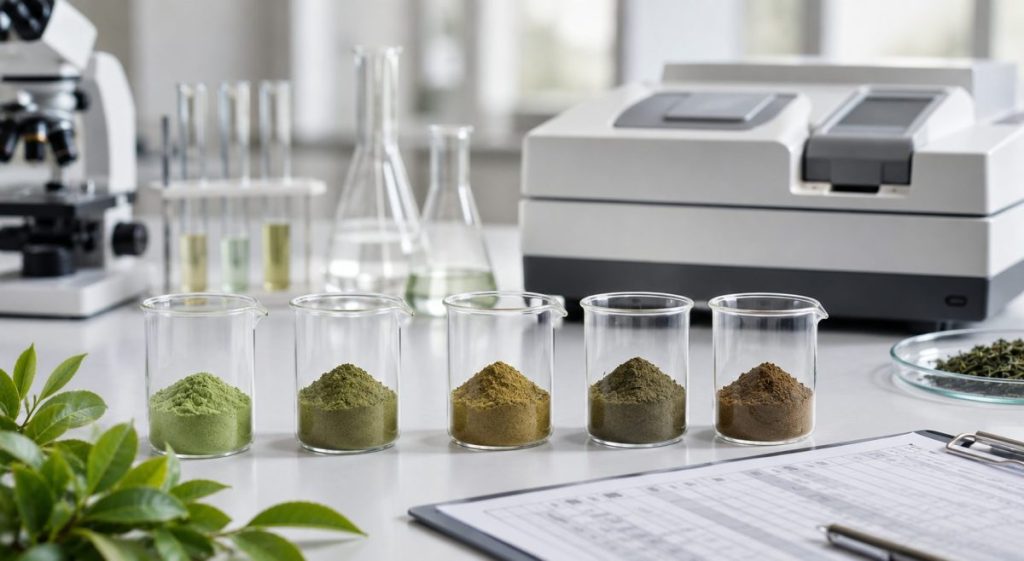
A black tea powder sample is only useful when the buyer can connect it with clear documentation. The specification sheet and COA help quality, purchasing and product development teams compare materials using the same reference points. Without documentation, a sample may look promising but still be difficult to approve for commercial use.
| Specification point | Why it matters for B2B buyers | Sample review note |
|---|---|---|
| Appearance and color | Supports visual consistency across batches and applications | Compare dry powder and prepared beverage color |
| Solubility or dispersibility | Important for RTD, milk tea and instant drink powder projects | Test hot water, cold water or final matrix as needed |
| Particle size | Affects flow, dry blending, mouthfeel and sediment observation | Review with the intended processing equipment |
| Moisture | Supports storage and packing review | Compare with packaging and warehouse requirements |
| Microbiology | Supports internal quality approval for food and beverage projects | Request batch-level COA before commercial approval |
| Heavy metals and pesticide residues | Supports compliance review and customer documentation | Confirm method, limits and market expectations |
| Carrier or excipient | Affects label review, taste, cost and formula compatibility | Confirm whether maltodextrin or another carrier is used |
| Packaging | Affects handling, storage and shipment planning | Review bag size, carton/drum format and pallet needs |
Sample Testing Workflow for Beverage Projects
Sample testing should be structured enough to support a real buying decision. A buyer can start with a simple matrix: hot water, cold water and the intended finished formula. The same sample should be observed immediately after mixing and after the chosen holding time. This helps the buyer compare clarity, sediment, color movement, aroma and taste in a repeatable way.
- Define the target application before requesting samples.
- Use the same mixing temperature, water quality and stirring method across samples.
- Record color, aroma, taste, sediment and mouthfeel using consistent language.
- Test the sample in the final formula if the project includes milk, sweetener, acid, flavor or stabilizer systems.
- Keep the approved sample, COA and internal test notes together for later commercial review.
For RTD projects, the buyer should also review cold-water behavior, thermal processing fit, pH, package format and standing observation. The instant black tea powder RTD guide covers this application in more detail. For cold-fill or iced tea projects, the cold soluble tea powder guide gives a more specific sourcing path.
Supplier Qualification Checklist
A black tea powder supplier should be evaluated on more than sample taste. The buying team needs to know whether the supplier can support documents, repeat supply, packaging, communication and quotation details. This is especially important when the project will move from lab review to pilot batch and then to commercial order.
| Checklist item | What to request | Why it matters |
|---|---|---|
| Product identity | Product name, tea base, powder type and carrier status | Prepares a clear RFQ and avoids mismatched samples |
| Documents | Specification, COA, flow chart, allergen statement and packing information | Supports quality and purchasing review |
| Sample link | Lot number, sample date and recommended application notes | Connects bench review with later commercial quotation |
| Commercial terms | MOQ, lead time, packing size, shipment route and payment terms | Shows whether the material can fit the launch plan |
| Communication | Technical answers and quotation follow-up | Shortens the path from sample approval to purchase order |
HERBSEA works with buyers who need black tea powder for beverage, powder mix and food manufacturing projects. If the project is still early, the buyer can share the intended application and target sensory direction first. If the project is closer to launch, the buyer should add expected annual volume, document requirements, sample quantity and preferred packing format.
Internal Linking and Page Boundary
This article should not compete with the main product page for exact product purchase intent. Instead, it should help buyers understand how to evaluate black tea powder before they request a quote. The product page remains the primary conversion page for instant black tea powder, and the category page remains the broader hub for instant tea powder supplier topics.
Related sourcing pages for the tea powder cluster:
- Bulk instant tea powder supplier checklist for supplier comparison and quotation preparation.
- Instant black tea powder for RTD beverages for ready-to-drink formulation review.
- Cold soluble tea powder for cold-fill, iced tea and low-sediment beverage projects.
- Instant tea powder types comparison for spray-dried, freeze-dried and agglomerated powder formats.
- Instant Green Tea Powder for green tea beverage, powder mix and food application review.
- Green Tea Leaf Extract L-Theanine 20%-40% HPLC for projects that need a standardized green tea extract specification.
- HERBSEA FAQ for sample, MOQ, document and shipping questions.
How to Write a Better RFQ for Black Tea Powder
A useful RFQ gives the supplier enough context to recommend the right starting grade. Instead of asking only for a price per kilogram, the buyer should describe the finished product, intended process, target flavor, desired color, sample test method, document requirements and commercial timing. This helps the supplier avoid sending a generic material that looks related but does not fit the project.
- Application: RTD tea, milk tea, instant drink powder, foodservice beverage or food manufacturing.
- Required powder behavior: cold soluble, hot soluble, low sediment, strong tea body, dry blend flow or specific color direction.
- Documentation: specification, COA, microbiology, heavy metals, pesticide residue statement, allergen statement and packing information.
- Commercial details: sample quantity, expected order quantity, destination market, packing preference and launch timeline.
- Internal review: quality approval, product development notes and purchasing requirements.
This RFQ structure makes the first supplier response more useful. It also creates a cleaner buyer journey for SEO: the visitor can learn the sourcing criteria here, move to the product page for exact product information, and then contact HERBSEA with a qualified request.
Start with the finished application. RTD tea, milk tea, instant drink powder and food manufacturing projects require different solubility, sensory, color and packing checks. Buyers should define the application before comparing samples.
Not always. Instant black tea powder is usually reviewed for beverage reconstitution, flavor, color and handling. Black tea extract powder may be reviewed around extract ratio, carrier, marker range and formula positioning. The RFQ should state the intended application.
B2B buyers commonly request a specification sheet, batch COA, microbiology data, heavy metals information, pesticide residue statement, allergen statement, flow chart, packing information and sample reference.
Use the same mixing method across samples and test the material in the final formula when possible. Review color, aroma, taste, sediment, mouthfeel, clarity and standing behavior before discussing commercial approval.
Yes. Buyers can share application, sample quantity, document requirements, packing preference and target volume. HERBSEA can help match the inquiry with relevant instant tea powder options and bulk supply information.
Request Black Tea Powder Specifications and Samples
To review black tea powder for a B2B project, share your target application, required powder behavior, sample quantity, documentation needs, packing preference and buying timeline. HERBSEA can help match the inquiry with relevant instant tea powder options, specification documents and bulk supply information.
Contact HERBSEA to request specifications, sample availability and quotation details for black tea powder or instant tea powder projects.
Black Tea Powder Internal Sourcing Links
For a complete black tea powder sourcing review, use the following HERBSEA pages before requesting samples or bulk quotation:
- black tea powder supplier product page for specification, COA, MOQ, samples and bulk packaging.
- What Is Black Tea Powder? for definition, applications and specification checks.
- black tea powder for milk tea formulation guidance.
- Black Tea Powder for RTD Tea Manufacturing and iced tea projects.
- Black Tea Powder vs Black Tea Extract for choosing between beverage-base powder and extract-led specifications.
- bulk black tea powder supplier selection checklist.