
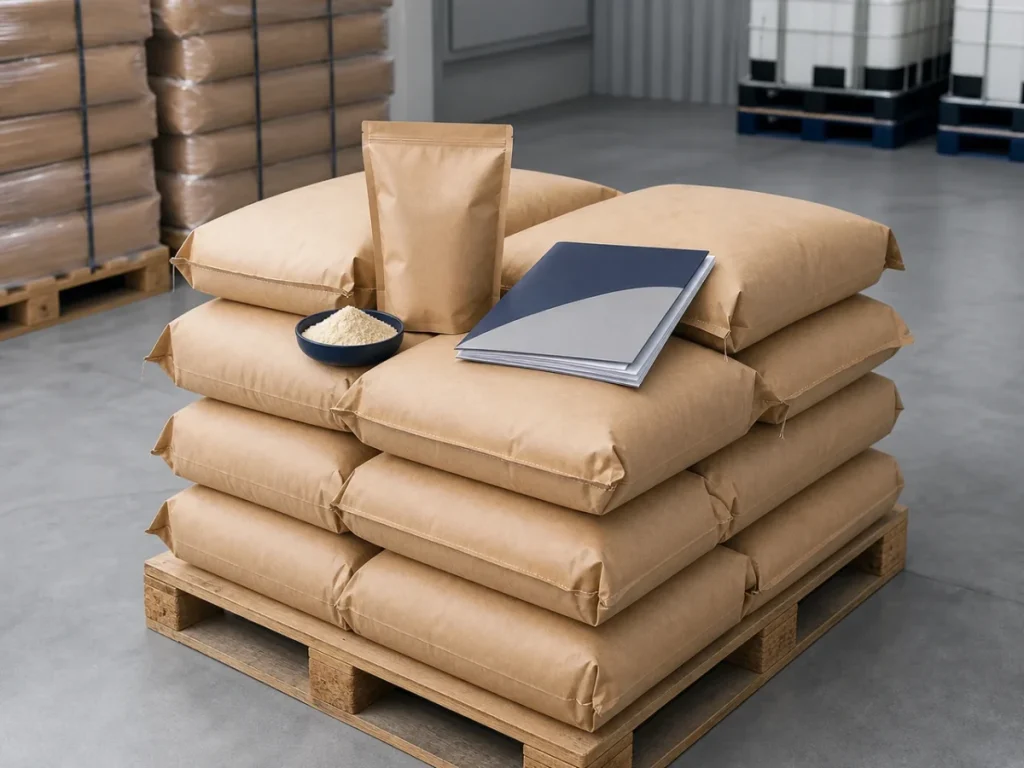
Pea Protein for Beverage Formulation
Pea Protein for beverage formulation should be evaluated as both a raw material and a processing ingredient. For beverage brands, RTD developers, powder drink manufacturers and contract formulators, the sourcing decision should connect protein content, solubility, dispersibility, taste profile, mouthfeel, pH conditions, sample testing, COA and bulk supply planning.
A Pea Protein grade that works in a dry powder blend may not automatically fit a beverage system. Beverage formulation adds extra questions around water behavior, texture, sediment, flavor masking and process stability.
For commercial sourcing, buyers can start from the Pea Protein supplier page and request the current specification, COA and sample support for their target beverage format. This article supports the core page by focusing on practical formulation notes for beverage and drink powder projects.
Start With the Beverage Format
The first question is the finished format. Pea Protein can be evaluated for ready-to-drink beverages, dry powder drink mixes, shaker-style nutrition drinks, high-protein beverage concepts and plant-protein blends. Each format creates a different technical requirement.
The finished beverage format decides which Pea Protein questions matter most.
For an RTD beverage, the buyer may care about dispersion, mouthfeel, pH, process conditions and storage review. A powder drink project may focus more on instant behavior, blend uniformity, shaker performance and taste. In a high-protein concept, the formulation team may need to balance protein level with texture and sensory expectations.
Useful format questions include:
Which beverage type is being developed?
What protein level is targeted per serving format?
Will the product be RTD, powder drink or another system?
How will the consumer prepare or use the finished product?
Which processing step will the contract manufacturer apply?
What sample quantity is needed for bench testing?
Can the same Pea Protein grade support scale-up?
These questions help prevent the buyer from choosing a raw material based only on protein content.
Long-Tail Section: Pea Protein for Beverages
Pea protein for beverages should be reviewed through solubility, dispersibility, taste, mouthfeel and process fit. A supplier may offer a technically suitable Pea Protein powder for general use, but beverage projects often need a more specific discussion.
Beverage buyers should ask how the powder behaves in water, not only what the protein percentage is.
A practical beverage inquiry can include the intended format, target protein level, pH direction, sample quantity, document checklist, target packaging and process notes. If the formula requires a smooth texture or quick dispersion, those expectations should be explained before sample approval.
When the project is early, the buyer may request small samples for bench screening. Later, pilot-scale testing may require larger sample quantities and closer alignment with the commercial batch. The supplier should understand which stage the buyer is in.
Solubility and Dispersibility Review
Solubility and dispersibility are central concerns in plant protein beverages. Pea Protein may behave differently depending on grade, particle size, processing conditions, pH, mixing method and other formula components. A material that disperses acceptably in one system may not perform the same way in another.
Solubility should be tested in the buyer’s actual beverage system, not assumed from a generic product description.
Technical teams may review:
How quickly the powder wets out
Whether clumps appear during mixing
How much sediment forms after standing
Whether the formula needs high-shear mixing
How the material behaves at the target pH
What mouthfeel appears after hydration
Whether the grade works with flavors, sweeteners or stabilizers
A research article in PMC notes that pea protein can have low solubility under acidic pH conditions near its isoelectric point, while processing approaches may improve solubility in certain beverage contexts. Buyers can review the background article on pea protein solubility and thermal stability for acidic beverages for technical context. Supplier qualification, however, should still rely on the exact specification, sample and COA for the material being purchased.
Long-Tail Section: Pea Protein Solubility
Pea protein solubility should be reviewed as a formulation variable, not a yes-or-no claim. A buyer should define the beverage type, pH direction, process method and sensory target before deciding whether the sample is suitable.
The same solubility result may be acceptable for one beverage project and unsuitable for another. For example, a thick shake-style formula may tolerate more body than a clear beverage concept. A powder drink may need quick dispersion in a shaker bottle, while an RTD system may need process review under manufacturing conditions.
A useful RFQ can ask:
What grade is recommended for beverage formulation?
Which sample quantity is suitable for bench testing?
Can the supplier provide particle-size information?
What COA and specification documents are available?
Will the sample grade match the commercial order grade?
Does the supplier need the target pH or processing notes before recommendation?
By adding these details, the buyer gives the supplier a practical basis for product selection.
Taste and Mouthfeel Considerations
Taste and mouthfeel are common formulation questions for plant protein beverages. Pea Protein can bring flavor and texture characteristics that need to be reviewed in the finished formula. Flavor systems, sweeteners, stabilizers, cocoa, coffee, fruit bases or other ingredients may all change the final sensory profile.
Taste review should happen in the real formula, not from dry powder alone.
A beverage team may test bitterness, beany notes, chalkiness, viscosity, aftertaste, color impact and aroma interaction. These observations are not only sensory details. They can affect the commercial decision because additional flavor masking or stabilizer work may change formulation cost and timeline.
Procurement should collect feedback from R&D before final quote approval. A lower raw material price may become less useful if the formula needs more adjustment to reach the target sensory profile.
pH, Heat and Process Conditions
Beverage processing conditions can affect how Pea Protein behaves. The target pH, mixing sequence, heat exposure, homogenization, filling process and storage condition may all influence the final product. This does not mean one grade is universally suitable or unsuitable; it means the sample should be tested in the intended process.
Processing conditions should be part of the RFQ when the project is beverage-focused.
Important process questions include:
Is the beverage acidic, neutral or another pH direction?
Will the formula be heat processed?
Does the project use high-shear mixing?
Are stabilizers or hydrocolloids included?
Will the finished product be RTD or powder drink?
What storage review will the buyer conduct?
Is pilot testing planned before commercial order?
A recent study on pea protein isolate beverages evaluated pH stability and microbiological safety under thermal processing and storage conditions, showing why beverage systems should be reviewed under real processing assumptions. Buyers can use peer-reviewed pea protein beverage stability research for background, while keeping supplier approval tied to the purchased material’s COA and sample performance.
Long-Tail Section: Pea Protein RTD Beverage
Pea protein RTD beverage projects require closer review than simple dry blend projects. RTD formulas usually involve processing, shelf-life planning, storage review and sensory evaluation. The buyer should define target protein level, pH range, texture expectation and processing route before approving a raw material.
RTD projects need sample testing that reflects manufacturing reality. A desktop review of the COA is not enough for scale-up.
The supplier does not need to know the buyer’s full confidential formula. Still, a practical brief should include the application type, target format, protein level, pH direction if available, sample amount and document requirements. This allows the supplier to suggest a grade and prepare an appropriate quotation basis.
Powder Drink and Shaker Applications
Powder drink projects may place more emphasis on instant dispersion, shaker behavior, blend uniformity and taste. The buyer should test whether the Pea Protein powder blends well with flavors, sweeteners, cocoa, fibers, minerals or other proteins.
A powder drink sample should be tested both as a dry blend and after preparation.
In the dry blend, the team can review flow, dusting, color and uniformity. After preparation, the evaluation should cover clumping, sediment, mouthfeel, taste and visible separation. If the finished product will be sold in sachets or tubs, packaging and humidity handling may also matter.
A contract manufacturer may request bulk density, particle size, moisture, flowability and packaging notes before pilot production. These items should be collected before final RFQ.
Long-Tail Section: Plant Protein Beverage Formulation
Plant protein beverage formulation usually requires more than ingredient substitution. Pea Protein, soy protein, rice protein and other plant proteins can behave differently in water, flavor systems and processing conditions. If a buyer is comparing several plant proteins, the test matrix should be organized carefully.
Plant protein selection should be based on formulation fit, document support and commercial supply conditions together.
Buyers comparing adjacent materials can review the Plant Protein category. For product-specific supply support, use the Pea Protein supplier page.
If the formula blends Pea Protein with other plant proteins, the sample test should evaluate the complete protein system rather than one ingredient in isolation. A blend may change texture, taste, viscosity and process performance.
COA and Specification for Beverage Projects
Beverage teams still need strong document review. The formulation team may focus on solubility and mouthfeel, while QA checks whether the material documents support internal approval.
A Pea Protein sample should pass both formulation testing and document review.
Key document items include:
Current specification sheet
Batch-specific COA
Protein content result
Particle size or mesh information if available
Moisture and ash
Heavy metals
Microbiology
Storage condition
Packaging information
SDS where required
For U.S. dietary supplement context, buyers may review the FDA’s dietary supplements page. Manufacturing quality-system context can also be reviewed through 21 CFR Part 111. These authority references are useful for buyer-side background and should not replace supplier-specific COA, specification and sample testing.
Sample Testing Workflow
A practical beverage sample workflow should connect procurement, QA and formulation teams. Each team reviews a different part of the decision, and the final approval should combine all three perspectives.
The sample should not move to commercial order until technical fit, document scope and supply conditions are aligned.
A useful workflow:
Define beverage format and target protein level.
Request the Pea Protein specification and COA.
Confirm sample quantity for bench testing.
Test dispersibility, taste, mouthfeel and sediment.
Review pH and processing assumptions.
Collect QA comments on COA and specification.
Ask for MOQ, packaging and lead time.
Confirm whether commercial lots can follow the approved sample direction.
This workflow keeps sample testing tied to the real purchase decision.
RFQ Notes for Beverage Buyers
A clear RFQ helps the supplier recommend the right Pea Protein direction. Instead of asking only for a quote, the buyer should explain the finished format and test purpose.
A practical RFQ can say:
Please quote Pea Protein powder for beverage formulation. We need current specification, batch COA, sample support, protein content target, particle-size information if available, packaging options, MOQ and lead time. The intended application is RTD beverage, powder drink or shaker-style nutrition drink. We plan to evaluate dispersibility, taste, mouthfeel and document fit before bulk purchase.
A beverage RFQ should connect the product format with the sourcing requirement.
Buyers can send this information through the HERBSEA contact page and request sample support for their formulation project.
Internal Links for This Article
This article should link back to the core Pea Protein supplier page near the introduction and again near the RFQ section.
Use the Plant Protein category when discussing adjacent plant protein ingredients.
Link to Pea Protein Specification and COA Guide after that article is live.
Link to Pea Protein Powder Price Factors when discussing quote preparation.
Every support article in this cluster should guide qualified buyers back to the core Pea Protein inquiry page.
FAQ
Can Pea Protein be used in beverage formulation?
Yes, Pea Protein can be evaluated for beverage formulation, but the grade should be tested for dispersibility, taste, mouthfeel, pH behavior, COA fit and commercial supply conditions.
What should buyers test first for Pea Protein beverages?
Start with dispersion, clumping, sediment, taste, mouthfeel and formula compatibility. Document review should run at the same time so the sample can be approved from both technical and QA perspectives.
Is Pea Protein suitable for RTD beverages?
RTD beverage projects need process-specific testing. The buyer should review pH, heat exposure, storage expectations, stability, sample behavior and supplier document support before commercial approval.
How much sample is needed for beverage testing?
Sample quantity depends on the test plan. Bench testing may need less material, while pilot testing or contract manufacturer review may require more. Ask the formulation team before requesting the sample quantity.
Where should buyers request Pea Protein beverage samples?
Buyers can start from the Pea Protein supplier page or send project details through the HERBSEA contact page.
HERBSEA provides raw materials for B2B manufacturing and formulation use. The information on this page is for ingredient sourcing and specification review only. It is not medical advice and does not provide diagnosis, treatment, cure, prevention, dosage, or consumer use recommendations.
Sources used for external reference selection: FDA dietary supplements, 21 CFR Part 111, pea protein solubility and thermal stability research, and pea protein beverage stability research.