
EGCG 98 powder is a high-purity catechin monomer (epigallocatechin gallate, CAS 989-51-5) isolated from green tea leaves (Camellia sinensis) and standardized to a minimum 98% EGCG content by HPLC. Before you qualify any supplier, confirm four things in writing: (1) the HPLC assay method and EGCG/GCG peak resolution (Rs ≥ 2.0) on the COA, (2) a batch-specific representative COA with heavy-metal, pesticide-residue and microbial results, (3) the sample-lot reference tied to that COA, and (4) packing, MOQ and lead time for your destination market. Use the EGCG 98% product page as the commercial reference, then send the buyer inputs below before requesting samples or a quotation.
1. Why the EGCG 98 Grade Matters to Buyers
EGCG is the dominant catechin in green tea polyphenols. A “98%” grade means the material is a purified monomer rather than a standardized extract, so the assay number is the single most important specification field on the COA. At this purity the material behaves differently from 40–70% extract grades: it is a white-to-off-white crystalline powder (lower-purity grades run light tan to brown), has low water solubility above ~5 mg/mL at room temperature, is light-sensitive, and slightly hygroscopic. Those physical properties directly affect your formulation screening, packaging specification and storage instructions.
What “98%” actually measures
Buyers often assume the number is universal. It is not. The assay depends on the analytical method:
| Assay field | What buyers should confirm | Why it matters |
|---|---|---|
| Method | Reverse-phase HPLC, C18 column, UV 280 nm (or DAD at 274–280 nm), EGCG reference standard | HPLC vs UV-only methods can differ by several percentage points; ISO 14502-1:2005 and Chinese GB/T 22244-2008 both prescribe HPLC for catechin content |
| Calibration standard | USP EGCG reference standard (e.g., USP-1236700) or equivalent | Ensures the reported value is traceable and comparable across suppliers |
| EGCG/GCG resolution | Rs ≥ 2.0 between EGCG and GCG epimer peaks | Fast-gradient methods that co-elute EGCG and GCG can overstate purity by 2–8% |
| Catechin fingerprint | EGCG, EGC, ECG, EC and GCG reported individually | A COA showing 99%+ EGCG with all other catechins “not detected” warrants a follow-up question |
| Caffeine | Usually ≤ 1.0–2.0% (decaffeinated grades < 0.1%) | Relevant if your end product targets caffeine-sensitive markets |
Ask the supplier to state the method wording, the reference standard, and the resolution value in the COA method note. If the COA does not document Rs for the EGCG/GCG pair, regard the purity figure as unverified.
2. Global Market Context: Demand and Supply Base
EGCG demand continues to grow with the dietary supplement and functional-ingredient segments. Analyst estimates differ by scope, but the direction is consistent:
| Metric | Figure | Source / Year |
|---|---|---|
| Global EGCG supplement market | ≈ USD 1.30 billion in 2024, ~8.5% CAGR | Bosson Research, 2025 |
| Global EGCG (ingredient) market | USD 143–184 million in 2024, ~6–8% CAGR to 2032–2033 | 24chemicalresearch / DataIntelo, 2025 |
| China tea output | 3.28 million tonnes in 2024; ~18.7% of mid/low-grade leaf used for deep processing | China Ministry of Agriculture and Rural Affairs, 2024 |
| China food-grade catechin exports | 1,247 tonnes in 2024, +16.8% y/y | China Customs (HS 2932.99), 2024 |
| China tea & mate extract exports | ≈ USD 164 million in 2024; US, Hong Kong SAR and Malaysia ≈ 45% of value | IndexBox, 2024 |
China is the largest tea producer and the largest source of food-grade catechins, which is why most EGCG 98 inquiries are answered from Chinese manufacturing bases. That concentration makes supplier qualification — assay method, COA traceability, factory audit — more important than price alone.
3. Qualification Criteria: What to Review Before Samples
Use the table below as a pre-RFQ worksheet. Each review point maps to a document you should request before the first sample is shipped.
| Review point | Buyer input | Why it matters |
|---|---|---|
| Assay direction | EGCG target, HPLC wording, sample-lot reference | Keeps supplier values tied to your specification, not a generic brochure number |
| Physical fields | Appearance, color, odor, particle size, flow direction | Supports sample handling and formulation screening |
| Document set | Specification sheet, representative COA, method note, packing information | Documents support QA before sample approval |
| Sample plan | Sample quantity, test matrix, destination address | Clear sample inputs reduce supplier back-and-forth |
| Commercial path | MOQ expectation, packing size, lead time, destination market | Commercial details prepare the next quotation step |
| Compliance | Pesticide-residue MRLs, heavy metals, residual solvents | Destination-market compliance is a document problem before it is a logistics problem |
4. Comparing Purity Grades: Which Specification Fits Your Application
Not every project needs 98%. Matching the grade to the application avoids paying for purity you cannot use in the formula.
| Grade | Typical assay basis | Typical appearance | Common applications |
|---|---|---|---|
| Tea polyphenols 40–60% | UV (Folin-Ciocalteu) | Brown-yellow powder | Functional beverages, antioxidant-active food ingredients |
| Green tea extract 70–90% catechins | HPLC (catechin sum) | Tan to light brown | Supplements where total catechins matter more than a single monomer |
| EGCG 95% | HPLC (EGCG monomer) | White to off-white | High-potency capsule/tablet formulas |
| EGCG 98% | HPLC (EGCG monomer, Rs ≥ 2.0) | White to off-white crystalline | Premium supplement and pharmaceutical-adjacent applications |
| EGCG ≥ 98% + decaffeinated | HPLC + caffeine check | White crystalline | Caffeine-sensitive formulations and export markets |
Rule of thumb: if your COA review or application team needs a defined monomer value, choose a grade where the assay method and reference standard are documented. If the grade is still open, ask the supplier for the available specification options with representative COA and sample-lot details before you lock the target.
5. Certification Tiers: What to Require by Market
Certifications are not all equal, and the right set depends on your destination market. Use three tiers to separate must-have from nice-to-have.
| Tier | Certifications / documents | Buyer action |
|---|---|---|
| Baseline (all suppliers) | Specification sheet, batch COA, ISO 9001, HACCP | Reject suppliers that cannot produce a batch-specific COA with a lot reference |
| Food-safety systems (recommended) | FSSC 22000 and/or ISO 22000, cGMP, ISO/IEC 17025 lab results | Required by most EU and US supplement manufacturers for finished-goods liability |
| Market-access (as applicable) | Kosher, Halal, USDA/EU organic, vegan, non-GMO, FDA NDI filing status (US), Novel Food status (EU) | Confirm with your QA which documents your market actually requires before asking suppliers to provide them |
| Testing depth | Third-party reports (SGS/Eurofins-style) for heavy metals, pesticide residues per EU Regulation (EC) 396/2005, residual solvents per ICH Q3C | For EU-bound product, pesticide MRL compliance is often the make-or-break document |
A supplier that runs an in-house HPLC and a third-party accredited lab, and can name the reference standard used, is easier to qualify than one that only forwards a template COA.
6. Reading the COA: Five Fields That Decide Approval
Regard the COA as a technical document, not a formality. These five fields carry the most information:
- Lot/batch number and sample-lot reference — the COA must tie to the physical sample you receive; a representative COA should state it is from a recent production lot.
- Assay method and resolution — method wording (HPLC, column, wavelength, reference standard) and EGCG/GCG Rs ≥ 2.0.
- Full catechin fingerprint — EGCG, EGC, ECG, EC, GCG values; presence of minor catechins is normal for botanical material.
- Heavy metals and pesticide residues — lead, arsenic (total and inorganic), cadmium, mercury; pesticide panel sized to EU MRL Regulation (EC) 396/2005 (tea carries one of the largest MRL parameter sets of any commodity).
- Microbial and residual solvents — TPC, yeast & mold, E. coli, Salmonella; solvent residues per ICH Q3C if solvents were used in processing.
If a field is blank or the method is not stated, ask before you qualify the lot — blanks on a COA are easier to accept during samples and much harder to explain at a finished-goods audit.
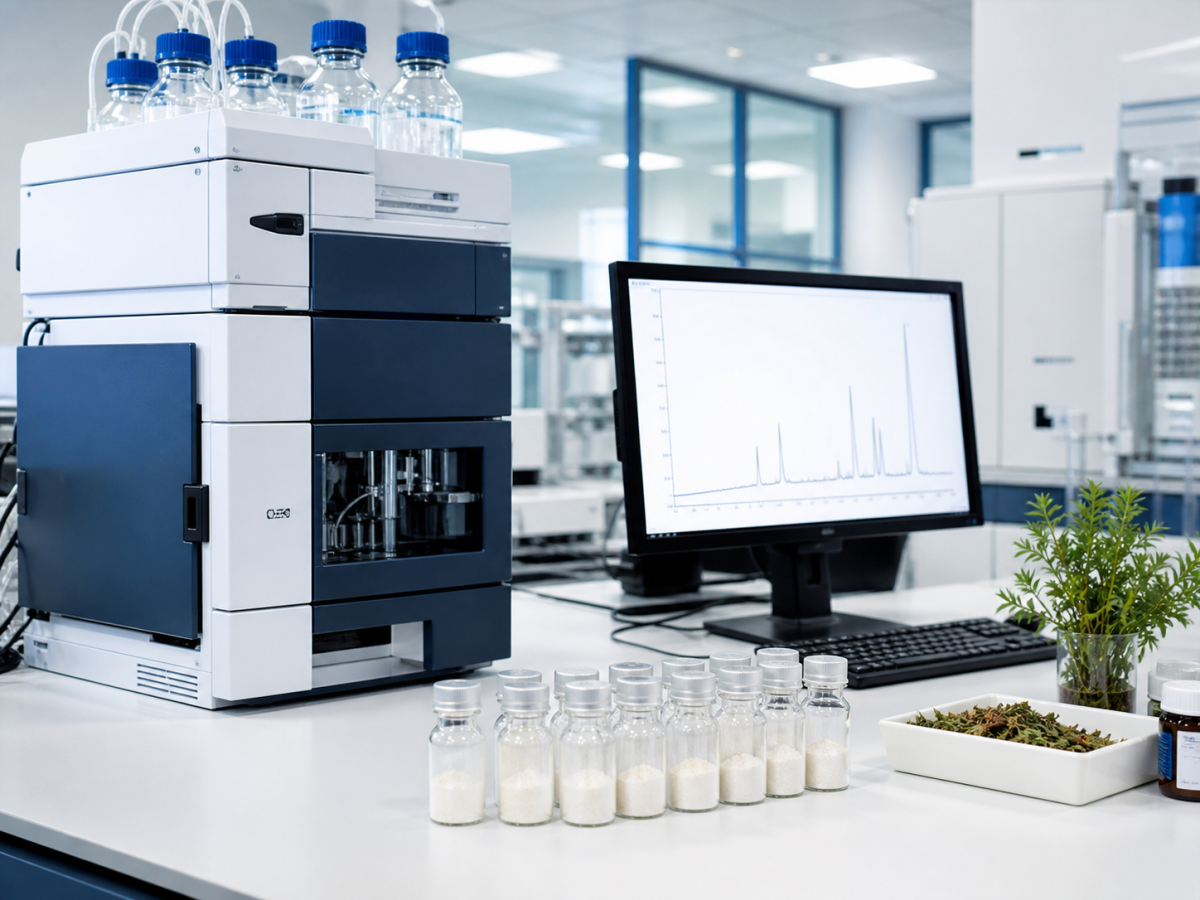
7. Sample Review vs Bulk RFQ
| Dimension | Sample review | Bulk RFQ |
|---|---|---|
| Main purpose | Check physical behavior, document fit and application match | Confirm commercial supply, packing, lead time and export needs |
| Buyer input | Application, sample quantity, target specification, COA needs | Quantity, MOQ expectation, packing size, destination market |
| Documents | Specification, COA, method note | Quotation, packing list, export documentation checklist |
| Limit | Needs later commercial confirmation | Should follow document or sample approval when the specification is strict |
Sample cost expectations
Budgeting for samples reduces friction later. Typical industry ranges:
| Sample type | Typical cost | What it covers |
|---|---|---|
| Stock sample | USD 0–50 | Existing specification, standard packing |
| Custom sample | USD 50–500 | Adjusted particle size, packing, or minor spec changes |
| Pre-production sample | USD 100–1,000+ | New process validation, scale-up batch |
| Sample-to-order conversion | 20–30% of inquiries | Industry benchmark for how many sample requests convert to orders |
8. Packing, Storage and Export Documentation
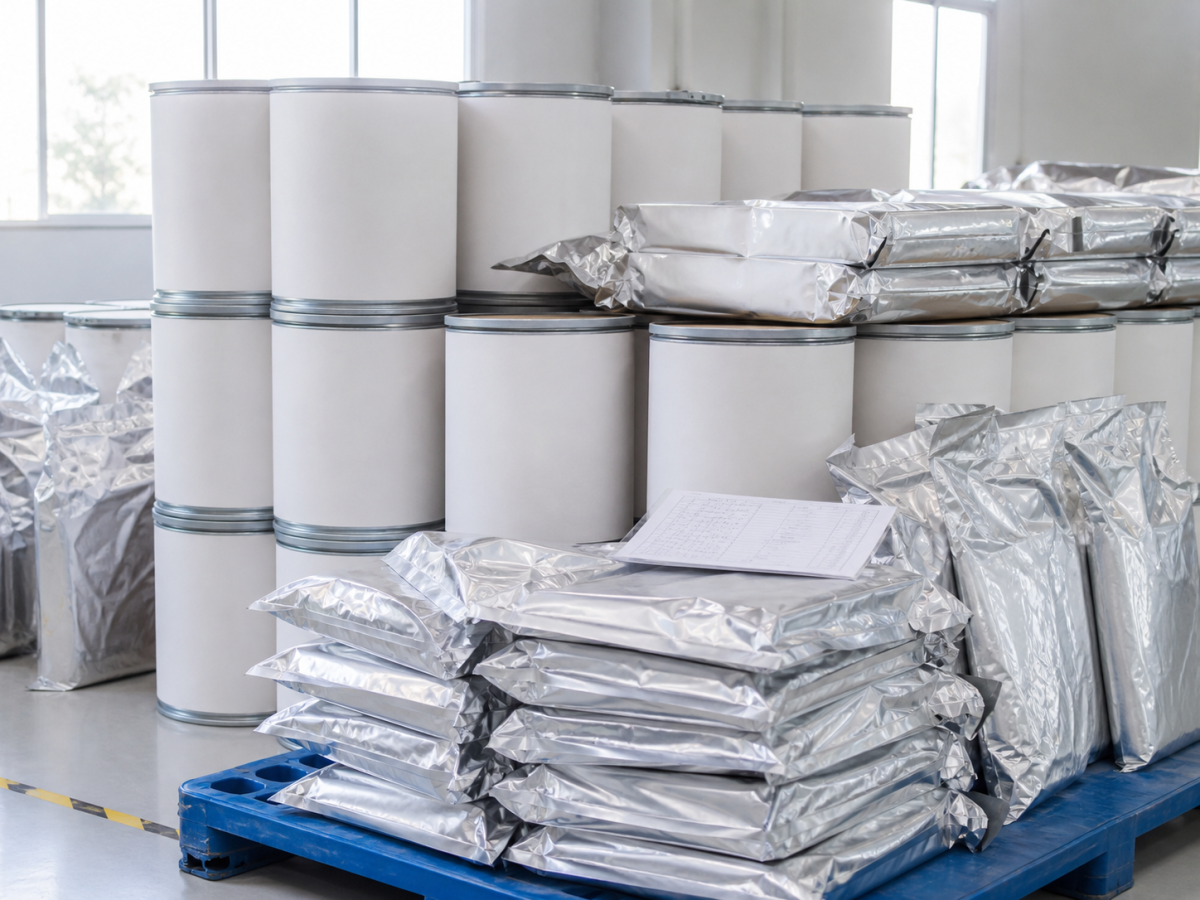
- Packing: double-layer food-grade poly bags inside a fiber drum (standard 25 kg net), vacuum aluminum-foil bags for smaller units; custom packing (10 kg, 5 kg, retail-ready) is normally available on request.
- Storage: sealed container, cool and dry, protected from direct light; EGCG is light-sensitive and slightly hygroscopic, so desiccant inclusion and opaque or amber packaging are worth requesting for long transit.
- Export documents: COA, packing list, commercial invoice, and destination-specific phytosanitary/certificate needs; see the Ingredient Export Documentation Checklist for the full list.
9. RFQ Checklist (Pre-Fill Before You Contact a Supplier)
- EGCG target and HPLC method wording (include Rs requirement if your QA uses it).
- Specification sheet and representative COA with lot reference.
- Sample lot and batch reference for the physical sample.
- Particle size, packing and storage direction.
- MOQ, lead time and destination market.
- Certification documents required by your market (EU MRL panel, Kosher/Halal, organic).
10. FAQ
Ask for the HPLC assay wording, specification sheet, representative COA, sample lot, packing, MOQ, lead time and destination-market support — in that order. The assay wording is the highest-value question because it tells you whether the 98% figure is method-verified.
Check three things: the method states HPLC with a C18 column and a UV wavelength of 274–280 nm, the EGCG/GCG resolution (Rs ≥ 2.0) is documented, and the catechin fingerprint reports EGCG, EGC, ECG, EC and GCG individually rather than a single isolated number. Ask for a third-party accredited lab report if the COA is in-house only.
Yes. Keep the sample code, batch number and representative COA connected during internal review. A sample without a lot-referenced COA cannot be re-verified later and creates a documentation gap at finished-goods audit.
No. Green tea extract 98% usually refers to total polyphenols by UV (Folin-Ciocalteu). EGCG 98% refers to the single catechin monomer by HPLC. Confirm which basis the supplier used, because the two numbers are not interchangeable and the physical properties differ.
Standard commercial packing is 25 kg net in double poly bags inside a fiber drum, with smaller units in vacuum aluminum-foil bags. MOQs vary by supplier; most manufacturers quote smaller MOQs for repeat customers and can split shipments for first trials.
Use the EGCG 98 product page on the iherbsea.com site with your specification, sample, COA and RFQ details, or contact HERBSEA directly with application, sample, COA and RFQ inputs.
11. Summary
Before supplier comparison, align material identity, application, target specification, COA fields, sample plan, MOQ, packing and destination market. The four documents that decide qualification are the specification sheet, the lot-referenced COA with a documented HPLC method, the sample-lot reference, and the market-specific compliance set (pesticide MRLs, heavy metals, certification). Clear inputs help suppliers respond with usable samples and quotation details, and they make the difference between a sample that passes QA and one that has to be repeated.
Related Sourcing Resources
- EGCG 98% Supplier — main product page for HPLC COA, sample and RFQ review.
- Green Tea Extract Supplier — adjacent extract sourcing path.
- Bulk Matcha Powder Supplier — adjacent green tea powder sourcing path.
- Plant Extract Supplier hub — category-level comparison.
- EGCG COA Sample Request Guide — COA-first sample request workflow.
- Bulk Ingredient Sample Request Template — sample quantity, specification, COA and MOQ fields.
- Food Ingredient RFQ Template — supplier comparison, packing and quotation fields.
- Ingredient Export Documentation Checklist — COA, packing and destination-market document review.
- Ingredient Supplier Audit Checklist — supplier scope, sample control and document readiness.
- Ingredient Sourcing Guide Index — grouped tea powder, plant extract and documentation resources.
Data Sources
Market and specification figures cited in this guide: Bosson Research (EGCG supplements market, 2025); 24chemicalresearch and DataIntelo (EGCG ingredient market, 2025); China Ministry of Agriculture and Rural Affairs (2024 tea production statistics); China Customs HS 2932.99 (2024 catechin export data); IndexBox (China tea/mate extract exports, 2024); ISO 14502-1:2005; GB/T 22244-2008; USP reference standards; EU Regulation (EC) 396/2005 MRL framework; ICH Q3C. Typical sample-cost ranges and 20–30% sample-to-order conversion are industry benchmarks; verify current figures with your supplier before budgeting.