
Quick Answer
For beverage, vending, bakery, and dry-mix projects, the right spray dried black tea powder supplier is the one that can match your target sensory profile, solubility behavior, bulk density, microbiology limits, packaging format, and export documents before you place a bulk order. Ask for a COA, flowability notes, allergen and GMO statements, pesticide-residue scope, country-of-origin details, and a sample plan that mirrors your real formulation.
HERBSEA can support bulk black tea powder sourcing for brands that need stable color, clean tea aroma, repeatable blending behavior, and export-ready documentation. For commercial product specifications, see our Instant Black Tea Powder page.
1. Define the Powder Specification Before You Compare Suppliers
Spray dried black tea powder is not a single commodity grade. Two suppliers may both offer “instant black tea powder,” while one is optimized for hot vending systems and another is better for dry sachets, bakery mixes, or tea latte bases. Before requesting prices, send a short specification brief so each supplier quotes against the same target.
Key items to define:
- Application: RTD beverage, vending premix, dry mix sachet, bakery, chocolate, dessert, or food service.
- Solubility target: hot soluble, cold soluble, or dual-use.
- Sensory target: brisk, mellow, malty, roasted, high-color, or light-color profile.
- Physical profile: powder color, mesh range, bulk density, flowability, and caking control.
- Chemistry and quality markers: moisture, total plate count, yeast and mold, heavy metals, pesticide-residue scope, caffeine range, and carrier status.
- Packing: 1 kg sample pouch, 5 kg trial carton, 20-25 kg bulk carton, or customized inner bag.
This brief helps buyers compare supplier capability rather than comparing only unit price.
2. Match the Production Route to Your Application
Spray drying is widely used because it can convert tea extract into a free-flowing powder with efficient cost control and good blending behavior. However, the supplier still needs to control extraction, concentration, filtration, drying temperature, carrier use, and final packing humidity.
| Application | What Buyers Usually Need | What to Check in Samples |
|---|---|---|
| Vending drinks | Fast dispersion, stable cup color, consistent taste at high throughput | Dissolution time, foaming behavior, sediment, aroma after hot water contact |
| RTD tea beverage | Good clarity or controlled haze, color consistency, low off-notes | Cold solubility, turbidity, pH compatibility, heat-process stability |
| Dry mix sachets | Low caking, easy blending with sugar, creamer, flavors, or minerals | Bulk density, flowability, humidity tolerance, blend uniformity |
| Bakery and dessert | Tea color and flavor that remain recognizable in a food matrix | Heat stability, color after processing, aroma intensity in trial recipe |
If your project needs cold soluble performance, do not assume every spray dried black tea powder will dissolve cleanly in cold water. Request a cold-water test method, sample video, or a small pilot batch review before confirming MOQ.
3. Compare Origin Options With Risk and Flavor in Mind
Origin affects cost, aroma, color, lead time, and document expectations. For black tea powder, procurement teams often compare China, India, Sri Lanka, and Kenya, then choose based on target taste and regulatory workload.
| Origin Option | Typical Sourcing Strength | Buyer Watch Point |
|---|---|---|
| China | Flexible processing, strong tea powder manufacturing base, broad packaging options | Confirm pesticide-residue scope and batch traceability for the target market |
| India | Malty Assam-style profiles and strong black tea identity | Confirm seasonal profile variation and color consistency between lots |
| Sri Lanka | Ceylon-style aroma, export experience, established tea identity | Check price volatility and lead time for selected grades |
| Kenya | Strong global black tea export position and cost-effective bulk tea base | Align sensory expectations because some lots are brisk and high-color |
Market context also matters. Use these numbers as sourcing context, not as a substitute for supplier-specific batch documents.
| Market Data Point | 2024 Reference Value | Buyer Meaning |
|---|---|---|
| Kenya black tea export value | About US$1.36 billion | Kenya remains a major reference origin for bulk black tea cost comparison |
| Sri Lanka black tea export value | About US$674 million | Useful benchmark for Ceylon-style aroma and export experience |
| India black tea export value | About US$667 million | Important reference origin for malty black tea profiles |
| China black tea export value | About US$199 million | Supports China-origin review when processing flexibility matters |
| China total tea exports | About 374,100 tonnes / US$1.42 billion | Shows the export scale behind China-origin tea supply chains |
| China black tea exports | About 24,800 tonnes | Useful context for black tea powder buyers comparing origin options |
| Sample-to-order discussion rate | Roughly 20-30% for aligned B2B sample files | Structured briefs can reduce unqualified sample loops |
4. Build a Supplier Shortlist Around Documents, Not Claims
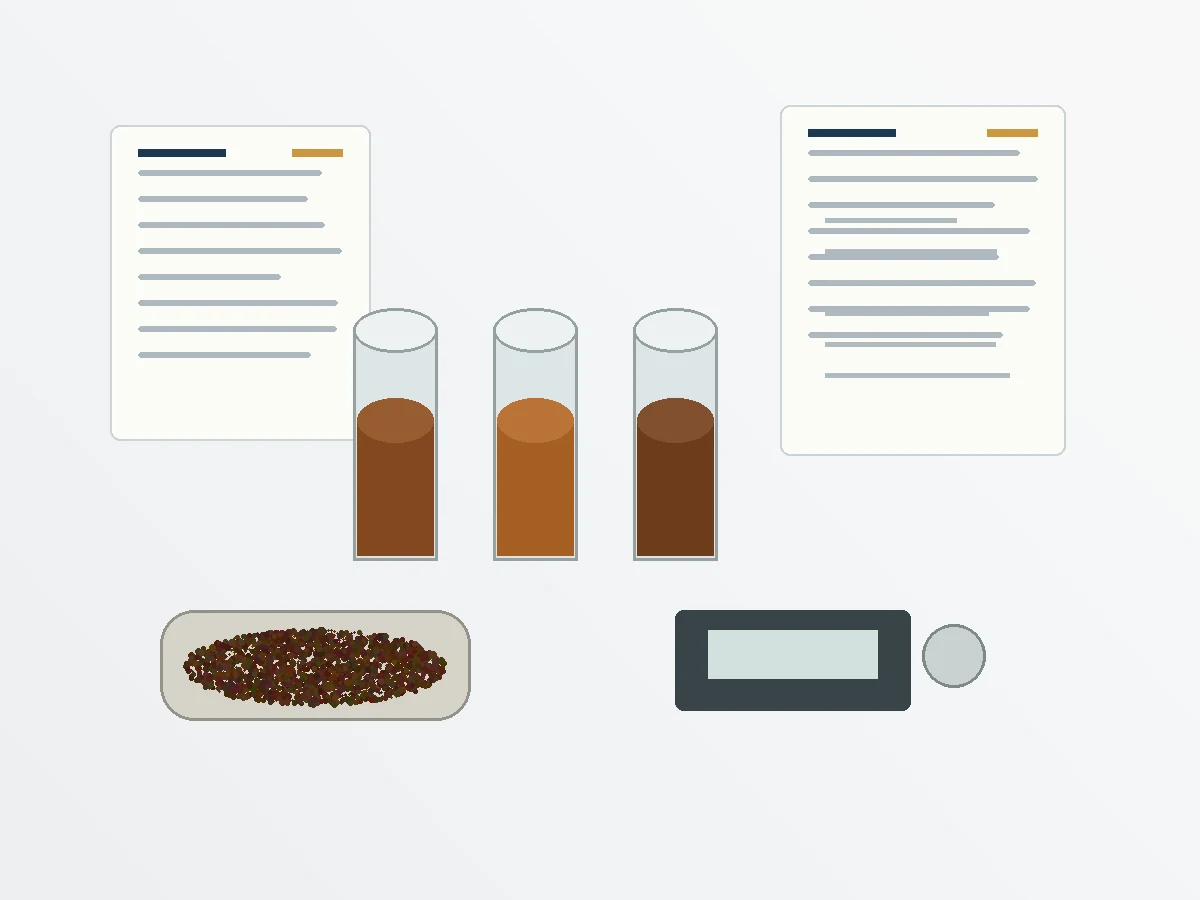
A reliable supplier should be able to send document samples before payment terms are finalized. For international beverage or food brands, documentation is often the fastest way to separate trading-only vendors from suppliers with real quality-control discipline.
| Document / Standard | Why It Matters for B2B Buyers | Practical Request |
|---|---|---|
| COA | Confirms batch-level assay, moisture, microbiology, and physical indicators | Ask for a recent anonymized COA from the same product family |
| ISO 3720:2011 reference | Gives a recognized black tea specification framework | Ask how raw tea selection aligns with black tea quality parameters |
| HACCP / ISO 22000 / FSSC 22000 | Shows structured food-safety management | Request certificate copy, scope, site name, and expiry date |
| Pesticide-residue report | Supports EU, US, or brand-specific compliance review | Ask for the test panel, method, lab name, and date |
| Heavy metal report | Supports internal QA approval | Confirm lead, arsenic, cadmium, and mercury test scope |
| Allergen / GMO / carrier statement | Helps formulation and label review | Confirm whether maltodextrin or another carrier is used |
For EU-facing projects, Regulation (EC) No 396/2005 is a key pesticide MRL framework, and buyers should confirm the applicable residue limits for tea and the default value used where a specific MRL is not listed. For technical review, align your internal QA team with the current consolidated regulation and lab testing plan.
5. Request Samples in a Way That Predicts Bulk Performance
Many black tea powder projects fail at the sample stage because the buyer requests only a small pouch without sharing the intended application. A better sample request asks the supplier to send the closest stock grade and, when needed, a modified sample against your formula target.
| Sample Type | Typical Use | Cost Expectation | Buyer Decision Point |
|---|---|---|---|
| Stock sample | First sensory and solubility screening | Often US$0-50, freight separate | Decide whether the supplier category is suitable |
| Adjusted sample | Color, aroma, carrier, or solubility adjustment | Often US$50-500 depending on workload | Decide whether the supplier can match the brief |
| Pilot or pre-shipment sample | Confirmation before production or shipment | Often US$100-1,000+ depending on volume | Decide whether to release PO or shipment |
HERBSEA recommends sending the supplier your water temperature, mixing ratio, target color, sweetness system, and packaging plan. Even simple details, such as hot vending versus cold RTD use, can change the recommended grade.
6. Check Packaging, MOQ, and Export Documents Early
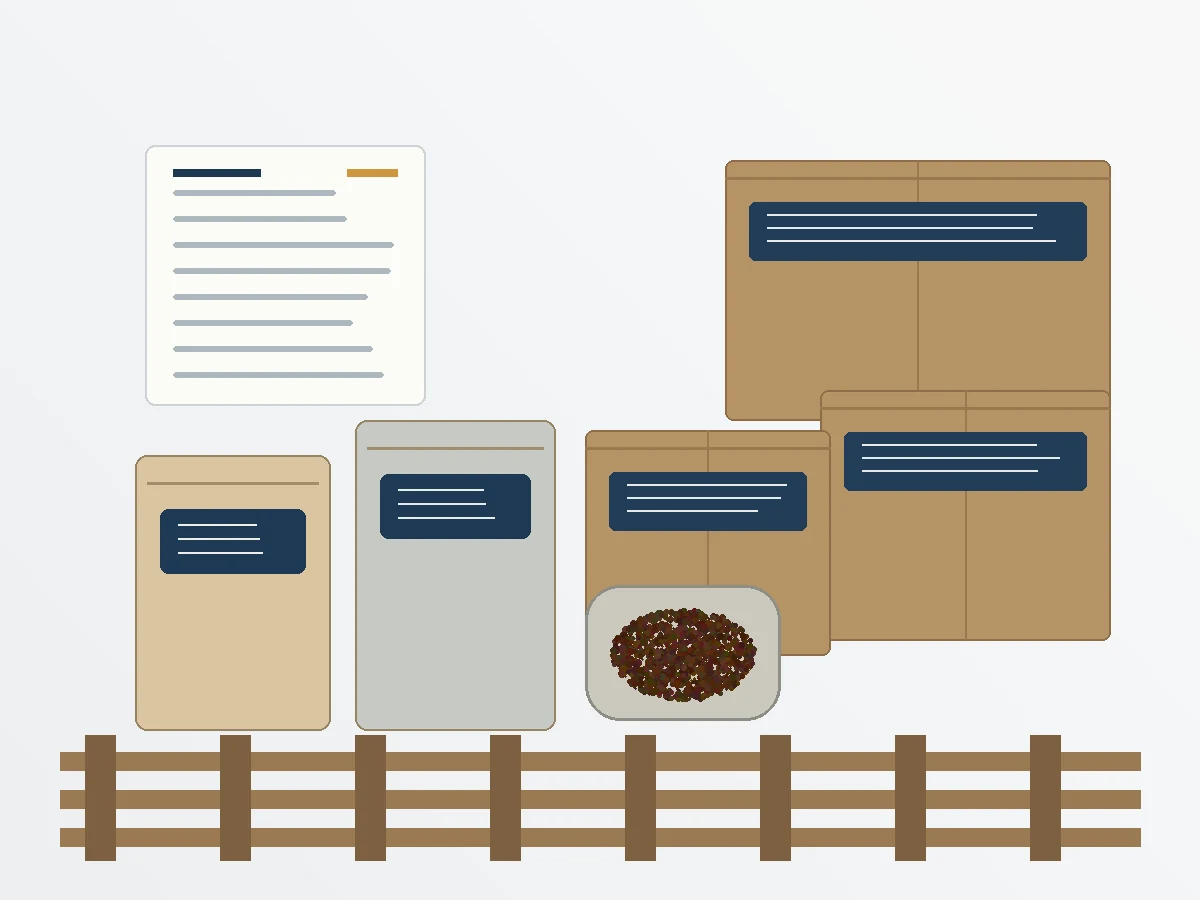
Spray dried tea powder is sensitive to moisture and odor transfer. A low quote can become expensive if the packaging is weak, cartons are not export-ready, or the supplier cannot prepare the document set your forwarder needs.
For bulk orders, confirm:
- Inner packing: aluminum foil bag, PE liner, nitrogen option if required, and seal integrity.
- Outer packing: carton strength, palletization, label format, and batch coding.
- MOQ: stock grade MOQ versus customized grade MOQ.
- Shelf-life basis: storage condition, unopened packaging, and retest policy.
- Export set: commercial invoice, packing list, COA, certificate of origin when required, phytosanitary-related documents where applicable, and HS code alignment.
If your buyer file requires HS code review, read our Black Tea Powder HS Code and Export Documentation Guide before finalizing shipping terms.
7. Price the Supplier by Total Project Cost
The cheapest sample price is rarely the best procurement result. Compare the full sourcing cost: sample iteration time, test fees, MOQ, payment terms, packing quality, rejected-lot risk, shipping method, and internal QA workload.
| Supplier Factor | Low-Risk Signal | Higher-Review Signal |
|---|---|---|
| Response quality | Answers application, spec, packing, and document questions directly | Sends only price and generic photos |
| Sample support | Offers stock and adjusted sample routes | Refuses to discuss application details |
| Quality data | Provides COA and test scope with batch logic | Uses broad statements without test detail |
| Delivery planning | Explains lead time, MOQ, and packing by order size | Gives a single lead time for all quantities |
| Export readiness | Knows document set and product classification discussion | Leaves document work until after payment |
For many B2B ingredient projects, a structured sample process can turn roughly 20-30% of serious sample requests into order-stage discussions when the specification, testing plan, and commercial expectations are aligned.
8. Internal Links for Further Review
Use these related HERBSEA guides when building your supplier comparison file:
- Black Tea Powder Sample Request Checklist
- Instant Black Tea Powder COA Specification Guide
- Cold Soluble Black Tea Powder Supplier Guide
- Black Tea Powder for Vending Drink Formulation
- Unsweetened Black Tea Powder Bulk Guide
It usually offers efficient cost control, good blending behavior, and practical scalability for beverage and food production. The final performance still depends on extract quality, carrier use, drying control, and packing.
Only if the grade is designed and tested for cold solubility. Ask the supplier for a cold-water dispersion method, turbidity notes, and sample performance at your target temperature.
Start with a recent COA, product specification, allergen statement, GMO statement where relevant, pesticide-residue report, heavy metal report, certificate copies, packing specification, and export document sample list.
Compare sensory profile, color, price stability, lead time, certificate availability, and residue-testing scope. Origin is useful context, but batch-level documents and application testing should guide the final decision.
Stock grades usually have lower MOQ than customized grades. Custom color, solubility, flavor, or carrier requirements may require a higher MOQ because the supplier needs a dedicated production arrangement.
HERBSEA can align the product grade, sample plan, packing format, and document set around your application, then support RFQ comparison for bulk instant black tea powder projects.
Summary
A strong spray dried black tea powder supplier should help you verify more than taste. For B2B procurement, the real decision file should include sample performance, COA data, residue and heavy metal test scope, food-safety certificates, packing details, MOQ, lead time, and export document readiness. Buyers who define these items before requesting price usually receive clearer quotes and reduce avoidable sample loops.
Data sources used for this guide include UN Comtrade 2024 black tea export context, China Customs / tea industry 2024 export summaries, ISO 3720:2011 black tea specification reference, and the EU Regulation (EC) No 396/2005 pesticide-residue framework.