
Quick Answer — What documentation do you need before quoting spices powders?
Six documents: (1) a specification sheet with botanical identity, mesh size, moisture, color and sensory target; (2) a batch-specific COA covering microbiology, heavy metals, pesticide residues and physical results; (3) certification evidence (HACCP, ISO 22000, FSSC 22000 as applicable); (4) packing details; (5) a sample record linked to the batch number; and (6) the export documents for the destination market. Use the Spices Powder Supplier hub as the working page, then confirm specification, sample lot, COA, packing and quotation details with the supplier team.
1. Why Spice Powder Documentation Quality Is a Real Buying Risk
Spices are low-moisture foods, which limits microbial growth during storage — but it does not eliminate contamination. The U.S. FDA risk profile for spices identifies Salmonella as the pathogen most commonly linked to spice-related illness, and published retail surveillance studies report detectable Salmonella prevalence of about 0.24% for black pepper, 0.49% for dehydrated garlic and 0.64% for hot red pepper. On the chemical side, turmeric is one of the most-adulterated commodities globally: documented fraud includes starch, cassava and chalk powder addition, and lead chromate has been found used to intensify yellow color. These are exactly the risks a COA, specification sheet and certification evidence are designed to catch — which is why buyers who skip documentation checks pay for it later at customs or at the factory gate.
The market context makes documentation more valuable, not less. Global herbs and spices trade was estimated at US$193.62 billion in 2025, growing to US$205.07 billion in 2026 (CAGR 5.9%) and projected at US$256.76 billion by 2030 (Business Research Company, Jan 2026). Within the spice powder supply chain, international trade in ginger, turmeric, thyme and related spices (HS 0910) reached US$3.94 billion in 2024, led by China (US$787 million, 20% share) and India (US$702 million, 17.8% share) (ITC Trade Map / UN Comtrade, 2024). India exported 176,325 metric tonnes of turmeric in FY 2024-25 worth US$333 million — about 66% of world turmeric exports — with Bangladesh, UAE, USA, Malaysia and Morocco as the top five buyers (Spices Board India, Aug 2025). When volume and value concentrate in a few origin countries, the documents you request are what separate consistent, compliant lots from commodity-grade cargo.
| Market indicator | Value | Source / year |
|---|---|---|
| Global herbs & spices market | US$193.62B (2025) → US$205.07B (2026E), CAGR 5.9%; US$256.76B by 2030E | Business Research Company, Jan 2026 |
| World exports, HS 0910 (ginger, turmeric, thyme, curry spices) | US$3.94B (2024) | ITC Trade Map / UN Comtrade, 2024 |
| Top HS 0910 exporters | China US$787M (20%), India US$702M (17.8%), Netherlands US$258M | ITC Trade Map / UN Comtrade, 2024 |
| India turmeric exports | 176,325 t / US$333M in FY 2024-25; ~66% of world exports | Spices Board India / PIB, Aug 2025 |
| India spices exports overall | >1.5 million tonnes to 180+ countries (2023) | Spices Board India |
| India turmeric to EU | €39.9M / 18,136 t (2024), +58.8% vs 2020; >60% to Germany, UK, Netherlands | CBI / ITC Trade Map, 2025 |
2. The 7-Part Spice Powder Documentation Checklist
Use this list as the skeleton of every spice powder RFQ. Each item maps to a decision the supplier needs from you — and a document they need to return.
| # | Document / data point | What it confirms | When you need it |
|---|---|---|---|
| 1 | Specification sheet | Identity, grade, mesh size, moisture, color, sensory target | Before comparing suppliers |
| 2 | COA (batch-specific) | Actual measured physical, micro, heavy metals, pesticide results | Before sample approval and shipment |
| 3 | Certification evidence | HACCP plan, ISO 22000 / FSSC 22000 scope, FDA/FSVP where applicable | Supplier qualification |
| 4 | Sample record + batch number | Sample lot linked to its COA and retention sample | Sample approval stage |
| 5 | Packing specification | Inner/outer packing, net weight, palletization, shelf life | RFQ and container planning |
| 6 | Export document list | Phytosanitary, certificate of origin, health certificate, Spices Board certificate | Before quotation to destination market |
| 7 | RFQ details | Sample size, MOQ, price basis, lead time, Incoterm, payment terms | Commercial confirmation |
For identity, confirm three things in the specification sheet: botanical source (e.g., Zingiber officinale for ginger, Curcuma longa for turmeric, Cinnamomum species for cinnamon), plant part (rhizome vs bark), and powder format (fine, extra fine, steam-treated, organic). “Turmeric powder” without botanical identity and plant part is not a specification — it is a description.
3. Specification Sheet Fields That Decide Product Fit
A spice powder spec sheet should carry limits, not adjectives. The fields below are the ones that determine dispersion, texture, color and flavor behavior in food, beverage and dry-mix applications.
| Field | Typical benchmark | Why it matters |
|---|---|---|
| Mesh / particle size | 40 mesh (coarse, re-processing), 60 mesh (standard food use), 80 mesh (fine, supplements), 100 mesh (very fine, specialty) | Drives dispersion, sedimentation and mouthfeel in liquids |
| Moisture | ≤ 8-10% (ISO 939) | High moisture shortens shelf life and risks clumping in transit |
| Total ash / acid-insoluble ash | Total ≤ 7%, acid-insoluble ≤ 1.5% (ISO 928 / ISO 930) | Ash control flags adulteration and sand/soil content |
| Volatile oil | Product-specific minimum (ISO 6571) | The main aroma driver for ginger and cinnamon |
| Color value | ASTA color units for paprika/chili; curcumin content for turmeric (up to ~8% in premium grades) | The main grade-splitting parameter for colored spices |
| Foreign matter | ≤ 0.5% premium, ≤ 1% standard | Physical cleanliness of the lot |
Ask for the supplier’s own spec sheet and compare these fields against your application. If you are buying turmeric for a beverage color application, curcumin content and mesh matter more than volatile oil; for ginger powder in a bakery mix, mesh and moisture dominate.
4. COA: What Every Field Should Show — and the Red Flags That Reject It
A COA is per-batch evidence, not a marketing document. Verify four things before you trust it: (1) a unique batch/lot number that matches the sample or shipment; (2) a named accredited laboratory (e.g., NABL, ILAC-recognized) with a verifiable number; (3) actual measured values, not just “conforms”; (4) test methods for each parameter. A COA without a batch number is a template, and one with every value landing exactly on the limit has likely been adjusted to appear compliant.
| Parameter | Typical acceptable limit | Common test methods |
|---|---|---|
| Total plate count (TPC) | ≤ 100,000 CFU/g (premium ≤ 50,000) | ISO 4833 |
| Yeast & mould | ≤ 1,000 CFU/g (premium ≤ 500) | ISO 21527 |
| Coliforms | ≤ 100 CFU/g | ISO 4832 |
| E. coli | Negative / absent | ISO 16649 |
| Salmonella | Negative / 25 g | ISO 6579 |
| Lead (Pb) | ≤ 2.0 mg/kg (EU Reg 1881/2006); premium < 0.5 mg/kg | ICP-MS |
| Cadmium (Cd) | ≤ 0.5 mg/kg | ICP-MS |
| Arsenic (As) / Mercury (Hg) | ≤ 1.0 / ≤ 0.1 mg/kg | ICP-MS / AFS |
| Aflatoxin B1 | ≤ 5 µg/kg (EU); total aflatoxins ≤ 10 µg/kg | HPLC |
| Ochratoxin A | ≤ 15 µg/kg (EU) | HPLC-FLD / LC-MS/MS |
| Pesticide residues | EU MRL per Reg (EC) 396/2005; default 0.01 mg/kg; multi-residue panel 200-500+ compounds | GC-MS/MS / LC-MS/MS |
Microbiological limits above follow the European Spice Association Quality Minima (Salmonella absent/25 g, E. coli < 2 log CFU/g, yeast & mould < 5 log CFU/g) and common published spice COA specifications (ATA Spice, JJ Spices, Atlas AgroFood, 2024-2026). Heavy metals and aflatoxin limits follow EU Regulation (EC) 1881/2006 benchmarks. Always confirm the exact limits in the supplier’s spec sheet and against your destination market — a lot can pass one market and fail another.
Pesticide methodology is the most common rejection trigger. If your destination is the EU, ask for a multi-residue screen of 200-500+ compounds with the 0.01 mg/kg default MRL — a basic 12-compound panel will not satisfy Regulation (EC) 396/2005 compliance, and ethylene oxide fumigation has been banned in the EU since 2020. For chili and paprika destined for the EU, also require a Sudan Red absence result.
5. Certification Tiers: What Buyers Should Ask Suppliers to Hold
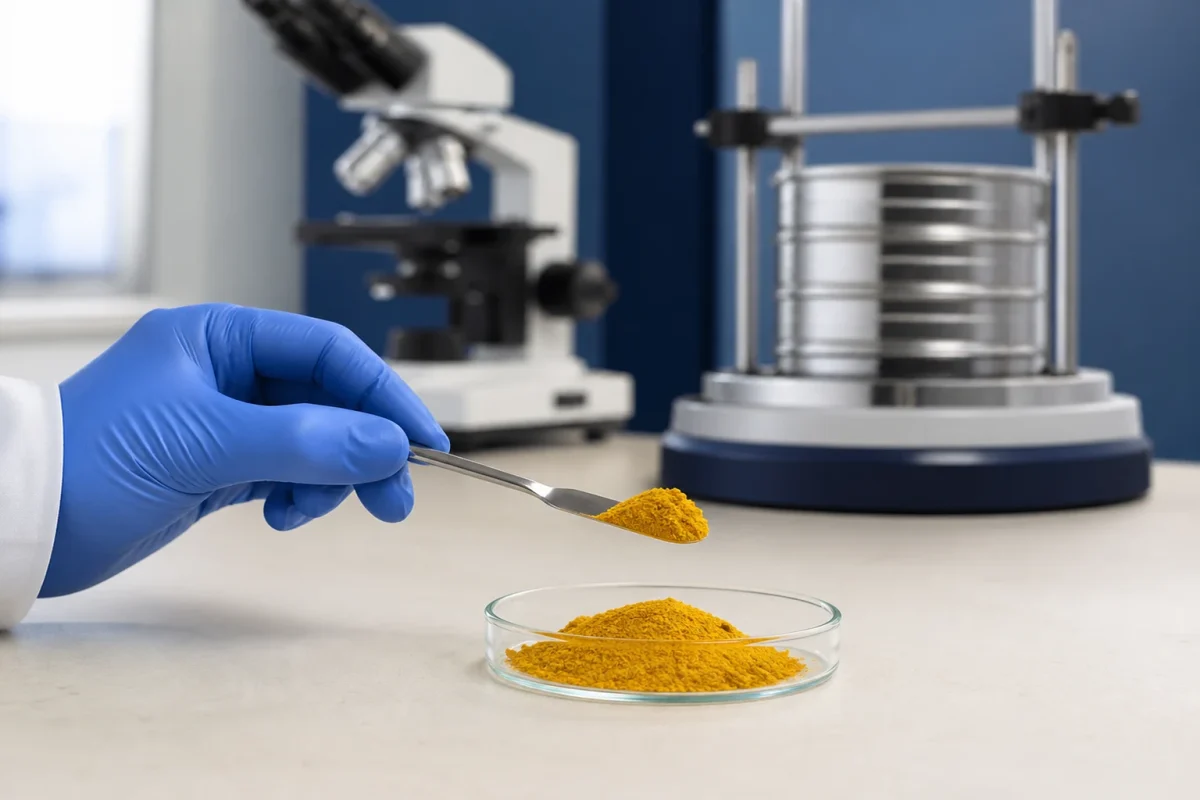
Certifications are structured, auditable evidence that the factory controls hazards — cross-contamination in blending, pathogens in low-moisture foods, foreign materials, allergens and chemical residues. They are not packaging logos. Group them in three tiers so you can match the request to the market:
| Tier | Certifications / registrations | Typical buyer expectation |
|---|---|---|
| Foundational (baseline) | HACCP plan, ISO 22000, local registration (e.g., FSSAI + Spices Board CRES in India) | Minimum for any serious export supplier |
| Market access (destination-specific) | FSSC 22000, BRCGS Food Safety, IFS Food (GFSI-recognized); FDA Food Facility Registration + FSVP for US buyers | Required by EU/UK retailers and US importers |
| Premium / claim-based | USDA NOP / EU Organic / NPOP, Kosher, Halal, Fair Trade, Sedex SMETA audit | Needed only if your label claims it |
FSSC 22000 is the scheme most EU and US buyers ask for by name: it builds on ISO 22000, adds sector-specific prerequisite programs (ISO/TS 22002 series) and food-fraud/defense requirements, and is recognized by the Global Food Safety Initiative. Retail groups including Tesco, Carrefour, Rewe, Whole Foods and Walmart condition supplier onboarding on GFSI-recognized certification — without it, the factory is often not even invited to tender. Certification is valid for three years, and the initial audit process typically takes 3-12 months depending on starting compliance (Legal4Sure, USB Certification, 2025-2026).
When a supplier presents only a domestic license (e.g., FSSAI alone) with no HACCP or ISO/FSSC evidence, regard them as not export-ready for EU/US channels.
6. Sample Types and the Document Trail from Sample to Quotation
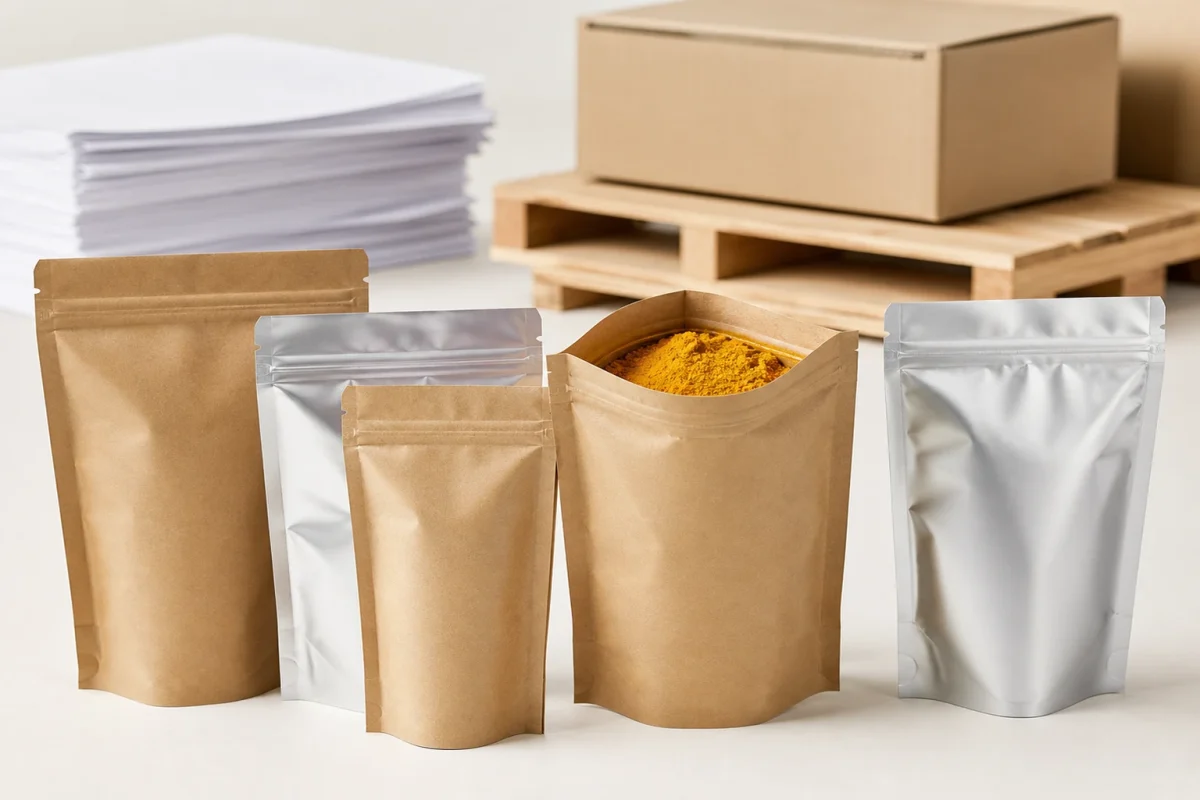
Samples are where documentation discipline is won or lost. Standard spice powder sample sizes run 100-500 grams, and the sample must ship with a batch-specific COA — the same batch number you will verify against later. Paid samples are normal; an exporter that resists a written spec, a batch-linked COA, or independent lab verification of the sample is a red flag.
| Sample type | Typical cost | When it fits |
|---|---|---|
| Stock / off-the-shelf sample | US$0-50 | Standard grade, existing production lot |
| Custom sample | US$50-500 | Adjusted mesh, color target or processing per your brief |
| Pre-production / pilot sample | US$100-1,000+ | New origin, new process, or first commercial run |
Cost benchmarks above are the common industry tiers; sample-to-order conversion in food ingredient sourcing typically runs 20-30%. Use them to set expectations with suppliers — and always record the sample lot number, COA version and internal approval note so the bulk shipment can be checked against the same baseline instead of approved on memory.
- Request a supplier profile — company dossier, certificates, facility photos and named references.
- Issue a written specification sheet — grade, moisture target, mesh, color value, destination-market compliance.
- Request a paid sample with a batch-specific COA — 100-500 g is the standard spice powder sample size.
- Run independent lab verification in your market to catch sample switching or cherry-picking.
- Request a proforma invoice with quantity, grade, Incoterm, payment terms and the full export document list.
- Agree MOQ, packing, lead time and payment structure before production begins.
- Confirm the pre-shipment COA before loading, and keep a retention sample policy in place.
7. Document Review vs Commercial RFQ
Use document review to qualify a supplier; use a commercial RFQ to close the deal. Running them in the wrong order — asking for pricing before specification and document scope are fixed — is the most common source of unusable quotations.
| Dimension | Document review | Commercial RFQ |
|---|---|---|
| Main purpose | Confirm identity, specification, COA fields and sample fit | Confirm MOQ, price path, packing, lead time and shipment needs |
| Buyer input | Application, target grade, method preference, document list | Trial quantity, annual estimate, destination country, packing requirement |
| Documents exchanged | Spec sheet, batch COA, certification evidence, sample record | Proforma invoice, packing list, export document set, payment terms |
| Limit | Does not replace commercial confirmation | Should be based on a clear specification and document checklist |
8. RFQ Checklist for Spice Powder Documentation Review
- Target spice powder, botanical name and plant part.
- Mesh size, color target and sensory direction for your application.
- Application and process condition (beverage, dry mix, bakery, re-processing).
- COA scope: micro, heavy metals, aflatoxin, pesticide panel matched to destination market.
- Certification evidence (HACCP / ISO 22000 / FSSC 22000 / organic as applicable).
- Sample quantity, order estimate, packing requirement and destination country.
9. FAQ
Request a specification sheet (identity, mesh, moisture, color, sensory target), a batch-specific COA (microbiology, heavy metals, pesticide residues), packing details, certification evidence, and the export documents required for the destination market.
They affect dispersion, texture, color and flavor behavior in food, beverage and dry mix applications — the same turmeric powder that is ideal for a beverage color application may be too fine or too coarse for a bakery blend.
Ask for HACCP and ISO 22000 as the baseline, and FSSC 22000 (or BRCGS/IFS) when the destination is the EU or the buyer is a major retail or foodservice chain. For US-bound product, confirm FDA Food Facility Registration and FSVP compliance.
Pesticide residues above the default 0.01 mg/kg MRL under Regulation (EC) 396/2005, or a COA that only tested a small compound panel. Ask for a multi-residue screen covering 200-500+ compounds; for chili products also require a Sudan Red absence result.
Check for a unique batch number, a named accredited laboratory (e.g., NABL with a verifiable number), actual measured values rather than conforms, test methods per parameter, and dates that align with production. Cross-check the lab name and accreditation, and request the raw lab report for high-value orders.
Yes — B2B buyers can send several target powders with application, sample, packing and document requirements in one request, and the supplier team will return spec, sample and COA details per product.
10. Summary
For a faster supplier review and a cleaner audit trail, send the ingredient name, botanical identity, target grade, application, sample plan, COA or specification requirements, certification expectations, order estimate, packing need and destination country in one RFQ. Keep the spec sheet as the fixed contract, the COA as per-batch evidence, and the sample record linked to its batch number before quotation.
11. Related Sourcing Pages
- Spices Powder Supplier hub — category-level comparison of ginger, turmeric and cinnamon powders.
- Ginger Powder — for spice powder sample and RFQ review.
- Turmeric Powder — for color, mesh and document comparison.
- Cinnamon Powder — for sensory and packing review.
- Ingredient Sourcing Resource Center — RFQ, sample, audit and export document workflows.
- Bulk Ingredient Sample Request Template — sample quantity, COA and specification notes.
- Food Ingredient RFQ Template — quotation details.
- Ingredient Export Documentation Checklist — destination-market document review.
- Contact HERBSEA with specification, sample, COA and RFQ requirements.
12. Data Sources
Market and regulatory data cited in this guide: Business Research Company herbs and spices global market report (Jan 2026); ITC Trade Map / UN Comtrade HS 0910 export statistics (2024); Spices Board India turmeric export data via Press Information Bureau (Aug 2025); CBI turmeric-to-Europe market analysis (ITC Trade Map, 2025); European Spice Association Quality Minima Document; EU Regulation (EC) 396/2005 (pesticide MRLs) and Regulation (EC) 1881/2006 (contaminant limits); FDA spice risk profile; published spice COA and certification references from ATA Spice, JJ Spices, Atlas AgroFood, Harmain Global, Legal4Sure, USB Certification, HONGSING and Harvestia Group (2024-2026). Sample cost tiers and conversion benchmarks are common industry ranges. Limits are benchmarks for comparison — always confirm the exact specification with the supplier and your destination-market regulation.