
# Urolithin A Powder for Capsules and Tablets: Buyer Formulation Notes
Quick answer: For capsule and tablet projects, source Urolithin A as a defined raw material (CAS 1143-70-0, assay ≥98% by HPLC), then qualify it against your target format before scale-up — flowability and particle size for capsule filling, compression behavior and moisture control for tableting. Confirm the manufacturing route (fermentation vs chemical synthesis), request the batch COA with residual solvent and heavy-metal results, and align sample testing with the exact capsule size or tablet tooling you plan to use. HERBSEA supplies bulk Urolithin A powder for B2B formulation use; review the bulk Urolithin A powder supplier page and request the current specification, COA, and sample support for your target format.
What You Are Actually Sourcing: Urolithin A Powder Grades
Urolithin A (CAS 1143-70-0, molecular formula C13H8O4, molecular weight 228.2) is a gut-microbiota metabolite of ellagitannins found in pomegranate and berry sources. In the B2B market it is sold as a crystalline powder, typically at 98% or higher assay. Two production routes dominate supply, and they behave differently in downstream formulation:
| Grade / Route | Typical Assay (HPLC) | Typical COA Range | What It Means for Formulation |
|---|---|---|---|
| Fermentation / bioconversion (98%) | ≥98.0% | LOD ≤2.0%, ash ≤0.5%, heavy metals ≤10 ppm | Most common spec for capsules and tablets; consistent batch-to-batch profile, lower residual-solvent exposure |
| High-purity fermentation (99%) | ≥99.0% | Tighter impurity profile, full solvent panel | Used for premium finished products and tighter regulatory dossiers |
| Chemical synthesis | 92% lab yield; 61–67% at kilo scale | Solvent residue risk (DMF, DMSO) without polishing | Higher cost and purification bottleneck; verify residual solvents on every batch |
Published industry reporting notes that chemical synthesis can drop from about 92% purification yield at laboratory scale to 61–67% at kilo scale because of structural analogs that are difficult to remove, and that some 2025 batch returns were linked to excessive DMF/DMSO solvent residues from low-purity precursors. For capsule and tablet projects this is the single strongest reason to demand a full residual-solvent panel in the COA rather than relying on assay alone.
Market Context: Why Capsule and Tablet Formats Dominate
The commercial case for solid formats is straightforward. In the global Urolithin A supplement market, capsules and softgels accounted for roughly 65.8% of the market by form in 2025, while healthy-aging and mitochondrial-support applications represented about 54.0% of application share. Independent market estimates place the global Urolithin A supplement market at around US$115 million in 2025, with projections to about US$378 million by 2032 at an 18.5% CAGR; a separate food-grade estimate shows US$245.5 million in 2025 growing to about US$759 million by 2032 at a 17.5% CAGR, with North America holding about 43.4% of that market.
| Market Metric | 2025 Value | Projection | Source |
|---|---|---|---|
| Global Urolithin A supplement market | ~US$115.0M | ~US$377.7M by 2032 (18.5% CAGR) | P-Market Research |
| Capsules + softgels share of market by form | 65.8% | Stable through forecast | P-Market Research |
| Healthy-aging / mitochondrial application share | 54.0% | Largest application segment | P-Market Research |
| Food-grade Urolithin A market | ~US$245.5M | ~US$759.1M by 2032 (17.5% CAGR) | P-Market Research |
| North America share (food-grade) | ~43.4% (US$106.7M) | Leading region | P-Market Research |
For a raw-material buyer this means two things: (1) most downstream customers will formulate a capsule or tablet, so your powder needs the flow, blend, and compression profile for capsule and tablet production; and (2) supply-side competition is tightening, so documentation and consistency become differentiators in supplier selection.
Capsule Formulation Priorities: Fill, Flow, and Uniformity
Capsule projects depend on three powder characteristics before anything else: fill-weight accuracy, flowability through the dosing system, and blend uniformity with excipients.
- Fill weight: Confirm the target active weight per capsule early (commonly 250–500 mg of ≥98% assay powder in a size 0 or size 1 shell, with excipients making up the balance).
- Flowability: Powder must dose consistently at production speed. If the sample bridges or agglomerates in your test equipment, discuss a glidant (e.g., silicon dioxide) or particle-size adjustment with the supplier before approval.
- Blend uniformity: Test the sample with the exact excipient system and capsule size you plan to use, not with a generic placeholder. For custom blends, the formulation team should review the full formula matrix before sample approval.
Ask the supplier whether particle-size data (e.g., D50 and mesh cut) is available for the specific lot, and whether the same grade can be supplied across pilot and commercial batches.
Tablet Formulation Priorities: Compression, Moisture, and Stability
Tablet projects add compression behavior, moisture exposure during processing, and blend consistency to the qualification list.
- Compression behavior: The powder must compact into a robust tablet without excessive friability or sticking. A free-flowing grade with the right particle distribution reduces punch-face issues.
- Moisture control: Low loss on drying (typically ≤2.0%) and controlled moisture pick-up protect tablet hardness and stability during processing; review the LOD result on each COA.
- Blend consistency: Compare the approved sample with the commercial lot when bulk material arrives — particle size and flowability should match the tested grade, not just the assay.
Discuss these points with the contract manufacturer or internal R&D team before commercial purchase, so the RFQ reflects the real production route rather than an idealized spec sheet.
Capsules vs Tablets: Side-by-Side Formulation Checklist
| Review Point | Capsules | Tablets |
|---|---|---|
| Flowability | Supports filling consistency | Supports feeding and compression |
| Particle size | Supports fill and blend review | Supports blend and compression review |
| Moisture control | Helps storage and handling review | Helps process and stability review |
| Excipient load | Lower; active can dominate fill weight | Higher; binders, disintegrants, lubricants required |
| Typical fill weight | 250–500 mg active per capsule | Depends on target tablet weight and dose form |
| Documents | COA, specification, and SDS | COA, specification, and processing notes |
Particle Size, Flowability, and Excipient Compatibility
Particle size and flowability influence weighing, mixing, and finished-format consistency, so buyers should ask whether particle-size information is available and compare the approved sample with the commercial lot when bulk material arrives. Formulation teams should also evaluate how the powder behaves with selected excipients, carriers, or blend partners — appearance, uniformity, caking tendency, handling behavior, and compatibility with the planned manufacturing route. If the powder is destined for a stick-pack, sachet, or beverage-grade application instead of a capsule or tablet format, ask whether a microencapsulated or dispersible variant is offered, as the handling profile differs materially.
COA and Documentation to Request Before Scale-Up
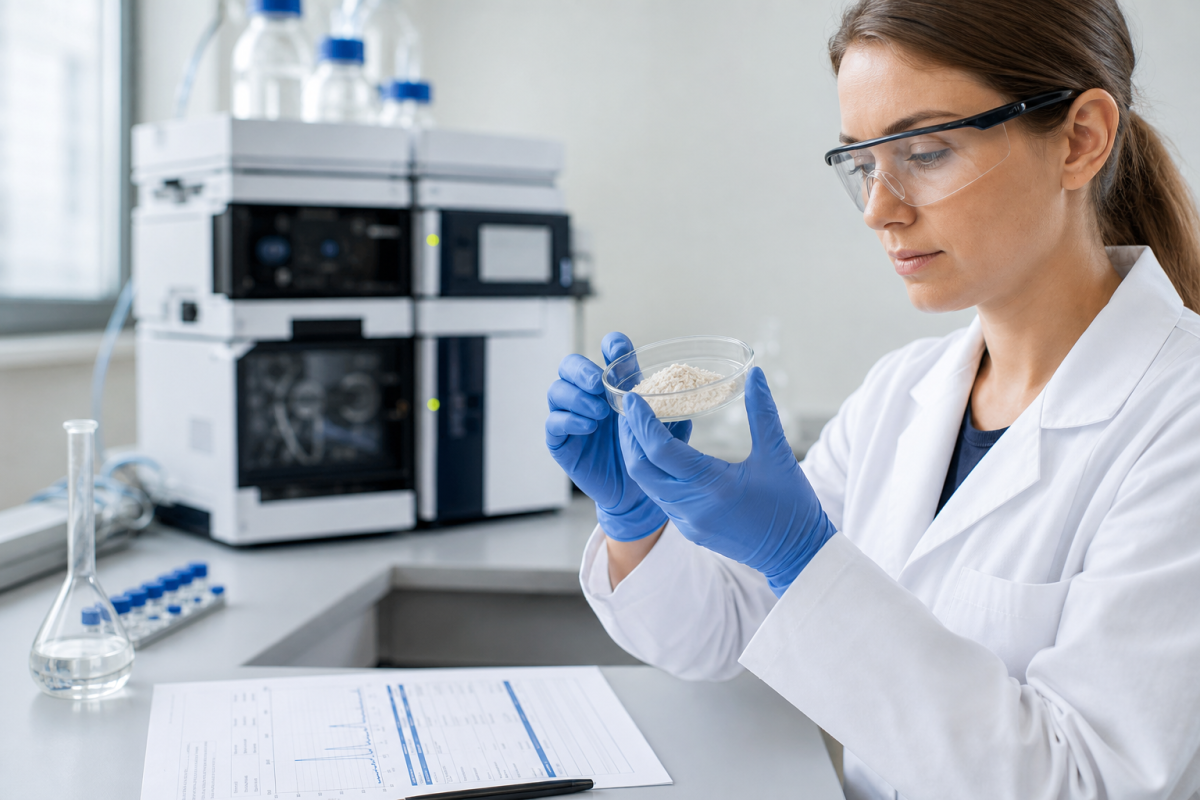
Document review should stay close to formulation testing: connect each sample with its COA, specification sheet, and packaging information, and keep this record so pilot lots and commercial lots can be compared without confusion. The COA for a capsule- or tablet-grade Urolithin A should at minimum cover the parameters below:
| COA Parameter | Typical Specification | Why It Matters |
|---|---|---|
| Assay (HPLC) | ≥98.0% (some suppliers 99.0%) | Defines the active content your formulation is built on |
| Loss on drying | ≤2.0% | Moisture control for filling and compression |
| Ash content | ≤0.5% | Purity and processing cleanliness |
| Heavy metals | ≤10 ppm (lead ≤2 ppm, arsenic ≤1 ppm, cadmium ≤1 ppm, mercury ≤0.1 ppm) | Destination-market compliance |
| Residual solvents | Panel per batch (DMF, DMSO, ethanol, etc.) | Critical for synthesis-derived material |
| Microbial limits | TPC ≤1,000 CFU/g, mold & yeast ≤100 CFU/g, pathogens absent | Finished-product safety programs |
| Particle size | D50 / mesh cut when available | Flow and blend predictability |
| Certifications | ISO 9001 / ISO 22000 / HACCP / KOSHER / HALAL as applicable | Supply-chain and market entry support |
Regulatory Status by Destination Market
Urolithin A is not regulated identically across markets, and the destination market should be stated in the RFQ so the supplier can align documentation. Summary positions based on public records as of mid-2026:
| Market | Status (public records) | Implication for Formulation Buyers |
|---|---|---|
| United States | FDA GRAS notice GRN 791 (no-objection letter, December 2018) for a branded source in specified food and supplement uses | Capsule- or tablet-format supplement positioning is the common route; confirm the GRAS notice scope matches the intended use |
| European Union | Novel Food authorization has been granted for a specific branded source; general-use authorizations have been pending EFSA review | EU finished-product launches depend on the specific source and dossier; confirm authorization status with the raw-material supplier |
| Japan | Not a FOSHU/FFC functional food ingredient; listed as a cosmetic ingredient | Supplement launches require local regulatory review |
| China | Cosmetic new-ingredient registration exists; not approved as a health food or new food ingredient | Export formulations for the domestic market are constrained |
| Australia / New Zealand | Non-traditional / novel food; permitted as an active in listed medicines | Route depends on product category and dossier |
For broader formulation comparison, read the Urolithin A and CoQ10 formulation checklist. For quality review, use the Urolithin A specification and COA guide.
RFQ Checklist for a Capsule or Tablet Project
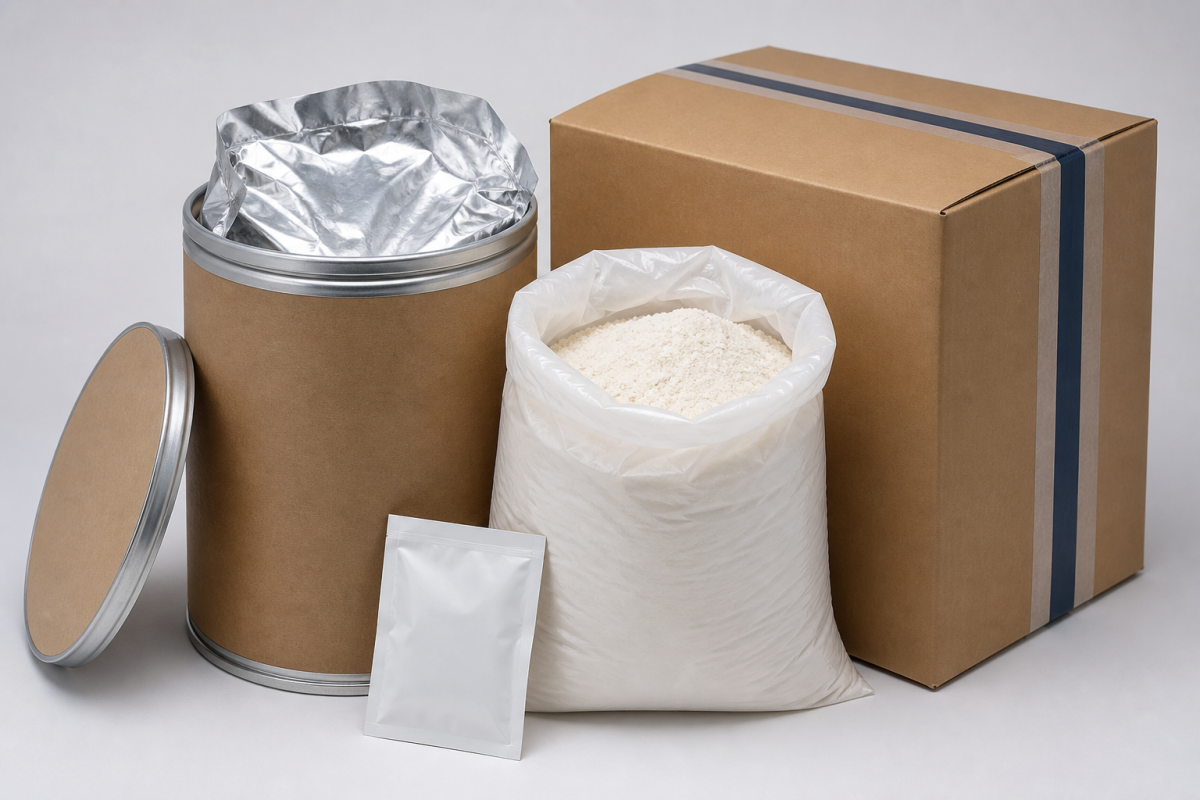
When contacting HERBSEA, include the finished format, target purity, order quantity, sample request, document requirements, packaging preference, and destination market. With this context, the supplier can align raw material support with the buyer’s manufacturing plan. A complete RFQ package looks like this:
- Finished format (hard capsule, tablet, or both) and target capsule size / tablet weight.
- Target assay (≥98% or ≥99%) and acceptable COA parameter ranges.
- Order quantity and delivery timeline (stock, custom, or pre-production).
- Sample request with the exact test plan (flow, blend, compression, stability).
- Document requirements (COA, specification, SDS, certificates, residual-solvent panel).
- Packaging preference (e.g., 1 kg, 25 kg) and destination market for regulatory alignment.
FAQ
There is no universal industry split between capsule-grade and tablet-grade powder; the same ≥98% fermentation powder is commonly used for both. What changes is the qualification work: capsule projects focus on fill weight and flowability, while tablet projects add compression behavior and moisture control. Confirm particle-size data and blend behavior with the sample against your target format.
Most capsule and tablet projects specify ≥98% by HPLC, with 99% used for premium positioning or tighter regulatory dossiers. The COA should report the exact assay result per batch, not only the minimum guarantee.
Fermentation-based (bioconversion) material is the most common choice for capsule and tablet projects because it offers a more consistent impurity profile and lower residual-solvent exposure. If synthesis-derived material is considered, require a full residual-solvent panel per batch, as kilo-scale purification is the known bottleneck in that route.
Assay, loss on drying, particle size, and flow-related data matter most for filling consistency. For tablet projects, add compression-related checks and moisture-control results to the same COA review.
Yes — HERBSEA supports sample review aligned with the buyer’s manufacturing route. Share the capsule size or tablet plan so the sample discussion matches your real production process.
Yes. The United States has a GRAS notice (GRN 791) for a branded source; the EU has authorized a specific branded source under Novel Food rules; Japan and China handle it differently for supplements. State the destination market in your RFQ so documentation can be aligned.
Summary: A successful Urolithin A capsule or tablet project starts with a defined raw material — ≥98% assay, documented COA including residual solvents, confirmed manufacturing route, and particle-size/flow data — then qualifies that material against the actual production format before scale-up. Keep sample testing aligned with the planned capsule size or tablet tooling, request the full documentation set, and state the destination market early.
HERBSEA provides raw materials for B2B manufacturing and formulation use. This article supports ingredient sourcing and specification review only. It is not medical advice and does not provide diagnosis, treatment, cure, prevention, dosage, or consumer use recommendations. Market figures cited above are independent third-party estimates used for sourcing context; verify current numbers and regulatory status with the relevant authority or a qualified advisor before committing to a formulation program.