
Protein powder for beverage formulation needs to be reviewed as both an ingredient and a processing material. A plant protein may look simple on a product list, but beverage systems create practical questions about dispersibility, wetting speed, mouthfeel, taste, sediment, viscosity, particle size, color, allergen status and production handling.
This guide is written for beverage brands, dry mix brands, contract manufacturers, R&D teams and purchasing managers comparing pea protein, soy protein, broad bean protein, chick pea protein, mung bean protein and other plant protein ingredients. It gives a practical B2B review path from sample request to commercial quotation, with attention to application testing, documentation and bulk supply readiness.
For a direct product starting point, buyers can review HERBSEA’s Pea Protein page or browse the Plant Protein category for related protein powder options.
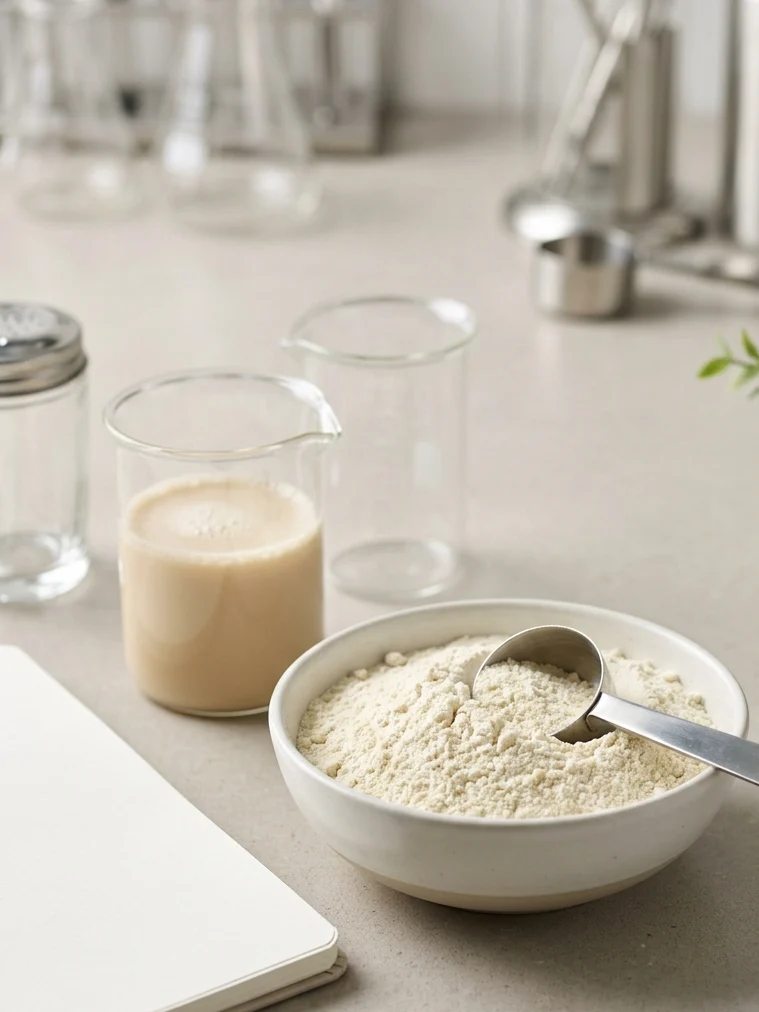
Protein powder sample testing for beverage formulation, solubility, dispersibility and bulk plant protein sourcing.
Why Protein Powder for Beverage Formulation Needs Application Testing
A protein powder that works in a nutrition blend may behave differently in a beverage base. Water temperature, mixing equipment, sweetener, flavor system, pH, stabilizer choice and standing time can all change the finished result. For that reason, a buyer should not approve a protein ingredient from the specification sheet alone. The specification starts the review, but the application test completes it.
Beverage formulation also makes a key distinction that buyers should keep clear: solubility and dispersibility are not the same. Some protein powders disperse well enough for a shake-before-use beverage or powder drink mix, but they may not fully dissolve into a clear or low-sediment RTD system. A good supplier conversation should define the acceptable outcome before the team compares samples.
For broader beverage ingredient planning, HERBSEA’s Functional Beverage Ingredient Sourcing Guide can help buyers align solubility, flavor, documentation, packaging and sample evaluation across multiple beverage ingredients.
Protein Source Options Buyers Should Compare
The best protein powder depends on the finished drink format, target protein level, sensory profile, label strategy and processing condition. Do not evaluate every plant protein as interchangeable.
| Protein source | Typical sourcing question | Application review focus |
|---|---|---|
| Pea protein | Can it support a clean-label plant protein beverage or powder mix? | Taste, mouthfeel, protein level, particle size, suspension and sediment |
| Soy protein | Does the project accept soy as a major allergen and label-positioning choice? | Solubility, allergen labeling, flavor, viscosity and heat/process fit |
| Broad bean protein | Is the buyer looking for an alternative legume protein? | Flavor direction, color, dispersion, amino acid profile and sample availability |
| Chick pea protein | Does the formulation need a different flavor or label story? | Beany notes, mouthfeel, water binding and powder blend behavior |
| Mung bean protein | Is the application seeking a newer plant protein option? | Color, taste, dispersion, source story and commercial continuity |
HERBSEA product pages can support more specific ingredient review, including Soy Protein Powder, Broad Bean Protein Powder, Chick Pea Protein Powder and Mung Bean Protein.
Application Fit Matrix
The first practical step is to define the application. The same protein source can lead to different buying requirements depending on whether the project is a ready-to-mix powder, RTD beverage, plant-based shake, bakery mix, snack system or custom blend.
| Application | What the buyer should review | Suggested sample check |
|---|---|---|
| Ready-to-mix powder | Flowability, wetting speed, dusting, flavor compatibility and shaker performance | Dry blend test and shaker test after standing |
| RTD beverage | Sediment, viscosity, mouthfeel, pH fit and processing condition | Pilot liquid sample, heat/process review and standing observation |
| Plant-based shake | Texture, protein level, flavor balance and stabilizer compatibility | Matrix test with sweetener, flavor and stabilizer system |
| High-protein powder blend | Blend uniformity, bulk density and serving-size impact | Powder blending test, scoop test and reconstitution test |
| Bakery or snack mix | Particle size, color, water binding and process handling | Small batch trial in the final base |
| Custom blend | Compatibility with fibers, sweeteners, botanical powders or flavor systems | Blend uniformity, packaging check and finished product trial |
Core Selection Criteria for a Protein Powder Supplier
A useful RFQ should not ask only for price. Price becomes meaningful only after the buyer defines the grade, protein target, application, document package, sample reference and commercial expectations.
Protein source
Pea protein, soy protein, broad bean protein, chick pea protein and mung bean protein each bring different sensory and handling considerations. The source should match the beverage concept, allergen strategy, cost target and application behavior.
Protein content and basis
Confirm whether the product is quoted on a dry basis, as-is basis or another declared basis. The target protein level should match the finished product plan, nutrition panel expectations and ingredient declaration strategy used by the buyer. For protein quality context, the FAO report on Dietary Protein Quality Evaluation in Human Nutrition is a useful reference when teams discuss amino acid profile and protein quality assessment.
Particle size and mouthfeel
Particle size influences mouthfeel, dusting, wetting speed, suspension and blending behavior. A fine powder may hydrate differently from a coarser grade, and a grade that looks acceptable in a scoop may feel gritty after hydration. Buyers should request particle information when mouthfeel or powder flow matters.
Flavor profile
Plant proteins can carry beany, cereal, earthy, nutty or neutral notes. The ingredient should be tested with the actual flavor system rather than in water only. Sweeteners, acids, cocoa, coffee, fruit flavors and botanical extracts can all change the sensory result.
Solubility, dispersibility and sediment
A beverage may need full dissolution, stable suspension or a shake-before-use format. Buyers should define the acceptable outcome first. Research comparing plant and dairy proteins has shown that plant proteins can differ in solubility, emulsifying behavior and foaming properties across pH conditions, which is directly relevant to beverage development (PMC).
Allergen and label considerations
Soy protein has different labeling implications from pea, chick pea, mung bean or broad bean protein in many markets. For U.S. projects, FDA’s Food Allergies resource explains major food allergen labeling expectations, including soybeans and sesame. Buyers should confirm destination-market labeling requirements before commercial approval.
Commercial supply path
MOQ, packaging, lead time, COA, specification and approved sample reference should be aligned before scaling the formula. A sample that performs well but cannot be supported with repeat documentation and realistic lead time is not ready for purchasing approval.
Sample Testing Workflow
Sample testing should be simple enough for a busy product team, but structured enough to support a real buying decision. The goal is to avoid subjective notes such as “looks good” and replace them with observations that can be discussed with the supplier.
- Start with a clear application brief: beverage format, protein target, flavor system, sweetener, pH, processing condition and packaging plan.
- Test the protein in water and in the final formula so the team can separate protein behavior from formula interaction.
- Record mixing time, mixing speed, water temperature, liquid volume, standing time and observation time.
- Evaluate wetting, dispersion, hydration, foam, sediment, viscosity, mouthfeel, aftertaste and color shift.
- Run the same test across competing samples before changing protein source or flavor system.
- Review COA, specification, allergen statement, packaging and shipment details before commercial approval.
For pea protein projects, a technical review such as The Current Situation of Pea Protein and Its Application in the Food Industry can help R&D teams understand why solubility, emulsifying behavior, water-holding capacity and processing history matter in finished food and beverage systems.
Keep the approved sample, COA and internal test sheet together. This creates a reference point for later commercial lots and avoids confusion when the project moves from bench review to production planning.
Documentation Buyers Should Request
Documentation is part of the product. A sample without clear documents can slow internal approval even when the application result looks promising.
| Document or information | How it supports the buying decision |
|---|---|
| Specification sheet | Confirms product name, protein content, appearance, particle information, microbiology, packaging and storage guidance |
| COA | Shows batch-level values and helps compare the supplied sample with expected commercial material |
| Allergen statement | Supports label review, cross-contact review and destination-market compliance checks |
| Application sample notes | Records matrix, temperature, mixing condition, observation time and handling notes |
| Commercial terms | Clarifies MOQ, lead time, packaging, shipping route, sample availability and document timing |
For internal QA alignment, HERBSEA’s Botanical Extract Quality Testing Guide is also useful as a general supplier-document reference because it explains how buyers can think about COA review, assay methods, contamination checks and sample-to-batch consistency.
Supplier Comparison Scorecard
When several suppliers offer materials with similar names, the buying team needs a comparison method that goes beyond price. A low unit price can become expensive if the sample does not match the intended application, if documents arrive late, or if commercial packaging does not fit the buyer’s production line.
| Scorecard item | What to compare | Why it matters |
|---|---|---|
| Application match | Performance in the target beverage or powder matrix | The best grade is the one that fits the finished product |
| Sensory profile | Taste, aroma, color, mouthfeel and aftertaste | Protein powders can influence the whole flavor system |
| Dispersion behavior | Wetting, hydration, sediment, foam and viscosity | Beverage projects need process-fit, not only a good COA |
| Document clarity | Specification, COA, allergen statement, origin and packaging | Clear documents help quality and purchasing teams move faster |
| Sample consistency | Whether repeated samples look and behave the same | Consistency builds confidence before commercial quotation |
| Scale readiness | MOQ, lead time, packaging and shipment plan | A suitable sample still needs a realistic supply path |
The scorecard does not need to be complicated. A buyer can rate each point from one to five, add notes from the application test, and then discuss the strongest two or three options with the supplier.
Troubleshooting Common Beverage Formulation Issues
| Observed issue | What to check first | Supplier question |
|---|---|---|
| Sediment after standing | Particle size, hydration, pH, stabilizer system and standing time | Is there a grade with better suspension or finer particle profile? |
| Gritty mouthfeel | Particle size, hydration time, protein source and process condition | Can you provide a smoother grade or application notes? |
| High viscosity | Protein level, stabilizer, heat process and water binding | Is another grade better for drinkable texture? |
| Foam during mixing | Mixing speed, emulsification behavior and equipment setup | Is antifoam guidance or process adjustment needed? |
| Strong beany notes | Protein source, flavor system and use level | Which sample has a cleaner sensory profile for this flavor direction? |
| Document gap | COA, allergen statement, specification and commercial packaging | Which documents are available for the exact commercial grade? |
Each observation should become a supplier question. This helps narrow the next sample instead of restarting the whole sourcing process.
How to Write a Better RFQ
A better RFQ starts with the application, not with the ingredient name alone. Instead of asking for a general quote, the buyer can provide a concise project brief that includes the target product format, expected annual volume range, required documentation, packaging preference and timing.
Include:
- Beverage format: RTD, shake powder, high-protein drink, smoothie base, dairy alternative or custom blend.
- Target protein level per serving and preferred protein source.
- pH, heat step, mixing method, water temperature and packaging format.
- Flavor direction, sweetener system and texture target.
- Sample quantity and expected test method.
- Required documents: COA, specification, allergen statement, origin and packaging details.
- Estimated commercial volume, MOQ expectation and launch timing.
This information helps HERBSEA recommend a practical starting sample and connect the inquiry with relevant specification, document and quotation details.
FAQ: Protein Powder for Beverage Formulation
What protein powder is best for beverage formulation?
The best protein depends on the finished drink format, target protein level, taste, mouthfeel, processing condition and label plan. Buyers should compare samples in the actual beverage matrix rather than choosing by ingredient name only.
How should buyers test protein powder samples?
Use the same protein level, liquid volume, temperature, mixing method and observation time. Record wetting, dispersion, hydration, viscosity, sediment, flavor and mouthfeel immediately after mixing and after standing.
Why does protein powder create sediment in beverages?
Sediment can come from particle behavior, incomplete hydration, formula interaction, process condition or the protein source itself. Buyers should test the sample in the final matrix and discuss grade options with the supplier.
What documents should be requested before bulk order?
Request a specification sheet, COA, sample reference, protein basis, allergen statement, packaging details, storage guidance, MOQ, lead time and shipment information.
Can plant protein powder be used in RTD beverages?
Plant protein powder can be evaluated for RTD beverages, but the sample should be tested for suspension, mouthfeel, taste, viscosity, pH fit and process compatibility in the intended formula.
What should be included in an RFQ for protein powder?
Include beverage format, target protein level, protein source preference, flavor direction, process condition, sample test method, document needs, packaging preference and estimated commercial volume.
Request Specifications and Samples
To review protein powder for beverage formulation for a B2B project, share your target application, expected protein level, flavor direction, sample quantity, documentation needs, packaging preference and buying timeline. HERBSEA can help match the inquiry with relevant plant protein powder options, documentation and bulk supply information.
Contact HERBSEA to request specifications, sample availability and quotation details for your formulation project.
B2B Sourcing Takeaways
This guide is most useful when it is connected to a real purchasing brief. Buyers can use the topic as a starting point, then confirm protein target, particle size, flavor direction, dispersion, microbiology, moisture and packing format before sample approval. HERBSEA works with procurement, R&D and quality teams that need supplier communication, repeatable documentation and practical bulk order planning.
| Review step | Buyer action |
|---|---|
| Define requirement | Clarify the ingredient name, target specification, application format and expected order quantity. |
| Check documents | Request COA, specification sheet, available test data, packing details and export document support. |
| Test sample | Evaluate color, odor, solubility, particle size, flowability and formula compatibility in the intended process. |
| Plan purchase | Confirm MOQ, lead time, packaging, shipment terms, destination market and reorder expectations. |
RFQ Checklist for HERBSEA
- Target ingredient and preferred specification or assay range.
- Finished-product format and key processing requirements.
- Sample quantity, commercial volume estimate and requested packing format.
- Destination country and documents needed for internal quality review.
- Timeline for sample testing, purchase approval and first shipment.
For related ingredient options, review the Plant Protein category. To request a sample, COA or quotation, contact HERBSEA through the plant extract supplier contact page and include the details above so the team can match a suitable grade.
Supplier Comparison Notes
When comparing suppliers, avoid judging the page only by a broad ingredient name. A useful comparison should connect the specification with the intended application, document package and repeat order plan. Two materials with similar names can differ in assay method, particle size, carrier status, sensory profile, packing format and shipment readiness.
For a faster review, send the same RFQ details to each supplier and compare replies side by side. Look for clear answers on available grades, sample timing, COA fields, MOQ, lead time, export documents and whether the supplier can keep future batches aligned with the approved sample. This gives procurement and quality teams a practical basis for shortlisting.
Because ingredient pages can be revisited during later purchasing cycles, keep notes on the approved specification, supplier response, internal sample result and any requested document updates. Those notes make it easier to reopen the project, compare a replacement material or brief a new quality reviewer without starting the sourcing process from zero.
FAQ: Protein Powder for Beverage Formulation: Plant Protein Supplier Guide
Use it as a sourcing checklist before sample request or supplier comparison. Confirm the target specification, application format, quality documents, MOQ, lead time and packing requirements with HERBSEA.
B2B buyers commonly review the specification sheet, COA, assay method summary, microbiology and heavy metals data, packing details and available export document support.
Custom specification review may be available for qualified projects. Share the desired assay, physical requirements, application, order volume, destination market and document checklist before quotation.