
Green tea extract liquid formulation requires a clear match between ingredient specification and final product format. A buyer may be developing a beverage, liquid concentrate, shot, powder-to-liquid concept or supplement application. Each format places different demands on flavor, color, solubility, assay target, documentation and commercial packaging.
This guide helps B2B buyers compare green tea extract, L-theanine standardized extract, EGCG 98 and instant green tea powder when a liquid system is involved. The goal is not to make broad consumer claims. The goal is to help purchasing teams and product developers define the right ingredient request before sample testing and quotation.

A green tea extract liquid project can fail commercially when the ingredient is chosen only by name. The buyer needs to know whether the formula needs tea flavor, a defined marker, a high-purity component, color contribution or a blendable botanical ingredient. A better RFQ explains the application first and then asks for the specification that fits that application.
A strong sourcing page should help a buyer make a better first inquiry. It should define the application, explain which specification points matter, show how samples can be evaluated, and make the next internal review step clear. For HERBSEA, the page also needs to keep a B2B ingredient supplier voice. That means the content should speak to product developers, purchasing teams, quality managers and brand owners, not to consumers looking for personal advice.
Why green tea extract liquid Needs a B2B Review
Search demand around this topic usually contains more than one intent. Some visitors want a general explanation, while qualified buyers need a sourcing path. For iherbsea.com, the useful SEO angle is the second one: help a commercial buyer understand how to request the right sample, how to compare that sample, and how to connect the result with bulk supply. That makes the page more valuable than a short product note, and it gives related product pages a clear internal link target for application questions.
A sourcing page should also reduce unnecessary back-and-forth. When a buyer knows which application data to share, the supplier can respond with a narrower ingredient recommendation. When the buyer understands which specification points to review, the internal quality team can compare materials faster. When the page links back to the right product and category pages, Google can also understand that the article supports a real ingredient portfolio rather than sitting alone as a thin blog post.
Application Fit Matrix
The first practical step is to define the application. The same ingredient name can lead to different buying requirements depending on whether the project is a liquid beverage, dry mix, concentrate, food system, supplement application or custom blend. The table below gives buyers a simple way to frame the first sample request.
| Application | What the buyer should review | Suggested sample check |
|---|---|---|
| Clear beverage | Low haze, mild flavor impact, suitable assay target | Solubility and appearance after standing |
| Concentrate or syrup | Compatibility at higher solids and dilution performance | Concentrate mix and dilution check |
| Powder-to-liquid product | Blendability, taste balance, particle behavior | Dry blend and reconstitution test |
| Supplement liquid | Defined marker and documentation path | COA and assay method review |
| Tea-flavor beverage | Tea character and color contribution | Compare extract with instant green tea powder |
Core Selection Criteria
A useful RFQ should not ask only for a price. Price matters, but it is meaningful only after the buyer has defined the grade, documentation, sample reference and commercial expectations. The following criteria help separate a casual inquiry from a sourcing request that can move toward quotation.
Ingredient role
Decide whether the ingredient is present for green tea flavor, standardized marker content, color, botanical positioning or a combination of those roles.
For SEO and sourcing clarity, this point should be reflected in the page copy, the sample request and the internal buying notes. It gives the supplier context and helps the buyer compare options without relying on generic product descriptions.
Assay method
Confirm the marker and method used on the specification sheet. L-theanine and EGCG projects need a different review than a broader green tea extract request.
For SEO and sourcing clarity, this point should be reflected in the page copy, the sample request and the internal buying notes. It gives the supplier context and helps the buyer compare options without relying on generic product descriptions.
Solubility expectation
Liquid projects should define whether the extract must dissolve clearly, disperse acceptably or be used in a system where slight haze is acceptable.
For SEO and sourcing clarity, this point should be reflected in the page copy, the sample request and the internal buying notes. It gives the supplier context and helps the buyer compare options without relying on generic product descriptions.
Flavor contribution
Green tea extract can influence bitterness, astringency and overall profile. The buyer should test it in the final flavor system, not only in water.
For SEO and sourcing clarity, this point should be reflected in the page copy, the sample request and the internal buying notes. It gives the supplier context and helps the buyer compare options without relying on generic product descriptions.
pH and process fit
The formula’s pH, heat step, mixing sequence and storage condition can affect appearance and flavor, so they should be shared early with the supplier.
For SEO and sourcing clarity, this point should be reflected in the page copy, the sample request and the internal buying notes. It gives the supplier context and helps the buyer compare options without relying on generic product descriptions.
Documentation readiness
The supplier should provide COA, specification, packaging details and batch information that match the commercial buying path.
For SEO and sourcing clarity, this point should be reflected in the page copy, the sample request and the internal buying notes. It gives the supplier context and helps the buyer compare options without relying on generic product descriptions.
Sample Testing Workflow
Sample testing should be simple enough for a busy product team, but structured enough to support a real buying decision. A repeatable review method is especially important when multiple suppliers or grades are being compared. The goal is to avoid subjective comments such as ‘looks good’ and replace them with observations that can be discussed with the supplier.
- Define the final liquid system before sampling, including pH range, flavor base, sweetener system and processing temperature.
- Compare the extract in water and in the final matrix so that the buyer can separate ingredient behavior from formula interaction.
- Record the internal ingredient level in the lab sheet, but keep public-facing copy focused on specification and formulation review rather than consumer use instructions.
- Check color, haze, sediment and flavor after the same standing time planned for internal product review.
- Confirm the COA and specification match the ingredient grade used in the application sample.
Buyers should keep the approved sample, the COA and the internal test sheet together. This creates a reference point for later commercial lots and avoids confusion when the project moves from bench review to production planning. If the formula matrix changes after sample approval, the ingredient should be checked again under the new conditions before confirming bulk purchase.
Documentation Buyers Should Request
Documentation is part of the product. A sample without clear documentation can slow down internal approval even when the application result looks promising. For B2B buyers, documentation also helps align the purchasing team, quality team, product developer and supplier before commercial terms are discussed.
| Document or information | How it supports the buying decision |
|---|---|
| Specification sheet | Confirms product name, appearance, assay or marker range, particle size if available, standard packaging and storage guidance used for commercial review. |
| COA | Shows batch-level values and helps the buyer compare the supplied sample with the expected commercial material. |
| Application sample notes | Records the matrix, temperature, mixing condition, observation time and handling notes from the buyer’s pilot test. |
| Commercial terms | Clarifies MOQ, lead time, packaging, shipping route, sample availability and documentation required before quotation. |
The exact document set may vary by ingredient and destination market, but the principle is consistent: the buyer should know what is being evaluated, which batch the sample represents, how the product is packed, and what information will be available when a commercial order is prepared.
Supplier Comparison Scorecard
When several suppliers offer materials with similar names, the buying team needs a comparison method that goes beyond price. A low unit price can become expensive if the sample does not match the intended application, if documents arrive late, or if commercial packaging does not fit the buyer’s production line. A simple scorecard helps the buyer compare suppliers on the points that actually influence launch readiness.
| Scorecard item | What to compare | Why it matters |
|---|---|---|
| Application match | How well the sample performs in the target matrix | The best grade is the one that fits the product, not simply the one with the strongest specification claim. |
| Document clarity | Specification, COA, origin and packaging information | Clear documents help internal quality and purchasing teams move faster. |
| Sample consistency | Whether repeated samples look and behave the same | Consistent samples create confidence before the buyer discusses commercial lots. |
| Communication speed | How quickly the supplier answers technical and commercial questions | Fast answers shorten the path from sample review to quotation. |
| Scale readiness | MOQ, lead time, packaging and shipment planning | A suitable sample still needs a realistic supply path. |
The scorecard does not need to be complicated. A buyer can rate each point from one to five, add notes from the application test, and then discuss the strongest two or three options with the supplier. This approach is especially useful when an ingredient category has many similar names and the buyer needs a clear reason to select one grade for the next round.
Liquid Green Tea Extract Design Choices for Beverage Projects

Green tea extract liquid is usually selected when a beverage team wants a tea-derived ingredient that can move smoothly into liquid processing. Compared with dry powder, a liquid format may simplify dosing in a plant, reduce dust during handling, and allow the R&D team to evaluate color and taste in a beverage matrix more quickly. The buyer still needs to define what kind of liquid extract is needed. A strong sourcing request should describe the target beverage, the desired tea profile, the concentration range, the carrier system, the packaging format, and the documents needed for internal review.
The most useful supplier conversation begins with the finished drink. A light green tea RTD beverage, a fruit tea, a functional beverage base, a syrup concentrate, and a foodservice tea concentrate may all use green tea extract liquid differently. The extract may need to deliver a mild tea note, a stronger catechin character, a consistent amber or green-brown color, or a specific solids contribution. Buyers should explain the use case before asking for quotation because the same ingredient name can represent several possible extract strengths and sensory profiles.
| Design choice | Buyer question | Why it matters |
|---|---|---|
| Extract strength | Is the project looking for a light tea note or a concentrated ingredient? | Strength influences use level, cost-in-use, flavor impact and packaging needs. |
| Carrier or solvent system | What liquid base is used and does it fit the formula and label plan? | Carrier choice affects compatibility, handling, storage and documentation. |
| Sensory profile | Should the extract taste fresh, mild, roasted, astringent, or neutral? | The wrong profile can require extra flavor masking or formula adjustment. |
| Appearance target | Does the beverage need clarity, light haze, or a natural tea appearance? | Visual target determines how the sample should be tested. |
| Commercial packaging | Will the buyer need small sample bottles, drums, totes, or custom packing? | Packaging affects production handling, shipment planning and shelf review. |
Concentration, Brix and Cost-in-Use Review
Liquid ingredients should not be compared only by unit price per kilogram. A beverage buyer needs to compare cost-in-use, which depends on concentration, recommended use level, flavor contribution, and how much liquid is added to the formula. A lower-priced liquid extract can become less attractive if the buyer needs a much higher use level to reach the desired tea profile. A stronger extract can be easier to ship and store, but it may need more careful dosing and sensory balancing.
For early sample review, the buyer should ask the supplier how the extract is normally expressed: solids content, Brix, tea solids, marker range, or another internal specification. Not every project needs the same measure, but the team should know what the number means and how it connects to the final beverage. If two suppliers describe concentration differently, the buyer should request clarification before comparing price or sensory performance.
Cost-in-use review should be connected with the target beverage. A lightly flavored sparkling tea may need a different extract strength from a still green tea drink or a syrup concentrate. A foodservice base may prioritize repeat dispensing and stronger tea impact, while a bottled beverage may prioritize balance and clarity. The sourcing page should help buyers define these differences before they ask for a quote.
pH, Sweetener and Flavor System Compatibility
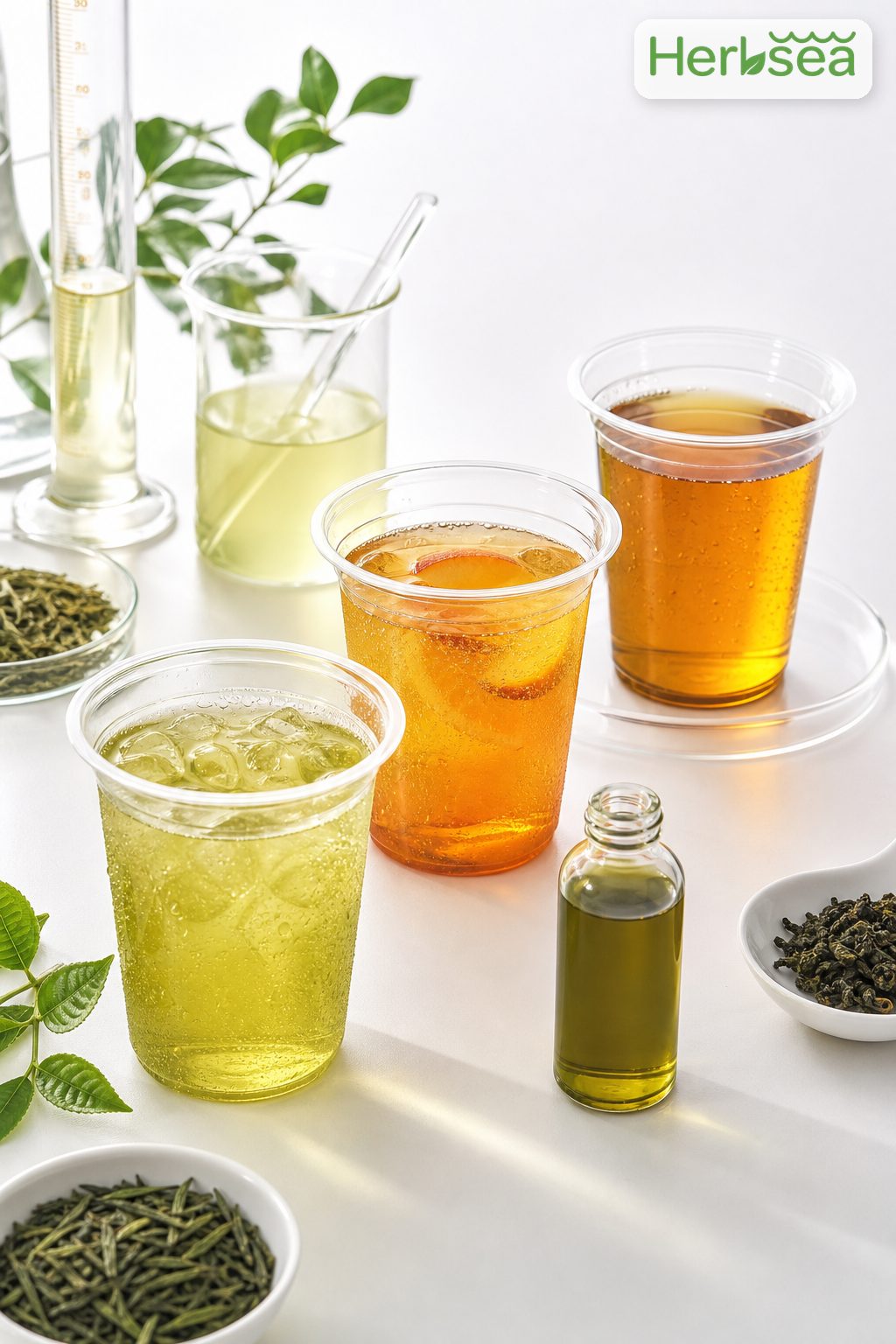
Green tea extract liquid should be tested in the real formula environment because pH, sweetener, flavor system and other ingredients can change the final result. In plain water, a sample may look clean and taste balanced. In a fruit tea system, acidity and flavor can shift the tea perception. In a low-sugar beverage, the astringency may become more noticeable. In a syrup or concentrate, color and sediment behavior may change because the solids level is higher.
Buyers should share the expected pH range, Brix target, sweetener type, flavor direction and processing condition when requesting samples. If the formula contains minerals, proteins, botanical extracts, juice components or stabilizers, those details should also be mentioned. This does not require sharing a confidential formula; a practical range is enough to help the supplier recommend a better starting point.
| Formula factor | What to observe | Suggested buyer note |
|---|---|---|
| pH range | Color shift, taste balance, haze and standing appearance | Test at the expected finished beverage pH rather than water only. |
| Sweetener system | Astringency balance and flavor roundness | Compare the sample with the actual sweetener or sugar level. |
| Fruit flavor or juice | Tea note, color and sediment interaction | Evaluate the extract in the final flavor direction. |
| Concentrate format | Solids load, pourability and dilution behavior | Check both concentrate and diluted beverage performance. |
| Thermal step | Color, aroma and taste after processing condition | Run a small process-simulation test before commercial approval. |
Clarity, Color and Sediment Testing for Liquid Extracts
Clarity requirements vary by product. Some green tea drinks need a bright, clean appearance. Others allow a natural tea haze. A syrup concentrate may look darker than the final diluted beverage. The buyer should define the visual target early because it changes how the sample is judged. Without a target, one team member may call a light haze acceptable while another sees it as a problem.
A practical test can be simple. Prepare the sample at the intended use level, record the liquid temperature, note the mixing method, and take photos after mixing and after standing. If the beverage will be filled into a transparent bottle, check the sample in similar packaging or against a white and black background. If the extract is used in an opaque beverage, focus more on sediment, ring formation and flavor stability than on perfect clarity.
Buyers should ask whether the supplier has application notes for clear beverage use, concentrate use, or foodservice systems. These notes do not replace internal testing, but they can help the team avoid a sample that is not designed for the intended application.
Liquid Extract Packaging, Storage and Production Handling
Liquid extract packaging deserves early attention because it affects receiving, storage, dosing and plant handling. A small sample bottle may be convenient for R&D, while commercial supply may use larger bottles, drums or totes. The buyer should confirm the normal commercial packaging, inner liner or closure style, storage guidance, shelf-life statement and whether the packaging format fits the production facility.
Production teams should also ask how the extract should be mixed into the beverage base. Some liquid ingredients are added directly to water or syrup. Others may be easier to handle after pre-dilution or controlled addition. If the buyer uses automated dosing, the team may need viscosity and handling information. If the buyer uses manual batching, the team may care more about pourability, container size and ease of cleaning.
Storage review should include temperature guidance, light exposure, odor control, container resealing and stock rotation. These details are part of commercial readiness. A formulation can look suitable in a sample round but still become difficult to manage if the packaging, storage or dosing method does not fit the buyer’s facility.
Quality Documents and Supplier Questions for Green Tea Extract Liquid
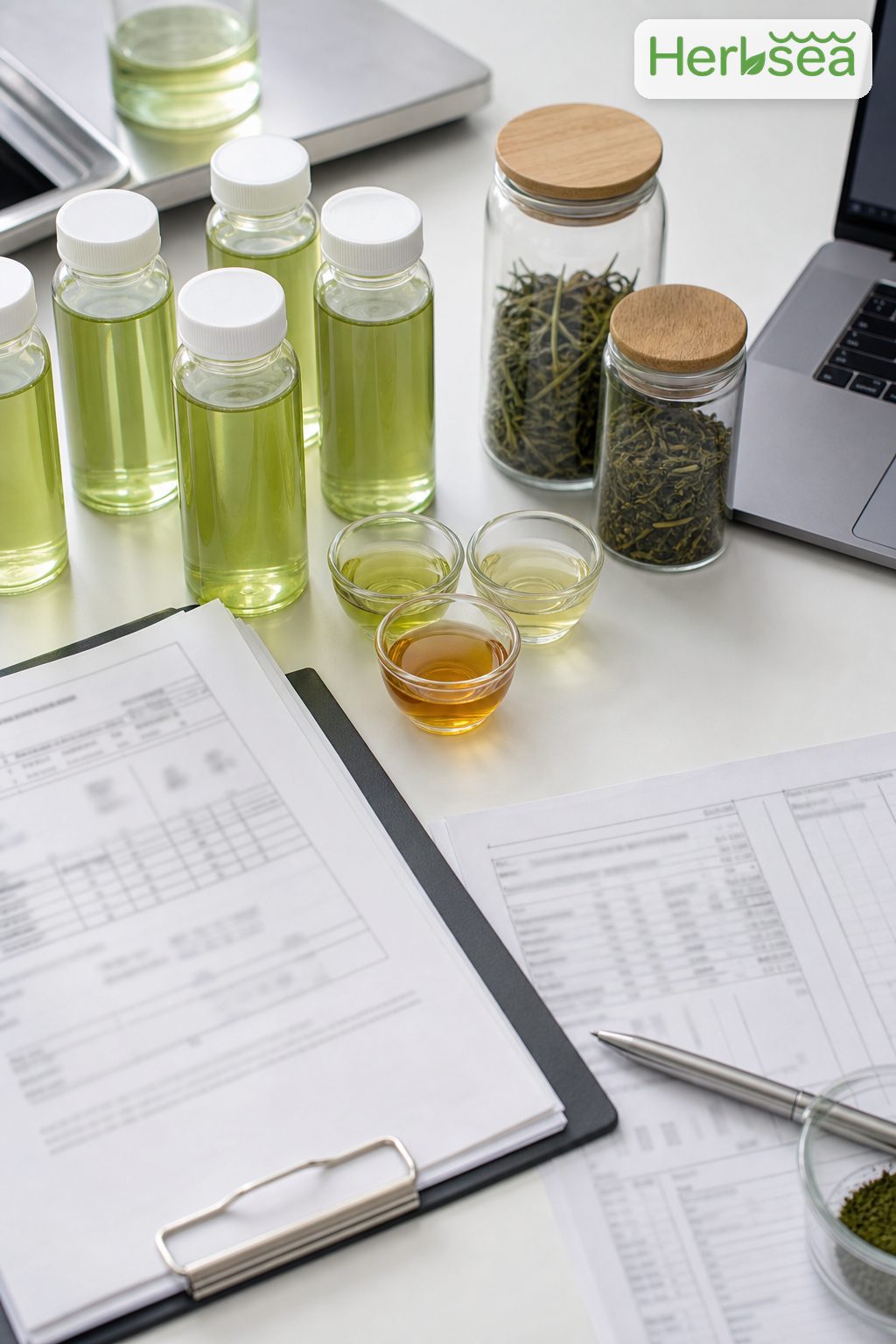
A B2B buyer should request documentation that connects the sample to a commercial supply path. The exact document set may vary by project, but the buyer usually needs a specification sheet, COA, sample reference, packaging details, storage guidance and shipment planning information. If a marker compound or solids range is important for the project, the buyer should ask how it is measured and how the commercial batch will be documented.
Supplier questions should be practical: What is the standard concentration range? What is the normal packaging? Is the product intended for beverage use? Can the supplier support sample comparison in different matrices? What information is available before quotation? What MOQ and lead time should be expected for the selected grade? The more clearly these questions are answered, the easier it is for the buyer to move from sample review to purchase planning.
| Document or answer | What it confirms |
|---|---|
| Specification sheet | Product identity, appearance, concentration basis, packaging and storage guidance. |
| COA | Batch-level values linked to the sample or commercial lot. |
| Sample reference | Which grade the buyer tested and whether it matches the quoted material. |
| Application notes | Suggested starting point for beverage, concentrate or foodservice systems. |
| Commercial terms | MOQ, lead time, packaging, shipment route and quotation details. |
Troubleshooting Liquid Extract Formulation Issues
Green tea extract liquid projects often run into small issues before the formula is ready for commercial approval. The extract may look darker than expected, create a stronger astringent note, show light haze, interact with fruit flavor, or change the finished beverage color after standing. These observations should be recorded as formulation notes rather than dismissed as simple supplier problems. A good supplier conversation uses those notes to decide whether the buyer needs a different extract strength, a different tea profile, a lower use level, a revised flavor system, or another sample round.
If color is too dark, the buyer should check use level, concentration, tea base and whether the extract is being evaluated in water or in the final beverage. If flavor is too sharp, the team should compare sweetener system, acid level and flavor pairing. If haze appears, the buyer should check pH, standing time, storage condition and whether other ingredients are contributing to the appearance. A structured troubleshooting table helps the buyer give the supplier useful feedback instead of a vague comment such as “the sample is not right.”
| Observed issue | What to check | Supplier question |
|---|---|---|
| Color too strong | Use level, concentration, beverage base and target shade | Is a lighter profile or lower concentration sample available? |
| Astringency too noticeable | Sweetener, acid, flavor system and extract strength | Can you recommend a milder tea profile for this matrix? |
| Haze or sediment | pH, standing time, formula interaction and process condition | Is this grade intended for clear beverage use? |
| Weak tea identity | Use level, competing flavors and beverage format | Is there a stronger green tea extract liquid option? |
| Handling too difficult | Viscosity, packaging, pouring method and dosing equipment | Which packaging format fits production handling better? |
Pilot Batch and Commercial Approval Checklist
Bench approval is not the end of the sourcing process. Before a buyer moves to commercial purchase, the selected extract should be checked in a small pilot or production-like review. The goal is to confirm that the ingredient performs under the mixing method, processing condition, packaging plan and storage expectation that the commercial product will use. A pilot review can reveal handling details that are not obvious in a small beaker test, such as viscosity during pumping, mixing time, container residue or color change after process simulation.
The buyer should connect the approved sample with the exact commercial grade. This includes sample name, lot reference, specification, COA, packaging size, storage guidance, MOQ, lead time and quotation currency. If the supplier sends several samples, the team should avoid approving one sample visually and then quoting a different grade. A clear sample reference reduces confusion between R&D, purchasing and quality teams.
Commercial approval should also include responsibility for final formula decisions. HERBSEA can support ingredient supply, specification review and sample discussion, while the buyer controls the finished beverage formula, label review, market requirements and final product validation. This keeps the page in a B2B sourcing voice and avoids turning the article into consumer advice or unsupported product claims.
How Green Tea Extract Liquid Supports the Tea Ingredient Cluster
This page should support, not compete with, related tea ingredient pages. The article is best used for application questions around liquid green tea extract in beverage development. Product pages should remain the main destination for specific product identity, specification and RFQ details. The instant tea powder category page should remain the broader hub for tea powder and extract ingredients. This separation helps Google understand that the site has a connected ingredient portfolio rather than several thin pages fighting for the same keyword.
Internal links should guide buyers by task. A buyer researching liquid formulation can start here, then move to green tea extract, L-theanine, EGCG, instant tea powder or contact pages when the sourcing question becomes more specific. A buyer starting on a product page can use this article to understand beverage testing and RFQ preparation. That two-way path gives the page a stronger role in the site structure.
Green Tea Extract Liquid Buyer Worksheet
A buyer worksheet turns a general inquiry into a sourcing request that can be answered quickly. Before contacting a supplier, the team can collect the finished beverage type, target tea character, liquid base, pH range, sweetener system, color target, packaging plan and launch timing. The worksheet does not need to reveal a confidential formula. It only needs enough context to help the supplier recommend the right sample and avoid sending a generic extract that does not fit the project.
The worksheet should also record internal decision owners. R&D may care about taste and clarity. Quality may care about specification and COA. Purchasing may care about MOQ, price, lead time and shipment. Marketing may care about visual identity and ingredient story. When those teams use the same sample reference and document set, the sourcing process becomes more efficient. This is why the page should educate buyers about both formulation and sourcing details.
| Worksheet field | Example buyer input | Supplier response needed |
|---|---|---|
| Finished product | Still green tea beverage, fruit tea, syrup concentrate or foodservice base | Recommended extract format and starting sample. |
| Target profile | Mild green tea, stronger tea note, lighter color or concentrate strength | Grade options and expected sensory direction. |
| Formula context | pH, sweetener, flavor, juice, mineral or other botanical ingredients | Compatibility notes and suggested test method. |
| Commercial plan | Estimated volume, target launch date and packaging preference | MOQ, lead time and packaging options. |
Adding this worksheet logic improves the article because it gives the reader a job to complete. The page is not only describing green tea extract liquid; it is helping a commercial buyer prepare a better supplier conversation. That is the kind of depth a B2B SEO page needs in order to compete beyond simple keyword repetition.
The same worksheet can also become a weekly SEO review tool. If a new GSC query shows that buyers are searching for green tea extract liquid in a specific beverage format, HERBSEA can update this page with a more precise sample testing note, a stronger internal link, or a better RFQ example. That keeps the article useful after publication.
How to Write a Better RFQ
A better RFQ starts with the application, not with the ingredient name alone. Instead of asking for a general quote, the buyer can provide a concise project brief that includes the target product format, expected annual volume range, required documentation, packaging preference and timing. This helps the supplier avoid sending a grade that is technically related but commercially mismatched.
A strong inquiry can be written in plain language: describe the final product, explain the sample test, list the required documents and ask which grade is the best starting point. The supplier can then respond with a more useful recommendation, including sample availability, MOQ, lead time and any questions that need to be answered before quotation.
- Application type and target format.
- Desired appearance, flavor, color or handling outcome.
- Specification or marker requirements when applicable.
- Sample quantity and expected test method.
- COA, specification and packaging requirements.
- Estimated commercial volume range and target timing.
Internal Linking and Sourcing Path
This article is designed as an application and sourcing guide. It should not replace the product page. The product page should remain the main page for the ingredient itself, while this article answers the application question in more detail. That division helps avoid keyword overlap and gives search engines a cleaner map of the site.
Related pages for deeper sourcing review:
- green tea extract
- L-theanine HPLC supplier
- EGCG 98 supplier
- instant green tea powder
- instant tea powder supplier category
A buyer who lands on this article can move to the relevant product page for specification review. A buyer who starts on a product page can move here to understand application testing. This two-way connection is exactly what the page map is meant to achieve.
Commercial Scale-Up Notes
After the first sample looks suitable, the buying conversation should shift from general interest to scale-up readiness. This includes confirming whether the sample reflects the intended commercial grade, whether packaging can support the buyer’s handling process, and whether lead time fits the launch calendar. If the buyer needs a custom blend or special packaging, that requirement should be discussed before the final quotation.
Scale-up also requires communication between formulation and purchasing teams. A product developer may approve the application result, while the purchasing team still needs MOQ, payment terms, shipment route and document timing. Keeping these details connected reduces delays and gives the supplier a clearer basis for quoting.
Pre-Order Review Before Commercial Purchase
Before a commercial purchase, the buyer should connect the approved sample with the exact grade that will be quoted. This sounds obvious, but it is a common source of confusion when several samples, particle sizes, assay ranges or packaging options were discussed during development. The buyer should keep the final sample name, lot reference, specification sheet and internal test notes together.
The buying team should also decide which details must be fixed and which details can remain flexible. For example, the application result may require a specific appearance, particle behavior or marker range, while packaging size may allow several options. Separating fixed requirements from flexible preferences helps the supplier quote accurately and suggest alternatives when needed.
- Confirm the exact ingredient grade and approved sample reference.
- Confirm the specification sheet and COA format expected for commercial lots.
- Confirm packaging size, carton or drum format, pallet preference and labeling requirements.
- Confirm whether the buyer needs a standard ingredient, a custom blend or a special handling request.
- Confirm lead time, shipment route, order quantity and document timing before issuing the purchase order.
This final review is also useful for SEO content because it shows that the page understands the real buying journey. Search engines increasingly reward pages that satisfy a specific user task. For these application keywords, the task is not entertainment or general education; it is helping a commercial buyer move from research to a qualified sourcing conversation.
Page Boundary: What This Guide Should and Should Not Rank For
Every page in the SEO map needs a clear boundary. This guide should rank for the application and sourcing question, while the linked product pages should rank for exact ingredient names and specification terms. That separation reduces internal competition and makes the internal link structure easier to understand. If multiple pages try to target the same phrase, Google may split signals across them and the site can lose clarity.
For this page, the main topic is green tea extract liquid. Related product names should appear naturally as sourcing paths, not as the headline target of the article. The article should answer application review questions, while product pages should present product identity, specification, packaging and RFQ details. That is why the content links to product pages but does not replace them.
FAQ: Green Tea Extract Liquid Sourcing
Green Tea Specification Support Pages
- L-Theanine in Green Tea Extract: HPLC and COA Guide – review assay, COA and sample testing points.
- Decaffeinated Green Tea Extract Powder Supplier Guide – review caffeine target, catechin markers and documentation.
Neither format is automatically better. Liquid extract can simplify beverage batching and sample review, while powder may be easier to store or ship for some projects. Buyers should compare format, concentration, use level, packaging and the final beverage matrix.
Send the beverage format, target flavor, pH range if available, sweetener system, expected use level, packaging preference, document requirements and estimated commercial volume. These details help the supplier recommend a better starting grade.
Use the same liquid volume, use level, pH, sweetener system, mixing method and observation time. Record color, clarity, haze, sediment, aroma, taste and any formula interaction.
A specification sheet and COA should be reviewed first. Buyers may also request sample reference, packaging details, storage guidance, shelf-life statement and commercial quotation information.
It can be evaluated for these applications, but the sample should be tested in the actual matrix. Fruit flavor, acidity, sweetener and other ingredients can change the tea note, color and appearance.
Confirm the exact commercial grade, specification, COA format, packaging, MOQ, lead time, shipment route and document timing before issuing a purchase order.
Request Specifications and Samples
To review green tea extract liquid for a B2B project, share your target application, expected specification needs, sample quantity, packaging preference and buying timeline. HERBSEA can help match the inquiry with relevant ingredient options, documentation and bulk supply information.
Contact HERBSEA to request specifications, sample availability and quotation details for your formulation project.
More Green Tea Support Pages
- Green Tea Extract Powder Caffeine Specification Guide – review caffeine target and COA points.
- Green Tea Powder vs Matcha for Beverage Formulation – compare color, taste and formulation fit.
- Instant Green Tea Powder HS Code and Export Documentation Guide – review export documents and shipment planning.