
Color ingredients are often judged visually, but a purchasing decision needs more than a beautiful Natural blue colorant sourcing is a technical buying decision for beverage, confectionery, frozen dessert, dry mix, gummy and functional food projects. Blue spirulina and phycocyanin ingredients can create a vivid blue shade, but the final result depends on the product matrix, pH, processing temperature, light exposure, packaging, sample quality and documentation readiness.
This guide is written for B2B product teams comparing natural blue colorant suppliers. It explains how to review Blue Spirulina Extract, when to compare Spirulina Powder, which documents to request, and how to structure a useful sample test before moving into quotation or bulk supply.
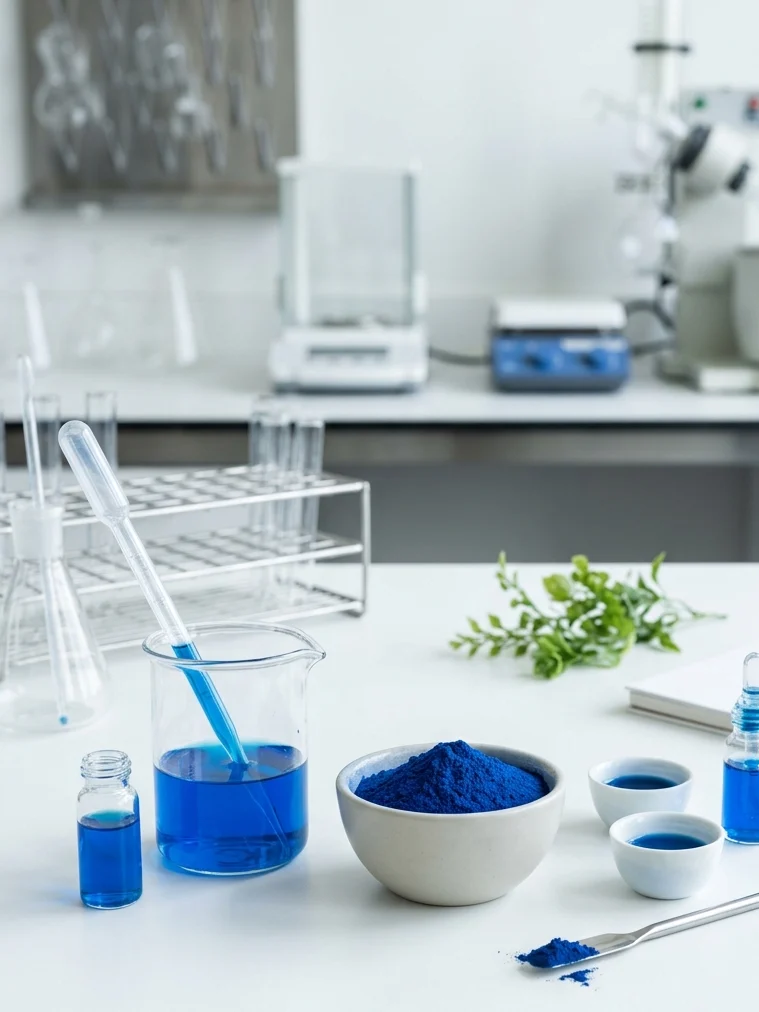
Natural blue colorant sample testing with blue spirulina powder for food and beverage formulation.
Why Natural Blue Colorant Sourcing Needs a B2B Review
Color ingredients are often judged by photos, but a purchasing decision needs more than a beautiful blue sample. A buyer should test the color in the real application, measure the shade against the product target, and confirm specification, COA, packaging and supply readiness before approving a commercial grade.
For blue spirulina projects, the first question is not only how blue the powder looks. The better question is how the color behaves in the final matrix. A clear sourcing review helps the supplier recommend a narrower starting sample, helps the quality team compare documents faster, and helps purchasing connect the approved sample with MOQ, lead time and quotation details.
For broader botanical ingredient sourcing, buyers can also review HERBSEA’s Plant Extract category and Botanical Extract Quality Testing Guide to align COA, assay, heavy metals, microbiology and supplier document expectations.
Blue Spirulina, Phycocyanin and Spirulina Powder: What Buyers Should Clarify
Buyers may use blue spirulina, phycocyanin and spirulina powder in the same conversation, but they are not always the same sourcing request.
| Ingredient request | What it usually means | Best review focus |
|---|---|---|
| Blue spirulina extract | A blue phycocyanin-rich ingredient used mainly for color impact | Color value, shade, carrier, solubility or dispersibility, pH and heat fit |
| Phycocyanin powder | The blue pigment-protein complex associated with spirulina extract | Color strength, assay or color value basis, stability, purity and document package |
| Spirulina powder | Whole spirulina biomass powder, typically green to blue-green | Nutrition positioning, botanical identity, color impact, particle size and taste |
If the goal is a bright natural blue shade, Blue Spirulina Extract is usually the more direct sample request. If the project needs a whole spirulina ingredient for a supplement powder, tablet, capsule or functional food concept, Spirulina Powder may be the better starting point.
Application Fit Matrix
The same ingredient name can lead to different buying requirements depending on whether the project is a liquid beverage, dry mix, confectionery, frozen dessert or custom color blend. Use the matrix below to frame the first RFQ and sample request.
| Application | What the buyer should review | Suggested sample check |
|---|---|---|
| RTD beverage | Bright shade, pH fit, dispersion, light exposure and flavor base | Matrix test, pH record, bottle standing observation |
| Powder drink mix | Dry blend color, flow, dusting and reconstitution behavior | Blend uniformity test and shaker test |
| Confectionery or gummies | Color strength, base color and process fit | Small batch heat and finished piece review |
| Frozen dessert | Shade after processing, freezing and storage | Pilot batch comparison after storage |
| Dairy or plant-based system | Color in an opaque or creamy matrix | Use level, base color and light-storage check |
| Custom color blend | Compatibility with yellow, green, fruit or botanical color components | Blend ratio and final shade check |
For beverage-specific projects, HERBSEA’s Functional Beverage Ingredient Sourcing Guide can support additional checks around solubility, flavor profile, carrier status, microbiology and sample evaluation.
Core Selection Criteria for a Natural Blue Colorant Supplier
A useful RFQ should not ask only for price. Price becomes meaningful only after the buyer defines the application, target shade, grade, document package, sample reference and commercial plan.
Color target
Define whether the project needs vivid blue, soft blue, turquoise, blue-green or a blend-ready shade. The finished base color matters: the same blue colorant will look different in clear water, citrus beverage, creamy plant-based drink, yellow gummy base or brown dessert system.
Ingredient format
Confirm whether the project needs powder, liquid or a prepared blend. Powder can be easier to ship and store, especially for dry mixes, but it may need careful dispersion. Liquid formats may support beverage batching or rapid shade matching, but they may have different packaging, shelf-life and concentration considerations.
pH and matrix
The formula matrix can shift the final shade. Buyers should test the colorant in the exact beverage, powder, confectionery, frozen dessert or dairy-style system. Phycocyanin stability can be influenced by pH and temperature; a food colorant study on C-phycocyanin evaluated stability under different pH and temperature conditions, which is why application testing should reflect the real process environment (PMC).
Processing condition
Mixing sequence, heat step, light exposure and storage condition can all influence visual performance. A single water test is not enough if the finished product will face heat processing, acid pH, clear packaging, long shelf display or freezing.
Documentation
Request a specification sheet, COA, sample reference, composition or carrier information, origin information, packaging details and storage guidance. If the colorant will be used in a regulated food, beverage or supplement application, the buyer should confirm the destination-market requirements before commercial approval.
Commercial continuity
The approved sample should connect to a commercial grade that can be supplied with stable packaging, repeat documentation, realistic MOQ and lead time. A sample that looks good but cannot be quoted or repeated is not ready for purchasing approval.
Regulatory and External Reference Checks
Natural colorant sourcing should include regulatory review by the buyer’s own quality and compliance team. HERBSEA can support ingredient specification, COA and sample information, but the buyer remains responsible for checking final product category, label plan and destination-market requirements.
For U.S. food color applications, buyers can review the current eCFR listing for 21 CFR 73.530, Spirulina extract. FDA also lists spirulina extract in its Regulatory Status of Color Additives database.
For international reference, FAO/JECFA provides a specification entry for Spirulina Extract, INS 134. For EU projects, buyers should separately review whether the material is treated as a food additive, coloring food, ingredient or another category in the target market; EFSA’s food colours overview is a useful starting point for understanding EU color additive evaluation.
Sample Testing Workflow for Shade Matching
Sample testing should be simple enough for a busy product team, but structured enough to support a real buying decision. Replace subjective comments such as “looks good” with repeatable observations that can be discussed with the supplier.
- Define the target shade and finished product format.
- Prepare samples in the actual formula matrix, not only in water.
- Record use level, pH, mixing method, temperature, process condition and observation time.
- Photograph samples under consistent lighting with no color filter.
- Compare the shade immediately after mixing and after the planned holding or process condition.
- Review dispersion, specks, sediment, color shift and flavor or odor impact.
- Connect the selected sample to COA, specification, packaging, MOQ and quotation details.
Keep the approved sample, COA and internal test sheet together. This creates a reference point for commercial lots and avoids confusion when the project moves from bench review to production planning.
Documentation Buyers Should Request
Documentation is part of the product. A sample without clear documents can slow internal approval even when the application result looks promising.
| Document or information | How it supports the buying decision |
|---|---|
| Specification sheet | Confirms product name, appearance, color value or assay basis, carrier, storage guidance and standard packaging |
| COA | Shows batch-level values and links the supplied sample with expected commercial material |
| Composition or carrier information | Helps quality, label and formulation teams understand the material format |
| Application sample notes | Records matrix, temperature, mixing condition, observation time and handling notes |
| Commercial terms | Clarifies MOQ, lead time, packaging, sample availability, shipping route and document timing |
If the project also uses fruit powders, botanical extracts or other natural color-supporting ingredients, HERBSEA’s Fruit Powder category may be useful for related formulation ideas, especially where fruit base color affects the final blue shade.
Supplier Comparison Scorecard
When several suppliers offer materials with similar names, the buying team needs a comparison method that goes beyond unit price.
| Scorecard item | What to compare | Why it matters |
|---|---|---|
| Application match | Performance in the target matrix | The best grade is the one that fits the finished product |
| Shade stability | pH, heat, light and storage behavior | Natural blue color can shift under real process conditions |
| Document clarity | Specification, COA, carrier, origin and packaging information | Clear documents help quality and purchasing teams move faster |
| Sample consistency | Whether repeated samples look and behave the same | Consistency builds confidence before commercial quotation |
| Communication speed | Technical and commercial response quality | Fast answers shorten the path from test to quote |
| Scale readiness | MOQ, lead time, packaging and shipment plan | A good sample still needs a realistic supply path |
The scorecard does not need to be complicated. A buyer can rate each point from one to five, add notes from the application test, and then discuss the strongest two or three options with the supplier.
Troubleshooting Common Blue Colorant Issues
| Observed issue | What to check first | Supplier question |
|---|---|---|
| Shade looks too green | Base color, pH, yellow ingredients and flavor system | Is a different phycocyanin strength or color direction available? |
| Color looks weak | Use level, process condition, light exposure and storage | Which sample has stronger shade impact in this application? |
| Uneven dry blend | Particle size, blend order, powder flow and carrier system | Is there a format better suited to powder blending? |
| Specks in finished product | Dispersion, hydration, viscosity and mixing method | Should the colorant be pre-dispersed before addition? |
| Document gap | Market, application, carrier and internal approval needs | Which documents are available for this grade and destination market? |
Each observation should become a supplier question. This helps narrow the next sample instead of restarting the whole sourcing process.
How to Write a Better RFQ
A better RFQ starts with the finished product, not with the ingredient name alone. Instead of asking for a general quote, the buyer can provide a concise project brief.
Include:
- Application type and target product format.
- Desired shade, color intensity and visual reference.
- Formula pH, heat step, light exposure and packaging type.
- Preferred ingredient format: powder, liquid or blend.
- Required documents: COA, specification, composition, allergen or quality questionnaire.
- Sample quantity and expected test method.
- Estimated commercial volume range and launch timing.
- Packaging preference, destination market and shipment requirements.
This information helps HERBSEA recommend a practical starting sample and connect the inquiry with relevant specification, document and quotation details.
FAQ: Natural Blue Colorant Sourcing
What is a natural blue colorant commonly sourced from?
Many food and beverage projects review blue spirulina or phycocyanin-based ingredients. The right choice depends on finished product format, shade target, pH, process condition, packaging and documentation needs.
Should buyers choose blue spirulina extract or spirulina powder?
For a bright blue color target, blue spirulina extract is usually the more direct request. Spirulina powder is a broader biomass ingredient and may be more relevant for supplement, powder blend or whole-ingredient positioning.
Why does blue color shift in some products?
Shade can change because of pH, heat, light exposure, base color, flavor system, storage condition or other color ingredients. Buyers should test the sample in the real formula rather than approving a water-only test.
What should be included in a blue colorant RFQ?
Include product format, target shade, pH range, process temperature, light exposure, packaging, document requirements, sample quantity and estimated commercial volume.
What documents should buyers request?
Request specification sheet, COA, sample reference, composition or carrier information, packaging details, storage guidance, MOQ, lead time and shipment details.
Can blue spirulina be used in beverages and confectionery?
It can be evaluated for these applications, but the buyer should run application testing in the intended formula and review destination-market requirements before commercial approval.
Request Specifications and Samples
To review natural blue colorant supply for a B2B project, share your target application, desired shade, expected specification needs, sample quantity, packaging preference and buying timeline. HERBSEA can help match the inquiry with relevant blue spirulina, phycocyanin or related ingredient options, documentation and bulk supply information.
Contact HERBSEA to request specifications, sample availability and quotation details for your formulation project.
B2B Sourcing Takeaways
This guide is most useful when it is connected to a real purchasing brief. Buyers can use the topic as a starting point, then confirm botanical source, active marker or extract ratio, assay method, particle size, appearance and batch documents before sample approval. HERBSEA works with procurement, R&D and quality teams that need supplier communication, repeatable documentation and practical bulk order planning.
| Review step | Buyer action |
|---|---|
| Define requirement | Clarify the ingredient name, target specification, application format and expected order quantity. |
| Check documents | Request COA, specification sheet, available test data, packing details and export document support. |
| Test sample | Evaluate color, odor, solubility, particle size, flowability and formula compatibility in the intended process. |
| Plan purchase | Confirm MOQ, lead time, packaging, shipment terms, destination market and reorder expectations. |
RFQ Checklist for HERBSEA
- Target ingredient and preferred specification or assay range.
- Finished-product format and key processing requirements.
- Sample quantity, commercial volume estimate and requested packing format.
- Destination country and documents needed for internal quality review.
- Timeline for sample testing, purchase approval and first shipment.
For related ingredient options, review the Plant Extract category. To request a sample, COA or quotation, contact HERBSEA through the plant extract supplier contact page and include the details above so the team can match a suitable grade.
Supplier Comparison Notes
When comparing suppliers, avoid judging the page only by a broad ingredient name. A useful comparison should connect the specification with the intended application, document package and repeat order plan. Two materials with similar names can differ in assay method, particle size, carrier status, sensory profile, packing format and shipment readiness.
For a faster review, send the same RFQ details to each supplier and compare replies side by side. Look for clear answers on available grades, sample timing, COA fields, MOQ, lead time, export documents and whether the supplier can keep future batches aligned with the approved sample. This gives procurement and quality teams a practical basis for shortlisting.
Because ingredient pages can be revisited during later purchasing cycles, keep notes on the approved specification, supplier response, internal sample result and any requested document updates. Those notes make it easier to reopen the project, compare a replacement material or brief a new quality reviewer without starting the sourcing process from zero.
FAQ: Natural Blue Colorant Supplier Guide: Blue Spirulina and Phycocyanin
Use it as a sourcing checklist before sample request or supplier comparison. Confirm the target specification, application format, quality documents, MOQ, lead time and packing requirements with HERBSEA.
B2B buyers commonly review the specification sheet, COA, assay method summary, microbiology and heavy metals data, packing details and available export document support.
Custom specification review may be available for qualified projects. Share the desired assay, physical requirements, application, order volume, destination market and document checklist before quotation.