
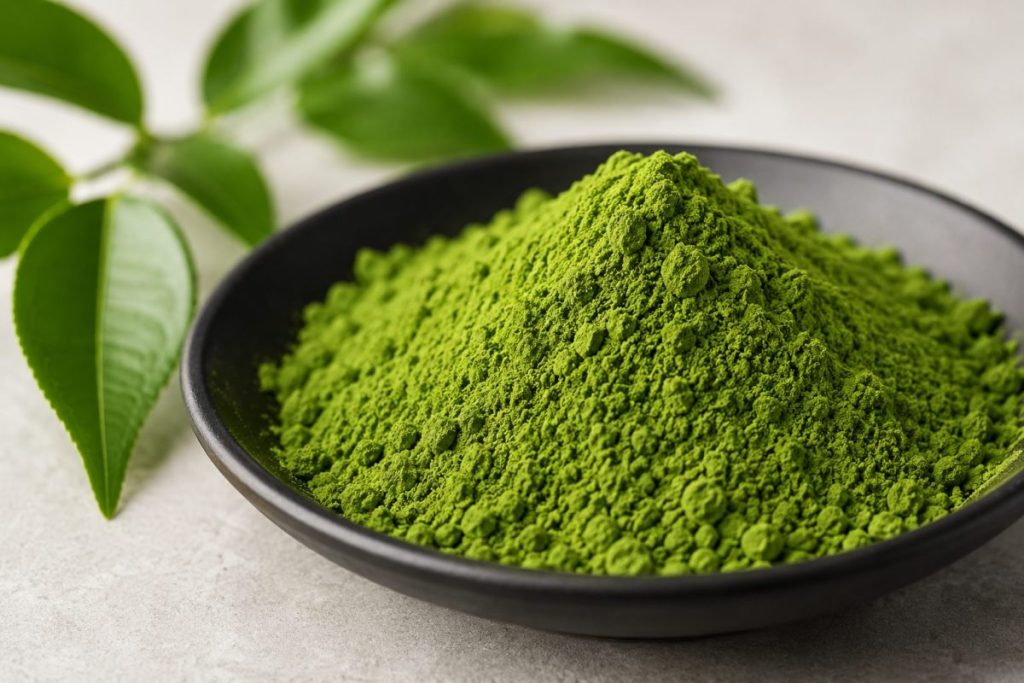
Introduction: Why Organic Matcha Powder Needs a B2B Quality Checklist
Demand for organic matcha powder continues to expand across North America as beverage brands, food manufacturers, café chains, and nutritional supplement companies introduce new matcha-based products. Applications now extend far beyond traditional tea, including ready-to-drink (RTD) beverages, instant latte mixes, bakery products, desserts, protein blends, and functional nutrition powders.
For procurement teams, however, purchasing matcha is far more complex than selecting products labeled “ceremonial grade” or “culinary grade.” Product appearance, milling quality, dispersibility, particle size distribution, production consistency, and documentation all influence manufacturing performance and finished product quality.
Companies sourcing from an organic matcha powder supplier should therefore establish a technical evaluation process that combines laboratory documentation with application testing. Color, particle size, moisture control, heavy metal testing, pesticide screening, microbiological safety, and organic certification are all essential components of supplier qualification.
Manufacturers seeking multiple tea ingredient options can also review the complete Instant Tea Powder Supplier portfolio for beverage and food formulations.
What Is Organic Matcha Powder for Commercial Formulation?
Organic matcha powder is produced by finely grinding shade-grown green tea leaves into an ultra-fine powder. Unlike conventional tea extracts, matcha contains the entire tea leaf rather than only water-soluble components.
Commercial formulators commonly use organic matcha powder in:
- Matcha latte powders
- RTD tea beverages
- Powdered beverage mixes
- Bakery products
- Ice cream
- Dessert formulations
- Smoothie blends
- Nutritional drink powders
- Foodservice beverage concentrates
Unlike instant tea extract, matcha powder remains suspended in liquid rather than dissolving completely. This distinction becomes especially important during product development because beverage stability depends on formulation design rather than simple solubility.
Brands developing cold beverages may also benefit from understanding the differences discussed in Cold Soluble Tea Powder for RTD Beverage Formulation.
Ceremonial Grade vs Culinary Grade Matcha Powder
One of the first purchasing decisions involves selecting the appropriate grade for the intended application.
Ceremonial Grade Matcha
Ceremonial grade matcha generally features:
- Bright emerald green appearance
- Smooth mouthfeel
- Mild vegetal aroma
- Lower bitterness
- Premium beverage positioning
It is commonly selected for premium drinking applications where the matcha itself is the primary ingredient.
Typical uses include:
- Premium café beverages
- Traditional matcha preparation
- High-end wellness beverages
Culinary Grade Matcha
Culinary grade matcha is formulated for manufacturing applications where the powder is blended with additional ingredients.
Typical characteristics include:
- Stronger tea flavor
- Slightly darker green color
- Excellent processing stability
- More economical pricing
Common applications include:
- Matcha latte powder
- Bakery premixes
- Cookies
- Cakes
- Ice cream
- Dairy beverages
- Protein powders
- Dessert products
For most OEM and food manufacturing projects, culinary grade often provides the most practical balance between performance and cost.
Rather than automatically selecting the highest grade, experienced buyers match ingredient specifications to the finished product’s positioning, processing conditions, and target price point.
Color Standards: Why Bright Green Matters
Color is one of the first quality indicators evaluated during incoming inspection.
Bright green matcha generally reflects multiple production factors, including:
- Shade cultivation practices
- Harvest timing
- Leaf maturity
- Drying conditions
- Oxygen exposure
- Storage quality
- Milling process
Although visual inspection is valuable, commercial procurement should rely on objective evaluation methods whenever possible.
Many purchasing teams request:
- Standardized product photographs
- Batch comparison images
- Lab* color values
- Internal color reference standards
- Retention samples
Consistent color across production lots is particularly important for consumer-facing beverage brands because visual variation can directly affect perceived product quality.
When discussing tea ingredient options, manufacturers may also compare Instant Green Tea Powder with traditional matcha depending on formulation objectives.
Particle Size and Mouthfeel
Particle size significantly influences processing performance and consumer experience.
Ultra-fine milling contributes to:
- Smoother mouthfeel
- Improved suspension
- Better powder dispersion
- Reduced sediment perception
- More consistent beverage appearance
Rather than requesting only mesh size, procurement teams increasingly ask suppliers to provide particle size distribution data, including:
- D10
- D50
- D90
- Average particle diameter
- Milling method
Useful supplier questions include:
- What is the typical D50?
- What mesh specification is used?
- Is the powder optimized for latte applications?
- Has the product been tested in RTD beverages?
- How does particle size vary between production batches?
Application-specific testing remains essential because different beverage systems respond differently depending on sugar content, protein concentration, fat level, stabilizers, and processing conditions.
Solubility vs Dispersibility: A Key Matcha Powder Distinction
One common misunderstanding during ingredient sourcing is assuming that matcha behaves like an instant tea extract.
In reality, matcha is not fully soluble.
Instead, the finely milled tea particles remain suspended within the beverage.
For this reason, technical documentation should describe performance using terms such as:
- Dispersibility
- Suspension stability
- Wetting characteristics
- Mouthfeel
- Sedimentation behavior
Using “fully soluble” to describe matcha may create unrealistic expectations during product development.
Brands requiring complete dissolution for clear beverages or highly stable RTD products may instead consider instant tea extracts or cold-soluble tea powders.
For a broader overview of processing technologies, see Instant Tea Powder Types Comparison.
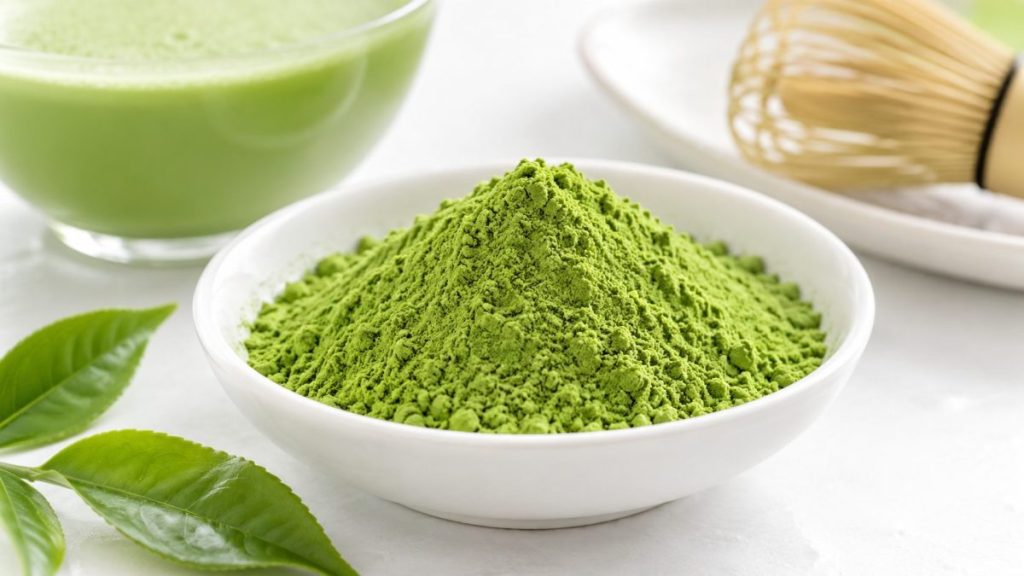
COA Checklist for Organic Matcha Powder Buyers
A Certificate of Analysis (COA) provides essential technical information for evaluating ingredient quality and regulatory compliance.
A comprehensive matcha powder COA should typically include:
| Item | Purpose |
|---|---|
| Appearance | Batch consistency |
| Color | Visual quality confirmation |
| Odor | Organoleptic evaluation |
| Particle size | Processing performance |
| Moisture | Storage stability |
| Ash | Raw material specification |
| Caffeine (if available) | Product characterization |
| Heavy metals | Food safety verification |
| Pesticide residues | Regulatory compliance |
| Microbiology | Food safety |
| Organic certificate | Organic status verification |
| Country of origin | Supply chain transparency |
| Batch number | Traceability |
| Production date | Inventory management |
| Shelf life | Storage planning |
Beyond the COA, buyers frequently request:
- Organic certificate
- Product specification sheet
- Allergen statement
- Non-GMO declaration (when applicable)
- Packaging specification
- Safety Data Sheet (if required)
- Technical Data Sheet
Organic certification requirements can be referenced through the USDA National Organic Program.
Laboratory testing is often performed according to recognized analytical standards such as AOAC Official Methods of Analysis where applicable.
Supplier Evaluation: What to Ask Before Bulk Ordering
Supplier qualification extends beyond reviewing a single laboratory report.
A structured RFQ process helps purchasing teams compare suppliers consistently.
Recommended evaluation questions include:
Product Information
- Which grade is recommended?
- What applications is it designed for?
- Is the powder organic certified?
- Is it suitable for beverage manufacturing?
Technical Documentation
- Complete COA
- Product specification
- Organic certification
- Heavy metal report
- Microbiological report
- Pesticide residue testing
- Batch traceability
Commercial Information
- Minimum order quantity (MOQ)
- Lead time
- Packaging options
- Annual production capacity
- Private label availability
- OEM/ODM support
Quality Assurance
- Batch-to-batch consistency
- Color consistency program
- Sample availability
- Retention sample policy
- Quality management certifications
Many international buyers also evaluate whether suppliers operate under recognized food safety management systems such as ISO 22000 Food Safety Management while manufacturing practices for products entering the U.S. market are expected to align with applicable requirements such as 21 CFR Part 117.
Companies comparing tea ingredient manufacturers may also find useful guidance in Bulk Instant Tea Powder Supplier: B2B Procurement Guide.
Recommended Applications
Organic matcha powder is widely incorporated into commercial food and beverage formulations, including:
- Matcha latte powder
- Ready-to-drink matcha beverages
- Café beverage concentrates
- Bakery mixes
- Cookies
- Cakes
- Ice cream
- Frozen desserts
- Yogurt products
- Smoothie powders
- Protein drink blends
- Meal replacement powders
- Functional nutrition products
- Beverage bases for foodservice
Selecting the appropriate grade, particle size, and processing characteristics for each application helps improve manufacturing efficiency while maintaining consistent product quality.
Conclusion
Choosing the right organic matcha powder supplier requires much more than comparing product prices or grade descriptions. Successful sourcing decisions are based on measurable quality indicators, complete technical documentation, reliable batch consistency, and supplier transparency.
By evaluating color standards, particle size distribution, dispersibility, COA documentation, food safety testing, organic certification, packaging options, and manufacturing capabilities, procurement teams can significantly reduce formulation risks while improving long-term supply reliability.
Whether your application involves premium matcha beverages, bakery products, powdered drink mixes, or nutritional formulations, requesting representative samples and conducting application-specific testing remains one of the most effective steps before commercial-scale purchasing.
Request Specifications, COA, Samples, or a Bulk Quotation
If you are sourcing organic matcha powder for commercial manufacturing, explore HERBSEA’s Bulk Matcha Powder Supplier product page to review available specifications and product options.
For additional tea ingredients, browse the complete Instant Tea Powder Supplier collection.
To discuss your formulation requirements, request technical specifications, obtain a COA, receive evaluation samples, or request a bulk quotation, please Contact HERBSEA.
B2B Sourcing Takeaways
This guide is most useful when it is connected to a real purchasing brief. Buyers can use the topic as a starting point, then confirm organic status, botanical source, extract ratio, carrier status, certification documents and batch COA review before sample approval. HERBSEA works with procurement, R&D and quality teams that need supplier communication, repeatable documentation and practical bulk order planning.
| Review step | Buyer action |
|---|---|
| Define requirement | Clarify the ingredient name, target specification, application format and expected order quantity. |
| Check documents | Request COA, specification sheet, available test data, packing details and export document support. |
| Test sample | Evaluate color, odor, solubility, particle size, flowability and formula compatibility in the intended process. |
| Plan purchase | Confirm MOQ, lead time, packaging, shipment terms, destination market and reorder expectations. |
RFQ Checklist for HERBSEA
- Target ingredient and preferred specification or assay range.
- Finished-product format and key processing requirements.
- Sample quantity, commercial volume estimate and requested packing format.
- Destination country and documents needed for internal quality review.
- Timeline for sample testing, purchase approval and first shipment.
For related ingredient options, review the Organic Plant Extract category. To request a sample, COA or quotation, contact HERBSEA through the plant extract supplier contact page and include the details above so the team can match a suitable grade.
Supplier Comparison Notes
When comparing suppliers, avoid judging the page only by a broad ingredient name. A useful comparison should connect the specification with the intended application, document package and repeat order plan. Two materials with similar names can differ in assay method, particle size, carrier status, sensory profile, packing format and shipment readiness.
For a faster review, send the same RFQ details to each supplier and compare replies side by side. Look for clear answers on available grades, sample timing, COA fields, MOQ, lead time, export documents and whether the supplier can keep future batches aligned with the approved sample. This gives procurement and quality teams a practical basis for shortlisting.
Because ingredient pages can be revisited during later purchasing cycles, keep notes on the approved specification, supplier response, internal sample result and any requested document updates. Those notes make it easier to reopen the project, compare a replacement material or brief a new quality reviewer without starting the sourcing process from zero.
FAQ: Organic Matcha Powder Supplier: Grade, Color, Particle Size and COA Checklist
Use it as a sourcing checklist before sample request or supplier comparison. Confirm the target specification, application format, quality documents, MOQ, lead time and packing requirements with HERBSEA.
B2B buyers commonly review the specification sheet, COA, assay method summary, microbiology and heavy metals data, packing details and available export document support.
Custom specification review may be available for qualified projects. Share the desired assay, physical requirements, application, order volume, destination market and document checklist before quotation.