
Mushroom Extract Powder Manufacturer Quality Checklist
When a buyer searches for a mushroom extract powder manufacturer, the important question is not simply whether a factory can offer a low price. The real question is whether the manufacturer can connect mushroom species, raw-material identity, extraction process, marker testing, batch release, packaging and commercial continuity in one clear supply file.
Quick answer: A qualified mushroom extract powder manufacturer should identify the species and material part, explain the extraction and concentration approach, define the marker or beta-glucan method, provide a lot-specific COA and specification sheet, support a traceable sample, and state MOQ, packaging, lead time and change-notification terms. Buyers should compare manufacturers on the same technical brief before approving a bulk order.
This guide is for brand owners, contract manufacturers, procurement teams, quality managers, importers and ingredient distributors. It focuses on raw-material qualification and formulation supply. It does not make consumer-use or finished-product claims.
1. What a Mushroom Extract Manufacturer Actually Controls
The word “manufacturer” can describe different levels of control. Some companies operate their own extraction plant. Others purchase concentrated material and complete blending, drying or packing at a separate site. A trading company may coordinate production with an approved factory. Each model can work for a B2B project when responsibility is transparent.
Before comparing price, ask the supplier to identify four parties:
- The legal selling entity on the quotation.
- The site that receives and processes the mushroom raw material.
- The laboratory that performs the reported tests.
- The site or party that releases and packs the commercial batch.
| Supply model | Possible advantage | Verification point |
|---|---|---|
| Direct extraction manufacturer | Direct control of production planning and process records | Confirm site address, process scope, batch release and export documents |
| Extraction specialist with export team | Technical production plus established international shipping workflow | Confirm which entity owns the lot and signs the COA |
| Contract manufacturing coordinator | Access to approved production partners and flexible project management | Request the written responsibility split between coordinator and factory |
| Trading company with factory network | Multiple source options and commercial flexibility | Verify the actual source, sample origin, lot ownership and replacement process |
The manufacturer’s label is only a starting signal. The evidence behind the lot matters more than the title used in a sales email.
2. Confirm Species, Material Part and Extract Identity
Mushroom materials can appear as fruiting-body extracts, mycelium materials, whole mushroom powders, blends or extracts made from a stated part. These are not interchangeable descriptions. A buyer should ask for the scientific name, common name, material part, cultivation or source statement and processing description.
The specification should distinguish an extract from a straight powder. It should also state whether the product is a single-species material or a blend. If the quotation uses a proprietary product name, ask the supplier to map it to the technical identity used on the COA and SDS.
At the first review, align these fields:
- Scientific species name and common trade name.
- Fruiting body, mycelium or blended material.
- Fresh or dried starting material, where relevant.
- Extract ratio or concentration description.
- Carrier, excipient or processing aid, if used.
- Marker compound or beta-glucan target and method.
- Appearance, color, odor, mesh or particle-size direction.
- Storage condition, packaging and proposed shelf-life statement.
An extract ratio alone does not prove the final concentration of a target compound. The buyer still needs the finished-powder assay, method and acceptance range.
3. Extraction Ratio: What the Number Does and Does Not Tell You
Suppliers may describe mushroom extracts with ratios such as 8:1, 10:1 or 20:1. The ratio can describe the relationship between starting material and extract, but suppliers may calculate or present it differently. A ratio should therefore be read beside the process description, yield basis and final marker specification.
Ask the manufacturer:
1. What raw-material basis supports the ratio? 2. Does the ratio refer to a single extraction step or a combined process? 3. Which solvent or extraction medium does the process use? 4. Does the final powder contain a carrier or standardizing material? 5. What assay or marker result does the commercial lot achieve? 6. Which process and laboratory records support the quoted value?
| Information on a quotation | Buyer interpretation |
|---|---|
| “10:1 extract” only | Useful as a starting descriptor, but incomplete for release review |
| “10:1, beta-glucan ≥ target” | More useful when the method, basis and lot result are also stated |
| “Standardized marker extract” | Ask for the marker identity, assay method, limit and calculation basis |
| “Mushroom powder extract blend” | Confirm each species, proportion, carrier and finished specification |
Do not rank manufacturers by the highest ratio alone. A buyer needs a consistent relationship between source material, process, final specification and batch result.
4. Marker and Beta-Glucan Testing
Marker testing helps a quality team decide which analytical evidence belongs in the specification. The marker depends on the species and the commercial positioning of the material. Beta-glucan may be relevant for some mushroom extracts, while other projects may require a different marker or a broader identity profile.
Ask the manufacturer to state:
- The marker or beta-glucan definition used in the specification.
- The analytical method and calculation basis.
- Whether the result is total beta-glucan, a defined fraction or another measurement.
- The reference standard or control material, when applicable.
- The minimum limit, typical value or batch result.
- Whether the test is performed on every lot or at a periodic frequency.
| Test question | Why a buyer should ask |
|---|---|
| Which analyte does the method measure? | Prevents a broad value from being presented as a species-specific marker |
| Is the result lot-based? | Clarifies whether the COA supports the released batch |
| Is the basis dry or as-is? | Prevents false comparisons between suppliers |
| Does the method include interfering matrix components? | Helps QA understand the report’s limitations |
| Does the lab identify its method version? | Supports document control during repeat orders |
The safest comparison uses the same analyte definition, method basis and acceptance limit for every candidate manufacturer.
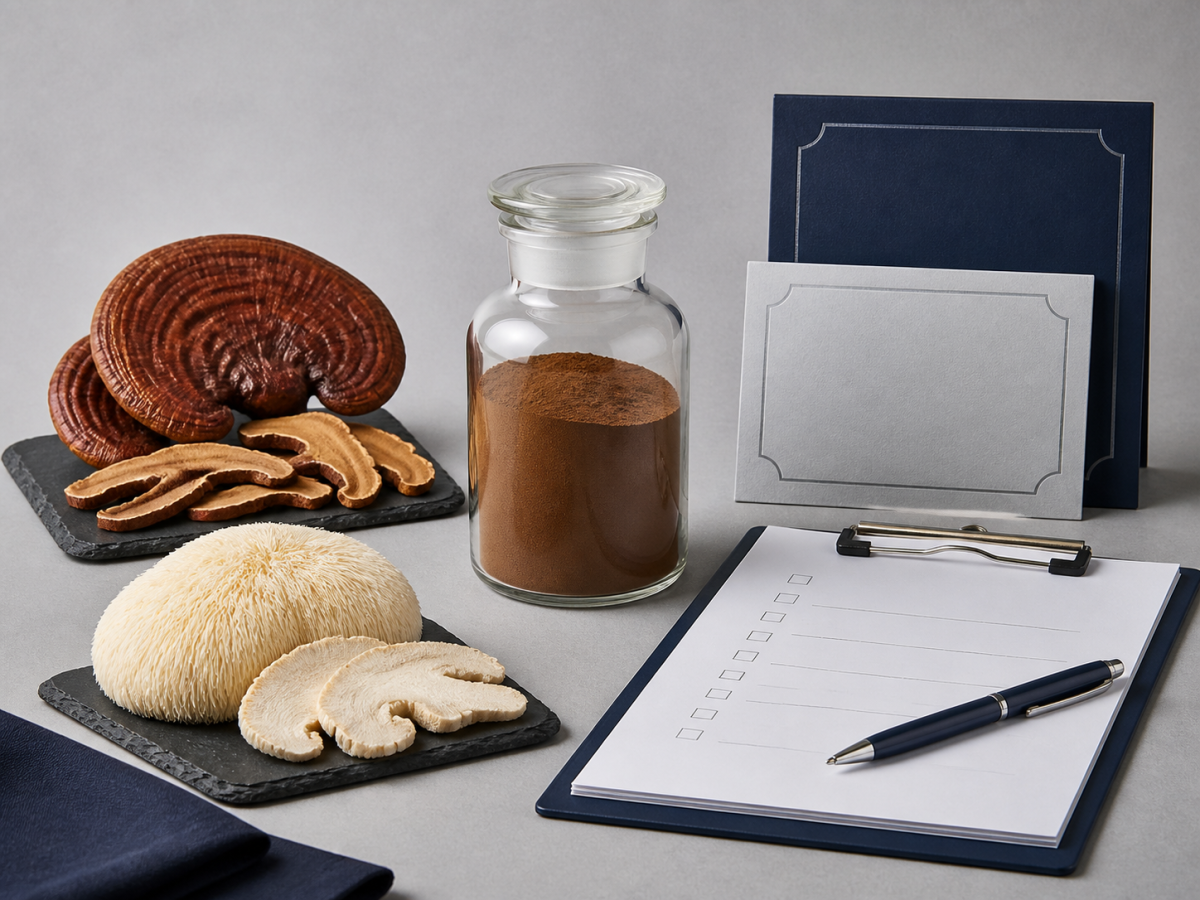
5. COA Review for a Mushroom Extract Powder Manufacturer
A COA should let a second reviewer connect the result to a named lot. At minimum, review the following fields.
Identity and lot traceability
Check species, material part, product code, lot number, manufacturing or retest date, test date, net weight and issuing company. The sample label and dispatch record should use matching identifiers.
Assay and marker results
Look for numerical results, units, method references, specification limits and approval status. A certificate that only says “pass” may not support a meaningful comparison between manufacturers.
Physical and process-related fields
Depending on the project, the specification may include appearance, odor, mesh, moisture, ash, bulk density, solubility or dispersibility. Buyers should request only the fields relevant to receiving, processing and formulation instead of copying an unrelated checklist.
Contaminant and microbiology controls
Ask which microbial organisms, heavy metals, pesticide items, residual solvents or other contaminants the manufacturer monitors. Confirm which tests are lot-based and which are periodic. The supplier should not present a periodic result as proof for every commercial lot.
Laboratory and approval details
Review the laboratory name, report date, reviewer or approver and document revision. If an external laboratory supports the test, ask how the report links to the released batch. ISO/IEC 17025 is a useful laboratory-competence reference, but it does not make the ingredient itself “ISO 17025 certified.”
6. Sample Testing Workflow Before Bulk Approval
A sample has qualification value only when the buyer knows what it represents. Request the sample together with a sample code, lot reference, net weight, dispatch date and available technical documents.
| Review stage | Buyer action | Manufacturer evidence | Output |
|---|---|---|---|
| Technical brief | Define species, material part, marker, application and destination | Confirm the supplier can quote the same grade | Normalized request |
| Document screen | Compare COA, specification, SDS and sample label | Provide current or clearly marked representative files | Questions list |
| Physical review | Inspect appearance, color, odor, packaging and label | Confirm sample storage and handling information | Sample record |
| Analytical review | Test identity, marker or other agreed parameters | Explain method, basis and lot connection | Internal test report |
| Application review | Evaluate dispersion, process fit and sensory profile under the buyer’s protocol | Provide relevant technical notes | R&D decision |
| Release review | Compare results with the commercial specification | Confirm MOQ, lead time, packaging and change process | Proceed, hold or new sample |
Keep the sample photograph, label, COA, supplier email and internal results together. If the manufacturer changes the source, process, site, method or packaging, the quality team can decide whether a new sample is needed.

7. Manufacturing Records and Traceability Questions
Quality review becomes more useful when the manufacturer can explain the records behind a batch. Buyers do not need confidential process recipes. They do need enough information to understand how the supplier controls material identity and repeatability.
Ask about:
- Raw-material receiving and species verification.
- Lot coding from incoming material through extraction and drying.
- In-process checks and hold points.
- Cleaning and cross-contact controls relevant to the site.
- Method versions and reference-standard control.
- Out-of-specification investigation and retesting policy.
- Retained sample storage and retrieval.
- Document revision and approval workflow.
- Change notification for site, process, source, method or packaging.
When a supplier answers these questions clearly, procurement and QA can assign responsibility after shipment. When the answers remain generic, record the gaps instead of assuming that an attractive COA resolves them.
8. Packaging, MOQ and Commercial Continuity
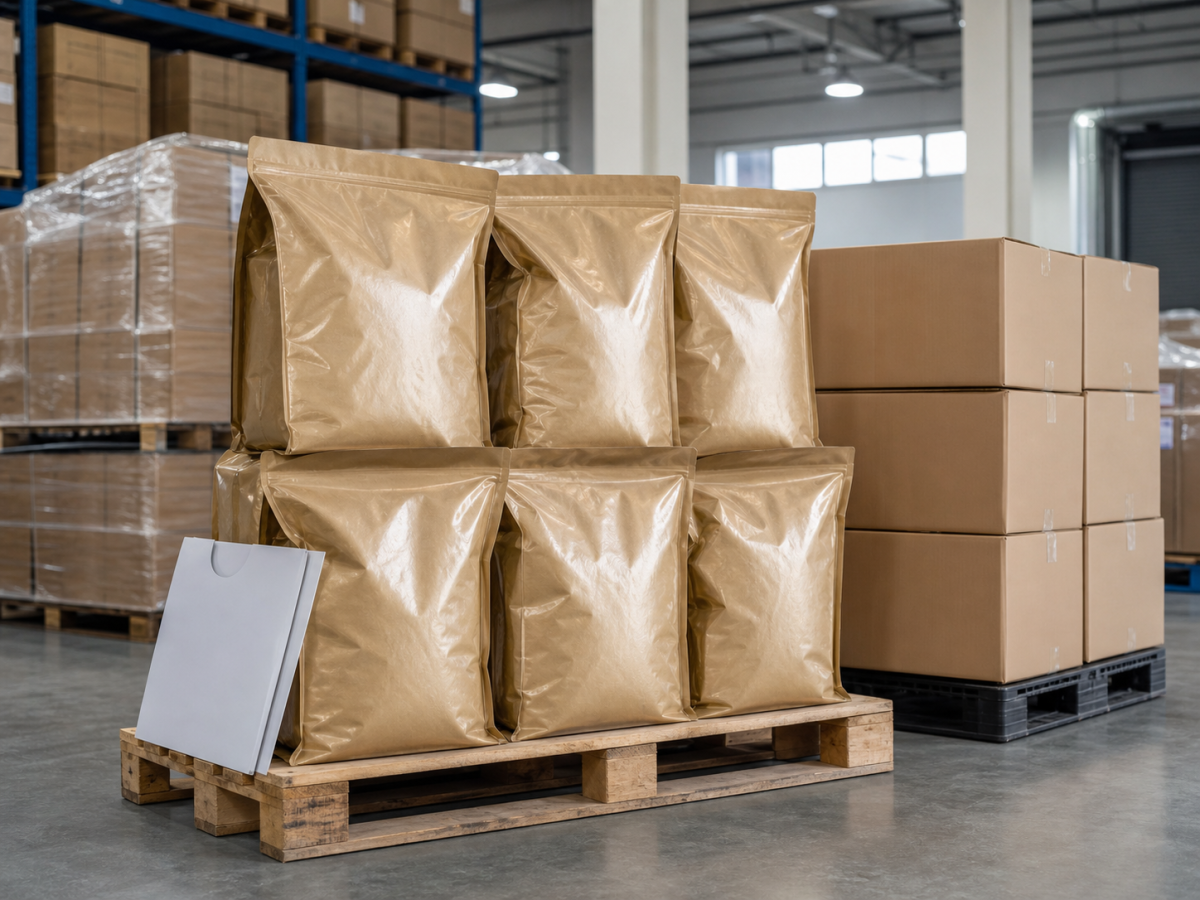
Packaging affects sampling, warehouse handling, label control and shipping. Ask the manufacturer to separate standard packaging from custom options and to state whether the quoted MOQ applies to one species, one marker target or a combined order.
| Commercial field | Questions for the manufacturer |
|---|---|
| MOQ | What is the minimum order for the selected species, marker target and package? |
| Sample | Is the sample from a current commercial lot or a development batch? |
| Packaging | What are the inner liner, outer container, net weight and pallet options? |
| Lead time | When does production time begin: order confirmation, artwork approval or payment? |
| Label | Which species, lot, weight, date and storage fields appear on the label? |
| Documents | Can the supplier provide COA, specification, SDS, packing list and invoice support? |
| Repeat orders | How does the supplier manage specification revisions and lot-to-lot questions? |
The buyer should request product price, packaging charges, sample charges, freight basis and document charges as separate quotation lines. This makes a manufacturer comparison easier and reveals whether two offers cover the same commercial scope.
9. Manufacturer Audit Scorecard
Use a simple 0–2 score for each category: 0 means missing or unclear, 1 means partly documented, and 2 means complete and consistent.
| Category | 0 points | 1 point | 2 points |
|---|---|---|---|
| Species identity | Trade name only | Name and source statement | Species, material part and identity evidence |
| Extraction description | Ratio only | General process statement | Ratio, process scope and relevant controls |
| Marker testing | No method or result | Result with limited basis | Method, basis, limit, result and lot |
| COA quality | Pass/fail only | Partial numerical data | Complete lot-specific certificate |
| Traceability | Sample unmarked | Sample code only | Sample, lot, label and dispatch link |
| Contaminant review | No test scope | General statement | Defined lot or periodic test plan |
| Packaging | Generic bag or drum | Basic pack details | Full material, label and pallet specification |
| Change control | No stated process | Informal notification | Written trigger and communication process |
| Commercial fit | MOQ or lead time unclear | Partial terms | MOQ, lead time, pack and freight basis clear |
The scorecard is a prioritization tool, not a certification. A high score still requires the buyer’s own quality and regulatory review before commercial approval.
10. RFQ Template for Mushroom Extract Manufacturers
Send the same brief to each candidate manufacturer so the answers remain comparable.
Material: State the mushroom species, material part and extract or powder format.
Target specification: Define extract ratio, marker or beta-glucan target, moisture, mesh, appearance and any other required limits.
Required documents: Request COA, specification sheet, SDS, source statement, process or route description, packaging specification and available contaminant or microbiology results.
Sample request: State the sample quantity, test purpose, preferred lot connection and destination.
Commercial request: Ask for MOQ, sample cost, bulk price tiers, standard packaging, custom packaging, lead time, payment terms and freight basis.
Quality questions: Ask which tests are lot-based, which are periodic, how the supplier manages out-of-specification results and which events trigger change notification.
Destination: Name the receiving country and product category so the supplier can identify the relevant document scope.
Ask suppliers to return the response in a structured table. A dated and complete answer is easier to review than several unnamed PDF files and a general statement that “all documents are available.”
11. Common Manufacturer Qualification Problems
- The ratio appears without a final assay: Request the finished-powder marker result and method.
- The product name changes between documents: Ask for a written reconciliation before approval.
- The COA has no lot number: Request a lot-specific certificate or clearly label the document as representative.
- The sample does not match the proposed commercial material: Pause application testing until the source is explained.
- Beta-glucan is listed without a definition: Ask which fraction and calculation basis the supplier uses.
- A periodic test is presented as a batch result: Request the actual lot evidence or mark the item as periodic.
- Packaging is described only as “bulk bag”: Confirm liner, net weight, lot label and pallet details.
- The manufacturer cannot explain who releases the batch: Record the responsibility gap before comparing price.
- The MOQ changes after the sample stage: Request the MOQ for the exact species, marker target and package under review.
These points do not automatically disqualify a manufacturer. They show where the supplier file needs clarification before procurement and QA can make the same decision.
12. Internal Links and Sourcing Support
For a broader supplier comparison, buyers can review the mushroom extract supplier RFQ checklist and the mushroom extract category. Teams reviewing a species-specific project can also compare the bulk shiitake mushroom extract supplier guide. When the species, specification and sample plan are ready, use the HERBSEA supplier contact page for an RFQ discussion.
HERBSEA supports B2B ingredient sourcing by helping buyers organize specification, sample, documentation, packaging and quotation requirements. Final approval remains with the buyer’s own qualified procurement, quality and regulatory teams.
13. Frequently Asked Questions
Request the species and material-part statement, extract or powder specification, marker method, representative or lot-specific COA, SDS, sample information, packaging options, MOQ, lead time and available export documents.
No. The ratio should be reviewed with the raw-material basis, process description, final marker result, calculation basis and lot-specific COA. A higher ratio alone does not establish a better commercial fit.
It should identify the analyte definition, method, calculation basis, specification limit, numerical result, test date and lot. Buyers should confirm whether the result is lot-based or periodic.
That is the preferred arrangement for qualification. If the manufacturer sends a development or representative sample, the supplier should identify it clearly and explain how the commercial lot will be controlled.
Send the same technical brief, normalize species and marker requirements, compare the same COA fields, review the sample under the same protocol, and separate product price from packaging, freight and document charges.
HERBSEA can review the target species, material format, marker requirement, sample plan, destination market and commercial scope for a B2B inquiry. Buyers should include the intended application and required documentation in the first request.
Final Checklist
- The supplier identifies the scientific species and material part.
- The extraction ratio has a stated basis and does not replace the final assay.
- The marker or beta-glucan method and calculation basis are clear.
- The COA connects the numerical result to a named lot.
- The sample label, COA and quotation use matching identifiers.
- The manufacturer explains relevant contaminant and microbiology controls.
- Packaging, MOQ, lead time and document scope are written down.
- Change-notification and out-of-specification questions have an owner.
- The buyer has a repeatable sample and application review plan.
- Open questions are closed before commercial approval.
Sources and Verification Notes
For laboratory-competence and document-structure context, buyers can review the ISO/IEC 17025 overview, the U.S. OSHA Hazard Communication Standard and the European Chemicals Agency SDS guidance. These references support document review; they do not approve a specific mushroom extract lot or replace a destination-market assessment.
Summary
Choosing a mushroom extract powder manufacturer requires more than comparing extraction ratios or unit price. The strongest supplier file connects species, material part, process, marker method, COA, sample, traceability, packaging, MOQ and change control. Send a normalized RFQ, compare the same evidence and keep the sample linked to the proposed commercial lot. That approach gives procurement, QA and formulation teams a clearer basis for a repeatable bulk ingredient decision.
HERBSEA provides raw materials for B2B formulation and manufacturing projects. This article is for ingredient sourcing and specification review only. It does not provide consumer-use recommendations or market approval decisions.