
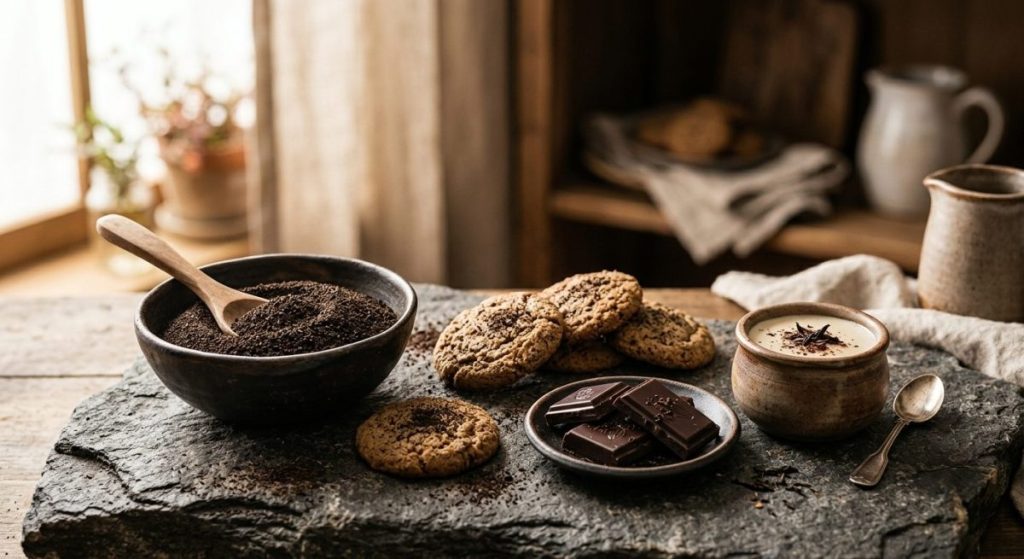
Black tea powder for bakery, chocolate and dessert applications needs a different sourcing review from black tea powder for milk tea or RTD beverages. In baked goods and confectionery systems, buyers need to evaluate tea flavor strength, powder color, moisture impact, particle size, heat process fit, fat-system compatibility and ingredient documentation.
For food brands, contract manufacturers, bakery ingredient buyers and chocolate developers, the main question is not only whether the black tea powder dissolves in water. The better question is whether the tea powder can deliver a clear black tea note in dough, cream, chocolate, filling, coating or dessert powder systems without creating avoidable processing issues.
HERBSEA supplies instant black tea powder for B2B beverage and food formulation projects. Buyers can review specification, COA, sample performance, particle size, packaging, MOQ and RFQ details before confirming a bulk order.
Quick Buyer Answer
Choose black tea powder for bakery and dessert applications when the project needs a tea base ingredient for cookies, cakes, fillings, ice cream mix, chocolate, confectionery, dessert powders or foodservice toppings.
Do not approve a black tea powder only by tasting it in hot water. Bakery, chocolate and dessert systems can change tea aroma, color, mouthfeel and final flavor release. Buyers should test the powder in the actual food matrix before bulk approval.
If the project is mainly beverage-focused, use HERBSEA’s instant black tea powder for milk tea guide or cold soluble tea powder guide instead. This article focuses on food application testing.
Where Black Tea Powder Fits in Food Formulation
Black tea powder can support tea-flavored bakery, chocolate and dessert product development. It may be evaluated for:
- Cookies and biscuits
- Cakes, muffins and bakery mixes
- Chocolate bars and compound coatings
- Ganache, fillings and spreads
- Ice cream, gelato and frozen dessert bases
- Pudding, custard and dessert powders
- Cream fillings and pastry systems
- Confectionery and candy applications
- Foodservice toppings and flavor bases
The right grade depends on the finished product. A powder that works well in a milk tea drink may not automatically perform well in a butter cookie, chocolate coating or frozen dessert base.
For buyers comparing tea origin and sensory direction, HERBSEA’s Assam vs Ceylon vs China black tea powder article can help define the starting tea profile before sample testing.
Bakery vs Chocolate vs Dessert Systems
Bakery, chocolate and dessert applications each create a different test environment for black tea powder.
| Application system | Main formulation concern | What buyers should test |
|---|---|---|
| Bakery dough or batter | Heat process, moisture, color and flavor retention | Tea note after baking, dough color, texture and powder dispersion |
| Chocolate and coatings | Fat compatibility, particle feel and flavor balance | Mouthfeel, color, bitterness balance and visible specks |
| Cream fillings and spreads | Smoothness, flavor release and stability | Particle size, color, aroma and storage behavior |
| Ice cream and frozen desserts | Dairy or plant-based base, cold process and flavor clarity | Tea strength after freezing, color and sediment |
| Dessert powder mixes | Dry blending, flow and reconstitution | Blend uniformity, powder flow and prepared dessert color |
This comparison keeps the buyer brief specific. A generic request for “black tea powder for dessert” gives the supplier less useful information than a brief that names the finished product and process.
Flavor Strength and Heat Process Fit
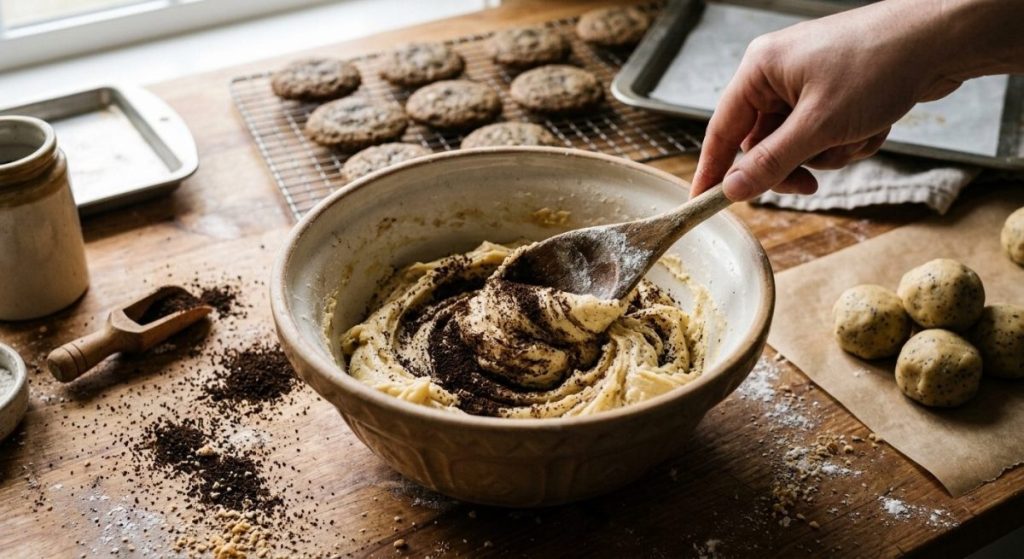
Bakery products may expose black tea powder to heat, fat, sugar and starch systems. These conditions can soften, mask or shift the tea note. Buyers should test flavor after processing, not only before baking.
For bakery applications, review:
- Tea aroma before and after baking
- Color change in dough or batter
- Tea note in the finished bite
- Interaction with butter, cream, cocoa or fruit flavor
- Powder dispersion in dry and wet mixing
- Texture impact at the intended use level
The tea powder supplier can provide a starting grade, but the bakery manufacturer should approve the material inside the finished formula.
Chocolate and Confectionery Considerations
Chocolate and confectionery applications need careful attention to particle size and fat-system compatibility. Black tea powder may contribute flavor and color, but a coarse powder can create a gritty mouthfeel or uneven visual appearance.
For chocolate and coating projects, buyers should test:
- Particle size and mouthfeel
- Distribution in cocoa butter or compound coating systems
- Tea flavor against cocoa bitterness and sweetness
- Color impact in dark, milk or white chocolate systems
- Heat exposure during processing
- Storage behavior and bloom-sensitive formula conditions
For chocolate-specific regulatory or product identity planning, buyer-side teams may review the Codex standards list, which includes CXS 87-1981 for chocolate and chocolate products, and the ISO Chocolate standards category. Ingredient approval should still depend on the buyer’s finished product formula and destination-market review.
Dessert Powders and Foodservice Mixes
Dessert powder mixes often combine black tea powder with sugar, milk powder, creamer, starches, gums, flavors or color systems. In these applications, black tea powder needs to blend evenly and deliver a consistent prepared color.
Buyers should review:
- Dry blend uniformity
- Powder flow and caking risk
- Color after reconstitution
- Sediment or visible particles
- Flavor balance after dairy or plant-based components
- Compatibility with thickening systems
- Packaging fit for sachets, pouches or foodservice packs
If the project is a dry beverage powder rather than a dessert system, HERBSEA’s black tea powder for dry mix sachets and vending drinks guide is the better sourcing reference.
Black Tea Powder vs Black Tea Flavor Powder
Food developers should separate real black tea powder from black tea flavor powder. These materials can serve different formulation goals.
| Ingredient type | What it usually provides | What buyers should clarify |
|---|---|---|
| Black tea powder | Tea solids, tea color, tea aroma and ingredient identity | Tea base, solubility, particle size, COA and application fit |
| Black tea extract powder | Marker-led or extract-focused specification direction | Assay, carrier, extraction ratio and sensory profile |
| Black tea flavor powder | Flavor system designed for aroma impact | Flavor declaration, carrier, allergen status and formula role |
| Milk tea premix powder | Multi-ingredient blend for a prepared beverage style | Full ingredient system, sweetener, creamer and label review |
If the project compares tea powder with extract powder, review HERBSEA’s black tea powder vs black tea extract guide. If the buyer needs an unsweetened tea base rather than a full premix, review unsweetened black tea powder vs milk tea premix powder.
Specification Points to Review
For bakery, chocolate and dessert projects, buyers should request a specification sheet and sample before bulk ordering. Key specification points include:
- Product name and tea base description
- Appearance, color and odor
- Particle size or mesh range
- Solubility or dispersion notes
- Moisture limit
- Caffeine or tea solids information, if specified
- Microbiological limits
- Heavy metals limits
- Residue or contaminant requirements based on destination market
- Packaging format and storage conditions
- COA availability by batch
Particle size is especially important when the final product is smooth, such as chocolate, cream filling, ganache or frozen dessert. A powder that feels acceptable in a beverage may need a different grade for a low-moisture or fat-rich food system.
Label and Allergen Review
Black tea powder itself is usually reviewed as a tea ingredient, but the finished bakery, chocolate or dessert formula may include wheat, milk, soy, egg, tree nuts, sesame or other ingredients that affect label review. Buyers should handle finished product labeling through their regulatory or QA team.
For US-market projects, the FDA Food Labeling Guide is a useful reference for early label planning, and FDA food allergen information can support buyer-side allergen review. For international planning, buyers may also review the Codex General Standard for the Labelling of Prepackaged Foods.
HERBSEA can support raw material specification and document discussion. The brand owner, importer or local advisor should confirm finished product label requirements.
Sample Testing Workflow
Use a food-matrix sample workflow instead of approving the ingredient only in water.
- Define the finished product: cookie, cake, chocolate, filling, ice cream, dessert powder or foodservice mix.
- Confirm whether the project needs instant black tea powder, extract powder, flavor powder or premix.
- Set the target tea strength, color and particle requirement.
- Test the powder in the actual process temperature and matrix.
- Compare flavor before and after processing.
- Review color, mouthfeel, sediment, specks or texture impact.
- Check COA, specification and packaging details.
- Request an adjusted grade if particle size, flavor strength or color does not match the target.
This workflow helps buyers separate tea ingredient quality from finished formula design.
Supplier Comparison Checklist
| Review point | Strong supplier response | Weak supplier response | Buyer action |
|---|---|---|---|
| Application fit | Asks whether the product is bakery, chocolate, filling or dessert powder | Sends a generic beverage-grade sample only | Share the finished product and process |
| Particle size | Provides mesh or particle size information | Cannot explain mouthfeel or powder grade | Test in chocolate, cream or low-moisture systems |
| Sensory profile | Discusses tea strength, color and aroma direction | Focuses only on unit price | Compare samples after processing |
| Heat process fit | Suggests testing after baking or heating | Assumes water tasting is enough | Approve material in the finished product |
| Documentation | Provides specification and COA support | Gives a sales description without batch data | Request documents before bulk order |
| Packaging | Offers suitable bulk packaging for food production | Provides limited packaging details | Confirm bag, carton, drum or custom pack |
| MOQ and lead time | Gives clear sample, MOQ and delivery information | Quotes without supply details | Include quantity and timeline in the RFQ |
RFQ Details to Send
To help HERBSEA recommend a suitable black tea powder for bakery, chocolate or dessert applications, buyers can send:
- Finished product type
- Target tea flavor strength and color
- Required powder format
- Heat process or cold process conditions
- Fat, dairy, starch or dry blend system
- Particle size or mouthfeel requirements
- Packaging format
- Estimated order quantity
- Destination market
- COA, specification and documentation requirements
- Sample request details
For broader black tea powder sourcing questions, buyers can also review HERBSEA’s bulk instant tea powder supplier guide.
FAQ
Can black tea powder be used in bakery products?
Yes. Black tea powder can be evaluated for cookies, cakes, bakery mixes, fillings and other baked goods. Buyers should test flavor, color and texture after the actual heat process.
Is black tea powder suitable for chocolate?
It can be evaluated for chocolate and coating systems, but particle size and mouthfeel are important. Buyers should test the powder in the actual cocoa or compound coating system before bulk approval.
Should buyers use black tea powder or black tea flavor powder?
It depends on the formula goal. Black tea powder contributes tea solids, color and tea character, while black tea flavor powder is usually selected for aroma impact. Buyers should clarify ingredient declaration, carrier and finished product requirements.
What specification points matter most for dessert applications?
Particle size, moisture, color, odor, solubility or dispersion notes, microbiological limits, heavy metals limits, packaging and batch COA are common review points.
Can the same black tea powder work for milk tea and bakery?
Sometimes, but buyers should not assume this. Milk tea focuses on beverage dispersion and dairy-system performance, while bakery and chocolate applications may need stronger particle-size and process testing.
Request Black Tea Powder Samples for Food Applications
HERBSEA supplies bulk instant black tea powder for bakery, chocolate, dessert, milk tea, RTD, dry mix and food formulation projects. B2B buyers can review specification, COA, sample performance, particle size, packaging, MOQ and lead time before quotation.
To source black tea powder for a bakery, chocolate or dessert formulation project, send your finished product brief through the HERBSEA contact page.
B2B Sourcing Takeaways
This guide is most useful when it is connected to a real purchasing brief. Buyers can use the topic as a starting point, then confirm tea powder solubility, color, taste profile, caffeine direction, processing fit, packing and COA review before sample approval. HERBSEA works with procurement, R&D and quality teams that need supplier communication, repeatable documentation and practical bulk order planning.
| Review step | Buyer action |
|---|---|
| Define requirement | Clarify the ingredient name, target specification, application format and expected order quantity. |
| Check documents | Request COA, specification sheet, available test data, packing details and export document support. |
| Test sample | Evaluate color, odor, solubility, particle size, flowability and formula compatibility in the intended process. |
| Plan purchase | Confirm MOQ, lead time, packaging, shipment terms, destination market and reorder expectations. |
RFQ Checklist for HERBSEA
- Target ingredient and preferred specification or assay range.
- Finished-product format and key processing requirements.
- Sample quantity, commercial volume estimate and requested packing format.
- Destination country and documents needed for internal quality review.
- Timeline for sample testing, purchase approval and first shipment.
For related ingredient options, review the Instant Tea Powder category. To request a sample, COA or quotation, contact HERBSEA through the plant extract supplier contact page and include the details above so the team can match a suitable grade.
Supplier Comparison Notes
When comparing suppliers, avoid judging the page only by a broad ingredient name. A useful comparison should connect the specification with the intended application, document package and repeat order plan. Two materials with similar names can differ in assay method, particle size, carrier status, sensory profile, packing format and shipment readiness.
For a faster review, send the same RFQ details to each supplier and compare replies side by side. Look for clear answers on available grades, sample timing, COA fields, MOQ, lead time, export documents and whether the supplier can keep future batches aligned with the approved sample. This gives procurement and quality teams a practical basis for shortlisting.
Because ingredient pages can be revisited during later purchasing cycles, keep notes on the approved specification, supplier response, internal sample result and any requested document updates. Those notes make it easier to reopen the project, compare a replacement material or brief a new quality reviewer without starting the sourcing process from zero.
FAQ: Black Tea Powder for Bakery, Chocolate and Dessert Applications
Use it as a sourcing checklist before sample request or supplier comparison. Confirm the target specification, application format, quality documents, MOQ, lead time and packing requirements with HERBSEA.
B2B buyers commonly review the specification sheet, COA, assay method summary, microbiology and heavy metals data, packing details and available export document support.
Custom specification review may be available for qualified projects. Share the desired assay, physical requirements, application, order volume, destination market and document checklist before quotation.