
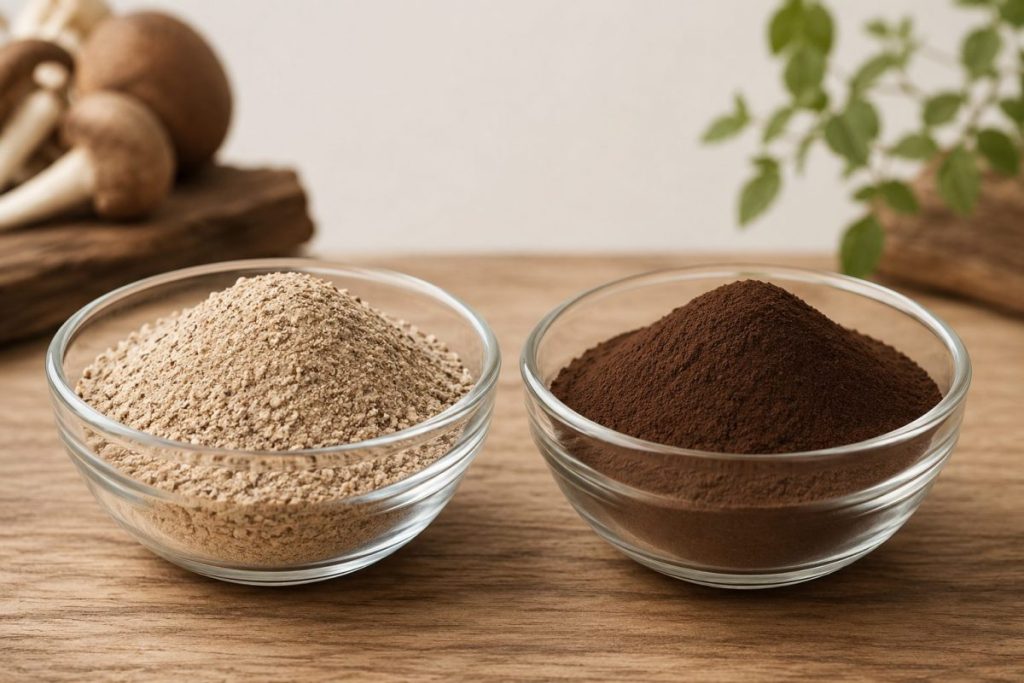
Shiitake Mushroom Extract Sample Approval Starts Before the Sample Arrives
Sample approval is the bridge between supplier selection and bulk purchasing. For Shiitake Mushroom Extract powder, a sample should be reviewed together with the specification, COA, intended format and buyer-side quality requirements. A clean sample workflow helps procurement, R&D and QA teams make the same decision from the same evidence.
A sample is not approved just because it arrives. It is approved only when the material, COA, specification, application test and commercial conditions match the buying brief.
Procurement teams can start from the HERBSEA Shiitake Mushroom Extract supplier page to request a sample, COA and quotation details for supplement and functional food formulation projects. This article supports that core page by explaining how B2B buyers can evaluate the sample before moving into bulk order planning.
Define the Sample Purpose First
Before requesting a sample, decide what the sample should help verify. Some projects need a document review sample, while others need material for capsule, tablet or powder blend evaluation. The sample quantity and document package should match that purpose.
The first sample question is not “Can you send a sample?” The better question is “What do we need this sample to prove for our project?”
A document review sample may be used mainly to compare the supplier’s COA, specification sheet and communication process. A formulation sample may need enough material for blending, tableting, encapsulation or powder mix testing. A commercial pre-approval sample may need a stronger link to the future bulk lot, including batch number, packing details and confirmed specification direction.
Useful sample-purpose questions include:
Is the sample for supplier screening?
Is the sample for QA document review?
Is the sample for capsule, tablet or powder blend testing?
Does the contract manufacturer need a specific sample quantity?
Will the sample be compared with other supplier samples?
Does the buyer need a quote before or after sample review?
Will the approved sample become the reference for future bulk orders?
Clear sample purpose prevents the buyer from requesting too little material, the wrong document set or the wrong specification direction.
Long-Tail Section: Shiitake Mushroom Extract Sample Request
A Shiitake Mushroom Extract sample request should include more than a shipping address. The supplier needs to understand the target application, sample quantity, document requirements and intended next step. If the buyer only asks for “a sample,” the supplier may send material that is available but not fully matched to the project.
A stronger sample request can say:
Please provide a Shiitake Mushroom Extract powder sample for supplement formulation review. We need current specification, available COA, sample quantity options, MOQ, packaging information and quotation support. The intended application is capsule, tablet or powder blend development.
This type of request helps the supplier respond with a useful sample package. It also gives procurement and QA teams a clearer record for later comparison.
Match the Sample With COA and Specification
The sample should be traceable to supplier documents. Product name, batch number, specification direction, assay result, method note, appearance and storage information should connect across the sample label, COA and specification sheet.
If the sample, COA and specification cannot be connected, the approval decision is weak.
A common sourcing problem happens when a buyer receives a sample but does not receive a matching COA. Another problem occurs when the COA shows one product description while the quotation uses a different wording. These mismatches may look small at the sample stage, but they can slow down QA approval during commercial order release.
The buyer should confirm:
Does the sample label show the product name?
Does the COA match the product name?
Does the COA show a batch number?
Does the specification sheet use the same material description?
Is the marker direction consistent across documents?
Does the supplier explain any difference between sample and commercial batch?
Can the approved sample be used as a reference for future order discussion?
For specification review, buyers can use HERBSEA’s mushroom extract COA guide and then return to the Shiitake Mushroom Extract supplier page for product-specific inquiry.
Long-Tail Section: Shiitake Extract Sample Testing
Shiitake extract sample testing should be practical and connected to the intended finished format. A sample may pass document review but still need formulation testing. For capsule projects, the buyer may evaluate flowability and fill behavior. For tablet projects, the formulation team may check blending and compression behavior. For powder blends, color, odor, texture and mixing behavior may matter.
Sample testing should answer the buyer’s manufacturing question, not only the purchasing question.
A procurement team may focus on supplier documents and price. QA may focus on COA, specification and contaminant limits. R&D or formulation staff may focus on powder behavior, blend uniformity and finished-format compatibility. A good sample approval workflow allows all three teams to record their findings before the buyer confirms a bulk order.
Appearance, Odor and Physical Review
Basic receiving observations are useful. Record powder color, odor, texture, visible agglomeration, packaging condition and label information. These notes create a reference when the commercial lot arrives later.
Do not rely only on memory when reviewing samples. Record the sample condition and keep it with the purchasing file.
A simple sample log can include arrival date, supplier name, product name, batch number, sample quantity, package condition, color, odor, texture, visible agglomeration, COA file name and reviewer comments. If several suppliers are being compared, this log helps procurement avoid mixing up samples or documents.
Physical review does not replace COA review. It adds practical information for receiving, handling and formulation. If the sample looks different from a later bulk lot, the buyer can use the sample log to ask the supplier for clarification.
Particle Size and Blending Behavior
Particle size and flow behavior can affect capsules, tablets and powder blends. During sample review, formulation teams may compare the powder with excipients, evaluate blend uniformity and check whether any special handling requirement should be added to the commercial RFQ.
For capsule projects, flowability can affect filling consistency. For tablet projects, particle size and moisture may affect processing review. For powder blends, the sample may need to be tested with other ingredients to check appearance and uniformity.
A sample that looks acceptable in a bag still needs to be tested in the real formulation context.
If the buyer has a contract manufacturer, the sample should be sent with the relevant specification and COA. The contract manufacturer may ask for additional information such as mesh size, bulk density, moisture, carrier status or allergen-related documentation where applicable. These questions should be collected before final quotation.
Long-Tail Section: Shiitake Mushroom Extract Approval Workflow
A practical Shiitake Mushroom Extract approval workflow can be organized in five stages.
Stage one is supplier screening. The buyer checks product name, specification direction, MOQ, communication quality and sample availability.
Stage two is document review. QA compares the COA, specification sheet, SDS and packing information.
Stage three is receiving review. The team records sample label, batch number, appearance, odor, texture and packaging condition.
Stage four is application testing. R&D, the contract manufacturer or the formulation team checks whether the powder fits the intended capsule, tablet or powder blend process.
Stage five is commercial confirmation. Procurement confirms bulk quantity, packaging, lead time, document scope, shipment details and reorder expectations.
A sample should move to bulk order only after document review, physical review and application review are aligned.
Workflow Table for Sample Approval
Document review: Check COA, specification sheet, SDS and packing information.
Receiving check: Record appearance, packaging condition and label details.
Application test: Evaluate flow, blending and finished-format compatibility.
QA decision: Compare internal results with the target specification.
RFQ update: Send final quantity, packing and document requirements.
Commercial confirmation: Confirm MOQ, packaging, lead time, shipment documents and reorder expectations.
The approval workflow should create a record that can be used again when the commercial batch arrives.
Bulk Order Scale-Up Questions
After the sample passes internal review, confirm whether the bulk lot can match the approved specification and whether the same document scope will be available. The buyer should also discuss packaging size, lead time, storage condition, export documents and receiving requirements.
Important scale-up questions include:
Can the commercial lot follow the approved sample direction?
Will the batch COA include the same key items?
Is the specification sheet current?
What MOQ applies to the commercial order?
What packaging format is used for bulk supply?
What lead time should the buyer expect?
Can export documents be prepared for the destination market?
What details should be included in the purchase order?
The commercial order should not be treated as a separate conversation from the approved sample. The two should be connected.
Long-Tail Section: Mushroom Extract Sample Workflow
A mushroom extract sample workflow should be consistent across related ingredients. Whether the buyer is reviewing Shiitake Mushroom Extract, Reishi Mushroom Extract or another mushroom extract, the basic process should connect product identity, COA, specification, sample observations, formulation testing and commercial quotation.
Buyers comparing broader options can review the Mushroom Extract category. If the team is still preparing the inquiry, HERBSEA’s mushroom extract supplier RFQ checklist can help organize the request.
For quality-system background in U.S. dietary supplement manufacturing, buyers may review 21 CFR Part 111. FDA also provides information on dietary supplements. These references support buyer-side context, while the actual approval decision should rely on supplier documents and sample testing.
Supplier Communication During Sample Review
Supplier communication matters during sample approval. A strong supplier should be able to clarify what the sample represents, what documents are available, what MOQ applies and what details are needed before quotation.
If the supplier cannot connect the sample to a specification or cannot explain COA scope, the buyer may need more clarification before approval. This does not automatically mean the material is unsuitable, but it does mean the purchasing file is incomplete.
Good supplier communication reduces the risk of approving a sample that cannot be supported during commercial ordering.
Procurement teams should keep all supplier replies, sample labels, COA files and quotation notes in one record. When the bulk order arrives, this record helps the buyer compare the commercial lot with the approved sample.
RFQ Update After Sample Testing
After sample testing, the buyer should update the RFQ instead of simply asking for a final price. The updated RFQ should include approved specification direction, target order quantity, packing preference, destination country, document checklist, shipment timing and any contract manufacturer notes.
A useful post-sample RFQ may say:
The Shiitake Mushroom Extract sample has passed our internal review for the intended formulation direction. Please quote commercial quantity based on the approved sample direction. Include current COA scope, specification sheet, MOQ, packaging format, lead time, shipment documents and reorder support.
The post-sample RFQ should turn sample feedback into purchasing instructions.
For sample requests or commercial quotation support, buyers can share the target specification, sample quantity, document checklist and destination market through the HERBSEA contact page.
Internal Link Map for This Article
This article should link back to the core Shiitake Mushroom Extract supplier page near the introduction and again near the CTA.
It should also link to the mushroom extract COA guide when discussing document review.
Use the mushroom extract supplier RFQ checklist in the RFQ section.
Link to the Mushroom Extract category when discussing adjacent mushroom extract options.
Every support article in this cluster should send buyers back to the core product page for inquiry.
FAQ
What should a Shiitake Mushroom Extract sample include?
A useful sample package should include the sample material, product name, batch or sample reference, current specification, available COA, packing information and quotation context.
Should the sample COA match the bulk lot?
The sample COA should match the sample being reviewed. Before bulk purchase, the buyer should confirm whether the commercial lot can follow the same specification direction and whether a batch-specific COA will be available.
How much sample should buyers request?
Sample quantity depends on the review purpose. A document review may need less material, while capsule, tablet or powder blend testing may require more. The buyer should ask the contract manufacturer or formulation team before requesting the sample quantity.
When should buyers request a final quote?
A final quote is more useful after the buyer confirms sample feedback, target specification, order quantity, packaging preference, destination country and required documents.
Where should buyers request Shiitake Mushroom Extract samples?
Buyers can start from the Shiitake Mushroom Extract supplier page or send sample details through the HERBSEA contact page.
HERBSEA provides raw materials for B2B manufacturing and formulation use. The information on this page is for ingredient sourcing and specification review only. It is not medical advice and does not provide diagnosis, treatment, cure, prevention, dosage, or consumer use recommendations.