
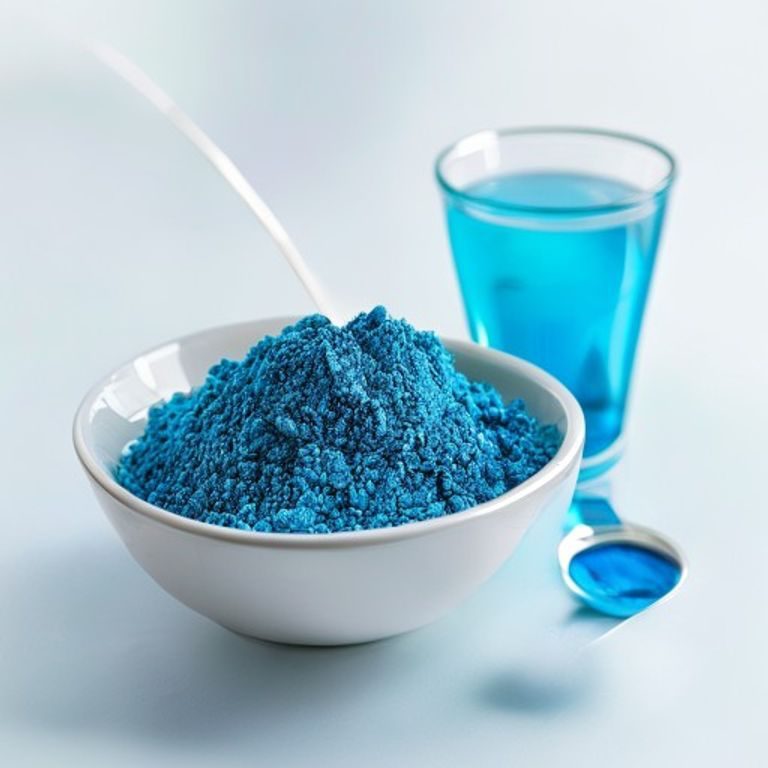
Blue spirulina powder has become one of the most attractive natural color ingredients for beverage brands. Its vivid blue shade can help create eye-catching drinks, smoothie blends, powdered beverage mixes, plant-based products, and functional beverage concepts without relying on synthetic blue colorants.
For B2B buyers, however, blue spirulina powder is not just a “pretty color” ingredient. Its performance depends on phycocyanin content, pH, heat exposure, light, oxygen, processing method, beverage base, application level, and supplier documentation. A blue powder that looks vibrant in a sample jar may behave very differently in an acidic drink, hot-fill process, protein beverage, or long shelf-life RTD formula.
This guide explains how beverage brands, R&D teams, and procurement managers can evaluate blue spirulina powder for drinks, including color stability, formulation limits, COA checks, and bulk supplier questions.
HERBSEA supplies blue spirulina extract for natural blue color applications in beverages, foods, and functional ingredient systems.
What Is Blue Spirulina Powder?
Blue spirulina powder usually refers to spirulina extract rich in phycocyanin, the blue pigment-protein complex naturally found in spirulina. It is different from whole green spirulina powder, which contains the full biomass and has a green to blue-green appearance.
This distinction matters in beverage formulation.
Whole spirulina powder is usually used for nutrition positioning, plant-based protein, greens blends, or superfood powder concepts. Blue spirulina extract is mainly used for natural blue color.
For drinks, blue spirulina is often selected when brands want:
A clean-label blue shade
A botanical or algae-derived color story
Bright visual differentiation
Natural color positioning
Compatibility with smoothie, beverage powder, dairy alternative, or functional drink concepts
A colorant that supports premium and social-media-friendly beverage design
But color performance must be tested carefully. Blue spirulina is sensitive to certain processing and formulation conditions, especially low pH and high heat.
Why Beverage Brands Use Blue Spirulina
Blue is one of the most difficult colors to achieve naturally in food and beverage formulation. Many plant-based colorants provide red, purple, yellow, orange, or green tones, but stable natural blue options are more limited.
This makes blue spirulina especially valuable for brands developing:
Blue smoothie powders
Ocean-inspired functional drinks
Hydration powders
Plant-based milk beverages
Colorful latte powders
Sports nutrition drink mixes
Kids’ beverage powders
Natural blue dessert drinks
Limited-edition beverage launches
Blue spirulina can create a bright and modern product appearance. It also works well in formulations where the color itself becomes part of the product identity.
However, brands should avoid treating blue spirulina like a universal color solution. It works best in systems where pH, heat, and light exposure are controlled.
For a broader sourcing perspective, HERBSEA’s natural blue colorant supplier guide explains how blue spirulina fits into natural color applications.
Blue Spirulina Powder vs Green Spirulina Powder
Blue spirulina powder and green spirulina powder are often confused, but they serve different product goals.
Blue spirulina extract is used primarily for color. It is typically richer in phycocyanin and produces a more vivid blue shade. It is usually selected for beverages, powders, desserts, dairy alternatives, and clean-label color concepts.
Green spirulina powder is made from whole spirulina biomass. It contains proteins, pigments, minerals, and other components from the whole material. Its color is usually green or blue-green rather than bright blue. It is more suitable for greens powders, nutritional blends, tablets, capsules, and superfood formulations.
For beverage brands, the choice depends on the product concept. If the goal is natural blue color, blue spirulina extract is usually the better fit. If the goal is whole spirulina nutrition positioning, green spirulina powder may be more appropriate.
Key Formulation Factors for Blue Spirulina Drinks
Blue spirulina is visually powerful, but it needs the right formulation environment. The most important factors are pH, heat, light, oxygen, application level, beverage base, and processing method.
pH Sensitivity
pH is one of the biggest factors affecting blue spirulina color. Phycocyanin is generally more stable in neutral to mildly alkaline systems. In acidic beverages, the blue color can fade, shift, or become less vibrant.
This is especially important for fruit drinks, citrus beverages, vinegar drinks, kombucha-style products, and acidic hydration drinks. These formulas may look attractive at first but lose color over time if the pH is too low.
Before using blue spirulina in an acidic beverage, brands should run stability tests at the target pH and under real storage conditions.
Heat Sensitivity
Blue spirulina can also be sensitive to high heat. RTD beverages that require pasteurization, hot fill, or UHT processing may create color loss or shade changes.
This does not mean blue spirulina cannot be used in beverages. It means the process must be tested. Some brands may prefer using blue spirulina in powdered beverage mixes, cold-filled drinks, frozen desserts, smoothies, or systems with gentler processing.
If heat processing is required, the R&D team should test color before processing, immediately after processing, and after shelf-life storage.
Light and Oxygen Exposure
Light and oxygen can also influence natural color stability. Transparent bottles may look attractive on the shelf, but they can expose the color to more light. Packaging choice can affect the final appearance of the drink over time.
Brands should test different packaging formats, including clear bottles, opaque bottles, cans, and sachets, depending on the product format.
Application level and Shade Control
Blue spirulina is usually used at low levels, but the target application level depends on the target shade, base color, pH, processing, and ingredient interactions.
A white or pale base may produce a cleaner blue. A yellow, brown, green, or protein-rich base may shift the final shade toward teal, gray-blue, or muted green.
This is why application testing is more reliable than judging the dry powder alone.
Blue Spirulina in Different Beverage Systems
Blue spirulina can be used in several drink formats, but each system has different technical concerns.
In powdered beverage mixes, the main concerns are color uniformity, powder blending, moisture control, and color after reconstitution. Blue spirulina can work well here because heat exposure is often limited.
In smoothie powders, blue spirulina can create vivid color when paired with fruit powders, plant proteins, fibers, or greens ingredients. However, darker fruit powders may reduce brightness.
In plant-based milk beverages, the base color and pH are important. Oat milk, coconut milk, almond milk, and soy systems may each produce a different final shade.
In RTD drinks, processing and shelf life become more demanding. Brands should test heat processing, storage temperature, sedimentation, light exposure, and color drift.
In functional beverage concepts, blue spirulina may be combined with electrolytes, fibers, botanical extracts, proteins, or sweeteners. Each additional ingredient can influence color and stability.
For brands building broader drink formulas, HERBSEA’s functional beverage ingredients sourcing guide can help connect color, flavor, active ingredients, and sourcing decisions.
Important COA and Specification Checks
When sourcing blue spirulina powder in bulk, buyers should request a specification sheet and current batch COA. Color performance is important, but procurement teams also need quality and compliance documentation.
Important checks include:
Phycocyanin content or color value
Appearance and color shade
Solubility or dispersibility information
Moisture
Particle size
Ash
Microbiology
Heavy metals
Pesticide residue information if applicable
Carrier or excipient information
Allergen statement
Non-GMO statement if required
Country of origin
Shelf life
Storage conditions
Batch traceability
The supplier should clearly explain whether the product is pure extract, spray-dried powder, or a formulation with carriers. This matters because carriers can affect color strength, dispersibility, taste, labeling, and application level.
For beverage brands, phycocyanin content and color value are especially important. Two blue spirulina powders may look similar in a sample photo but perform differently in the final drink.
Regulatory and Labeling Considerations
Brands should confirm the regulatory status of spirulina extract in the target market before launching a product. In the United States, FDA’s color additive database lists spirulina extract as a color additive exempt from certification, and buyers can review the current FDA entry for Spirulina Extract as well as the relevant regulation at 21 CFR 73.530.
However, color additive rules can depend on product type, use level, market, and application. Beverage brands should review the most current regulation and confirm suitability for their specific finished product.
Labeling language should also be handled carefully. Blue spirulina should not be described with unsupported health-positioning claims. For U.S. products, brands can review general guidance from FDA Food Labeling & Nutrition.
How to Evaluate a Blue Spirulina Powder Supplier
A good supplier should help buyers understand both ingredient quality and application limits. For blue spirulina, the supplier should be able to discuss color strength, pH sensitivity, heat sensitivity, storage, COA documentation, and sample testing.
Before purchasing, ask:
What is the phycocyanin content or color value?
Is the powder pure extract or blended with a carrier?
What is the recommended pH range?
How does the color perform under heat?
Is it suitable for RTD beverages or better for powder mixes?
Can you provide a current COA?
Can you provide microbiology and heavy metal data?
What are the storage conditions?
What is the MOQ?
What is the lead time?
Can you provide samples for formula testing?
Can you support repeat batch consistency?
For natural color ingredients, batch consistency is especially important. Small color differences can become visible in finished beverages, especially in clear packaging or premium products.
Testing Before Commercial Production
Before scaling up, brands should test blue spirulina powder in the actual formula. A water test is useful, but it is not enough.
Application testing should include:
Target pH
Heat process
Color before and after processing
Color after 7, 14, and 30 days
Light exposure
Packaging format
Storage temperature
Flavor impact
Sedimentation
Interaction with proteins, minerals, acids, fibers, and sweeteners
If the product is a powder mix, brands should test blending uniformity, moisture sensitivity, caking, and color after reconstitution.
If the product is an RTD beverage, brands should test the full process and expected shelf life. Blue spirulina may look perfect in a lab sample but behave differently after processing and distribution.
FAQ
Is blue spirulina powder suitable for drinks?
Yes, blue spirulina powder can be used in drinks, especially powdered beverages, smoothies, plant-based beverages, and selected RTD systems. Brands should test pH, heat exposure, light stability, and shelf-life performance.
Is blue spirulina the same as regular spirulina powder?
No. Blue spirulina usually refers to spirulina extract rich in phycocyanin, used mainly for natural blue color. Regular spirulina powder is whole biomass and usually has a green or blue-green color.
Is blue spirulina stable in acidic drinks?
Blue spirulina is generally less stable in acidic systems. Brands developing citrus drinks, kombucha-style drinks, vinegar beverages, or low-pH products should run stability tests before commercial production.
Can blue spirulina be used in RTD beverages?
It can be used in some RTD beverages, but heat processing, pH, light, packaging, and shelf life must be tested. Powdered beverage mixes and cold-process applications are often easier.
What documents should a blue spirulina supplier provide?
A supplier should provide a specification sheet, COA, phycocyanin or color value information, microbiology data, heavy metal information, carrier details, shelf-life information, and batch traceability.
Source Blue Spirulina Powder for Drink Formulation
Blue spirulina powder can help beverage brands create clean, vivid, naturally colored drink concepts. But successful use depends on more than color intensity in the dry powder. Buyers should evaluate pH stability, heat sensitivity, light exposure, application level, beverage base, COA, phycocyanin content, carrier system, MOQ, lead time, and batch consistency.
HERBSEA supplies blue spirulina extract for beverage powders, smoothies, plant-based drinks, functional beverage concepts, and natural color applications. To request specifications, COA, samples, or a bulk quotation, please contact HERBSEA.
B2B Sourcing Takeaways
This guide is most useful when it is connected to a real purchasing brief. Buyers can use the topic as a starting point, then confirm botanical source, active marker or extract ratio, assay method, particle size, appearance and batch documents before sample approval. HERBSEA works with procurement, R&D and quality teams that need supplier communication, repeatable documentation and practical bulk order planning.
| Review step | Buyer action |
|---|---|
| Define requirement | Clarify the ingredient name, target specification, application format and expected order quantity. |
| Check documents | Request COA, specification sheet, available test data, packing details and export document support. |
| Test sample | Evaluate color, odor, solubility, particle size, flowability and formula compatibility in the intended process. |
| Plan purchase | Confirm MOQ, lead time, packaging, shipment terms, destination market and reorder expectations. |
RFQ Checklist for HERBSEA
- Target ingredient and preferred specification or assay range.
- Finished-product format and key processing requirements.
- Sample quantity, commercial volume estimate and requested packing format.
- Destination country and documents needed for internal quality review.
- Timeline for sample testing, purchase approval and first shipment.
For related ingredient options, review the Plant Extract category. To request a sample, COA or quotation, contact HERBSEA through the plant extract supplier contact page and include the details above so the team can match a suitable grade.
Supplier Comparison Notes
When comparing suppliers, avoid judging the page only by a broad ingredient name. A useful comparison should connect the specification with the intended application, document package and repeat order plan. Two materials with similar names can differ in assay method, particle size, carrier status, sensory profile, packing format and shipment readiness.
For a faster review, send the same RFQ details to each supplier and compare replies side by side. Look for clear answers on available grades, sample timing, COA fields, MOQ, lead time, export documents and whether the supplier can keep future batches aligned with the approved sample. This gives procurement and quality teams a practical basis for shortlisting.
Because ingredient pages can be revisited during later purchasing cycles, keep notes on the approved specification, supplier response, internal sample result and any requested document updates. Those notes make it easier to reopen the project, compare a replacement material or brief a new quality reviewer without starting the sourcing process from zero.
FAQ: Blue Spirulina Powder for Drinks: Color Stability, pH, Heat and COA Guide
Use it as a sourcing checklist before sample request or supplier comparison. Confirm the target specification, application format, quality documents, MOQ, lead time and packing requirements with HERBSEA.
B2B buyers commonly review the specification sheet, COA, assay method summary, microbiology and heavy metals data, packing details and available export document support.
Custom specification review may be available for qualified projects. Share the desired assay, physical requirements, application, order volume, destination market and document checklist before quotation.