

As we age, digestive function can begin to change. Bowel movements may become less regular, intestinal transit may slow, and constipation becomes increasingly common.
Some older adults turn to stimulant laxatives and may continue using them for extended periods. While these products can provide short-term relief, constipation in later life is more complex than simply getting the bowel to move.
Behind these changes are multiple age-related physiological factors involving the enteric nervous system, intestinal muscles, gastrointestinal signaling, and anorectal function.
This raises an interesting question: could 5-hydroxytryptophan (5-HTP), a precursor to serotonin, have a role in supporting the signaling pathways involved in gastrointestinal function?
To understand the science, we first need to understand why the gut changes with age.
I. Why Does Constipation Become More Common With Age?
The digestive tract is not simply a passive tube.
Within its walls lies an independent network of nerves known as the enteric nervous system (ENS). It contains approximately 500 million neurons—more than the spinal cord—which is why it is often referred to as the “second brain.”
The ENS acts as a local command center, coordinating smooth muscle activity, secretion, and sensory signals to keep intestinal contents moving through the digestive tract.
As we age, several parts of this coordinated system can change.
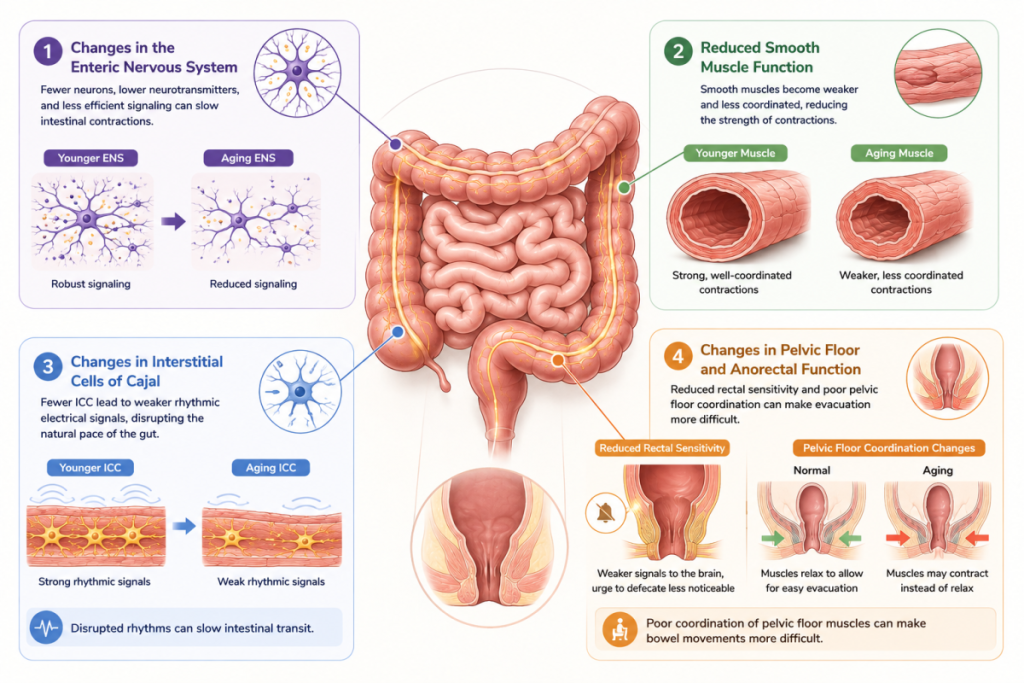
1. Changes in the Enteric Nervous System
With age, changes may occur in the number of enteric neurons, neurotransmitter levels, and the efficiency of neural signaling.
Think of the ENS as an aging electrical network: the system is still there, but signals may no longer travel as efficiently. As a result, the gut may respond more slowly to signals that coordinate intestinal contraction.
2. Reduced Smooth Muscle Function
Smooth muscles in the intestinal wall help propel intestinal contents forward.
With aging, the strength and coordination of these contractions may decline, reducing the efficiency of intestinal propulsion.
3. Changes in Interstitial Cells of Cajal
Interstitial cells of Cajal (ICC) act as the gut’s “pacemaker cells,” generating rhythmic electrical signals that help coordinate gastrointestinal contractions.
Research suggests that the number of ICC may decline with age, potentially contributing to disrupted gastrointestinal rhythms.
4. Changes in Pelvic Floor and Anorectal Function
Reduced rectal sensitivity can make the urge to defecate less noticeable.
Changes in pelvic floor coordination can also make bowel movements more difficult. In some cases, muscles that should relax during defecation may instead contract, contributing to difficulty with evacuation.
How Common Is Constipation in Older Adults?
Constipation in older adults is not a niche issue.
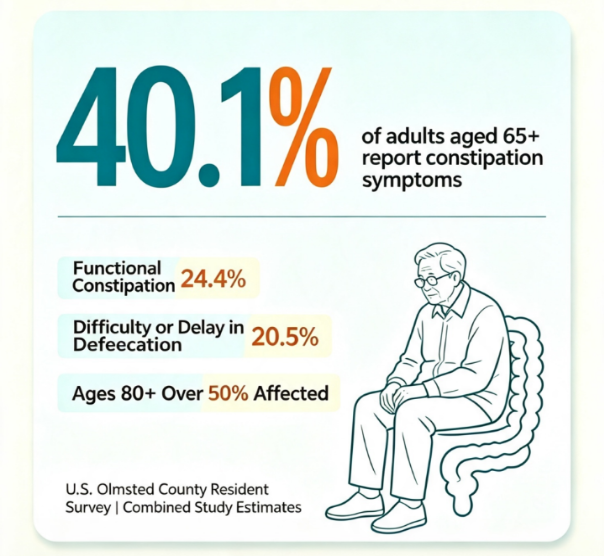
A U.S. study of 1,375 residents aged 65 and older in Olmsted County reported that:
- 40.1% experienced some form of constipation symptom
- 24.4% met criteria for functional constipation
- 20.5% experienced difficulty or delay with defecation
Other estimates suggest that constipation affects approximately 10–30% of community-dwelling older adults, while prevalence may rise to 40–60% in long-term care settings. Among adults over age 80, nearly one in two may be affected.
Put simply, constipation in later life is not the result of a single organ “getting old.”
It can reflect the combined effects of changes in nerve signaling, muscle function, sensation, medication use, and physical activity.
II. Stimulant Laxatives: Effective in the Short Term, but Not the Whole Answer
One common approach to constipation is the use of stimulant laxatives containing anthraquinone compounds, such as senna, rhubarb, aloe latex, and cascara.
How Do They Work?
After anthraquinone glycosides reach the colon, gut bacteria convert them into active metabolites.
These metabolites stimulate the intestinal wall to increase water and electrolyte secretion while also increasing intestinal motility.
This can make stimulant laxatives effective for short-term relief. The concern is that short-term effectiveness may sometimes be mistaken for suitability for routine, long-term use.
Melanosis Coli
One condition associated with prolonged use of certain anthraquinone-containing laxatives is melanosis coli, a generally benign and reversible pigmentation of the colonic mucosa. Anthraquinones can induce apoptosis in intestinal epithelial cells, after which cellular debris is taken up by macrophages, leading to the accumulation of lipofuscin and the characteristic brown-to-dark pigmentation of the colon.
Melanosis coli is typically asymptomatic and is often identified incidentally during colonoscopy. Although the causal relationship between anthraquinone use, melanosis coli, and colorectal cancer remains inconclusive, certain anthraquinone-containing laxative ingredients are subject to significant regulatory restrictions in foods and dietary supplements across many markets.
Reliance and Changes in Bowel Responsiveness
Another concern with prolonged use of stimulant laxatives is the potential for increasing reliance on external stimulation to produce a bowel movement.
With frequent or prolonged use, some individuals may find that they increasingly depend on stimulant laxatives to maintain regular bowel movements. Concerns have also been raised about changes in normal bowel responsiveness and motility regulation with long-term use.
Other potential problems include abdominal pain, diarrhea, dehydration, and electrolyte disturbances.
Different approaches to constipation work through different mechanisms—and each comes with its own considerations:
| Approach | Primary Mechanism | Key Considerations With Long-Term Use |
| Anthraquinone Stimulant Laxatives (e.g., senna) | Stimulate intestinal secretion and increase motility | Melanosis coli, abdominal pain, electrolyte disturbances, and potential reliance with prolonged use |
| Dietary Fiber | Increases stool bulk | May worsen bloating in some individuals |
| Osmotic Laxatives | Increase water content within the intestinal lumen | Diarrhea and potential electrolyte disturbances, depending on the specific agent |
The takeaway is not that stimulant laxatives are inherently “bad.” Rather, regular or prolonged reliance on them deserves greater consideration, particularly when constipation has become a chronic issue.
For chronic constipation, the more meaningful question may not simply be:“Which laxative is the strongest?”
but rather: “What approaches may help support the physiological systems involved in normal gut signaling, motility, and bowel regularity?”
III. 5-HTP: Not a Laxative, but a Precursor to Serotonin
To understand 5-HTP, we first need to understand serotonin.
Serotonin (5-hydroxytryptamine, or 5-HT) is an important neurotransmitter and signaling molecule. It is widely known for its relationship with mood and sleep. What is less widely recognized is that approximately 95% of the body’s serotonin is found in the gastrointestinal tract rather than the brain.
In the gut, serotonin is produced and released by enterochromaffin (EC) cells in the intestinal mucosa. These cells can be thought of as the gut’s “chemical sentinels,” with serotonin participating in the regulation of gastrointestinal movement, secretion, and sensation.
What Exactly Is 5-HTP?
5-HTP (5-hydroxy-L-tryptophan) is an intermediate in the serotonin synthesis pathway.
More precisely, it is a precursor to serotonin. It is not serotonin itself and should not simply be described as a neurotransmitter.
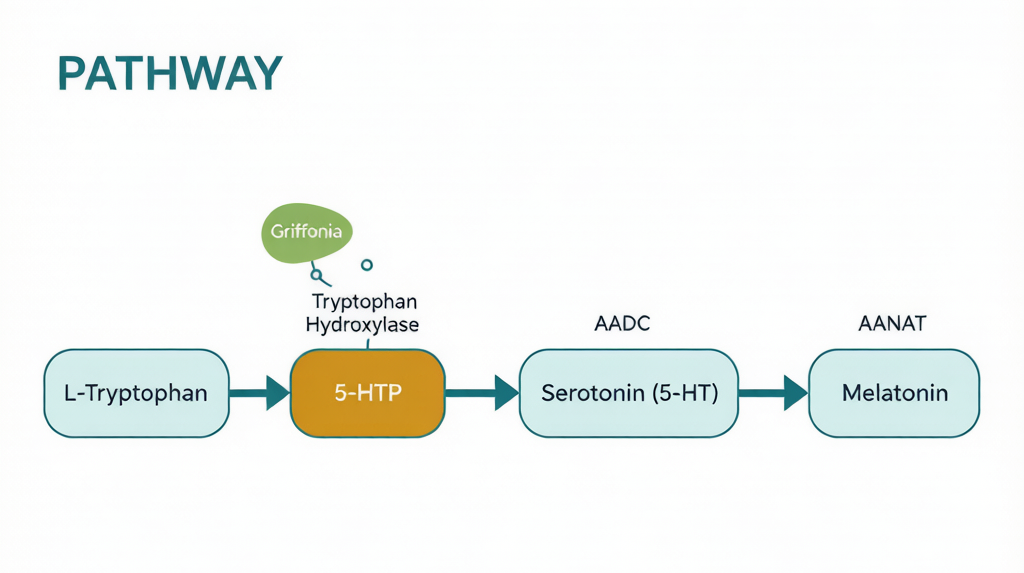
Tryptophan → 5-HTP → Serotonin → Melatonin:
5-HTP acts as an upstream precursor in the serotonin synthesis pathway.
IV. Why Might 5-HTP Be Relevant to Gut Motility?
To understand why serotonin is so important to gastrointestinal function, it helps to look at three key roles it plays in the gut: regulating motility, supporting secretion, and participating in sensory signaling. The figure below shows how these mechanisms work together.
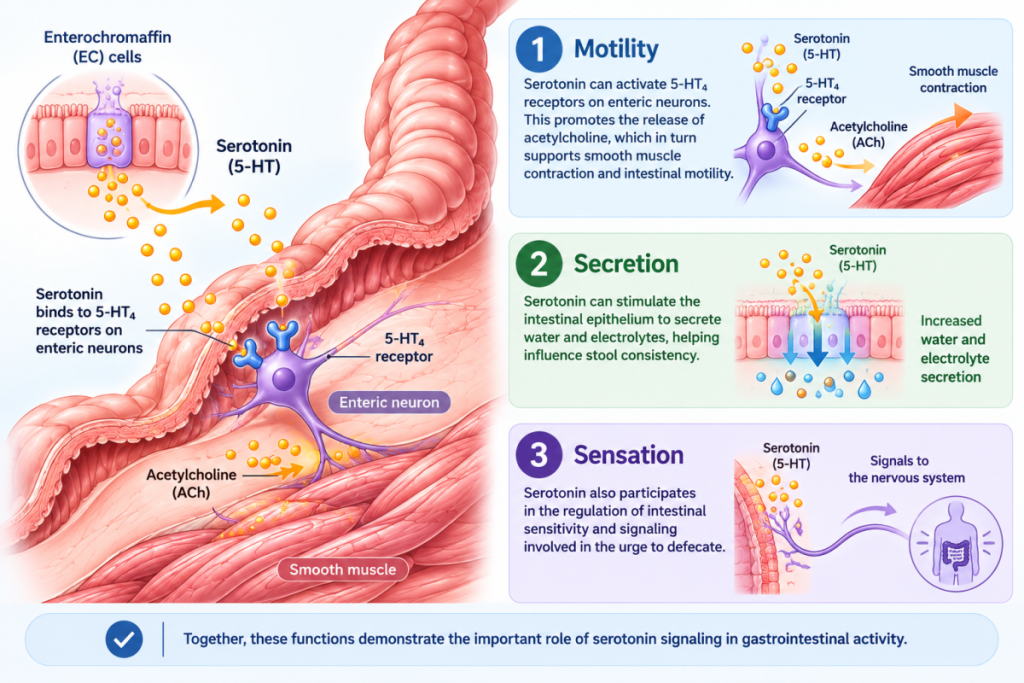
Serotonin’s Three Key Roles in the Gut: Pacemaker · Lubricant · Messenger
The 5-HT₄ Connection
The importance of this pathway is also reflected in clinical pharmacology.
5-HT₄ receptor agonists, such as prucalopride, are clinically approved for the treatment of chronic constipation.
This supports the role of serotonin signaling—particularly 5-HT₄ receptor signaling—in gastrointestinal motility.
However, an important distinction must be made: A prescription drug that directly targets a serotonin receptor is not the same as a dietary supplement that provides a serotonin precursor.
Prucalopride provides clinical evidence that targeting the serotonin pathway can promote gastrointestinal motility. It does not demonstrate that oral 5-HTP produces the same clinical effect.
V. What Does the Research on 5-HTP Show?
Animal Research: Important Mechanistic Evidence
Some of the strongest mechanistic evidence described in the current research comes from a mouse study conducted by researchers at Columbia University.
In mice with a genetic mutation that resulted in insufficient serotonin in enteric neurons, researchers observed a reduction in enteric neurons and slower gastrointestinal motility.
When the mice received slow-release 5-HTP, intestinal serotonin levels increased, enteric neuron numbers recovered, and gastrointestinal motility improved.
These findings provide important experimental support for investigating how 5-HTP may influence serotonin-related signaling in the gut.
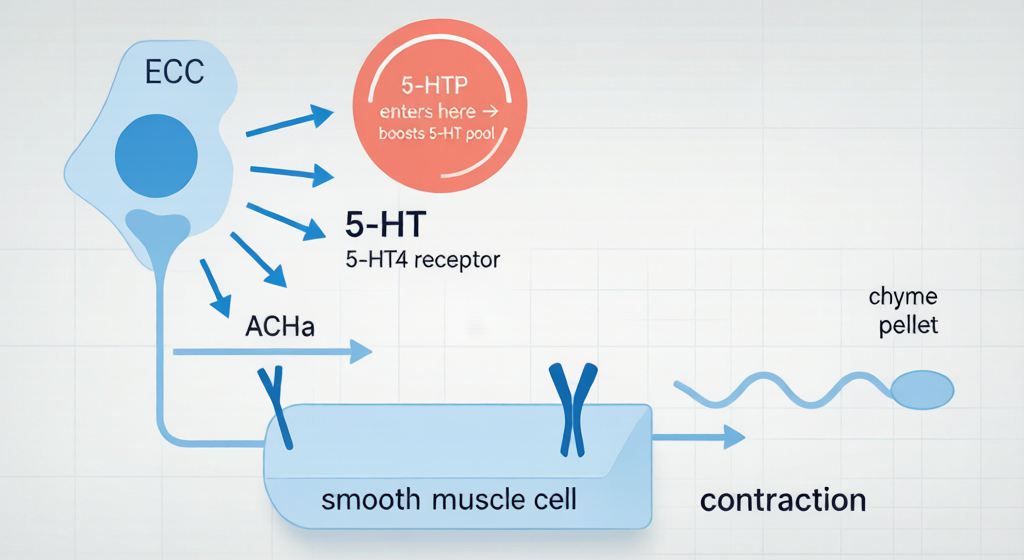
5-HTP Mechanism:
Upstream Precursor Supplementation → Increased Serotonin Availability → Activation of the Gut Motility Signaling Cascade
What About 5-HTP Dosage?
Published studies of 5-HTP have used a wide range of doses—approximately 150–800 mg per day, primarily in research related to sleep and mood.
For discussions related to gastrointestinal motility support, the Chinese source identifies a range of 100–300 mg per day.
For consumer education, a more cautious way to communicate this is:
Start with a low amount, assess individual response and tolerance, and adjust only when appropriate and with professional guidance. A commonly discussed approach is to begin at approximately 100 mg per day and gradually adjust within the 100–300 mg/day range based on tolerance.
VI. Safety: Who Should Not Use 5-HTP Without Professional Guidance?
5-HTP is not a vitamin, and more is not necessarily better.
Because 5-HTP is involved in serotonin metabolism, particular caution is required when it is combined with medications or other substances that affect serotonin.
Individuals should not self-administer 5-HTP if they are taking:
- SSRI or SNRI antidepressants, such as sertraline, fluoxetine, or venlafaxine
- MAO inhibitors
- Triptan migraine medications
- Tramadol
- St. John’s wort
Additional caution applies to:
- Pregnant individuals
- Breastfeeding individuals
- Children
- People with severe liver or kidney impairment
Excessive serotonergic activity or combining multiple serotonergic substances can increase the risk of serious interactions, including serotonin syndrome.
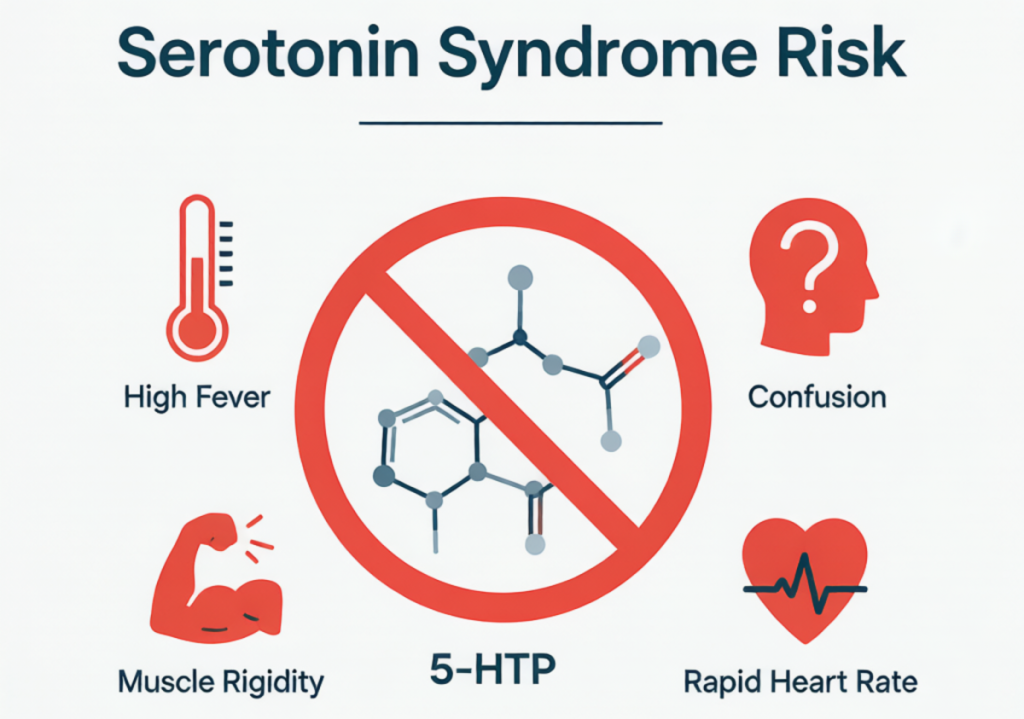
5-HTP Safety Considerations: Increased Serotonergic Activity May Lead to Serious Drug Interactions
VII. Putting 5-HTP in the Right Place in the Healthy-Aging Picture
5-HTP should not be viewed as a “magic ingredient” that can solve constipation on its own. Healthy digestive function depends on multiple factors, including:
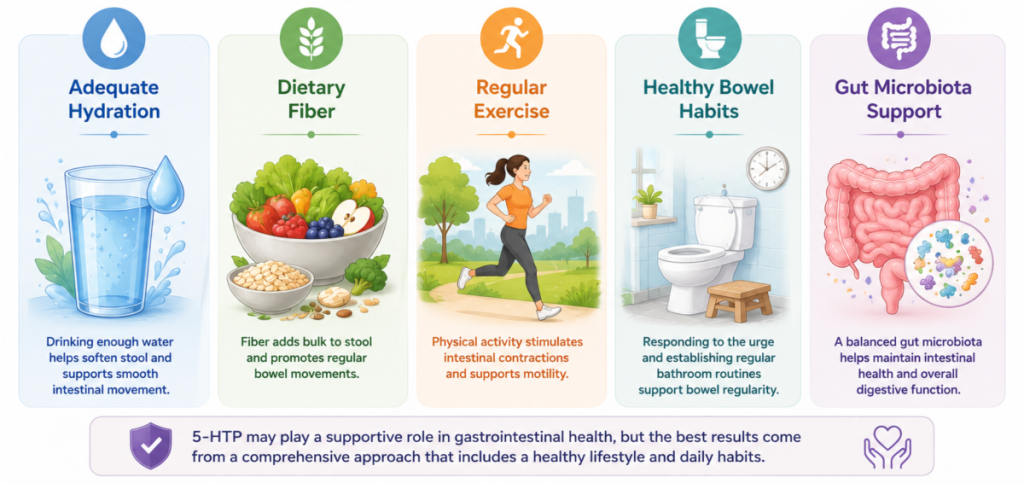
Within this broader picture, 5-HTP is better understood as an emerging area of research related to serotonin signaling and gastrointestinal function, rather than as a stand-alone solution for constipation.
Where Does the Evidence Stand?
The current evidence can be summarized simply:
Mechanistic Rationale: Established and biologically plausible
Animal Evidence: Strong mechanistic support
Human Evidence: Preliminary
Constipation-Specific Clinical Evidence: Still developing
This distinction is important when considering the potential role of 5-HTP in healthy aging.
The Takeaway
The slowing of gastrointestinal function with age reflects real physiological changes.
At the same time, long-term reliance on stimulant laxatives may not address the broader changes occurring in the nerves, muscles, sensory pathways, and signaling systems involved in normal bowel function.
5-HTP offers an interesting scientific direction because it provides an upstream precursor for serotonin synthesis, connecting it to a signaling pathway with an established role in gastrointestinal physiology.
References
- Talley NJ, et al. Constipation in an elderly community: a study of prevalence and potential risk factors. Am J Gastroenterol. 1996;91(1):19–25.
- Gandell D, et al. Treatment of constipation in older people. CMAJ. 2013;185(8):663–670.
- Patejdl R. Gastrointestinal motility function and dysfunction in the elderly patient: what are the effects of aging? 2024.
- Nguyen VTT, et al. Aging of enteric neuromuscular systems in gastrointestinal tract. Neurogastroenterol Motil. 2022;34(7):e14359.
- Yang N, Ruan M, Jin S. Melanosis coli: a comprehensive review. Gastroenterol Hepatol. 2020;15(6):321–328.
- Maffei ME. 5-Hydroxytryptophan (5-HTP): natural occurrence, analysis, biosynthesis, physiology and toxicology. Int J Mol Sci. 2020;22(1):181.
- Israelyan N, et al. Effects of serotonin and slow-release 5-HTP on gastrointestinal motility in a mouse model of depression. Gastroenterology. 2019.
- Sutanto CN, et al. The impact of 5-hydroxytryptophan supplementation on sleep quality and gut microbiota composition in older adults: a randomized controlled trial. Clinical Nutrition. 2024.
- Camilleri M, et al. Current and future pharmacological treatments for constipation. Nat Rev Gastroenterol Hepatol. 2014;11:605–613.
Disclaimer: This content is provided for educational purposes only and is not intended as medical advice. 5-HTP may interact with multiple medications. Consult a physician or clinical pharmacist before taking any supplement. Pregnant or breastfeeding individuals, children, and people taking medications should not use 5-HTP without professional guidance.