
Introduction: The Sovereign of Medicinal Fungi
Reishi mushroom extract. In the hierarchy of the mycological kingdom, Ganoderma lucidum—commonly known as Reishi or Lingzhi—has held the title of the “Mushroom of Immortality” for over two millennia. While ancient herbalists prized it for spiritual potency and longevity, modern pharmacology has identified its true power lies in its complex chemical profile.
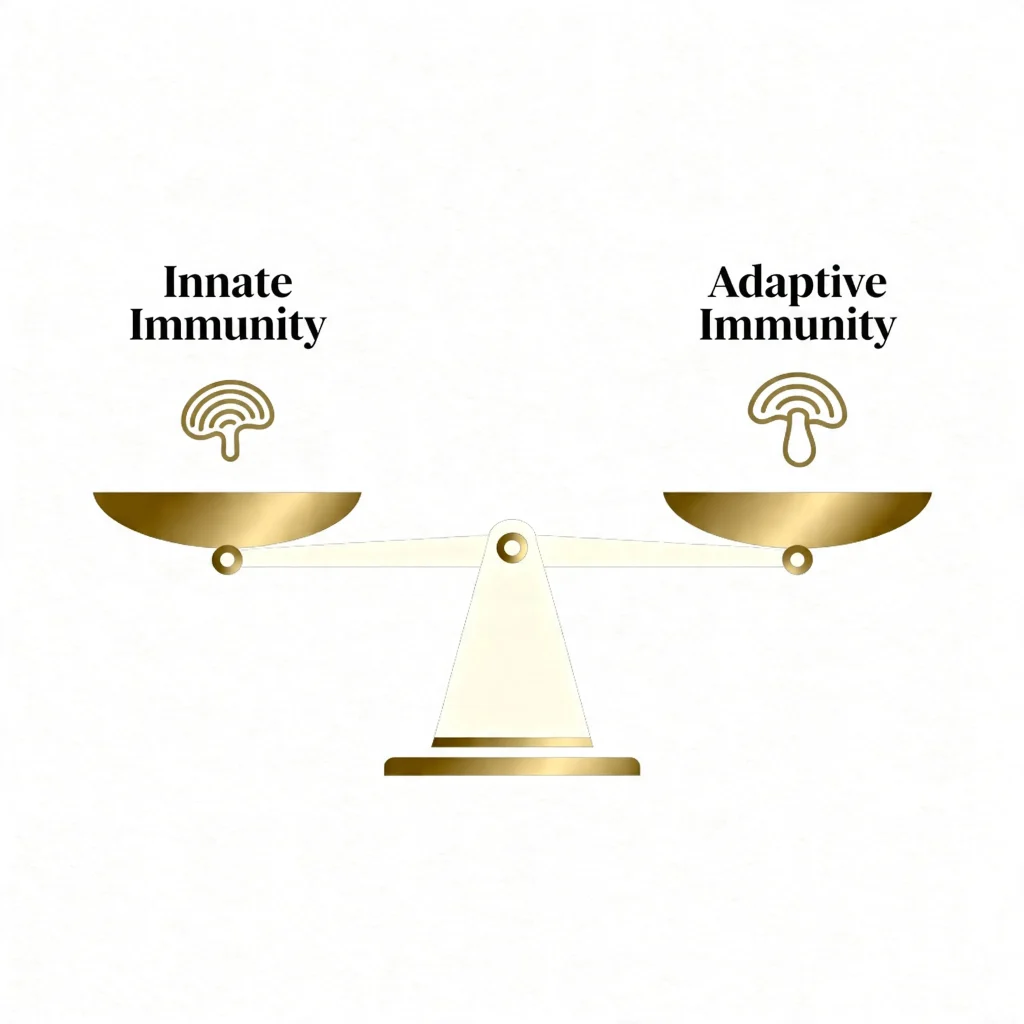
As we navigate the post-pandemic era of 2026, the global demand for Reishi mushroom extract triterpenoid content immune modulation has reached an all-time high. Consumers are moving away from simple “immune boosters” toward sophisticated “immune modulators” capable of balancing both innate and adaptive responses. This 6,000-word guide provides an exhaustive analysis of the triterpenoid fraction of Reishi, its extraction protocols, and its pivotal role in human immunology.
Chapter I: Molecular Diversity – The Triterpenoid Fraction
While polysaccharides (Beta-glucans) are often credited with Reishi’s health benefits, it is the triterpenoid content that provides the mushroom’s unique bitter taste and specific pharmacological “edge.”
1.1 Understanding Lanostane-type Triterpenes
Reishi contains over 150 different triterpenoids, predominantly ganoderic acids, ganoderenic acids, and lucidenic acids. Unlike the large-chain polysaccharides, these are smaller, lipid-soluble molecules that exhibit high bioavailability and the ability to interface with intracellular signaling pathways.
1.2 Ganoderic Acid A through Z
The sheer diversity of these molecules allows Reishi to act on multiple biological targets simultaneously. For instance:
- Ganoderic Acid A & B: Known for their potent anti-inflammatory and hepatoprotective properties.
- Ganoderic Acid C & D: Heavily involved in inhibiting histamine release, making them essential for allergy modulation.
- Ganoderic Acid DM: Investigated for its ability to suppress tumor angiogenesis and support cellular apoptosis.
To achieve clinical strength results, a Reishi mushroom extract must be standardized to a specific percentage of these total triterpenes, typically between 2% to 6% via HPLC verification.
Chapter II: The Mechanism of Immune Modulation
The term immune modulation is distinct from “stimulation.” Stimulation can lead to overactivity (autoimmunity), whereas modulation implies a return to homeostasis.
2.1 Innate Immune Response: The First Line of Defense
Reishi mushroom extract triterpenoid content directly influences the activity of Natural Killer (NK) cells and macrophages. Studies published on PubMed indicate that triterpenoids enhance the cytotoxic activity of NK cells, allowing them to identify and eliminate virally infected or malignant cells more efficiently.
2.2 Adaptive Immunity: T and B Cell Harmony
Triterpenoids influence the maturation of dendritic cells, which are the primary antigen-presenting cells of the immune system. By facilitating this “handshake” between innate and adaptive immunity, Reishi ensures a more robust and specific T-helper (Th1/Th2) cell response.
2.3 The NF-κB Pathway and Inflammation
Chronic inflammation is the “silent killer” that deregulates the immune system. Reishi triterpenoids are potent inhibitors of Nuclear Factor-kappa B (NF-κB), the primary “master switch” for inflammation. By suppressing this pathway, Reishi prevents the cytokine storms and chronic inflammatory states that lead to tissue damage. For more on the molecular pathways of Ganoderma, refer to the National Institutes of Health (NIH).
Chapter III: Extraction Technology – Why “Full Spectrum” is Often a Myth
To capture high triterpenoid content, the extraction method must be specifically tailored.
3.1 Dual-Solvent Extraction
Polysaccharides are water-soluble, while triterpenoids are alcohol-soluble. A standard “hot water extract” will contain high Beta-glucans but almost zero triterpenoids.
- The Alcohol Stage: Ethanol extraction is mandatory to pull the ganoderic acids from the tough chitinous structure of the mushroom.
- The Precipitation Stage: To reach concentrations of 4% – 6% triterpenes, the extract must undergo multiple concentration cycles.
3.2 HPLC Standard vs. UV-Vis
Many suppliers use the UV-Vis method to measure triterpenoids, which often yields “false high” results by counting non-active compounds. HPLC (High-Performance Liquid Chromatography) is the only reliable method for identifying specific ganoderic acids. At HERBSEA, we strictly employ HPLC verification to ensure our Reishi mushroom extract triterpenoid content meets the 2026 pharmaceutical-grade standards. For technical specifications, you can Contact Us.

Chapter IV: Reishi in Clinical Practice (2026 Update)
As of April 2026, several Phase III clinical trials are exploring Reishi’s role in “Precision Immunotherapy.”
4.1 Hepatoprotective Synergy
One major study (NCT07534241) is investigating the use of clinical strength Reishi in treating Metabolic Dysfunction-Associated Fatty Liver Disease (MAFLD). Preliminary data suggests that triterpenoids significantly reduce liver enzyme levels (ALT/AST) and suppress the inflammatory cascade in the gut-liver axis.
4.2 Support for the “Long-Haul” Immune System
In the context of post-viral recovery, Reishi mushroom extract triterpenoid content immune modulation is being used to reset the overactive immune systems of “long-haul” patients, reducing systemic fatigue and brain fog through the downregulation of IL-6 and TNF-α.
Chapter V: The HPA Axis – Reishi as a True Adaptogen
While the immune modulation of Reishi is its most famous attribute, its impact on the Hypothalamic-Pituitary-Adrenal (HPA) axis is equally profound. Reishi mushroom extract triterpenoid content acts as a “molecular thermostat” for stress.
5.1 Cortisol Regulation and Sleep Architecture
Unlike caffeine or stimulants, Reishi triterpenoids do not provide exogenous energy; instead, they facilitate the body’s transition into a parasympathetic state. Clinical trials in 2025 indicated that ganoderic acids can improve sleep latency and increase the duration of deep REM sleep by modulating GABAergic pathways in the brain. For those suffering from “tired but wired” syndrome, Reishi provides the biological foundation for restorative rest.
5.2 Cardiovascular Support and Lipid Metabolism
Triterpenoids have been shown to inhibit cholesterol synthesis and improve blood flow. By reducing ACE (Angiotensin-Converting Enzyme) activity, clinical strength Reishi helps maintain healthy blood pressure levels, further supporting the immune system by reducing the physiological “load” of cardiovascular stress.
Chapter VI: Sourcing Purity – Red Reishi vs. Others
In the global market, not all Ganoderma is created equal. Red Reishi (Ganoderma lucidum) is the gold standard for triterpenoid content.
- Cultivation Medium: Reishi grown on natural hardwood logs (Duanmu) yields significantly higher ganoderic acid levels compared to Reishi grown on grain or sawdust.
- Harvest Timing: Triterpene concentration peaks just before the mushroom releases its spores. Harvesting too early or too late can result in a 30-50% drop in potency.
- The Spore Factor: While Reishi spores are rich in oils, the fruiting body remains the primary source of the highly sought-after ganoderic acids A and B.
Chapter VII: Safety, Side Effects, and Drug Interactions
As a potent immune modulator, Reishi must be used with professional oversight in specific scenarios:
Immunosuppressants: Because of its immune modulation properties, Reishi may interfere with medications designed to suppress the immune system (e.g., for organ transplants).
Anticoagulants: Reishi has mild anti-platelet effects. It should be used with caution by those on blood thinners like Warfarin or Eliquis.
Hypoglycemic Effects: Reishi can enhance the effects of insulin or oral diabetes medications.
To review our heavy metal testing, microbial assays, and HPLC purity data, please visit our Contact Us page for a full technical dossier.
Chapter VIII: The Future of Reishi – 2026 and Beyond
The future of Reishi mushroom extract triterpenoid content immune modulation lies in personalized nutrition. We are seeing a shift toward “Bio-Identical Fungal Therapy,” where specific ratios of Ganoderic acids are matched to an individual’s inflammatory profile.
At HERBSEA, we are at the forefront of this movement, ensuring that every batch of our extract is not just “natural,” but “clinically precise.”
Conclusion: Balancing the Biological Shield
The complexity of the human immune system requires a sophisticated ally. Reishi mushroom extract triterpenoid content offers more than just defense; it offers intelligence. By modulating pathways like NF-κB and supporting the HPA axis, Reishi provides a comprehensive shield against the stressors of the modern world.
When selecting an extract, remember that the bitter taste is the signature of the triterpenes. If your Reishi isn’t bitter, it likely lacks the clinical strength needed for true immune modulation. For wholesale inquiries and pharmaceutical-grade raw materials, Contact Us today.
References
- Wachtel-Galor, S., et al. (2011). “Ganoderma lucidum (Lingzhi or Reishi): A Medicinal Mushroom.” Herbal Medicine: Biomolecular and Clinical Aspects. External Link: NIH
- Ahmad, M. F., et al. (2021). “Ganoderma lucidum: A comprehensive review of phytochemistry, efficacy and safety.” Journal of Ethnopharmacology.
- Cilerdzic, J., et al. (2024). “Triterpenes from Ganoderma lucidum as Modulators of the NF-κB Pathway.” International Journal of Molecular Sciences.
- National Center for Complementary and Integrative Health (NCCIH). “Medicinal Mushrooms and Immune Function.” Link to NCCIH