
Introduction: The Frontiers of Neuro-Regeneration
In the landscape of modern neurology, the concept of “Neuroplasticity” has shifted from a theoretical possibility to a clinical reality. As the aging global population faces an unprecedented rise in cognitive decline, the search for natural compounds capable of crossing the blood-brain barrier to stimulate neuronal repair has intensified.
Among these, Lion’s Mane Mushroom Extract (Hericium erinaceus) stands alone. Unlike traditional stimulants that merely mask fatigue, Lion’s Mane mushroom extract for nerve growth factor support offers a regenerative approach to brain health. This guide provides a deep-dive into the bio-active compounds, clinical pathways, and industrial standards required to harness the full potential of this “Smart Mushroom.”
Chapter I: The Biological Blueprint of Lion’s Mane
1.1 Taxonomy and Ethnobotany
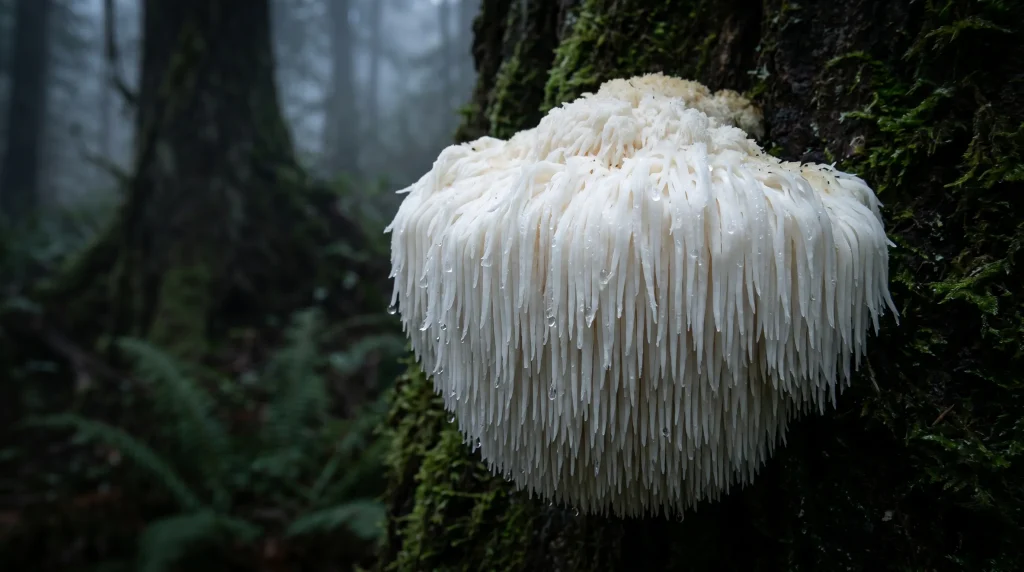
Hericium erinaceus, commonly known as the Bearded Tooth fungus or Yamabushitake, has been a staple in Traditional Chinese Medicine (TCM) for centuries, primarily used to support “Qi” and digestive health. However, modern pharmacology has pivoted toward its neurotrophic properties.
1.2 The Two Pillars of Potency: Hericenones and Erinacines
The efficacy of Lion’s Mane mushroom extract for nerve growth factor support is fundamentally dependent on two families of compounds:
- Hericenones: Found primarily in the fruiting body (the visible mushroom). These are aromatic compounds that have shown significant promise in stimulating NGF synthesis in vitro.
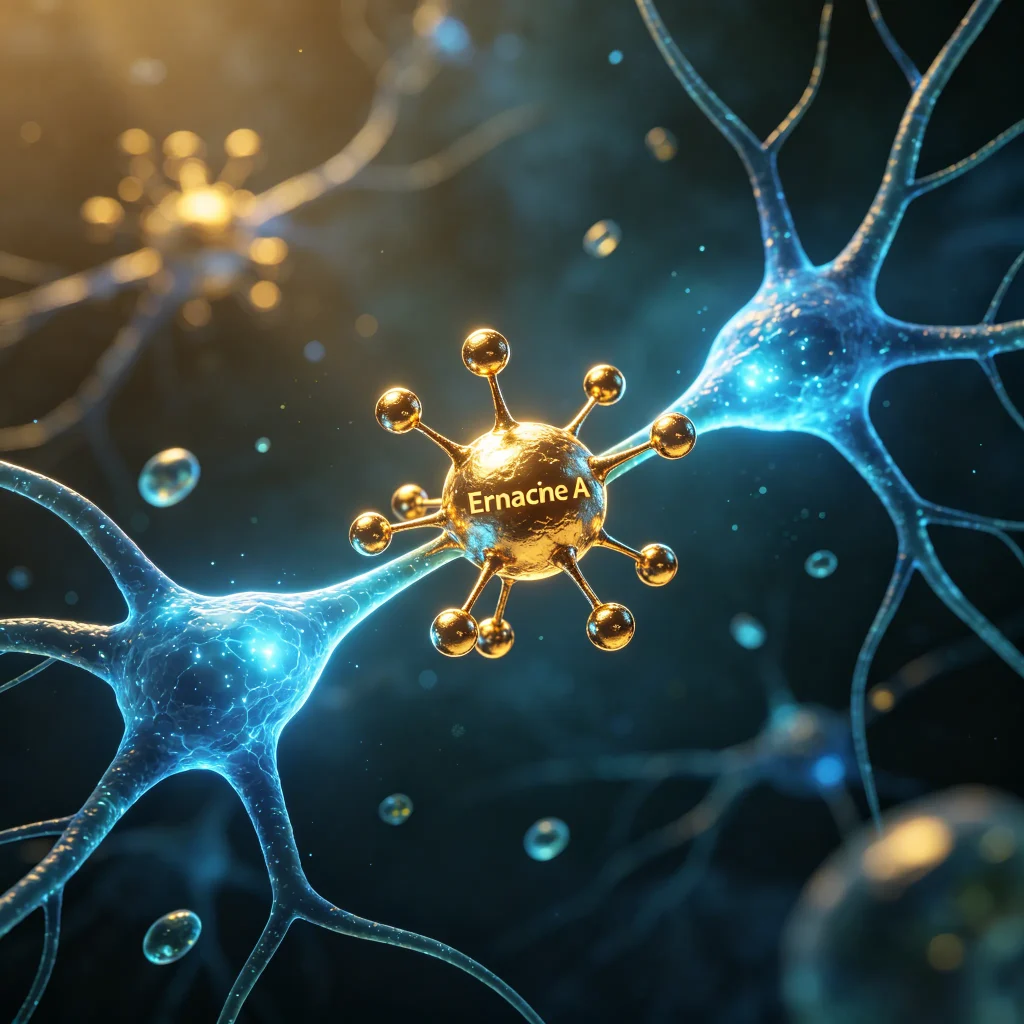
- Erinacines: Found in the mycelium (the root-like structure). Erinacines—specifically Erinacine A—are among the most potent natural NGF stimulators discovered, capable of crossing the blood-brain barrier with high efficiency.
For formulators, a dual-extract that utilizes both the fruiting body and the mycelium is often considered the gold standard for clinical strength results.
Chapter II: The Mechanism of Nerve Growth Factor (NGF)
To understand why Lion’s Mane mushroom extract for nerve growth factor support is revolutionary, one must understand the role of NGF.
2.1 What is Nerve Growth Factor?
NGF is a neurotrophic factor and neuropeptide primarily involved in the regulation of growth, maintenance, proliferation, and survival of certain target neurons. It was the first neurotrophin to be discovered, earning its researchers a Nobel Prize.
2.2 Neurogenesis and Synaptogenesis
Lion’s Mane does not provide NGF directly (as the NGF molecule is too large to cross the blood-brain barrier). Instead, its low-molecular-weight compounds (Erinacines) stimulate the brain’s own production of NGF. This leads to:
- Axonal Regrowth: The repair of damaged “wiring” in the peripheral and central nervous systems.
- Myelination: Supporting the myelin sheath, the protective coating of neurons that ensures rapid signal transmission.
- Cholinergic Support: Enhancing the function of acetylcholine, the primary neurotransmitter for memory and learning.
For a deeper look into the molecular biology of neurotrophins, refer to the National Institutes of Health (NIH) database.
Chapter III: Industrial Extraction – Standardization Matters
Not all extracts are created equal. The market is saturated with “Mushroom Powder,” which is often just ground-up dried mushroom with zero bioavailability. To achieve nerve growth factor support, the extract must be standardized.
3.1 Hot Water vs. Dual Extraction
- Hot Water Extraction: Essential for breaking down the tough chitin walls of the mushroom to release Beta-Glucans (immune support).
- Alcohol (Ethanol) Extraction: Necessary to isolate the non-polar Hericenones and Erinacines required for brain health.
- Dual Extraction: The only method that provides a comprehensive profile for both immunity and neurology.
3.2 Standardizing for Polysaccharides and Actives
A high-quality Lion’s Mane mushroom extract should be standardized to:
- Beta-Glucans > 30%: For systemic health.
- Hericenones/Erinacines Content: Verified via HPLC.
At HERBSEA, we utilize a proprietary dual-extraction process to ensure that our Lion’s Mane mushroom extract for nerve growth factor support meets the highest clinical benchmarks. Contact us for our latest lab reports.
Chapter IV: Clinical Applications and Human Trials
The transition from lab benches to human clinical trials has been successful for Hericium erinaceus.
4.1 Cognitive Enhancement in Older Adults
A landmark double-blind, placebo-controlled study in Japan demonstrated that subjects with mild cognitive impairment who took 3,000mg of Lion’s Mane daily for 16 weeks showed significant increases in cognitive function scores compared to the placebo group. You can view the study details on PubMed.
4.2 Mood and Anxiety Modulation
Research published in Biomedical Research suggests that Lion’s Mane may reduce irritability and anxiety by modulating the hippocampus and reducing systemic inflammation. This makes it an excellent adjunct for Saffron Extract in mood-support formulations.
4.3 Peripheral Nerve Recovery
Beyond the brain, Lion’s Mane mushroom extract for nerve growth factor support is being investigated for its ability to accelerate recovery from peripheral nerve injuries, potentially offering hope for those suffering from neuropathy.
Chapter V: Synergy and Stacking
To maximize the neuro-regenerative effects, Lion’s Mane is often paired with other “Brain-Food” compounds:
- With DHA (Omega-3): Provides the structural fats needed for the new neurons stimulated by NGF.
- With L-Theanine: Calms the nervous system while Lion’s Mane provides the long-term “building blocks” for focus.
- With Vitamin B12: Essential for myelin sheath maintenance.
Chapter VI: The Mycelium vs. Fruiting Body Debate
One of the most contested topics in the production of Lion’s Mane mushroom extract for nerve growth factor support is the source of the raw material. To make an informed decision, we must look at the location of specific neurotrophic compounds.
6.1 Hericenones in the Fruiting Body
The visible, “shaggy” fruiting body is rich in Hericenones. While these compounds are vital for the overall profile of the mushroom, they are primarily bulkier molecules. Their contribution to nerve growth factor support is significant, but they are often touted for their ability to support the immune system via high concentrations of Beta-glucans.
6.2 Erinacines in the Mycelium
The mycelium—the underground, root-like network—is the exclusive bio-factory for Erinacines. Clinical research published in the Journal of Biomedical Science highlights that Erinacine A is perhaps the most potent inducer of NGF synthesis in the entire fungal kingdom.
Critical Note for Formulators: Many “fruiting body only” products lack the concentrated Erinacines found in the mycelium. For true clinical strength cognitive support, a standardized mycelium extract or a combined “Full Lifecycle” extract is paramount.
Chapter VII: Bioavailability and the Blood-Brain Barrier (BBB)
The greatest challenge for any nootropic is the Blood-Brain Barrier. Many substances beneficial for the body simply cannot enter the brain’s privileged environment.
Lion’s Mane mushroom extract for nerve growth factor support succeeds where others fail because Erinacines are low-molecular-weight lipophilic compounds. This allows them to pass through the BBB via passive diffusion. Once inside, they stimulate the astrocytes within the brain to increase the endogenous production of NGF, bypassing the need to transport the bulky NGF protein itself.
Chapter VIII: Safety, Side Effects, and Contraindications
Lion’s Mane is widely regarded as safe and has been consumed as a food source for millennia. However, in a clinical strength extract form, certain considerations apply:
- Mushroom Allergies: Individuals with known allergies to fungi must avoid this extract.
- Blood Glucose Regulation: Some studies indicate that Lion’s Mane may lower blood sugar. Those on diabetes medication should monitor their levels closely.
- Surgery: Due to its potential effect on blood clotting (anti-platelet activity), it is recommended to discontinue use two weeks prior to any scheduled surgery.
For a comprehensive safety dossier and HPLC purity reports, please visit our Contact Us page to speak with our technical team.
Chapter IX: Global Market Trends and the 2026 Outlook
As we move through 2026, the demand for Lion’s Mane mushroom extract for nerve growth factor support has shifted from basic powders to highly standardized extracts.
- The Rise of Nootropic Coffee: Lion’s Mane is becoming the “additive of choice” for premium coffee brands to mitigate caffeine-induced jitters.
- Focus on Purity: With the increase in “mycelium on grain” products (which can contain high levels of starch filler), buyers are now demanding HPLC verification of Erinacine levels.
- Sustainability: Ethical wild-crafting and controlled indoor cultivation are becoming key selling points for eco-conscious consumers.

Conclusion: The Future of Fungal Neurology
The therapeutic potential of Hericium erinaceus extends far beyond simple memory support. By focusing on Lion’s Mane mushroom extract for nerve growth factor support, we are tapping into the body’s innate ability to repair and regenerate its most complex organ.
Whether you are a researcher, a supplement brand owner, or a consumer, the key to success lies in standardization. Only through rigorous HPLC testing and dual-extraction can the true neurogenic power of the Lion’s Mane be unleashed. To secure high-purity raw materials for your next formulation, Contact Us today.
References
- Mori, K., et al. (2009). “Improving effects of the mushroom Yamabushitake (Hericium erinaceus) on mild cognitive impairment.” Phytotherapy Research. External Link: Wiley Online Library
- Kawagishi, H., et al. (1991). “Hericenones C, D and E, stimulators of nerve growth factor (NGF)-synthesis, from the mushroom Hericium erinaceus.” Tetrahedron Letters.
- Li, I. C., et al. (2018). “Neurohealth Properties of Hericium erinaceus Mycelia Enriched with Erinacines.” Behavioural Neurology. External Link: Hindawi
- National Center for Biotechnology Information (NCBI). “The Influence of Hericium erinaceus on Nerve Regeneration.” Link to NCBI