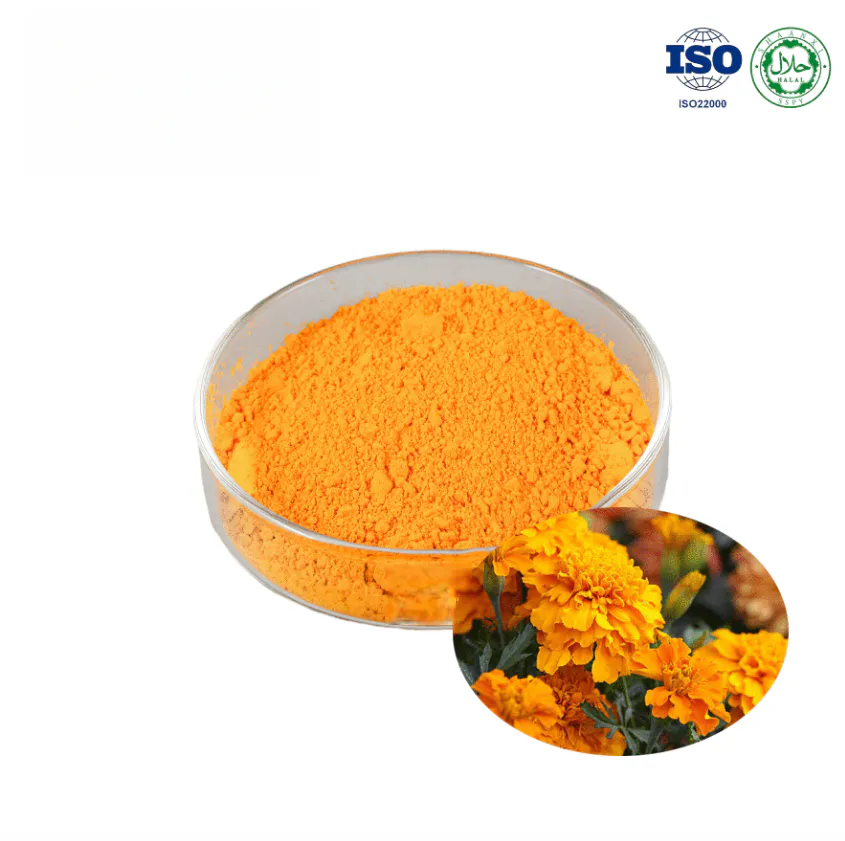
Product Overview: Marigold Extract
Marigold Extract is a high-value natural plant extract, and marigold is recognized as the core raw material for extracting lutein and carotenoids. The average content of yellow pigment (main component: lutein) in marigold is not less than 12g per kg, ensuring the high efficacy of the extract.
Lutein, also known as “Phytolutein”, naturally coexists withzeaxanthin in nature. Both lutein and zeaxanthin are key components of plant pigments in corn, vegetables, fruits and flowers, and more importantly, they are the main pigments in the macula of the human retina—a crucial area for maintaining normal vision.
Among natural sources, lutein is most abundant in dark green leafy vegetables (such as kale, collard greens, and spinach) and flowers (such as marigold and Tagetes erecta). Notably, the human eye contains high levels of lutein and zeaxanthin, but these two nutrients cannot be synthesized by the human body and must be supplemented through external sources (such as foods or extracts containing lutein and zeaxanthin); long-term deficiency may lead to severe visual impairment, even blindness. As a natural extract rich in lutein, marigold extract is a reliable source of this beneficial nutrient.
Lutein belongs to the carotenoid family. Carotenoids are a class of compounds related to vitamin A, among which β-carotene is well-known as the precursor of vitamin A. The carotenoid family includes about 600 compounds, such as α-carotene, lycopene, zeaxanthin, and β-zeaxanthin, with lutein being one of the most biologically active members. In the plant kingdom, carotenoids like lutein are responsible for the bright colors of vegetables and fruits such as sweet potatoes and carrots.
Core Functions & Efficacy of Marigold Extract
1. Protect Eye Health & Prevent Eye Diseases
The core value of Marigold Extract lies in its significant effect on maintaining normal vision and preventing eye diseases. Its main active ingredients lutein and zeaxanthin can target the retinal macula, effectively protecting the macula from oxidative damage and light damage. It has a prominent preventive and auxiliary improvement effect on age-related eye diseases such as age-related macular degeneration (ARMD) and cataracts, which is especially suitable for middle-aged and elderly groups and people who use their eyes intensively for a long time.
2. Reduce the Risk of Chronic Diseases
Supplementing adequate carotenoids (mainly from marigold extract’s lutein and other components) can also help reduce the risk of chronic diseases. Studies have shown that regular intake of natural carotenoids can lower the risk of colorectal cancer and heart disease, exerting a comprehensive protective effect on human health by virtue of their excellent antioxidant properties.
Why Choose Our Marigold Extract?
-
High-Quality Raw Material Base: Selected from high-quality marigold raw materials with standardized planting, the average content of yellow pigment is not less than 12g/kg, ensuring high content of core active ingredients such as lutein and zeaxanthin.
-
Natural & Safe: Adopts advanced physical extraction technology, fully retains the natural activity of lutein and zeaxanthin, without adding harmful additives, and meets food-grade and health product safety standards.
-
Clear Targeted Efficacy: Focuses on eye health protection, with definite effects on preventing macular degeneration and cataracts, and has broad market demand in the eye care health product field.
-
Multi-Nutrient Synergy: While being rich in lutein, it also contains natural zeaxanthin and other carotenoids, which exert synergistic health effects, better than single-component supplements.
-
Wide Application Scope: Suitable for raw materials of eye care health products (such as lutein softgels, tablets), functional foods, health drinks, and even eye care cosmetics, meeting diverse production needs of B-end manufacturers.
-
Strict Quality Control: Implements full-process quality inspection from raw material selection, extraction to finished product delivery, strictly detecting lutein content, purity and impurities, ensuring consistent quality and safety of each batch.
Application Scenarios
Widely applied in the formulation of eye care health products (lutein and zeaxanthin supplements), functional foods for middle-aged and elderly health, health drinks with antioxidant effects, and even natural eye care cosmetics. It fully meets the production needs of health product factories, food and beverage processing enterprises, and cosmetic manufacturers, as well as the health maintenance needs of individual consumers—especially office workers, students who use their eyes intensively, and middle-aged and elderly groups with eye health concerns.
Applications Of Marigold Extract