
Most weight loss supplements overpromise and underdeliver. Mulberry leaf extract — specifically the DNJ-rich form of Morus Alba — has a real mechanism behind it.
1. Why the Carb Blocker Category Needs More Science and Less Hype
Weight loss supplements have a credibility problem. Most products rely on appetite suppression claims. Few have the human data to back them up. Others use stimulant-based thermogenic blends. These work for some people. They leave others jittery and unsatisfied.
The search for a natural carb blocker for weight loss that actually works has become a persistent conversation. Consumers want something that works without caffeine jitters. They want something without digestive distress. They want something without exaggerated marketing language.
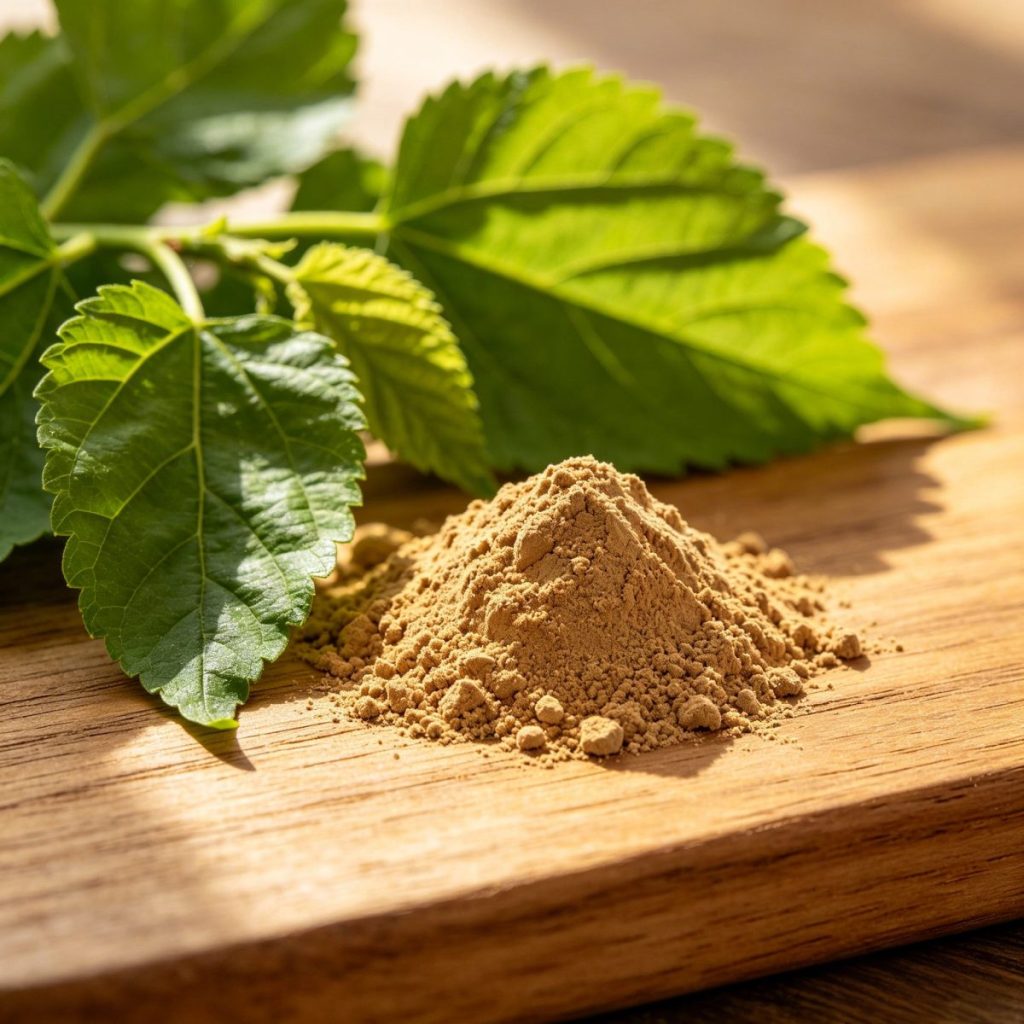
Mulberry leaf extract does not solve every problem in this category. No single ingredient does. What it does is address a specific, well-defined mechanism. It targets the enzymatic breakdown and absorption of dietary carbohydrates. It uses a naturally occurring compound that has been studied in traditional herbal medicine and in modern laboratory settings. The compound is DNJ (1-Deoxynojirimycin). The plant is Morus Alba — the white mulberry.
This guide is for supplement brand owners, product formulators, health practitioners, and informed consumers. It covers what mulberry leaf extract actually does. It explains the mechanism at a molecular level. It reviews the current evidence base. It also identifies the quality parameters that separate a clinically useful ingredient from a label filler.
2. What Makes Mulberry Leaf Extract Different From Other Carb Blockers
2.1 The “Carb Blocker” Label Is Used Very Loosely
The phrase “carb blocker” gets applied to many ingredients. White kidney bean extract inhibits alpha-amylase. Green coffee extract works through chlorogenic acid. Neither mechanism matches what defines mulberry leaf extract.
Mulberry leaf extract operates in a distinct pharmacological lane. It works at the intestinal brush border — where dietary carbohydrates actually cross into the bloodstream. This specificity matters. It determines which product claims you can honestly make.
2.2 The Botanical Background
Mulberry leaf extract comes from Morus Alba. This species is native to China. It is now cultivated across Asia, Europe, and North America. The leaves have been used in traditional Chinese herbal practice for over 1,500 years. They were historically used to support healthy blood sugar levels. They addressed what was called “excessive thirst and urination” — a symptom cluster that maps onto modern hyperglycemia.
What traditional medicine observed, modern biochemistry traced to a specific molecule: DNJ (1-Deoxynojirimycin).
2.3 How DNJ Works at the Molecular Level
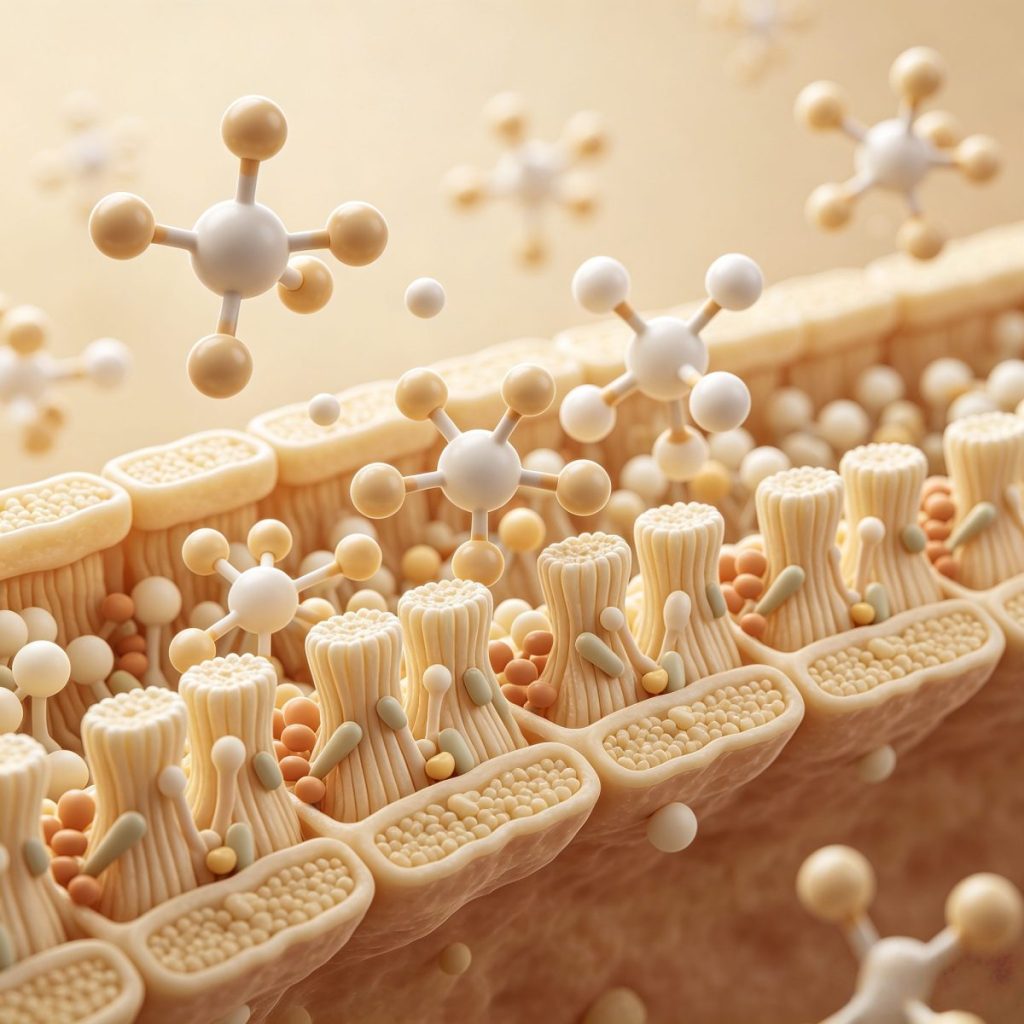
DNJ is an iminosugar. It is a structural analog of glucose. It fits into the active site of alpha-glucosidase enzymes. But it does not complete the catalytic reaction.
When DNJ occupies that active site, the enzyme cannot process complex carbohydrates into absorbable monosaccharides. A meaningful fraction of dietary carbohydrates remain unabsorbed. They pass into the large intestine. Gut microbiota ferment them there. This is not hypothetical. It is the same class of inhibition used clinically by pharmaceutical alpha-glucosidase inhibitors like acarbose. DNJ achieves a similar effect through a naturally occurring compound with a cleaner safety profile.
2.4 Why a Verifiable Mechanism Builds Brand Trust
Consumers in the weight loss supplement category are skeptical. They have read the claims. They have tried the products. When the mechanism behind your ingredient is specific and verifiable, you give customers something concrete to evaluate. Mulberry leaf extract with a documented DNJ specification provides that foundation.
3. The DNJ Mechanism: What Actually Happens When You Take Mulberry Leaf Extract
3.1 The Carbohydrate Digestion Pathway
When you eat starches — rice, bread, potatoes, pasta — those complex carbs must break down into monosaccharides before absorption. The process starts with salivary amylase in the mouth. It continues with pancreatic amylase in the small intestine. It finishes at the brush border of the enterocytes.
That is where alpha-glucosidase enzymes act — maltase, sucrase, and isomaltase. They cleave disaccharides and oligosaccharides into absorbable monosaccharides. Without this step, dietary carbohydrates cannot cross the enterocyte membrane. They cannot enter the bloodstream.
Alpha-glucosidase inhibitors like DNJ act precisely at this step. They occupy the enzyme’s active site. They prevent the catalytic cleavage of the glycosidic bond.
Why DNJ Fits the Active Site So Well
Alpha-glucosidase enzymes are highly specific about the shape of the molecule they accept. DNJ is a glucose analog with a nitrogen atom replacing the ring oxygen. This change is structurally small. Biochemically, it is critical. DNJ fits into the active site without triggering the catalytic reaction. The enzyme is occupied but not consumed. This is competitive, reversible inhibition. It reduces available enzyme activity without permanently inactivating the enzyme.
3.2 What Happens in the Gut After Inhibition
When DNJ partially inhibits alpha-glucosidase, complex carbohydrates break down less efficiently. A portion passes undigested into the large intestine. Gut microbiota ferment it — producing gases and short-chain fatty acids. Blood glucose does not rise to the same extent as with a fully digested meal. This is the biochemical basis for the natural carb blocker for weight loss framing. It is a real, measurable enzymatic interaction.
How This Compares to Prescription Alpha-Glucosidase Inhibitors
Prescription drugs like acarbose and miglitol also inhibit alpha-glucosidase. They are synthetic compounds for pharmacological dosing. DNJ achieves a similar mechanism through a naturally occurring compound. Acarbose commonly produces flatulence, bloating, and diarrhea. These limit long-term adherence. Mulberry leaf extract produces the same class of mechanism. It does not typically cause the same intensity of GI side effects. This does not make mulberry leaf extract a replacement for prescription therapy. It means the mechanism is well-established — and DNJ is the natural form of it.
3.3 The Alpha-Amylase Connection
Alpha-amylase breaks down starches in the mouth and small intestine. It is a secondary target for some mulberry leaf extract preparations. The primary activity of DNJ is against alpha-glucosidase. Some preparations also contain rutin and total flavones. These may contribute additional alpha-amylase inhibition through hydrogen bonding at the enzyme’s active site.
This means the mulberry leaf extract you source may deliver slightly different inhibition profiles. A preparation standardized to DNJ alone targets alpha-glucosidase specifically. A preparation including rutin and total flavones adds alpha-amylase activity. A 5% DNJ preparation produces substantially stronger inhibition than a 0.8% DNJ preparation at the same milligram dose.
Why Specification Choice Affects Your Product Claims
If your product copy emphasizes alpha-glucosidase inhibition, the DNJ percentage is the quality metric that matters most. If your positioning also touches on starch digestion, rutin and total flavones become relevant secondary indicators. These specification differences are not trivial. They determine what you can claim about your product’s mechanism.
4. What the Evidence Actually Shows
4.1 Blood Sugar and Postprandial Glucose
Studies from China, Japan, and South Korea — where Morus Alba has a long history of use — have consistently shown that mulberry leaf extract reduces postprandial glucose. This has been demonstrated in healthy adults and in people with impaired glucose tolerance or type 2 diabetes.
The mechanism in these studies is the DNJ-mediated inhibition of alpha-glucosidase. This slows the rate at which dietary carbohydrates convert to glucose. It reduces the post-meal glucose peak.
What the Systematic Review Found
A review in Journal of Ethnopharmacology evaluated multiple RCTs of mulberry leaf extract and DNJ. The intervention groups showed consistent reductions in postprandial glucose and HbA1c — compared to placebo. The effect size was modest but clinically meaningful. This is consistent with what a partial alpha-glucosidase inhibitor would be expected to produce. It is safe, well-tolerated, and designed for long-term use.
4.2 Weight Loss: What the Data Actually Say
Direct weight loss data for mulberry leaf extract are more limited. The primary mechanism — reduced carbohydrate absorption — does produce a real caloric effect. If 20% to 30% of meal carbohydrates pass undigested, that is a meaningful reduction in net caloric intake over time.
Whether this translates to clinically significant weight loss depends on several variables. Dietary context matters. Baseline body composition matters. Whether lower postprandial glucose improves satiety signaling also matters. The weight loss outcome is downstream from the blood sugar mechanism.
What the Clinical Studies Show
Small clinical studies have evaluated mulberry leaf extract or DNJ in metabolic syndrome management. Weight was a secondary endpoint. Results have been mixed but generally positive — modest reductions in body weight and body fat percentage over 8 to 12 weeks compared to placebo. These studies are not large enough to be definitive. They are consistent with the mechanism. They do not contradict it.
The honest positioning is this: mulberry leaf extract supports healthy blood sugar response after meals. The reduction in postprandial glucose may contribute to weight management over time. This works best as part of a broader dietary and lifestyle approach. Mulberry leaf extract is not a standalone weight loss agent.
5. Who Mulberry Leaf Extract Is Actually For
Mulberry leaf extract as a natural carb blocker for weight loss works best for a specific type of consumer. Understanding who that is — and who it is not — helps you position your product more accurately.
Mulberry leaf extract is most relevant for consumers who:
- Are managing their blood sugar response to meals — because of prediabetes, metabolic syndrome, or proactive glycemic health interest
- Are trying to lose weight and have identified high-carbohydrate meals as their primary dietary challenge
- Have tried other weight loss supplements — stimulants, appetite suppressants, fat burners — and found the experience unsatisfactory
- Want a botanical carb blocker that does not rely on caffeine or ephedra-class stimulants
- Are interested in traditional herbal medicine ingredients with some modern research validation
Mulberry leaf extract is less relevant for consumers who:
- Want rapid, dramatic weight loss — mulberry leaf extract produces a modest, gradual effect
- Eat a very low-carb or ketogenic diet — the alpha-glucosidase inhibition mechanism has limited substrate to act on
- Are managing type 1 diabetes or insulin-dependent type 2 diabetes — mulberry leaf extract is not a substitute for pharmaceutical management
For brand owners, this specificity is actually a strength. Your product can speak directly to a defined audience. The messaging is honest, specific, and unlikely to attract customers who will be disappointed by the results.
6. DNJ Content, Specifications, and Why the Percentage Matters
6.1 Understanding DNJ Specifications
DNJ content in commercial mulberry leaf extract is reported as a percentage by weight — measured by HPLC. The two most common specifications are DNJ 0.8% / HPLC and DNJ 5% / HPLC. The 5% preparation is roughly 6 times more concentrated in active DNJ than the 0.8% preparation.
From a dose equivalence perspective: if a clinical study used mulberry leaf extract at 5% DNJ with a 200 mg daily dose, a 0.8% DNJ preparation would need roughly 1,250 mg to deliver the same DNJ content. That is the difference between two capsules and a heaping tablespoon of powder. For product formulators, this is a critical comparison point.
Cost per Milligram of DNJ
A 0.8% DNJ product at 30/kganda5120/kg look very different in raw price. They are not very different in cost per milligram of DNJ. The 0.8% product is cheaper per kilogram. It delivers far less active compound per kilogram. The right comparison is cost per milligram of DNJ — not cost per kilogram. Formulators who compare on a kilogram basis will underestimate the true cost of low-specification ingredients.
6.2 Rutin and Total Flavones
In addition to DNJ, mulberry leaf extract preparations report rutin content and total flavones content. Rutin is a flavonoid glycoside with antioxidant and anti-inflammatory properties. It is typically present above 0.1%. Total flavones includes all flavonoid compounds — rutin, quercetin, morin, and others. The typical range is 0.1–3%, with premium preparations reaching 5%.
Rutin and total flavones do not contribute meaningfully to alpha-glucosidase inhibition — that is a DNJ function. They may contribute to the overall antioxidant and metabolic health profile. For formulators building a blood sugar support or weight management product, rutin content is a secondary quality indicator that supports broader health positioning.
6.3 Botanical Source and Harvest Timing
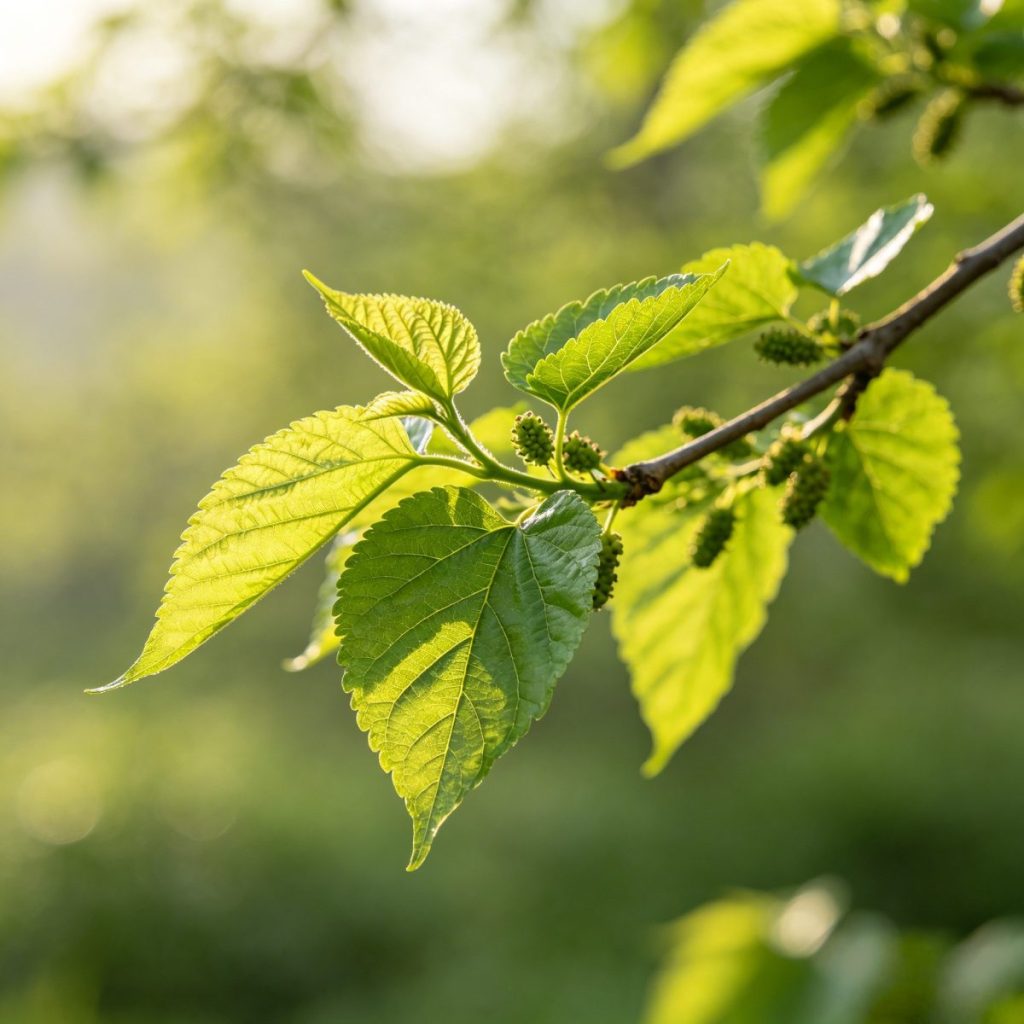
DNJ concentration in Morus Alba leaves varies by cultivar, growing region, harvest season, and leaf maturity. Young leaves harvested in early spring carry the highest DNJ concentrations. As leaves mature through the growing season, DNJ levels decline.
For procurement teams, harvest timing is a quality indicator — not just a detail. A supplier who documents young-leaf, early-spring harvest is delivering a different ingredient than one sourcing mature, mixed-season leaves. The DNJ difference between the two can be substantial. It will be reflected in the HPLC assay on the certificate of analysis.
7. How to Position Mulberry Leaf Extract Without Overpromising
The marketing challenge for mulberry leaf extract is the gap between what consumers want to hear and what the evidence supports. The brands that get this right occupy that gap honestly.
When positioning mulberry leaf extract for your product line:
- Describe it as a natural carb blocker for weight loss that inhibits alpha-glucosidase and reduces carbohydrate absorption — this is factually supported
- Explain the DNJ mechanism in plain language without inventing unstudied effects
- Connect the ingredient to blood sugar support as the primary claim — let weight management emerge as a secondary benefit
- Position it alongside dietary guidance — it works best when consumers are also mindful of their carbohydrate intake
- Avoid implying mulberry leaf extract is a substitute for diabetes medication or a standalone obesity treatment — it is neither
- Avoid weight loss claims relying on mulberry leaf extract-only clinical trials — the weight loss evidence base is smaller than the blood sugar evidence base
The most defensible positioning is as a metabolic support ingredient within a broader health product framework — one that addresses postprandial glucose response and carbohydrate absorption honestly, and lets the weight management benefit emerge naturally from that metabolic support.
8. Pre-Purchase Checklist for Mulberry Leaf Extract Ingredient
If you are sourcing mulberry leaf extract for commercial use, run through this list before placing an order.
- DNJ assay by HPLC with specification clearly stated (0.8% or 5%), certificate of analysis per batch
- Rutin content by HPLC or UV assay, with minimum specification
- Total flavones content specification
- Heavy metals panel: lead ≤ 0.5 ppm, arsenic ≤ 1.5 ppm, cadmium ≤ 0.5 ppm (USP <232> reference)
- Residual solvent analysis confirming no extraction solvent residues above ICH Q3C limits
- Microbial limits: TAMC ≤ 1,000 CFU/g, TYMC ≤ 100 CFU/g, zero E. coli / Salmonella / S. aureus
- Pesticide residue testing confirming all residues below applicable FDA MRLs
- Botanical identification: Morus Alba, Leaf part, harvest season documented
- Stability data covering 24 months under standard storage conditions
- Labeling review confirming compliance with your target market’s dietary supplement regulations for carb blocker and weight management claims
9. References
- Alpha-Glucosidase Inhibition by 1-Deoxynojirimycin (DNJ) — PubMed — Mechanistic studies on DNJ as a competitive inhibitor of intestinal alpha-glucosidase enzymes.
- Mulberry Leaf Extract and Postprandial Glucose Control — Journal of Ethnopharmacology — Systematic review of mulberry leaf extract clinical trials and blood sugar outcomes.
- Morus Alba and Metabolic Syndrome — PubMed Clinical Review — Clinical trial data on Morus Alba leaf extract for metabolic health and weight management endpoints.
- USP <232> Elemental Impurities — Limits for Heavy Metals in Dietary Ingredients — Official United States Pharmacopeia limits applicable to mulberry leaf extract quality testing.
- USP <1111> Microbial Enumeration Tests for Dietary Supplements — Standard microbial limits framework for botanical dietary ingredients including mulberry leaf extract.
- ICH Q3C Residual Solvent Guidelines (R8) — Permissible Daily Exposures — International Council for Harmonisation guideline for residual solvent limits in botanical extracts.
- FDA Dietary Supplement cGMP Requirements — Current Good Manufacturing Practice — U.S. FDA quality requirements for dietary supplement manufacturing.
- EU Food Supplements Directive 2002/46/EC — Authorized Vitamins and Minerals — European regulatory framework for botanical health claims, relevant for EU market positioning.
- Traditional Chinese Medicine and Morus Alba — Ethnobotanical Review — Historical and ethnobotanical context for mulberry leaf use in traditional herbal medicine.
- Alpha-Glucosidase Inhibitors in Diabetes Management — NCBI/NIH Review — Overview of alpha-glucosidase inhibitor pharmacology and its role in glycemic management.