
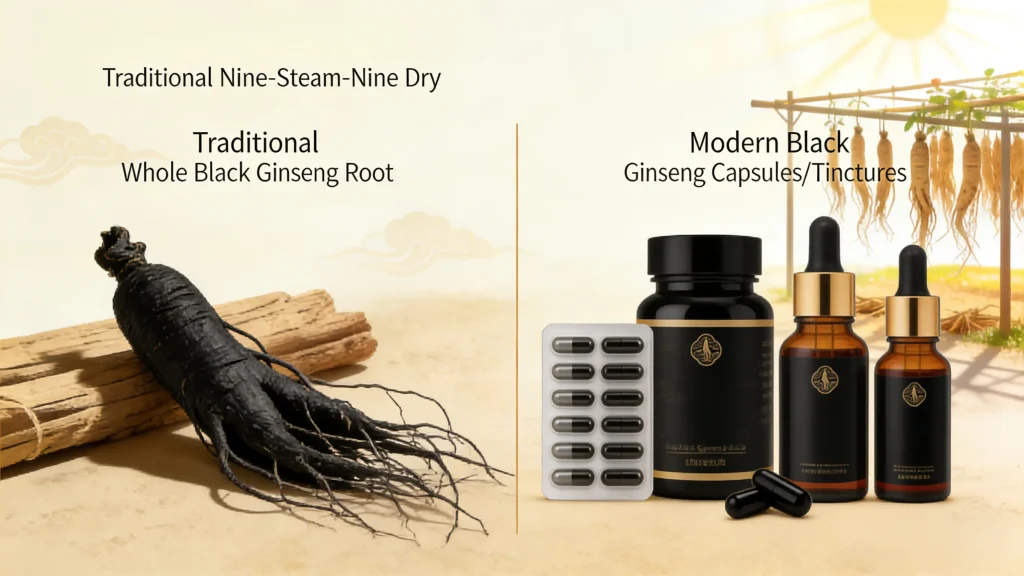
In the realm of premium herbal supplements, Black Ginseng Extract has emerged as a highly sought-after option—praised for its concentrated nutrients and enhanced health benefits compared to regular ginseng. What sets it apart is its unique processing: traditional Nine-Steam-Nine-Dry (Jiu Zheng Jiu Shai) method, honed over centuries, and modern industrial techniques designed for efficiency and consistency. But which processing method delivers a superior Black Ginseng Extract? In this article, we’ll break down the key differences, benefits, and tradeoffs of each—using clear, accessible language—to help you make informed choices for your wellness routine.
First: What Is Black Ginseng Extract?
Before diving into processing, let’s clarify the basics. Black Ginseng Extract is derived from Panax ginseng (Korean ginseng) or Panax quinquefolius (American ginseng) roots that undergo specialized steaming and drying. Unlike white ginseng (raw or lightly dried) or red ginseng (steamed once), black ginseng is processed repeatedly to deepen its color, concentrate active compounds, and reduce bitterness.
Its signature benefits—boosted energy, immune support, and antioxidant protection—come from high levels of ginsenosides (the active compounds in ginseng). The processing method directly impacts the type and concentration of these ginsenosides, making it a critical factor in the extract’s quality.
Traditional Processing: Nine-Steam-Nine-Dry (Jiu Zheng Jiu Shai)
The Nine-Steam-Nine-Dry method is a time-honored technique originating from East Asian herbalism, particularly Korean and Chinese traditions. As the name suggests, it involves nine cycles of steaming fresh ginseng roots and then drying them—typically under the sun (traditional) or low heat (modern adaptations).
Key Traits of Nine-Steam-Nine-Dry Processing
- Time-Intensive: Each cycle can take 1–2 days, with the full process spanning weeks. This slow, deliberate approach allows chemical changes in the ginseng root.
- Natural Transformation: Steaming breaks down raw ginsenosides (e.g., Rb1, Rg1) into more bioavailable forms (e.g., Rg3, Rh2). Drying preserves these compounds and prevents mold.
- No Additives: Traditional methods use only water, heat, and time—no chemicals, preservatives, or artificial ingredients.
- Rich Flavor & Color: Repeated steaming darkens the root to a deep black or brown, and the extract develops a sweet, earthy taste (less bitter than raw ginseng).
Pros of Nine-Steam-Nine-Dry Black Ginseng Extract
- Higher Bioavailability: The converted ginsenosides (e.g., Rg3) are easier for the body to absorb and use, maximizing health benefits.
- Traditional Credibility: For consumers valuing heritage and natural processing, this method aligns with holistic wellness values.
- Potent Antioxidants: Slow processing enhances the root’s polyphenol and antioxidant content, supporting cellular health.
Cons of Nine-Steam-Nine-Dry Processing
- Higher Cost: The labor and time involved make traditional black ginseng extract more expensive than modern alternatives.
- Inconsistency: Without strict quality control, batch-to-batch variation (in ginsenoside levels, moisture content) is possible—especially with small-scale producers.
Modern Processing: Industrial Techniques
Modern processing methods were developed to address the inefficiencies of traditional Nine-Steam-Nine-Dry. These techniques use advanced equipment to replicate (or enhance) the effects of repeated steaming and drying—with a focus on speed, consistency, and scalability.
Common Modern Processing Methods
- Pressure Steaming: High-pressure steam reduces the time per cycle to hours instead of days, while maintaining temperature control.
- Vacuum Drying: Low-temperature vacuum drying preserves active compounds while speeding up the drying process, reducing the risk of oxidation.
- Standardized Extraction: After processing, ginseng roots are extracted using solvents (e.g., water, ethanol) to isolate ginsenosides, ensuring consistent potency across batches.
Key Traits of Modern Processing
- Efficient & Scalable: The full process takes days instead of weeks, allowing mass production to meet high demand.
- Precision Control: Industrial equipment regulates temperature, humidity, and steam pressure to minimize variation.
- Standardized Potency: Most modern extracts list ginsenoside content (e.g., 5% Rg3) on the label, giving consumers clarity.
Pros of Modern Black Ginseng Extract
- Affordability: Lower production costs translate to more budget-friendly prices for consumers.
- Consistency: Strict quality control ensures each batch has similar ginsenoside levels and purity.
- Convenience: Modern extracts are often available in easy-to-take forms (capsules, tinctures) with precise dosing.
Cons of Modern Processing
- Potential for Over-Processing: High heat or rapid cycles may degrade some sensitive compounds if not controlled properly.
- Less “Natural” Perception: For consumers prioritizing traditional methods, industrial processing may feel less authentic.
Which Is Better? It Depends on Your Priorities
There’s no universal “better” option—your choice hinges on what you value most in a Black Ginseng Extract:
| Factor | Nine-Steam-Nine-Dry | Modern Processing |
|---|---|---|
| Bioavailability | Higher (converted ginsenosides) | Good (controlled conversion) |
| Cost | More expensive | More affordable |
| Consistency | Variable (without QC) | Highly consistent |
| Processing Philosophy | Natural, traditional | Efficient, standardized |
| Flavor | Sweet, earthy (premium taste) | Mild, less distinct |
Who Should Choose Nine-Steam-Nine-Dry?
- Consumers willing to pay a premium for traditional, additive-free processing.
- Those seeking maximum bioavailability and antioxidant content.
- Holistic wellness enthusiasts who prioritize heritage and natural methods.
Who Should Choose Modern Processing?
- Budget-conscious shoppers looking for consistent quality at a lower price.
- Consumers who want clear, labeled potency (e.g., specific ginsenoside levels).
- Anyone prioritizing convenience and scalability (e.g., regular supplement users).
Tips for Choosing High-Quality Black Ginseng Extract (Regardless of Processing)
- Check for Third-Party Testing: Look for extracts tested for purity (no heavy metals, pesticides) and ginsenoside content.
- Read the Label: Verify the processing method (e.g., “Nine-Steam-Nine-Dry” or “Pressure-Steam Processed”) and ginseng variety (Panax ginseng is preferred for black ginseng).
- Choose Reputable Brands: Opt for brands with transparent sourcing and manufacturing practices—avoid vague labeling like “natural processing” without details.
- Consider Your Goals: If you want maximum bioavailability, prioritize extracts highlighting converted ginsenosides (e.g., Rg3, Rh2) on the label.
Final Thoughts
Both Nine-Steam-Nine-Dry and modern processing methods produce high-quality Black Ginseng Extract—but they cater to different consumer needs. Traditional processing offers heritage, natural transformation, and enhanced bioavailability, while modern techniques deliver consistency, affordability, and convenience.
The “best” choice is the one that aligns with your budget, values, and wellness goals. Whichever you select, prioritizing third-party testing and transparent branding ensures you’re getting a safe, effective supplement.
B2B Sourcing Takeaways
This guide is most useful when it is connected to a real purchasing brief. Buyers can use the topic as a starting point, then confirm ginseng source, ginsenoside target, assay method, extract ratio, sample behavior and document package before sample approval. HERBSEA works with procurement, R&D and quality teams that need supplier communication, repeatable documentation and practical bulk order planning.
| Review step | Buyer action |
|---|---|
| Define requirement | Clarify the ingredient name, target specification, application format and expected order quantity. |
| Check documents | Request COA, specification sheet, available test data, packing details and export document support. |
| Test sample | Evaluate color, odor, solubility, particle size, flowability and formula compatibility in the intended process. |
| Plan purchase | Confirm MOQ, lead time, packaging, shipment terms, destination market and reorder expectations. |
RFQ Checklist for HERBSEA
- Target ingredient and preferred specification or assay range.
- Finished-product format and key processing requirements.
- Sample quantity, commercial volume estimate and requested packing format.
- Destination country and documents needed for internal quality review.
- Timeline for sample testing, purchase approval and first shipment.
For related ingredient options, review the Ginseng Family category. To request a sample, COA or quotation, contact HERBSEA through the plant extract supplier contact page and include the details above so the team can match a suitable grade.
Supplier Comparison Notes
When comparing suppliers, avoid judging the page only by a broad ingredient name. A useful comparison should connect the specification with the intended application, document package and repeat order plan. Two materials with similar names can differ in assay method, particle size, carrier status, sensory profile, packing format and shipment readiness.
For a faster review, send the same RFQ details to each supplier and compare replies side by side. Look for clear answers on available grades, sample timing, COA fields, MOQ, lead time, export documents and whether the supplier can keep future batches aligned with the approved sample. This gives procurement and quality teams a practical basis for shortlisting.
Because ingredient pages can be revisited during later purchasing cycles, keep notes on the approved specification, supplier response, internal sample result and any requested document updates. Those notes make it easier to reopen the project, compare a replacement material or brief a new quality reviewer without starting the sourcing process from zero.
FAQ: Which Is Better: Black Ginseng Extract Processing Methods (Nine-Steam-Nine-Dry / Modern Techniques)?
Use it as a sourcing checklist before sample request or supplier comparison. Confirm the target specification, application format, quality documents, MOQ, lead time and packing requirements with HERBSEA.
B2B buyers commonly review the specification sheet, COA, assay method summary, microbiology and heavy metals data, packing details and available export document support.
Custom specification review may be available for qualified projects. Share the desired assay, physical requirements, application, order volume, destination market and document checklist before quotation.