
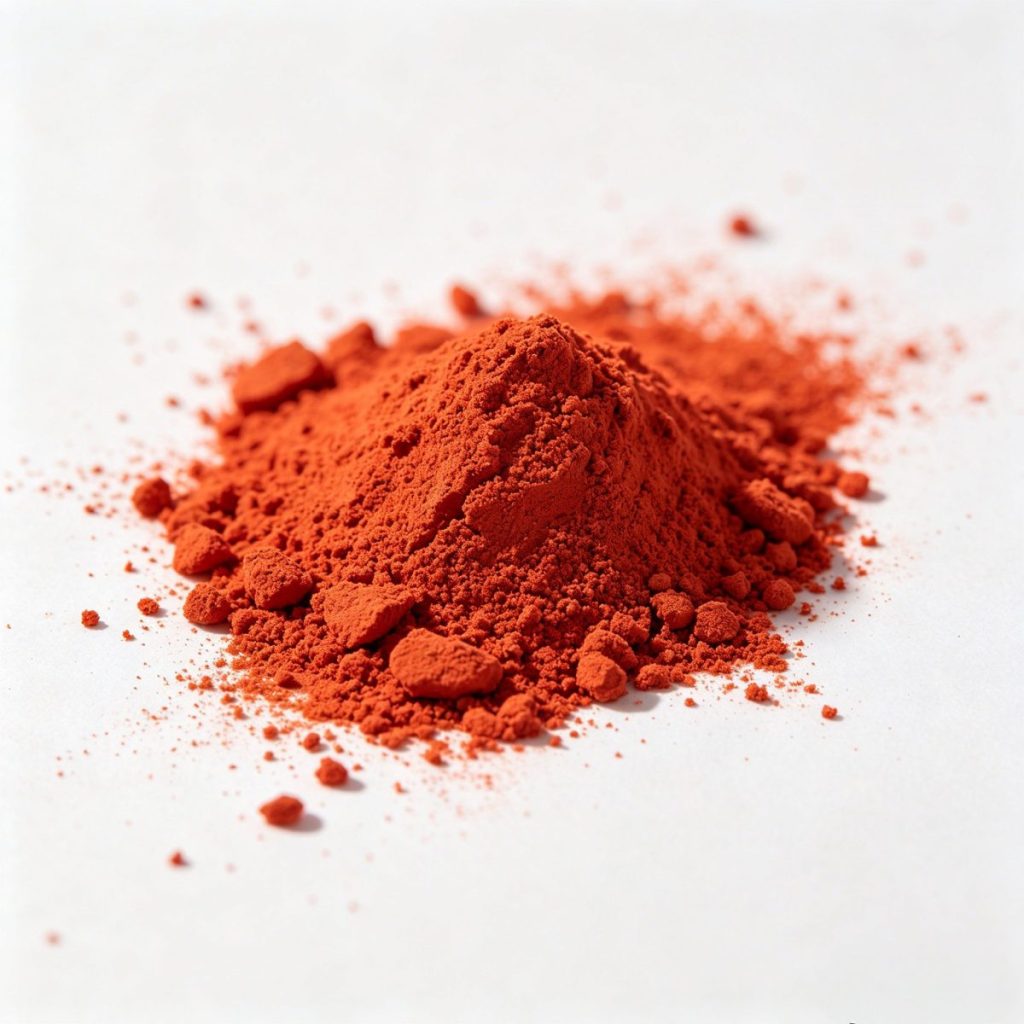
Consumers increasingly demand clean-label, science-backed ingredients for beauty-from-within formulations. Consequently, astaxanthin has emerged as one of the most potent natural antioxidants available to supplement and functional-food formulators.
Derived primarily from the microalga Haematococcus pluvialis, astaxanthin is a vibrant red-orange carotenoid pigment. Its documented antioxidant capacity is estimated at 6,000 times that of Vitamin C. This makes it a standout ingredient for skin health, anti-aging, and UV-protection applications. For B2B brand partners and B2C retail consumers, iHerbsea’s Haematococcus Pluvialis Extract delivers standardized astaxanthin at 1.5%–5% HPLC under GMP-certified conditions.
According to a market analysis by Grand View Research, the global beauty-supplement market exceeded $7 billion in 2024. This growth has placed ingestible skin-care ingredients at the center of product innovation. Astaxanthin now ranks among the fastest-growing actives in both clinical research and commercial launches. Unlike topical antioxidants that remain confined to the epidermis, oral astaxanthin delivers intracellular protection across all skin layers. This systemic delivery makes it uniquely valuable for supplement formulators targeting beauty-from-within consumers.
Peer-reviewed research published in Marine Drugs explains astaxanthin’s singular ability to span both aqueous and lipid cellular environments. This is enabled by its unique molecular architecture featuring both hydrophilic and lipophilic end groups. As a result, it neutralizes reactive oxygen species (ROS) across the entire cell simultaneously. This structural property distinguishes astaxanthin from nearly every other commercially available antioxidant. Ultimately, it positions it as a premium-priced, high-efficacy ingredient for anti-aging formulations. If you need custom formulation advice, you can contact our team at any time.
What Is Astaxanthin and Why Does It Matter for Skin?
Astaxanthin is a red-orange carotenoid naturally synthesized by Haematococcus pluvialis microalgae. The algae produce it in response to environmental stress such as intense UV light, nutrient deprivation, and elevated salinity. This remarkable survival mechanism produces one of nature’s most concentrated antioxidant compounds. Under stress conditions, Haematococcus pluvialis can accumulate astaxanthin at up to 3%–4% of its dry weight. This makes it the richest known natural source and the preferred raw material for commercial production.
Unlike water-soluble antioxidants such as Vitamin C, which operate only in aqueous cellular compartments, astaxanthin possesses an amphipathic molecular structure. It features a polar region flanked by two nonpolar beta-ionone rings. This allows it to span the entire cell membrane, providing antioxidant protection simultaneously inside and outside the cell. Through this membrane-spanning property, astaxanthin protects phospholipid bilayers, membrane-bound receptors, and intracellular organelles from oxidative damage. This exact mechanism is directly relevant to skin cell health, collagen integrity, and UV photoprotection.
The Journal of Medicinal Food published a landmark review evaluating astaxanthin’s photoprotective effects. It concluded that oral supplementation with 4–8 mg of natural astaxanthin daily produced measurable benefits. These included reductions in UV-induced skin erythema, improvements in skin texture and moisture, and reduced oxidative stress markers in skin tissue. Moreover, the study highlighted that natural astaxanthin from Haematococcus pluvialis demonstrated superior bioavailability compared to synthetic alternatives. This remains an important formulation consideration for B2B partners prioritizing clinical credibility.
Astaxanthin Molecular Structure: Why It Works Differently
The molecular architecture of astaxanthin makes it functionally distinct from other carotenoids. For example, Vitamin C operates solely in water-phase environments like cytosol and blood plasma. Conversely, Vitamin E operates only in lipid membranes. Each covers only one cellular compartment.
Astaxanthin breaks this limitation. Its ability to simultaneously span lipid bilayers and interact with aqueous environments gives it a dual-compartment antioxidant advantage. No single water-soluble or lipid-soluble antioxidant can replicate this feat.
[Aqueous Environment] -> Interacts with Polar Head
=========================================== <- Lipid Bilayer (Spanned by Astaxanthin) [Aqueous Environment] -> Interacts with Polar Head
Furthermore, research published in Free Radical Biology & Medicine demonstrated astaxanthin’s superior singlet-oxygen quenching activity. This activity is a primary driver of photoaging. The study found astaxanthin to be up to 40 times more effective than beta-carotene. In the context of skin health, this translates directly to reduced collagen degradation and preserved elastin integrity. It ultimately slows the formation of fine lines and wrinkles caused by cumulative UV exposure.
Astaxanthin for Skin Anti-Aging and Wrinkle Reduction
One of the most clinically documented applications of astaxanthin is its anti-aging potential. Specifically, it excels at reducing crow’s-feet wrinkles, improving skin elasticity, and protecting dermal fibers from degradation. A double-blind, placebo-controlled clinical trial published in the Journal of Medicinal Food (PMID: 23379384) evaluated these exact metrics. The study enrolled 44 healthy female subjects aged 30–50 and tested 6 mg of natural astaxanthin daily over 12 weeks.
The study findings were notable. The astaxanthin group experienced a 55.2% reduction in fine-line wrinkles (crow’s-feet), compared to just 14.7% in the placebo group. This statistically significant result provides strong commercial positioning for B2C anti-aging supplements.
Additionally, the same cohort showed significant improvements in skin texture measured by digital image analysis. They also demonstrated enhanced skin moisture content and better overall skin quality scores within the 12-week period.
From a formulation perspective, this 6 mg daily dosage provides a clinically backed benchmark for B2B partners. iHerbsea’s Haematococcus Pluvialis Extract 5% HPLC delivers the equivalent of 4 mg of pure astaxanthin in a 400 mg serving. This allows formulators to easily build single-ingredient capsules or synergistic multi-ingredient anti-aging stacks at proven effective dosages.
How Astaxanthin Protects Collagen from Oxidative Degradation
Collagen degradation in the dermis is primarily driven by matrix metalloproteinases (MMPs). These enzymes are upregulated by UV radiation, oxidative stress, and chronological aging. For instance, UV-B radiation from sunlight activates the transcription factor AP-1. This factor then upregulates the expression of MMP-1, MMP-3, and MMP-9. Together, these enzymes break down Type I and Type III collagen fibers in the dermis. Once collagen degradation exceeds synthesis—typically beginning in the mid-20s—fine lines, loss of elasticity, and sagging become visible.
UV-B Radiation -> Activates AP-1 -> Upregulates MMPs (1, 3, 9) -> Breaks Down Collagen
                                           ^
                     [Astaxanthin Suppresses This Step]
Astaxanthin interrupts this destructive pathway. It has been demonstrated in vitro and in vivo to suppress AP-1 activation. This suppresses MMP expression and reduces collagen degradation at the enzymatic level.
A study published in the Biological and Pharmaceutical Bulletin (PMID: 17981979) confirmed this mechanism. Oral astaxanthin supplementation successfully suppressed UV-induced MMP-1 and MMP-3 expression in human dermal fibroblasts. For B2B formulators, this mechanism is a powerful selling point. It proves astaxanthin addresses a root biological driver of collagen loss rather than just masking symptoms.
Astaxanthin and UV/Sun Protection: A Natural Internal Sunscreen
Consumers increasingly seek ingestible solutions to complement topical sunscreens. Astaxanthin is perfectly positioned to meet this growing demand in the beauty-from-within category.
A randomized, double-blind, placebo-controlled study published in Photochemistry and Photobiology (PMID: 21418404) evaluated 36 healthy subjects. The researchers found that 8 mg of natural astaxanthin daily for 10 weeks significantly reduced UV-induced skin erythema (redness). It also improved skin hydration and elasticity compared to the placebo.
The study specifically measured the Minimal Erythema Dose (MED). This is the threshold of UV dose that produces just-perceptible skin redness. The data showed a 51% improvement in MED for the astaxanthin group, indicating a substantial internal photoprotective effect. Furthermore, skin moisture content improved significantly, and transepidermal water loss (TEWL) dropped by approximately 25%. This offers a meaningful result for consumers with dry or sensitive skin.
The photoprotective mechanism of astaxanthin involves two complementary pathways:
- Direct Quenching: It neutralizes singlet oxygen and other ROS generated by UV exposure.
- Inflammatory Modulation: It downregulates inflammatory cytokine signaling (IL-6, TNF-α) that drives post-UV redness and collagen breakdown.
For B2B formulators, this clinically backed UV-protection claim differentiates astaxanthin from generic antioxidants. It provides a scientifically grounded marketing angle for sunscreen-complement products.
Astaxanthin vs. Other Skin Antioxidants: A Formulator Comparison
| Antioxidant | Primary Skin Benefit | UV Protection | Collagen Support | Oral Bioavailability |
| Astaxanthin | Anti-aging, elasticity | ✅ Strong (MED +51%) | ✅ MMP suppression | ✅ Lipid-soluble, full cell |
| Vitamin C | Brightening, collagen | ⚠️ Moderate | ✅ Collagen synthesis | ⚠️ Water-soluble only |
| Vitamin E | Moisture, barrier | ⚠️ Moderate | ✅ Oxidative protection | ✅ Lipid-soluble |
| Resveratrol | Anti-aging, sirtuin | ❌ No direct data | ✅ Indirect via sirtuin | ⚠️ Low bioavailability |
| CoQ10 | Anti-aging, energy | ❌ No direct data | ✅ Mitochondrial | ⚠️ Low oral absorption |
As compiled from peer-reviewed clinical data, this comparison table demonstrates why astaxanthin occupies a unique position. It is the only commercially available ingredient combining documented UV-protective effects, MMP-suppressive anti-aging action, and dual-compartment cellular coverage from a single oral dose. Consequently, astaxanthin is increasingly featured as the centerpiece antioxidant in premium beauty formulations.
Astaxanthin for Skin Collagen Support and Hydration
Beyond UV protection, astaxanthin’s dual role in collagen preservation and hydration makes it strategically valuable. It allows brands to target both the anti-aging and barrier-repair consumer segments simultaneously.
Dermal collagen degradation is accelerated by multiple factors, including UV exposure, chronological aging, glycation, and environmental pollutants. Astaxanthin protects against ROS across all these pathways at the same time. Furthermore, unlike topical collagen peptides that cannot penetrate the dermis effectively, oral astaxanthin easily reaches dermal fibroblasts. It protects collagen directly at its site of synthesis.
Skin hydration is a critical metric in consumer-perceived supplement efficacy. Astaxanthin supports this through its documented membrane-stabilizing properties. Being lipid-soluble, it integrates into the phospholipid bilayers of skin cell membranes across both the epidermis and dermis. This integration improves membrane fluidity and barrier function, which reduces transepidermal water loss (TEWL). The Photochemistry and Photobiology study referenced above demonstrated a 25% reduction in TEWL, translating directly to improved skin hydration from within.
Pairing Astaxanthin with Collagen Peptides for Synergistic Anti-Aging Formulations
The most commercially successful skin supplements combine complementary mechanisms. Pairing astaxanthin with collagen peptides creates a compelling synergistic anti-aging stack for B2B formulators.
Collagen peptides provide the raw amino acid building blocks for new dermal collagen synthesis. Meanwhile, astaxanthin protects those newly formed fibers from MMP-mediated degradation. This combined approach addresses both collagen supply and collagen preservation within a single formulation.
[Collagen Peptides] ---> Stimulate Supply \
                                           ===> Dual-Action Anti-Aging Shield
[Astaxanthin]       ---> Block Degradation /
This formulation aligns perfectly with modern consumer search behavior. In the beauty-from-within category, “collagen + antioxidant” combinations represent high-volume search queries on Amazon and Google.
To facilitate this, iHerbsea’s Haematococcus Pluvialis Extract and Collagen Peptides are both available as GMP-certified source materials. They come with full COA documentation, enabling B2B partners to build branded formulations with a single, compliant supplier.
iHerbsea Astaxanthin Products for Skin Health Formulations
iHerbsea’s Haematococcus pluvialis product line delivers standardized astaxanthin in multiple concentration tiers. This supports diverse formulation needs, ranging from functional beverages to premium clinical-grade supplements.
| Product | Astaxanthin Content | Primary Application | MOQ |
| Haematococcus Pluvialis Extract 1.5% HPLC | 1.5% HPLC | Functional food, beverage | 1 kg |
| Haematococcus Pluvialis Extract 5% HPLC | 5% HPLC | Premium supplements | 1 kg |
| Softgel Astaxanthin 4mg (Finished Product) | 4 mg / softgel | Retail brands | 5,000 units |
Formulators targeting the premium anti-aging segment can specify our 5% HPLC-grade extract for maximum potency per capsule. This enables a 2-capsule daily serving to deliver the 8–12 mg dosage range demonstrated in human clinical trials for UV protection. Alternatively, B2C brands seeking faster time-to-market can source our pre-finished softgel product for private-label packaging. This option reduces formulation development time from months to weeks.
All iHerbsea astaxanthin products carry full regulatory documentation. This includes a Certificate of Analysis (COA) confirming heavy metals (Pb/Cd/As/Hg) are well within USP limits. We also provide pesticide residue profiles covering over 400 screened compounds, and microbiology testing meeting USP/EP monograph standards. For partners targeting EU or US markets, we provide full export documentation and regulatory consultation to support your dossier preparation. This support removes one of the most time-consuming barriers to market entry.
Bulk Pricing and B2B Partnership
iHerbsea’s B2B pricing model for Haematococcus Pluvialis Extract is structured to support partners at every scale. We accommodate emerging DTC brands placing their first order, as well as large-scale contract manufacturers with multi-ton annual requirements. Our tiered pricing structure rewards volume commitment with progressive discounts, enabling cost-effective scaling as your business grows.
Additionally, iHerbsea’s formulation team provides complimentary technical support services. This includes dosage recommendations, stability data review, and regulatory documentation assistance as part of every B2B partnership.
For B2B partners pursuing GMP, NSF, or ISO 22000 certification for their own facilities, our documentation package is ideal. iHerbsea’s Supplier Verification Questionnaire (SVQ) and audit-ready data significantly reduce your supplier qualification timeline. If you are developing a skin health, anti-aging, or beauty-from-within supplement line, please contact iHerbsea’s team today. You can request a product sample, technical datasheet, or a custom pricing quotation.
External Sources and Further Reading
The following peer-reviewed publications provide the primary scientific foundation referenced throughout this article:
Grand View Research: Beauty Supplement Market Size Report — Grand View Research, 2024
Astaxanthin: A Potential Therapeutic Agent in Skin Cancer — Marine Drugs, 2018
Anti-Oxidant and Anti-Inflammatory Photoprotective Effects of Astaxanthin — Journal of Medicinal Food, 2013
Oral Intake of Astaxanthin and UV-Induced Erythema — Photochemistry and Photobiology, 2011
Astaxanthin Supplementation Decreases Oxidative Stress and Inflammation in Overweight/Obese Subjects — Marine Drugs, 2018