
1. Introduction: Why the COA Is Non-Negotiable
When you source broccoli seed extract for a commercial supplement product, the Certificate of Analysis (COA) is your single most important document. A COA analysis is not merely paperwork — it is a batch-specific, laboratory-verified record that answers one critical question: does this ingredient meet the specifications stated on the label?
In the dietary supplement industry, the gap between a premium product and a problematic one is often found in the fine print of a COA. For broccoli seed extract, where the active compound glucoraphanin and its downstream metabolite sulforaphane are highly sensitive to extraction conditions, a COA analysis becomes the definitive quality gate.
Glucoraphanin is the precursor to sulforaphane. A COA analysis must therefore verify not only the total glucoraphanin content but also the stability parameters, microbial limits, heavy metal residues, and solvent residues that determine whether an ingredient is fit for human consumption.
This guide is written for supplement brand owners, product formulators, and procurement professionals who need to understand broccoli seed extract COA analysis at a depth that goes beyond the basics.
2. Understanding Broccoli Seed Extract as an Ingredient
2.1 What Is Broccoli Seed Extract?
Broccoli seed extract is a concentrated botanical extract derived from the seeds of Brassica oleracea (variety italica). Unlike broccoli sprout extract, which is produced from young seedling shoots, broccoli seed extract delivers a higher concentration of glucoraphanin — the biologically inert precursor that converts to the powerful antioxidant and detoxification enzyme inducer sulforaphane upon hydrolysis by the enzyme myrosinase.
The scientific significance of this pathway cannot be overstated. Glucoraphanin itself does not provide the health benefits associated with broccoli. It is the sulforaphane generated through enzymatic hydrolysis that activates the Nrf2 pathway, a master transcriptional regulator of antioxidant and phase II detoxification enzymes. This is why COA analysis of broccoli seed extract must focus heavily on glucoraphanin content — it is the most reliable proxy for the ingredient’s biological potential.
2.2 Why Glucoraphanin Is the Critical Marker
Glucoraphanin levels in raw broccoli seeds vary significantly based on cultivar, growing region, harvest timing, and seed maturity. A well-designed COA analysis will therefore specify the exact glucoraphanin content per batch. Standardized broccoli seed extract products on the market typically range from 10% to 40% glucoraphanin, with premium grades targeting 25% to 40% by HPLC.
The broccoli seed extract industry also observes a significant challenge in myrosinase stability. When glucoraphanin is not accompanied by active myrosinase enzyme — whether due to heat damage during processing or formulation conditions — the conversion to sulforaphane in the human gut becomes unreliable. A thorough COA analysis should therefore address this through myrosinase activity testing when the product is positioned as a sulforaphane-generating ingredient.
3. The Anatomy of a Broccoli Seed Extract COA Analysis
3.1 Core Chemical Identity Tests
A complete broccoli seed extract COA analysis begins with identity verification. Without this foundation, all downstream data are meaningless.
Appearance and Organoleptic Properties: The COA will describe the physical state of the material — typically a fine, off-white to light beige powder. Deviations in color, odor, or texture may indicate adulteration, oxidation, or microbial contamination.
Particle Size Distribution: For finished supplement formulations, particle size affects flow properties, blend uniformity, and dissolution rate. Broccoli seed extract manufacturers will specify a D50 value (median particle diameter) as part of their COA analysis report, usually in the range of 50 to 200 microns for standard grades.
Loss on Drying (LOD) and Ash Content: LOD measures residual moisture, which directly impacts stability during storage. A high ash content may indicate inorganic contamination or the presence of unwanted seed coat material. A properly executed broccoli seed extract COA analysis will report LOD below 5% and total ash below 10%.
3.2 Active Marker Verification: Glucoraphanin and Sulforaphane
The analytical centerpiece of any broccoli seed extract COA analysis is the verification of the marker compounds. Two assays are of primary concern:
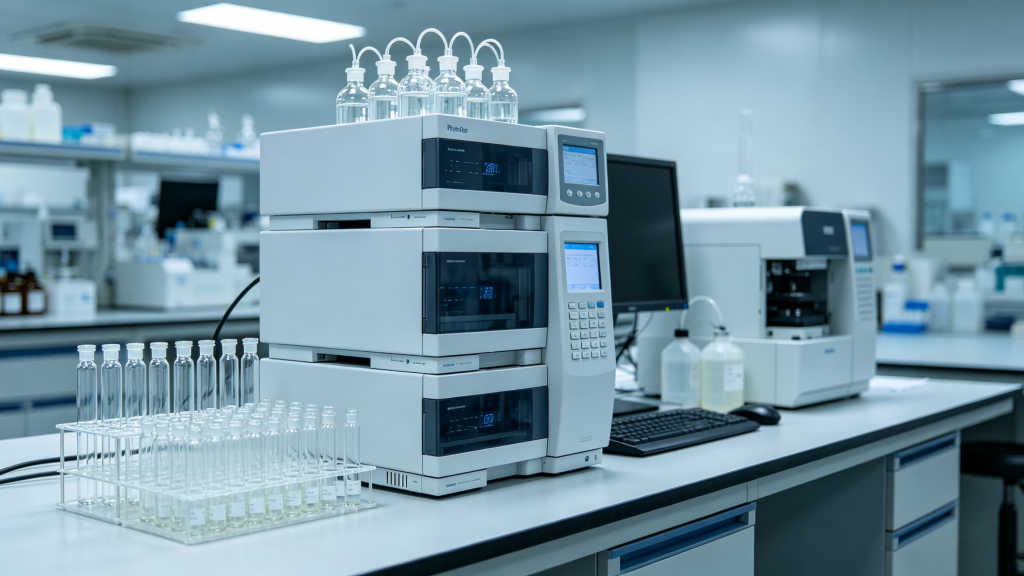
Glucoraphanin by HPLC: High-Performance Liquid Chromatography is the preferred method for quantifying glucoraphanin because it separates and measures the compound directly, without interference from structurally similar glucosinolates. A valid COA analysis will specify the column type, mobile phase, and detection wavelength. The result must be expressed as a percentage of the dried extract weight.
Sulforaphane by LC-MS/MS: When the product is intended as a sulforaphane source, some broccoli seed extract suppliers include sulforaphane assay by Liquid Chromatography–Tandem Mass Spectrometry. This provides direct evidence that active sulforaphane is present. However, because sulforaphane is relatively unstable, a high glucoraphanin content coupled with documented myrosinase activity is often a more reliable indicator of product quality than a single sulforaphane measurement.
3.3 Purity and Contaminant Testing
The third pillar of broccoli seed extract COA analysis is safety-related testing. These parameters are not optional — they are mandated by regulatory frameworks including the U.S. FDA Current Good Manufacturing Practice (cGMP) requirements and the European Union Food Supplements Directive.
Heavy Metals: A broccoli seed extract COA analysis must include testing for lead, arsenic, cadmium, and mercury. Plants grown in agricultural soil can bioaccumulate heavy metals, and the concentration in seeds is a direct reflection of growing conditions. Acceptable limits typically follow USP <232> Heavy Metal Limits — lead below 0.5 ppm, arsenic (inorganic) below 1.5 ppm, and cadmium below 0.5 ppm in finished supplement ingredients.
Pesticide Residues: As a high-value botanical extract, broccoli seed extract is susceptible to pesticide contamination from agricultural practices. A thorough COA analysis will test for a broad spectrum of organochlorine, organophosphate, and pyrethroid residues. Multi-residue methods using GC-MS or LC-MS/MS are the standard approach. A clean pesticide result — all residues below the applicable FDA Maximum Residue Limits — is a strong indicator of good agricultural and collection practices by the raw material supplier.
Mycotoxins: Aflatoxins (B1, B2, G1, G2) and ochratoxin A are naturally occurring mycotoxins produced by Aspergillus and Penicillium species. Seeds and botanical materials are susceptible if harvested under humid conditions or stored improperly. A broccoli seed extract COA analysis should report aflatoxin B1 below 0.5 ppb and total aflatoxins below 1.0 ppb for food-grade applications, in alignment with WHO Guidelines on Aflatoxins in Food — 2018.
Microbial Limits: Total aerobic microbial count (TAMC), total combined yeasts and molds count (TYMC), and absence of Escherichia coli, Salmonella spp., and Staphylococcus aureus are standard components of a broccoli seed extract COA analysis. The limits vary by region — USP <1111> Microbial Enumeration Tests is commonly referenced — but a well-manufactured ingredient will show TAMC below 1,000 CFU/g and TYMC below 100 CFU/g with zero pathogens.
3.4 Residual Solvent Analysis
Because botanical extraction typically uses ethanol, water, or supercritical CO₂ as solvents, a broccoli seed extract COA analysis must confirm that residual solvents are below the limits set by ICH Q3C Residual Solvent Guidelines. Ethanol is generally recognized as safe (GRAS) when below 5,000 ppm, but other extraction solvents (hexane, acetone, methanol) are more restrictive and must be reported individually when present.
4. How to Read a Broccoli Seed Extract COA Analysis
4.1 The Batch-Specific Nature of the Document
Every COA analysis is batch-specific. The certificate you receive for broccoli seed extract Lot BSE-2026-0045 is valid only for that production lot. When you reorder, do not assume the specifications from a previous COA apply to the new batch — always request and review the current document before releasing material to production.
4.2 Reading Glucoraphanin Content
A broccoli seed extract COA analysis will typically list glucoraphanin as a percentage by dry weight. A specification of 25% glucoraphanin minimum means that every gram of the dry extract contains at least 250 mg of glucoraphanin. The actual result in the COA analysis should fall above this threshold — not at it, and not below it.
Many buyers make the mistake of accepting a glucoraphanin result that exactly meets the specification. This is acceptable but not optimal. A batch with 28% or 32% glucoraphanin provides formulation flexibility that a 25.1% batch does not, especially when compounding final products that must meet label claims after blending and encapsulation.
4.3 Reading Heavy Metal Results
Heavy metals in a broccoli seed extract COA analysis are reported in parts per million (ppm) or parts per billion (ppb). The key distinction to understand is the difference between total arsenic and inorganic arsenic. Inorganic arsenic is the toxic form. Some broccoli seed extract suppliers will report total arsenic and call it acceptable — without disaggregating the inorganic fraction. A thorough COA analysis practice requires inorganic arsenic data specifically, as the WHO provisional guideline for inorganic arsenic in food supplements is 0.003 mg/kg (3 ppb).
4.4 Reading Microbial Counts
Microbial test results in a broccoli seed extract COA analysis are expressed as Colony Forming Units per gram (CFU/g). The format will appear as:
Total Aerobic Microbial Count: 15 CFU/g — Pass Total Combined Yeast and Mold Count: < 10 CFU/g — Pass E. coli: Absent in 1g — Pass Salmonella spp.: Absent in 25g — Pass
The phrase “Absent in 1g” means that the laboratory tested the quantity specified and found no detectable organisms. A “Present” result for E. coli or Salmonella in a broccoli seed extract COA analysis is an immediate rejection — no exceptions.
5. Red Flags in Broccoli Seed Extract COA Analysis
Not all COA reports are equally reliable. Experienced buyers develop an instinct for identifying warning signs that suggest a broccoli seed extract COA analysis may not accurately represent the material received.
5.1 Unattributed or Non-Independent Testing
A COA analysis generated by the manufacturer itself without third-party oversight is not necessarily fraudulent, but it lacks the objectivity that independent testing provides. The most reliable broccoli seed extract COA analysis documents come from accredited independent laboratories — facilities registered under ISO/IEC 17025 standards that can produce auditable records of their work.
5.2 Incomplete Heavy Metal Panels
Some broccoli seed extract suppliers test only for lead and arsenic, omitting cadmium and mercury. A complete heavy metal COA analysis panel includes all four: lead, arsenic, cadmium, and mercury. Incomplete panels suggest the supplier may be managing results strategically rather than conducting comprehensive safety verification.
5.3 Generic Specifications Without Batch Numbers
A generic product specification sheet is not a COA. A COA analysis must include a lot or batch number, a production date, and an expiry date. Without these identifiers, you cannot confirm that the material you receive in a future shipment matches the analytical results you reviewed.
5.4 Photocopied or Watermarked Documents
Digital broccoli seed extract COA analysis reports should be delivered as original PDF files generated directly from the Laboratory Information Management System (LIMS). Photocopied, scanned, or watermarked versions of older certificates introduce the risk of document tampering and eliminate the ability to verify document authenticity through direct laboratory contact.
5.5 Results That Hit the Specification Line Exactly
When every parameter in a broccoli seed extract COA analysis lands exactly at the specification limit, this pattern warrants scrutiny. In a properly managed quality system, analytical results form a statistical distribution — some batches will test comfortably above limits, others closer to limits, but very few will land exactly on limits across every parameter simultaneously.
6. The Consequences of Ignoring COA Analysis Quality
For supplement brands that treat broccoli seed extract COA analysis as a formality rather than a quality gate, the consequences extend far beyond a single dissatisfied customer.
6.1 Product Recalls and Regulatory Action
If a third-party laboratory discovers that a commercial supplement contains broccoli seed extract with heavy metal levels exceeding FDA limits, a product recall becomes likely. The FDA’s 2024 and 2025 enforcement actions against botanical supplement manufacturers have demonstrated a consistent pattern: facilities with inadequate raw material COA review practices are disproportionately represented in warning letter and recall data.
6.2 Loss of Brand Credibility
In the health supplement space, consumer trust is established through transparent ingredient sourcing. When a brand’s broccoli seed extract COA analysis practices are rigorous, this becomes part of the brand narrative — shared in product labeling, website content, and customer communications. Conversely, when COA practices are absent, the brand is exposed to competitive criticism and consumer skepticism.
6.3 Clinical Inefficacy at Scale
A broccoli seed extract with substandard glucoraphanin content — one that passes COA review without proper method verification — will not deliver the intended Nrf2 activation and antioxidant outcomes. At production scale, this translates to thousands of consumers receiving a product that does not meet its label claims, creating long-term brand damage that extends well beyond the initial product launch.
7. HERBSEA’s Broccoli Seed Extract COA Analysis Protocol
At HERBSEA, every batch of broccoli seed extract undergoes a multi-tiered COA analysis process before release. Our protocol is designed to exceed the standards expected by regulated supplement markets including the United States, European Union, and Japan.
7.1 Dual Verification for Active Marker
We apply HPLC for glucoraphanin quantification with a specification of not less than 25% by dry weight. In addition, we conduct LC-MS/MS confirmation for a randomly selected subset of batches each quarter, providing an independent analytical cross-check on our HPLC data.
7.2 Full Heavy Metal and Pesticide Panels
Our broccoli seed extract COA analysis includes the complete four-element heavy metal panel (lead, arsenic, cadmium, mercury) plus multi-residue pesticide screening for over 400 pesticide compounds by GC-MS/MS and LC-MS/MS. We report inorganic arsenic separately from total arsenic.
7.3 Microbial, Mycotoxin, and Residual Solvent Testing
Each batch receives comprehensive COA analysis for microbial limits, aflatoxin B1 and ochratoxin A, and residual solvents (including ethanol, hexane, acetone, and methanol when applicable). All safety parameters are tested against the most stringent of FDA, EU, or JP limits depending on the intended market.
7.4 Third-Party COA Validation
We offer broccoli seed extract COA analysis documentation from independent accredited laboratories upon request. For brands with specific analytical requirements — custom marker compounds, proprietary solvents, or application-specific purity thresholds — we collaborate with your preferred testing facility to develop a validated COA analysis protocol that meets your specifications.
If you need a current COA analysis for our broccoli seed extract or wish to discuss custom testing requirements for your formulation, contact us and our technical team will respond within one business day.
8. Pre-Purchase COA Verification Checklist
Before placing an order for broccoli seed extract, use this checklist to ensure the supplier’s COA analysis documentation meets minimum quality standards:
□ Glucoraphanin content is reported by HPLC with a minimum of 25%
Verify that the method used is genuinely HPLC with a specified column and mobile phase. Some suppliers use UV spectroscopy or gravimetric methods that do not provide the same specificity.
□ Heavy metal panel includes lead, arsenic, cadmium, and mercury
All four elements must be present. Note whether arsenic is reported as total arsenic or specifically as inorganic arsenic.
□ Pesticide residue testing is included
A broccoli seed extract COA analysis without pesticide testing is incomplete for regulated supplement markets. Confirm that the testing scope covers the relevant regulatory requirement.
□ Mycotoxin testing (aflatoxin) is present
Especially critical for seed-based ingredients, aflatoxin testing should be a standard part of any broccoli seed extract COA analysis protocol.
□ Microbial limits include E. coli and Salmonella
“Total plate count” without pathogen-specific testing is insufficient. The COA analysis must confirm the absence of E. coli and Salmonella species.
□ Batch number, production date, and expiry date are present
A COA analysis without a traceable batch identifier cannot be linked to physical inventory. Reject any documentation missing these three data points.
□ Residual solvents are below ICH Q3C limits
For extracts produced using organic solvents, the COA analysis must include a solvent residue statement with values below the applicable limits.
9. References
The following references were consulted in the preparation of this guide and provide authoritative background for the quality standards discussed.
- USP <232> Elemental Impurities — Limits — United States Pharmacopeia. Provides the official elemental impurity limits for dietary supplement ingredients.
- USP <1111> Microbiological Examination of Non-Sterile Products — United States Pharmacopeia. Standard for microbial enumeration and pathogen testing in botanical materials.
- ICH Q3C (R8) Guideline for Residual Solvents — International Council for Harmonisation. Establishes permitted daily exposure (PDE) limits for residual solvents in pharmaceutical and food-grade materials.
- Nrf2 Pathway and Sulforaphane — PubMed — National Library of Medicine. Research database for the Nrf2/Keap1 antioxidant response pathway activated by sulforaphane derived from glucoraphanin.
- FDA Current Good Manufacturing Practice (cGMP) for Dietary Supplements — U.S. Food and Drug Administration. Regulatory requirements for manufacturing, packaging, labeling, and holding operations for dietary supplements.
- FDA Dietary Supplement Enforcement Actions — U.S. Food and Drug Administration. Records of warning letters, product recalls, and enforcement actions related to dietary supplement quality.
- WHO Guidelines on Aflatoxins in Food — 2018 — World Health Organization. Fact sheet on aflatoxins in food, including provisional maximum tolerable daily intake (PMTDI) values and food safety recommendations.
- ISO/IEC 17025:2017 — General Requirements for the Competence of Testing and Calibration Laboratories — International Organization for Standardization. The benchmark standard for laboratory quality management systems.
- EU Food Supplements Directive (2002/46/EC) — European Commission. Harmonizes the vitamins and mineral supplements market across the European Union.
- FDA Pesticide Residue Limits in Food — U.S. Food and Drug Administration. Resources on pesticide residue tolerances and testing programs for imported and domestic food products.
Conclusion
A broccoli seed extract COA analysis is the most defensible record of ingredient quality available to supplement brands. It transforms the abstract concept of “quality” into a concrete, auditable data trail. For brands committed to product integrity and regulatory compliance, treating COA analysis as a procurement requirement rather than a documentation formality is one of the highest-leverage decisions a quality-focused brand can make.
The difference between a broccoli seed extract that supports the Nrf2 pathway effectively and one that delivers inconsistent results begins with the COA. Read it carefully. Compare it against the checklist above. And when in doubt, contact us — our technical team will help you interpret any broccoli seed extract COA analysis you receive, free of charge.t any broccoli seed extract COA analysis you receive, free of charge.