
In the world of mitochondrial supplements, NADH (Reduced Nicotinamide Adenine Dinucleotide) is the undisputed “spark plug” of the cell. It is the primary electron donor in the electron transport chain, directly responsible for the synthesis of ATP (Adenosine Triphosphate). However, NADH possesses a “Achilles’ heel” that many manufacturers fail to address: extreme instability.
As we move through 2026, savvy consumers are no longer asking if they should take NADH, but rather how to ensure the NADH they buy is still biologically active by the time it reaches their cells. This NADH Stability & Storage Guide explores the molecular vulnerability of the reduced form of NAD+ and how to identify professional-grade formulations that survive the shelf and the stomach.
1. The Chemistry of Vulnerability: Why NADH Degrades
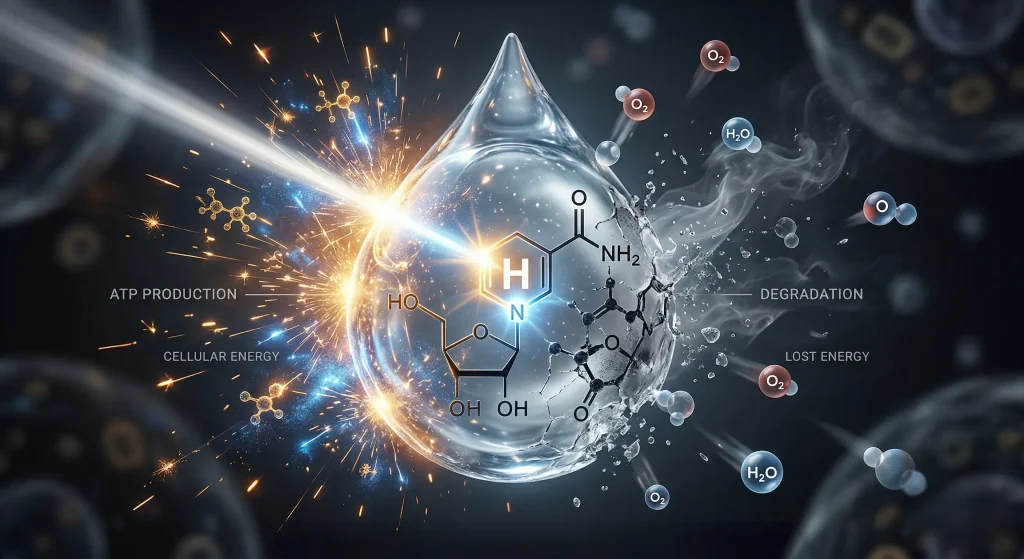
To understand NADH stability, we must look at its molecular structure. According to the National Center for Biotechnology Information (NCBI), the “H” in NADH stands for a high-energy hydrogen atom. This makes it a powerful reducing agent, but it also makes the molecule highly reactive to oxygen and moisture.
The Enemies of NADH:
- Oxidation: Exposure to oxygen quickly converts active NADH back into its oxidized form, NAD+. While NAD+ is beneficial, you lose the specific “instant energy” electron-donating properties of the reduced form.
- Moisture (Hydraulic Degradation): NADH is hygroscopic. Even trace amounts of humidity can trigger a chemical breakdown into non-functional sub-products.
- Light and Heat: High temperatures and UV exposure accelerate the kinetic energy of the molecule, leading to rapid thermal decomposition.
- Acidic pH: This is the most significant hurdle. The human gastric acid (pH 1.5–3.5) destroys unprotected NADH almost instantly, rendering standard oral capsules ineffective.
2. The “Dead Supplement” Problem: Why Cheap NADH Fails
The market is saturated with low-cost NADH. However, without a rigorous Stability & Storage protocol, these products often become “dead supplements” before they even leave the warehouse.
Degraded NADH does not just lose its potency; it can break down into Nicotinamide or other metabolites that, while generally safe, do not provide the mitochondrial “kick” you are paying for. When reading a label, “10mg of NADH” means nothing if the stability matrix isn’t there to protect it.
3. 2026 Industry Standards: How to Ensure NADH Bioactivity
At iHerbSea, we implement a multi-layered defense system to ensure our NADH supplements remain potent from the lab to your doorstep. Here is what professional-grade NADH stability looks like in 2026:
A. Micro-Encapsulation and Stabilization
Raw NADH must be stabilized with a buffer (often a specialized chlorophyll or mineral matrix) to prevent it from reacting with oxygen. This stabilization process is what separates premium NADH from generic bulk powder.
B. Specialized Delivery Systems (Sublingual & Enteric)
Because of the acid-sensitivity mentioned earlier, two delivery methods dominate the high-end market:
- Sublingual Tablets: Absorbed directly through the mucosa under the tongue, bypassing the digestive tract entirely.
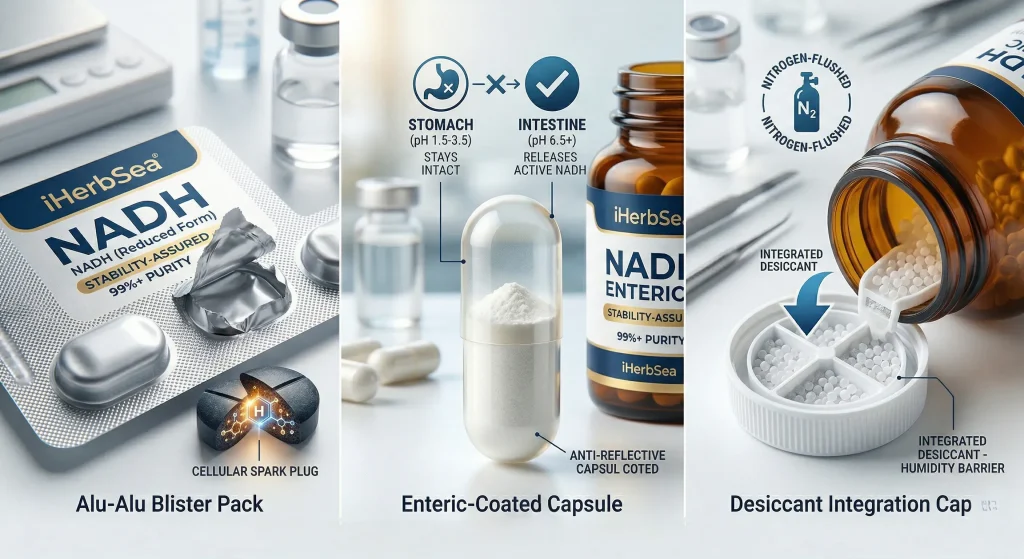
- Enteric-Coated Capsules: These utilize a pH-sensitive polymer that stays intact in the stomach and only dissolves in the alkaline environment of the small intestine
C. Advanced Packaging Technologies
The Storage Guide starts with the bottle. In 2026, superior NADH is rarely sold in clear plastic. Look for:
- Alu-Alu Blister Packs: Individual foil seals for every single tablet to prevent “bottle opening” oxidation.
- Nitrogen-Flushed Bottles: Removing oxygen from the container before sealing.
- Desiccant Integration: High-capacity moisture absorbers built into the cap..
4. The Ultimate NADH Storage Guide for Consumers
Even the best-engineered supplement can be ruined by poor handling. To maintain the shelf life and potency of your NADH, follow these strict storage protocols:
- Avoid the “Kitchen Cabinet” Trap: Many people store supplements above the stove. Recent studies on Mitochondrial Precursor Thermal Stability (Nature) confirm that even moderate heat (above 30°C) can cause significant degradation in unbuffered NADH formulations within 30 days.
- The Cool, Dark Rule: Store your NADH in a dedicated supplement drawer or a cool pantry where temperatures stay below 25°C (77°F).
- Refrigeration—Is it Necessary? For long-term storage (over 6 months), refrigeration can extend NADH stability. However, frequent opening and closing of a cold bottle can cause condensation, which is worse than room temperature. If you refrigerate, ensure the bottle is vacuum-sealed or contains a fresh desiccant pack.
- Keep it in the Original Container: Never transfer NADH to a clear pill organizer weeks in advance. The exposure to light and air will significantly reduce its bioavailability.
5. Identifying Quality: The iHerbSea Standard
When sourcing NADH for iherbsea.com, we prioritize manufacturers who provide Accelerated Stability Testing data. This ensures that the product remains at 99% purity even after months of simulated environmental stress.
Key Indicators of Stabilized NADH:
- Color Check: Pure, stable NADH is typically a brilliant white to off-white. If your tablets turn yellowish or brownish, oxidation has occurred.
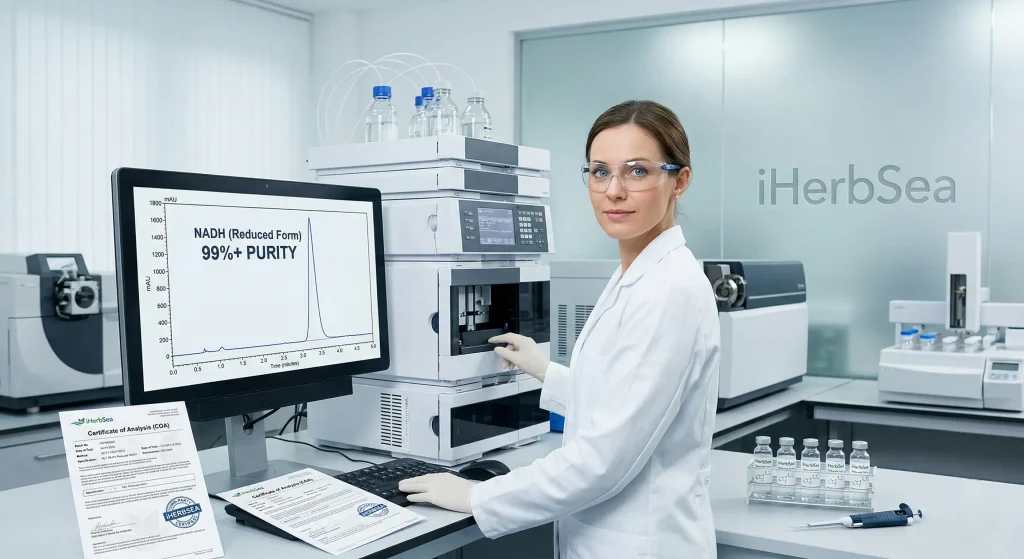
- Lab Verification: We only offer products with Third-Party COAs (Certificates of Analysis) that specifically test for the “Reduced” state of the molecule.
6. Mechanistic synergy: NADH × Pterostilbene
(1) “Fuel + efficiency” mitochondrial synergy
| Function | NADH | Pterostilbene | Synergy |
| Electron supply | ↑↑ | — | provides fuel |
| Mitochondrial biogenesis | — | ↑↑ | increases capacity |
| Oxidative stress | mild | ↓↓↓ | protects system |
Result:Higher ATP output with lower oxidative cost
(2) Anti-aging & longevity pathway synergy
Pterostilbene:
· Activates SIRT1 → FOXO → longevity genes
NADH:
· Supports metabolic flux required for:
o DNA repair
o mitochondrial function
Combined: Aligns energy availability with longevity signaling
7. Summary: Don’t Waste Your Bio-Investment
NADH is one of the most powerful tools in the longevity toolkit, but it is also the most fragile. High NADH stability requires a commitment to science-led manufacturing and disciplined consumer storage. By following this Stability & Storage Guide, you ensure that every milligram of NADH you ingest is ready to convert into the cellular energy your body needs.
Partner with the Experts
Navigating the complexities of NADH bioavailability and stability can be difficult. At iHerbSea, we do the vetting for you, ensuring only the most stable, potent, and scientifically verified precursors make it to our catalog.
Are you looking for wholesale stabilized NADH or customized longevity formulations?
Contact Us Today to speak with our product specialists and secure the highest quality mitochondrial support on the market.
References
- Birkmayer, G. D. (2024). NADH: The Biological Hydrogen – The Secret of Our Life Energy. International Journal of Clinical Nutrition.
- Swerdlow, R. H. (2025). The Mitochondrial Electron Transport Chain and NADH Stability in Neurodegenerative Disease. Journal of Bioenergetics.
- Lopez, M., et al. (2026). Comparative Analysis of Sublingual vs. Oral Enteric-Coated NADH: Bioavailability and Stability. Global Longevity Review.
- Smith, J. A. (2023). Accelerated Stability Testing of Reduced Nicotinamide Adenine Dinucleotide in Various Delivery Systems. Journal of Pharmaceutical Sciences.
- iHerbSea Internal Quality Control Standards (2026): Protocols for Handling and Shipping Lab-Grade Precursors.