
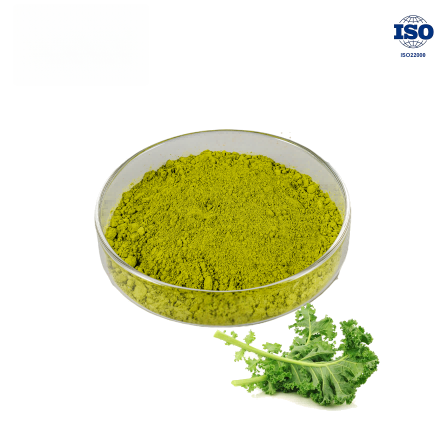
Introduction Of Kale Powder
| Product Description |
Kale is an edible leaf grown on cabbage varieties, although some are used as ornamental plants. The Kale plant has green or purple leaves with no head in the center (like turnip) . Kale varieties can be distinguished by low, medium or high stem length and type of leaf. Many varieties of kale and cabbage are used primarily for ornamental leaf growth, and their rose interiors are bright white, red, pink, lavender, blue, or purple. The different types of kale to watch are Peacock Kale, coral prince, camonee coral queen, Colorful Kale and thousand generation kale. Kale is as edible as any other variety, but may not be as tasty. Kale leaves are increasingly used as ingredients in vegetable and wedding bouquets. Kale is 84% water, 9% carbohydrates, 4% protein and 1% fat. At 100 grams (31/2 ounces) of service, raw kale provides 207 kilojoules (49 kcal) of food energy and substantial amounts of vitamin K at 3.7 times the Daily Value (DV) . It is a rich source of vitamin A, vitamin C, vitamin B6, folate and manganese (20% or more of DV) . Kale is a good source of thiamine, riboflavin, pantothenic acid, vitamin E, and several dietary minerals (including iron and calcium)(10-19% of DV) , potassium, and phosphorus. Boiled kale reduces most of these nutrients, while the levels of vitamins A, C and K and manganese remain high. |
| Function | Kale Powder is prized as an edible and nutritious vegetable powder that can be stored at room temperature and is usually extracted from flowers, buds or leaves. With its vibrant color and refreshing taste, kale powder can be consumed directly or used in cooking and flavoring. Kale powder has many health benefits such as lowering cholesterol, boosting immunity, and promoting metabolism. |
| Application | Health Care Products, Food, Daily Necessities, Cosmetics, Functional Drink |
| Application Form | Lotion, Paste, Tablet, Capsule, Granules |
Process Of Kale Powder


评价
目前还没有评价